What Is Physical AI? The Technology Behind Intelligent Robots
Artificial intelligence has mostly lived inside computers and smartphones. It can write text, analyze images, answer questions, and create software. Physical AI takes this intelligence into the real world.
Physical AI allows robots and autonomous machines to see, understand, reason, and act in physical environments. It is becoming an important area of robotics as researchers work toward machines that can handle more complex and unpredictable tasks.
What Is Physical AI?
Physical AI, also called physical artificial intelligence, refers to AI systems designed to interact with the physical world.
A traditional industrial robot may repeat the same movement thousands of times. A physical AI robot is designed to understand its surroundings and adapt its actions when conditions change.
For example, instead of simply moving a box from one fixed location to another, an intelligent robot could identify different objects, understand instructions, navigate around obstacles, and determine how to pick up and place unfamiliar items.
NVIDIA describes physical AI as technology that allows autonomous systems such as robots, cameras, and self-driving vehicles to perceive, understand, reason, and perform actions in the physical world.
How Does Physical AI Work?
Physical AI combines several technologies.
Sensors and Cameras
Robots use cameras, depth sensors, microphones, force sensors, and other hardware to understand their surroundings.
AI Models
AI models process this information and help the robot understand objects, people, spaces, and instructions.
Reasoning and Planning
The system determines what needs to happen and plans a sequence of actions.
Motor Control
The robot converts decisions into physical movements, controlling its arms, hands, wheels, legs, or other mechanisms.
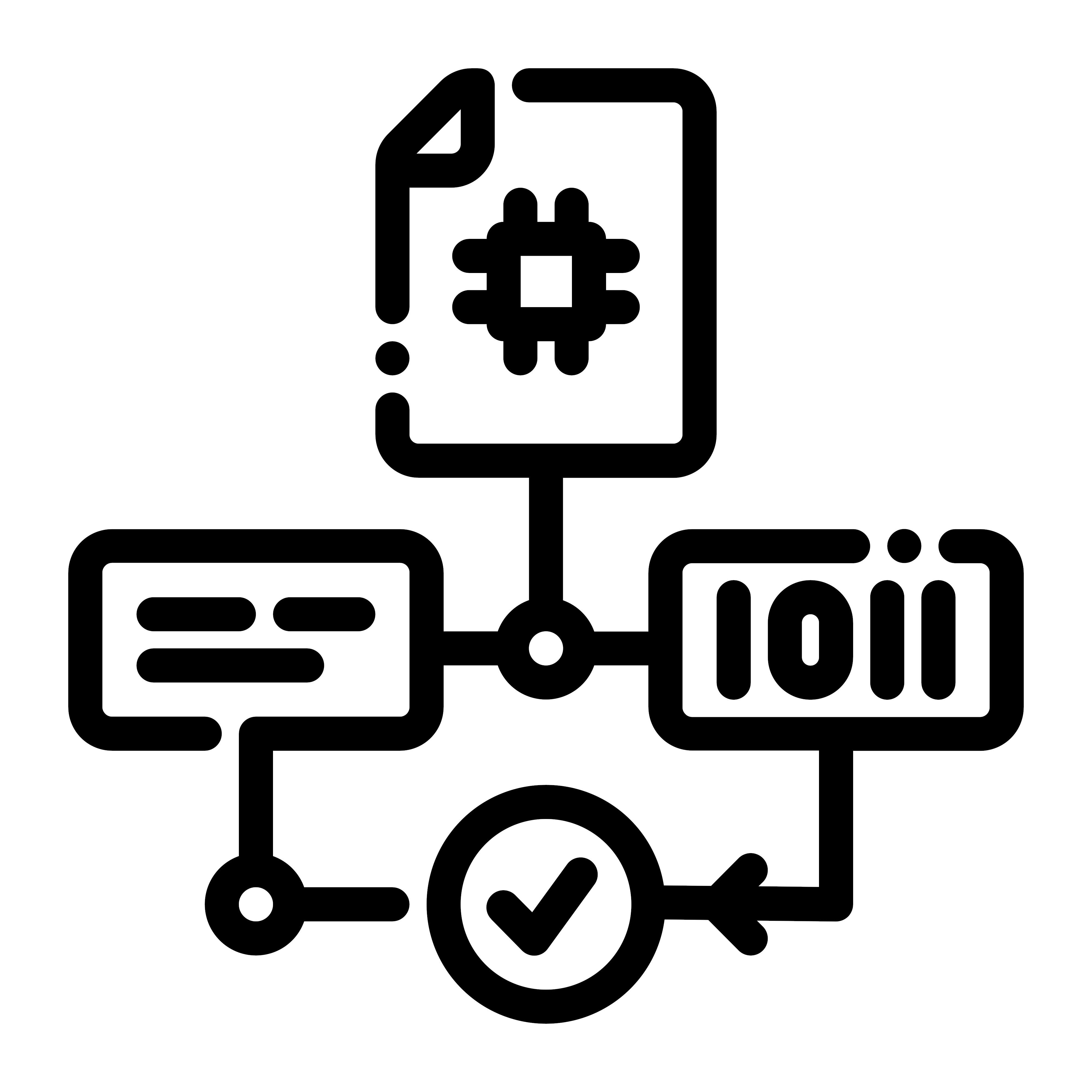
The basic process looks like:
Sense → Understand → Plan → Act → Observe → Adjust
This continuous feedback allows a robot to react to changes instead of following a completely fixed script.
Physical AI vs Traditional Robotics
Traditional robots are often programmed for specific environments and repetitive tasks.
Physical AI aims to make robots more adaptable.
For example, a traditional robot might be programmed to pick up one particular object from a specific location. A physical AI system could potentially recognize different objects, understand natural-language instructions, and adjust its movements according to the environment.
This does not mean every physical AI robot is fully autonomous. Many systems still operate within carefully controlled environments and require human supervision.
Latest Developments in Physical AI
Physical AI is developing rapidly in 2026.
Google DeepMind's Gemini Robotics 2 combines vision-language-action capabilities with embodied reasoning. Google says the system can support whole-body humanoid control, complex manipulation, multi-step planning, and collaboration between multiple robots.
NVIDIA is also developing physical AI models, simulation platforms, and robotics infrastructure. Its 2026 robotics work includes Isaac GR00T models, Cosmos world models, and simulation tools designed to help train and test robots before real-world deployment.
Another important development is on-device AI. Running models directly on robots can reduce dependence on cloud connections and potentially improve response times. Google has developed robotics models specifically optimized to run locally on robotic hardware.
Real-World Applications
Manufacturing
Physical AI can help robots perform assembly, inspection, material handling, and other factory tasks.
Warehouses
Intelligent robots can move goods, identify packages, navigate facilities, and support logistics operations.
Healthcare
Robotics can assist with certain medical and rehabilitation tasks, although these applications require particularly strong safety and regulatory controls.
Agriculture
AI-powered machines can help monitor crops, identify plants, remove weeds, and automate parts of harvesting.
Autonomous Vehicles
Self-driving systems use AI to understand roads, vehicles, pedestrians, and changing traffic conditions.
Humanoid Robots
Humanoid robots are being developed for environments designed for humans, including factories, warehouses, and potentially homes.
Benefits of Physical AI
Physical AI could provide several advantages:
-
More flexible robots
-
Better adaptation to changing environments
-
Reduced manual work
-
Automation of difficult physical tasks
-
More natural human-robot interaction
-
Greater use of robots outside controlled factories
Simulation is also becoming important because developers can train and test robots in virtual environments before deploying them in the real world. NVIDIA highlights simulation, synthetic data, and robot learning as important parts of modern physical AI development.
Challenges of Physical AI
Building intelligent machines is much harder than creating software that only operates on a screen.
Robots must deal with unpredictable environments, physical limitations, safety concerns, and real-time decisions.
Major challenges include:
-
High hardware costs
-
Limited battery life
-
Safety around humans
-
Difficult real-world training
-
Sensor errors
-
Complex physical movements
-
Limited reliability in unusual situations
-
Data and privacy concerns
Safety is especially important because an AI mistake in the physical world can have physical consequences. In 2026, NVIDIA introduced a robotics safety architecture designed to combine AI computing and safety mechanisms across physical AI systems.
What Is the Future of Physical AI?
The long-term goal is to create robots that can learn broader skills and operate in many different environments.
Future systems may be able to receive a simple instruction such as “clean this room” and determine how to identify objects, navigate the space, move items, and complete the task.
Multiple robots could also work together. Google DeepMind's latest robotics research demonstrates systems designed to coordinate multiple robots on shared tasks.
The biggest change could be the transition from robots that simply follow programs to machines that can understand situations and choose appropriate actions.
FAQ
What is physical AI?
Physical AI is artificial intelligence designed to perceive, understand, and interact with the physical world through robots and autonomous machines.
Is physical AI the same as robotics?
Not exactly. Robotics focuses on designing and controlling machines, while physical AI adds advanced AI capabilities that help machines perceive, reason, learn, and adapt.
What are examples of physical AI?
Examples include intelligent robots, humanoid robots, autonomous vehicles, warehouse robots, agricultural machines, and other autonomous systems.
Why is physical AI important?
It could allow robots to perform more flexible tasks and operate in environments that are difficult to program using traditional robotics.
Will physical AI robots replace humans?
Physical AI may automate some physical tasks, but its impact will vary by industry and application. Human supervision, maintenance, safety, and decision-making will remain important for many systems.
Final Thoughts
Physical AI represents a major step in the evolution of artificial intelligence. Instead of keeping AI inside computers, it gives intelligent systems the ability to interact with the physical world.
With advances in AI models, sensors, simulation, robotics hardware, and on-device computing, robots are becoming increasingly capable of understanding their surroundings and adapting their actions.
The future of AI may therefore not only be about smarter software. It may also be about intelligent machines that can see, reason, learn, and act in the real world.