What Is Physical AI and Why Is It the Next Big Robotics Trend?
Artificial intelligence has mostly lived inside computers. It can write text, analyze data, generate images, and answer questions. But a new area of AI is taking intelligence into the physical world.
This technology is called Physical AI.
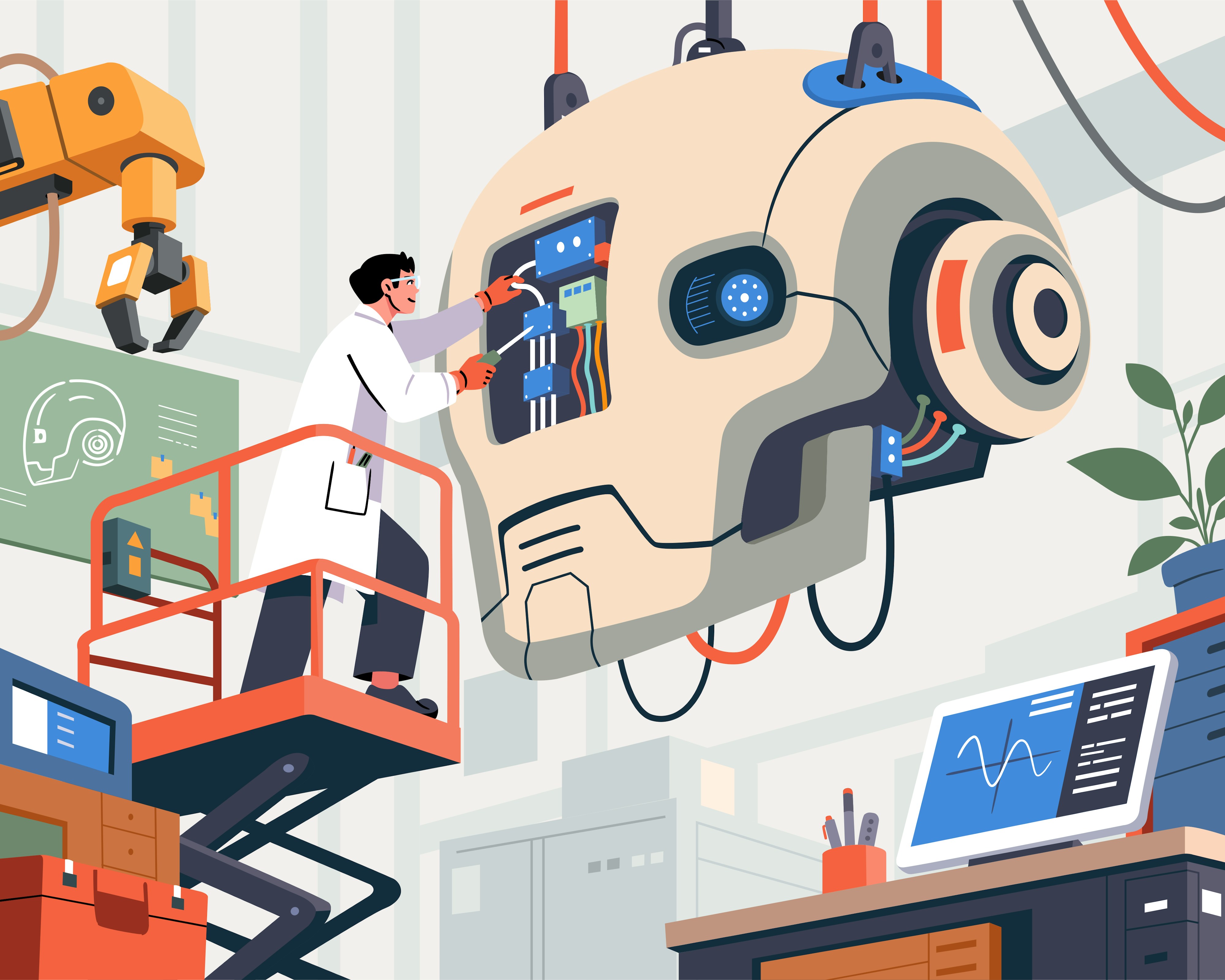
Physical AI combines artificial intelligence with robots, sensors, cameras, and machines that can interact with their surroundings. Instead of only producing digital answers, these systems can understand the physical environment and take real-world actions.
As robotics becomes more intelligent, Physical AI is becoming an important technology to watch.
What Is Physical AI?
Physical AI refers to AI systems that can perceive, understand, and act in the physical world.
A traditional robot usually follows carefully programmed instructions. A Physical AI robot can use AI to interpret what is happening around it and decide how to respond.
For example, instead of programming a robot to pick up one specific object from one fixed position, an AI-powered robot could identify different objects, understand their locations, and select an appropriate way to handle them.
The basic idea is:
See → Understand → Plan → Act → Learn
This makes Physical AI closely connected to the development of autonomous and general-purpose robots.
How Does Physical AI Work?
Physical AI combines several technologies rather than relying on a single AI model.
Sensors and Cameras
Robots use cameras, lidar, force sensors, microphones, and other sensors to collect information about their environment.
These sensors help the robot understand objects, distances, movement, and physical conditions.
AI Models
AI models process the information collected by the robot. Vision models can identify objects, while language and reasoning models can help interpret instructions and determine what needs to happen next.
Planning
The system breaks a goal into smaller actions.
For example:
Find the box → Move toward it → Pick it up → Navigate to the shelf → Place it safely.
Physical Control
Finally, the robot's control system converts those decisions into movements using motors, wheels, arms, hands, or legs.
Why Is Physical AI Becoming Important?
Robotics has traditionally worked best in controlled environments such as manufacturing lines.
But the real world is unpredictable.
Objects can move. People can walk into a robot's path. Lighting can change. A package may be damaged or placed differently.
AI can help robots respond to these variations instead of requiring engineers to program every possible situation.
This is one reason companies and researchers are working toward AI-powered general-purpose robots.
Latest Developments in Physical AI
Recent progress in AI models is making robots more capable of understanding both language and physical environments.
Google DeepMind, for example, has developed Gemini Robotics models designed to connect visual and language understanding with robotic actions. Its robotics research includes dexterous manipulation, multi-step tasks, and adapting AI models to different robotic platforms.
NVIDIA is also developing platforms for physical AI, including simulation and robotics technologies designed to help developers train and test intelligent machines before deploying them in the real world.
These developments show a broader shift from AI that operates only on screens toward AI that can interact with the physical world.
Real-World Applications
Physical AI could transform several industries.
Manufacturing
AI robots can inspect products, move materials, assemble components, and work alongside human employees.
Warehouses
Robots can identify packages, move inventory, optimize routes, and coordinate with other machines.
Healthcare
Robotics could support hospital logistics, rehabilitation, assistance, and other carefully controlled tasks.
Agriculture
Physical AI can help machines identify crops, detect weeds, monitor fields, and perform selected agricultural operations.
Autonomous Vehicles
Self-driving cars are another example of physical AI. They use sensors and AI systems to understand roads, vehicles, pedestrians, and traffic conditions before making driving decisions.
Home Robots
Future household robots could potentially help with cleaning, organizing, carrying objects, and other everyday activities.
However, homes are complex environments, so reliable household robots remain a significant technical challenge.
Benefits of Physical AI
Physical AI could provide several important advantages:
-
More flexible robots
-
Better automation
-
Less repetitive physical work
-
Improved inspection and quality control
-
Assistance with dangerous tasks
-
More natural human-robot interaction
-
Greater adaptability to changing environments
The biggest opportunity is flexibility. A robot that can understand different situations could potentially perform many tasks instead of being limited to one repetitive operation.
Challenges of Physical AI
Physical AI also faces major challenges.
Safety is one of the biggest. Robots operate around people and physical objects, so an incorrect AI decision can cause real-world harm.
Other challenges include:
-
High hardware costs
-
Limited battery life
-
Difficult real-world training
-
Sensor failures
-
AI errors
-
Slow physical movements
-
Reliability
-
Cybersecurity and privacy
Training robots is particularly difficult because physical mistakes can be expensive or dangerous. Researchers therefore use simulations and virtual environments to train and test robotic systems before real-world deployment.
What Is the Future of Physical AI?
The long-term goal is to create robots that can understand natural instructions and perform useful tasks in changing environments.
Imagine telling a household robot:
“Clean the kitchen, put the dishes away, and prepare the table.”
Instead of following a fixed sequence, the robot could identify objects, plan the task, adapt to obstacles, and communicate when it needs assistance.
In factories and warehouses, multiple intelligent robots could also cooperate and divide tasks.
This could lead to a new generation of general-purpose AI robots that are more flexible than traditional automation systems.
FAQ
What is Physical AI?
Physical AI is artificial intelligence designed to understand and interact with the physical world through robots, autonomous machines, and other systems.
Is Physical AI the same as robotics?
Not exactly. Robotics focuses on physical machines, while Physical AI adds advanced AI capabilities that help those machines perceive, reason, learn, and act.
Why is Physical AI important?
It can make robots more adaptable, allowing them to handle changing environments and more complex tasks.
What are examples of Physical AI?
Examples include autonomous vehicles, warehouse robots, AI-powered industrial robots, humanoid robots, and autonomous machines used in agriculture.
Will Physical AI replace human workers?
It may automate some physical and repetitive tasks, but the impact will vary by industry. Many applications are likely to involve humans working alongside AI-powered machines.
Final Thoughts
Physical AI represents an important shift in the evolution of artificial intelligence.
AI is no longer limited to screens and software. It is increasingly being connected to machines that can see, move, manipulate objects, and respond to the real world.
The technology still has significant challenges, especially around safety, reliability, cost, and real-world learning. But as AI models, robotics hardware, and simulation technology continue to improve, Physical AI could become one of the most important technologies shaping the next generation of robotics.