What Are Multi-Agent AI Systems and How Do They Work?

Artificial intelligence is becoming more capable of handling complex tasks. But instead of relying on one AI model to do everything, developers are increasingly building systems where multiple AI agents work together.
These are called multi-agent AI systems. Each agent can have a different role, skill, or objective, allowing the system to solve larger problems through collaboration.
What Is a Multi-Agent AI System?
A multi-agent AI system is a group of AI agents that communicate and cooperate to complete a task.
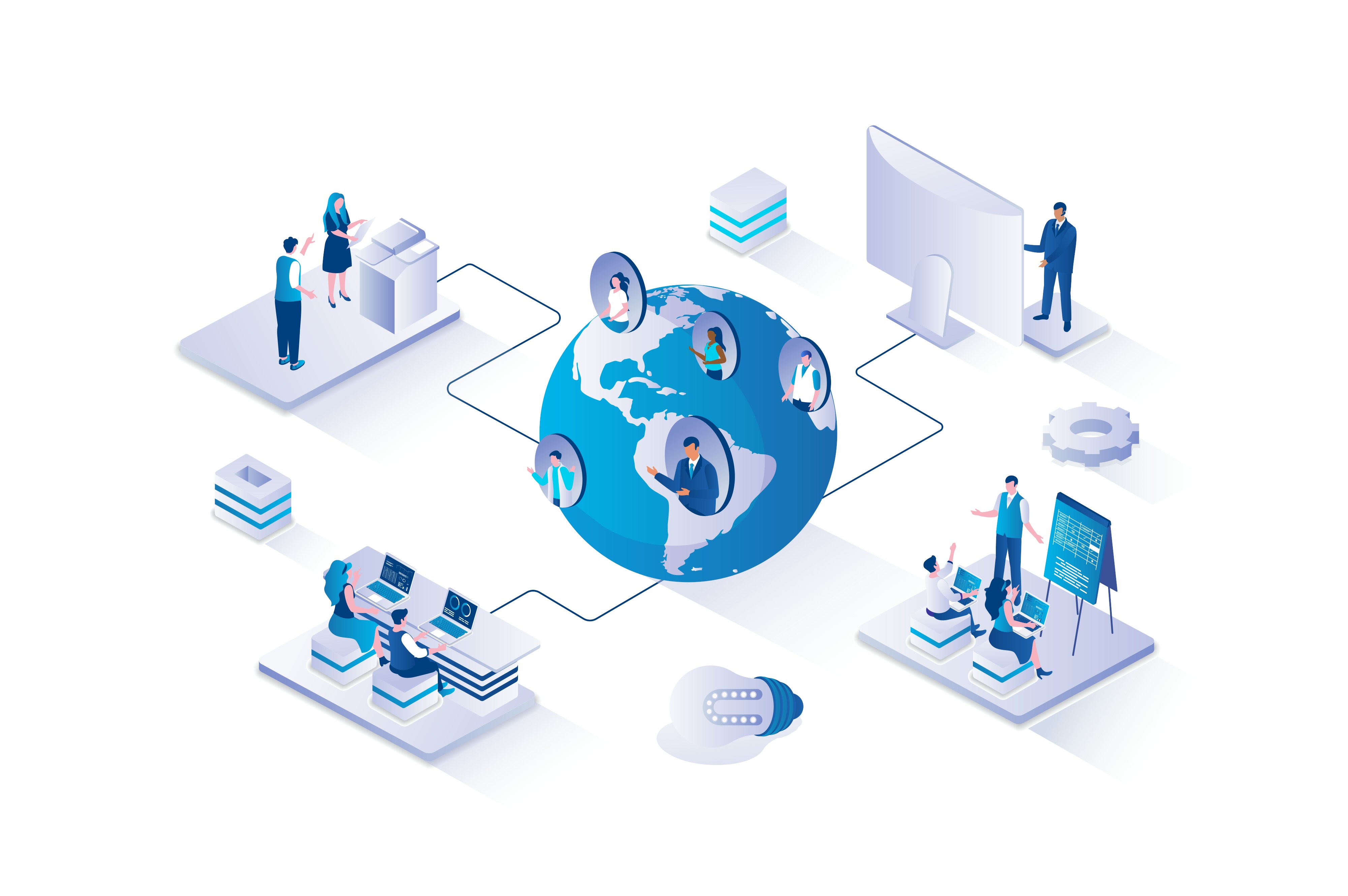
Think of it like a digital team.
One agent might research information, another might analyze the data, a third might write a report, and another might check the final result.
Instead of one AI trying to perform every step, work is divided among specialized agents.
This approach is becoming increasingly important as AI applications move from simple conversations toward complex, multi-step workflows.
How Do Multi-Agent Systems Work?
A typical multi-agent system has several important components.
1. Specialized Agents
Each agent is designed for a particular responsibility. For example, a research agent may collect information while a coding agent works on software.
2. Orchestrator
An orchestrator manages the overall workflow. It decides which agent should handle a particular task and when the results should be passed to another agent.
3. Communication
Agents need a way to exchange information. Modern agent frameworks increasingly support standardized approaches for agent-to-agent communication and tool access.
4. Shared or Separate Memory
Agents can maintain their own context or access shared information. This helps them continue complex tasks without repeating previous work.
5. Evaluation and Monitoring
Because AI agents can behave differently from traditional software, developers need systems to trace their actions, evaluate results, and identify failures. Microsoft, for example, has expanded agent observability and evaluation capabilities across different agent frameworks in 2026.
A Simple Example
Imagine a company wants to create a market research report.
Instead of asking one AI to complete everything, a multi-agent system could use:
-
Research Agent: Finds relevant market information.
-
Data Agent: Analyzes statistics.
-
Competitor Agent: Studies competing companies.
-
Writer Agent: Creates the report.
-
Review Agent: Checks the final content.
An orchestrator coordinates these agents and combines their work.
This can make complex workflows more modular and easier to manage.
Real-World Applications
Software Development
Multi-agent systems can divide software projects into coding, testing, debugging, documentation, and code-review tasks.
IBM introduced multi-agent capabilities for enterprise software development in 2026, including workflows designed for complex modernization projects.
Business Automation
Companies can use multiple agents to handle customer support, document processing, reporting, research, and internal operations.
For example, one agent could process incoming requests while another checks company data and a third prepares a response.
Research
Research workflows often involve collecting information, comparing sources, analyzing data, and writing conclusions. Specialized agents can divide these responsibilities.
Customer Service
One agent can understand a customer's problem, another can retrieve account information, and another can recommend the next action—subject to the company's permissions and controls.
Cybersecurity
Multi-agent systems can help analyze security alerts, investigate suspicious activity, and coordinate different stages of incident response.
Why Use Multiple AI Agents?
The biggest advantage is specialization.
A single AI system may be capable of many tasks, but specialized agents can be given narrower responsibilities and tools.
Other potential benefits include:
-
Parallel task execution
-
Better workflow organization
-
Specialized expertise
-
Easier integration with tools
-
More scalable automation
-
Ability to handle longer workflows
Microsoft's 2026 research and developer guidance also highlights architectures where multiple agents can work in parallel and share skills or tools.
Latest Developments in Multi-Agent AI
Multi-agent AI development is moving quickly in 2026.
Google's Agent Development Kit has added capabilities for building complex multi-agent applications, including graph-based workflows, human-in-the-loop processes, and cross-language agent collaboration.
Google also reported that successful multi-agent projects increasingly use engineering patterns such as asynchronous event systems, agent-to-agent communication, validation, and intelligent routing rather than simply connecting several prompts together.
This is an important distinction: a real multi-agent system is more than giving different names to several prompts. The agents need meaningful roles, communication, coordination, and useful workflows.
Challenges of Multi-Agent AI
Multi-agent systems also introduce new problems.
More agents can mean more complexity. If one agent produces incorrect information, another agent may use that information and continue the mistake.
Other challenges include:
-
Higher computing costs
-
Increased latency
-
Communication failures
-
Incorrect decisions
-
Security risks
-
Difficult debugging
-
Data privacy concerns
-
Complex system monitoring
Developers therefore need strong permissions, testing, observability, and human oversight for important workflows.
What Is the Future of Multi-Agent AI?
The future could involve AI teams working alongside human teams.
Instead of using one general-purpose assistant, businesses may deploy collections of specialized agents that coordinate across applications and departments.
For example, a company could have separate agents for sales, finance, customer service, software development, and research, with controlled communication between them.
As standards and agent protocols improve, agents may also become better at discovering and communicating with other agents and tools across different platforms. Google announced an Agentic Resource Discovery specification in 2026 to help agents discover and verify capabilities across the web.
FAQ
What is multi-agent AI?
Multi-agent AI is a system where multiple AI agents collaborate to complete one or more complex tasks.
How are AI agents different from multi-agent systems?
An individual AI agent can perform tasks independently. A multi-agent system connects multiple agents so they can communicate, specialize, and coordinate their work.
Are multi-agent systems better than one AI agent?
Not always. The right architecture depends on the task. Simple problems may only need one agent, while complex workflows can benefit from multiple specialized agents.
What are multi-agent systems used for?
They can be used in software development, research, business automation, customer service, cybersecurity, data analysis, and other complex workflows.
What is the biggest challenge?
Managing communication, reliability, security, cost, and coordination becomes more difficult as the number of agents increases.
Final Thoughts
Multi-agent AI systems represent an important step in the evolution of AI. Instead of expecting one model to perform every task, developers can create digital teams where each agent has a specific role.
As agent frameworks, communication standards, and monitoring tools continue to improve, multi-agent systems could become an important foundation for the next generation of AI-powered software.