 Astrum

AI Summary
The Puzzle of Special Relativity and Cosmic Expansion
On a grand cosmic scale—planets orbiting stars, stars orbiting within galaxies, and galaxies forming the cosmic web—the universe appears simple and elegant. Yet at the scales of special relativity and quantum mechanics, intuition breaks down and reality becomes deeply counterintuitive.
One of the central puzzles of special relativity is that the faster an object moves through space, the slower it moves through time. In the Hafele-Keating experiment, scientists flew atomic clocks around the world on commercial airplanes while leaving an identical set of clocks stationary at home; upon return, the traveling clocks read an earlier time, having ticked more slowly. Modern satellites must routinely adjust their internal clocks to account for both their orbital velocity and the weaker gravitational pull high above Earth. Furthermore, simultaneity itself is relative: two events that appear simultaneous to one observer may occur in a different sequence to another.
Conventional physics explains these effects by starting with the rule that light in a vacuum always travels at 299,792,458 meters per second regardless of the observer's motion—whether standing on a planet, flying toward the Sun in a rocket, or flying away from it. To keep light's speed constant across every frame of reference, space and time must stretch and contract. However, conventional explanations leave open why light behaves this way and why the universe accommodates it.
A strikingly similar pattern appears on cosmological scales. Observations show that the universe is expanding, and the farther away a galaxy is, the faster it recedes from Earth—approaching the speed of light at the edge of the observable universe and exceeding it beyond that boundary. In 2023, scientists studying 190 quasars discovered that extremely distant quasars appear to flicker five times slower than nearby ones. Conventional cosmology attributes this apparent slowing to cosmic expansion stretching the wavelengths of light—causing redshift—much like pulling on both ends of a film reel so it takes five times longer to play. To explain what drives this expansion, scientists introduced dark energy, an unseen energy filling the growing gaps of space, even though it defies everyday intuition that energy should continually spring from nowhere.
An alternative 4D geometric model seeks to account for special relativity, cosmic expansion, redshift, missing antimatter, and gravity from a single set of simple rules—without requiring dark energy.
Rethinking Space-Time as a 4D Geometric Expansion
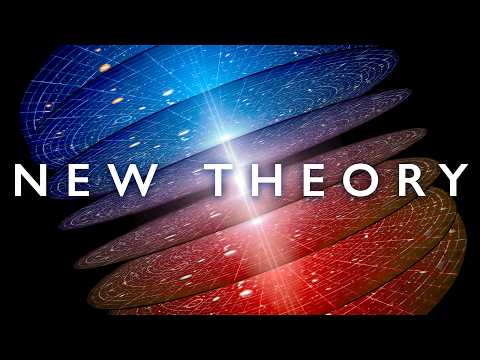
Rather than treating space and time as separate things, space-time can be understood as a four-dimensional universe where time is a fourth axis of direction perpendicular to the three spatial dimensions (forward-backward, up-down, and left-right). Even when an object sits still in 3D space, it is still moving along the direction of time.
This alternative model rests on four core assumptions:
-
A 4D Big Bang: At the beginning of the universe, everything occupied a single point in four dimensions and expanded outward in all directions—not just into 3D space, but into time as well.
-
Time as Perspective: There is no universal, fixed direction for time, just as there is no universal "forward" in 3D space. For any observer, time is simply the direction their trajectory is facing, while all directions perpendicular to it are experienced as space.
-
Experience Through Intercepted Photons: The entirety of the universe's history is mapped out as trajectories (arrows) in this 4D space. Observers experience the passage of time by moving along their trajectory and intercepting photons and particle forces arriving at each specific point in space-time.
-
Instantaneous Light in Its Own Frame: Light does not have an inherent speed limit in its own frame of reference; it travels instantaneously from its own perspective and only appears to have a finite speed from the viewpoint of other observers.
Questioning the One-Way Speed of Light
Standard 4D space-time diagrams draw light moving at a 45-degree angle, assuming light travels equally through space and time. Treating light as instantaneous in its own frame challenges that convention on two grounds.
First, no experiment has ever measured the one-way speed of light in a vacuum—only its round-trip speed. Like sending a child to school and noting only when they leave and return, dividing a round-trip time by two reveals the average speed, not whether the light traveled instantaneously on the outbound leg and slower on the return. Attempting to measure one-way speed using two synchronized clocks fails because moving one clock apart desynchronizes it due to motion-induced time dilation—an effect whose calculation already presupposes the speed of light. Similarly, synchronizing clocks from afar requires sending a signal at the speed of light, which again relies on a round trip. Dividing two-way travel times by two to get 299,792,458 meters per second was a matter of convention rather than direct measurement.
Second, calculating speed (distance divided by time) from a photon's perspective causes standard equations to break down. Because time slows down as speed increases and stops completely at light speed, a photon covering 10 meters experiences zero personal time—yielding either 10 meters divided by 0 seconds (approaching infinity) or, with length contraction shrinking the distance to zero, 0 meters divided by 0 seconds. Neither calculation produces 299,792,458 meters per second.
In this 4D model, two observers—Tom and Alice—are represented as arrows diverging slightly outward from the central Big Bang point. Because their trajectories point slightly apart due to their initial outward momentum (consistent with a constant-rate expansion rather than an accelerating one, setting gravity aside), they naturally drift apart without needing dark energy. When Tom sends a photon toward Alice, it travels perpendicular to Tom's timeline—meaning it covers the distance in zero time from Tom's perspective. However, because Alice's trajectory is angled away from Tom's, the photon intersects Alice's timeline further along her path, meaning Alice sees the photon take time to arrive. When Alice immediately sends a photon back perpendicular to her timeline, it intersects Tom's trajectory even further along, covering a longer return distance. Tom measures the total round-trip time, divides it by two, and calculates a constant speed of 299,792,458 meters per second—even though the light moved instantaneously outward and took longer on the return trip.
Explaining Cosmic Expansion, Redshift, and Time Dilation Without Dark Energy
Applying this same geometry to distant stars accounts for cosmic expansion, redshift, and cosmological time dilation. Because photons leave each star perpendicular to its trajectory, only arrows angled within 90 degrees of our own trajectory can ever send photons that intersect our timeline. Arrows angled at 90 degrees or more point away too steeply for their light to ever reach us, meaning the observable universe consists strictly of the half of the 4D cosmos within 90 degrees of our path.
For a very distant star angled steeply away from us, photons emitted once per second along the star's timeline strike our trajectory at an angle, stretching out the interval between arrivals so that we experience more than one second between each photon. For continuous light waves, this geometric stretching elongates the wavelength—shifting the light toward the red end of the spectrum—and slows down the apparent rate of events, explaining why distant quasars appear to flicker five times slower. Measuring these photon paths in 3D space also makes distant objects appear to recede rapidly while nearby objects recede slowly, reproducing the observed expanding universe from every vantage point without invoking dark energy.
Resolving the Barn-Pole Thought Experiment
The same geometric rules account for relativistic length contraction and the classic barn-pole thought experiment, which asks whether a 40-meter pole can fit inside a 20-meter barn. In special relativity, accelerating the pole close to light speed contracts its length to 20 meters from the barn's perspective, allowing both barn doors to close simultaneously around it. From the pole's perspective, however, the barn is rushing toward it and contracts instead—meaning the pole should not fit unless the two doors close at different times.
Tracking the front and back atoms of the pole in 4D space resolves the paradox:
-
From the barn's perspective: When the pole accelerates, its trajectory tilts sharply toward the barn's path. Taking a snapshot at the moment the back of the pole reaches the barn's entrance shows the cross-section of the pole compressed within the 20-meter barn, allowing both doors to shut at once before the front of the pole continues forward. At this instant, the back of the pole is slightly further along its timeline than the front.
-
From the pole's perspective: While moving at constant velocity, the pole remains in its own uncontracted reference frame, and the angled geometry shows the barn's back door closing first, followed later by the front door after the pole passes through.
-
Round-trip effects: When the pole decelerates at its destination, its reference frame shifts back; the back half pauses while the front half finishes arriving, restoring its full 40-meter length. Comparing the total path lengths confirms that the moving pole experienced less elapsed time overall than the stationary barn.
Accounting for Missing Antimatter, the Speed Limit, and Time Travel
Extending this 4D geometry offers potential explanations for several additional mysteries in physics:
-
Missing Antimatter: Standard physics suggests the Big Bang should have created equal amounts of matter and antimatter, which would have annihilated each other. Theoretical physics often describes antimatter as matter moving backward in time. In this 4D model, as trajectories angle farther from ours, their relative time slows down until reaching zero at 90 degrees; beyond 90 degrees, trajectories point into negative time values relative to us. The missing antimatter may therefore occupy the unobservable opposite half of the 4D universe, permanently separated from our half.
-
The Cosmic Speed Limit: Objects with mass start with outward momentum from the Big Bang. Adding sideways momentum tilts an object's trajectory, much like lengthening one side of a triangle—no matter how much length is added, the line can never become completely flat (90 degrees). Consequently, massive objects can never reach light speed or stop moving forward in time, and each additional burst of energy yields diminishing increases in observed speed.
-
Backward Time Travel: While massive objects and photons (which travel strictly at 90 degrees) cannot travel backward in time, hypothetical particles capable of traveling at angles greater than 90 degrees could connect points across space-time instantaneously or influence past events, offering a speculative framework for quantum entanglement and non-local quantum effects.
Determinism, Free Will, and Gravity in a Vibrating String Lattice
Because a 4D space-time map contains all past, present, and future trajectories simultaneously, every path is technically laid out from inception—challenging the idea of free will. However, the model only resembles our lived experience when an observer's awareness moves step by step along an arrow, intercepting photons moment by moment. What drives that progression—whether a higher "time above time" dimension or an initial choice made when the 4D universe first took shape—remains an open question.
Finally, incorporating gravity relies on combining this geometric space-time with vibrating strings. In this view, all mass and energy consist of vibrations along a lattice of intersecting strings in 4D space, with atoms forming where wave peaks occur. Just as plucking a taut string pulls its ends inward, larger vibrations shorten the surrounding string lattice. Massive concentrations of vibrating energy pull the surrounding space-time lattice inward, curving the trajectories of nearby arrows toward them. Sideways contraction pulls objects closer together, while vertical contraction shortens time intervals—slowing down time near massive objects. In this way, mass tells space how to curve, and curved space tells matter how to move through both space and time.
Full Transcript
00:01When we look at the universe around us,
00:03there is a certain elegance to what we
00:06find.
00:07Planets orbit stars. Stars orbit within
00:10galaxies. Galaxies make up great
00:13structures on the cosmic web.
00:16On this grand scale, the entire cosmos
00:18boils down to a few simple questions.
00:22Einstein himself once said that he had
00:24deep faith that the principle of the
00:26universe will be beautiful and simple.
00:30Yet, as soon as you consider special
00:32relativity or quantum mechanics, you
00:34realize Einstein was clearly misguided.
00:37At these levels of physics, the universe
00:39is not elegant or simple, but truly
00:42bizarre.
00:43Our day-to-day experience gives us no
00:46intuition that we can apply to the
00:47quantum world, and our very perception
00:50of time itself is shown to be shoddy.
00:53So, what's really happening? Am I wrong
00:56about the simplicity of the universe?
00:59Or do we simply not understand the rules
01:01that make it all make sense?
01:04Over the years, I've learned a lot about
01:06the universe as I've made these videos,
01:08and I think I've stumbled upon a model
01:11that might be the answer. The
01:13strangeness of special relativity, or
01:16the weirdness of quantum reality, our
01:19universe's speed limit, the problem of
01:21missing antimatter, the list goes on,
01:24and I think I can explain it all.
01:27This is a theory of everything, or at
01:30least the foundation for one. And by the
01:32end of this video, your understanding of
01:35the universe will be changed forever.
01:39I'm Alex Mcholgan, and you're watching
01:41Astrum. Join me in this final video on
01:44my theory of everything, as I offer a
01:47model that brings simplicity to all the
01:49confusion. Here, I will discuss how I
01:52think space-time works, and I hope by
01:54the end of it, you'll be inclined to
01:56agree with me.
01:59A theory of everything is the holy grail
02:01of physics and something we've not yet
02:03managed. It turns out that marrying the
02:06large-scale universe mechanics with the
02:08quantum world is somewhat difficult.
02:11Yet,
02:12here's an intriguing solution.
02:15This model has been developed by my
02:17brother John, who is one of the main
02:19script writers here on Astrum. And so,
02:21what this video is not going to be is a
02:24breakdown of the Einsteinian model of
02:26special relativity. Instead, we're going
02:28to take the observations of special
02:30relativity and are going to come up with
02:33a new way of accounting for them. The
02:35one that does so simply, while also
02:38answering a lot of the other mysteries
02:40that are plaguing science at the moment.
02:43Special relativity, simple?
02:46Can such a thing be?
02:48I'll let you judge for yourself. Though,
02:50I warn you now, we're going to be
02:52playing a little 4D chess with it. As a
02:55note, this is not the first part in my
02:58theory of everything series. If you
03:00haven't already, I'd recommend you take
03:02a look at my other videos on the topic,
03:04which you can check out here. I
03:06particularly recommend the one that
03:08covers some of the weird phenomena of
03:10special relativity that I'll be trying
03:12to account for here and it does a good
03:14job of laying the groundwork. And yes,
03:16this theory does explain the Barn Pole
03:19thought experiment.
03:21All right, enough disclaimers. It's on
03:23to the theory.
03:25This theory started with an observation,
03:28one that long-time subscribers of the
03:30channel will recognize.
03:32Isn't it strange that the faster things
03:34go in space, the slower they go in time?
03:39The most concrete example of this is the
03:41Hafele-Keating experiment, where two
03:44scientists, Hafele and Keating, a twist
03:47I know, took atomic clocks on commercial
03:50airplanes and flew them around the
03:52world. They also left another set of
03:54clocks at home, and when they returned,
03:57they compared the times on all the
03:58clocks.
04:00Fascinatingly, the clocks that traveled
04:02were reading an earlier time. They had
04:05ticked slower than the stationary
04:07clocks.
04:08This result is surprising, assuming you
04:10haven't already heard of special
04:12relativity, but it is actually a
04:14well-known and planned around phenomenon
04:17in the world we live in. Satellites have
04:19to have their internal clocks adjusted
04:21with this in mind, as due to their speed
04:23of travel, along with the time warping
04:26effects of not being as much in Earth's
04:29gravity well, their times and hours
04:32would otherwise not be in sync.
04:34Instinct tells us that time should flow
04:36the same for everybody. My now is the
04:38same as your now.
04:40But special relativity tells us that
04:42this is not the case.
04:44Even the concept of events happening in
04:47a particular order is up for debate, as
04:50just because I see two events happening
04:52in the same moment doesn't mean that you
04:54see things the same way.
04:57So, why does this occur?
05:00The conventional wisdom is that this is
05:01because light must always go at the same
05:04speed in a vacuum, 299,792,458
05:11m/s, no matter what your frame of
05:14reference is.
05:16Standing on a planet looking at the sun,
05:18that light is traveling towards you at
05:20299,792,458
05:24m/s. On a rocket ship flying towards the
05:28sun,
05:29that light is still traveling towards
05:31you at 299,792,458
05:35m/s, unaffected by your speed.
05:40Flying on a rocket ship going the
05:42opposite way,
05:43once again,
05:45299,792,458
05:48m per second.
05:50This means that if you want to keep the
05:53speed of light consistent, the rest of
05:56time and space has to bend over
05:58backwards to accommodate, quite
06:00literally, stretching and contracting to
06:03make sure the numbers always add up.
06:06But why does light need to go at that
06:09speed? And why does the universe
06:11accommodate?
06:12Different people have different answers,
06:15but it seems that no one really knows.
06:18It's just what we observe to be the
06:20case, and scientists have done numerous
06:23experiments to prove that the universe
06:24really does work that way.
06:27But something definitely seemed odd
06:29about this to my brother.
06:32Here's another oddity.
06:34We've talked about how the faster you
06:36go, the slower you go.
06:38But this has an interesting parallel.
06:41You may have heard that the universe is
06:42expanding. Everything is heading away
06:44from us in all directions. You have also
06:47likely heard, if you're the kind of
06:49person who would click on a video about
06:51a new theory of everything,
06:53that things travel away from us faster
06:56the further from us they are.
06:58Objects at the edge of the observable
07:00universe are traveling away from us so
07:03quickly, they are approaching the speed
07:05of light.
07:06Objects beyond the observable universe
07:09are traveling away from us even faster
07:12than that. So fast, the light from them
07:15is never going to get to us at all.
07:19But did you know that at those extreme
07:21locations, time also seemingly tick
07:24slower for those objects? As in, if we
07:28got a James Webb Space Telescope and
07:30super enhanced its resolution, and
07:32somehow were able to see a man waving at
07:35us on a distant planet out at the edge
07:37of the universe,
07:38we'd see him moving really slowly.
07:42This might make him a little difficult
07:44to communicate with even if somehow you
07:46could trade messages with him instantly.
07:49Thankfully, pictures speak a thousand
07:50words
07:51>> [music]
07:51>> and can showcase what a person is about,
07:54a fact that is well understood by
07:55Displate, the sponsor of today's video.
07:58With the right Displate metal poster, I
08:00might tell our distant alien instantly
08:02about my love of space with this Pillars
08:05of Creation poster. But, you could also
08:07demonstrate your love of gaming, sports,
08:09or pop culture. Displate has a
08:11collection of over 2 million designs
08:14available made by independent artists
08:16and big official licenses such as Star
08:18Wars, Marvel, One Piece, and more. And
08:22you might not be able to show the alien
08:24because of the time dilation, but
08:26putting up and swapping out posters is
08:28really fast and easy. They've even
08:30launched a new product, their Shards
08:33limited drop. These smaller collectible
08:36Displates have the same premium quality
08:38as classic Displates, but come in a
08:40variety of different rarity levels and
08:42finishes, and even their own licenses,
08:44D&D, Cyberpunk, Harry Potter, and more.
08:48Perfect for someone trying to build up a
08:50wall-worthy collection. So, whether it's
08:52a great gift for another or just for
08:54you, why not scan my QR code or follow
08:57my link in the description below.
08:59Astrome has a Displate collection you
09:01can check out, and people who use the
09:02code Astrome at checkout can get 22% off
09:05one Displate, 27% off two, or 33% off
09:09three when you purchase most Displates.
09:12Now, back to time dilation.
09:15Scientists discovered that this was the
09:16case back in 2023, not with distant men,
09:20but with quasars.
09:22They looked at 190 of them, some out at
09:25extreme distances, some much closer to
09:28home. They compared the flickers in each
09:30and found that the distant quasars were
09:32flickering five times slower than they
09:35should have been.
09:36Time was taking more slowly for them.
09:40Of course, time wasn't actually taking
09:43slower for those quasars. If you were by
09:46them, they'd be taking at a normal rate.
09:49It's more a trick of the light, so to
09:50speak, caused by the expansion of the
09:53universe.
09:54If you imagine the stream of photons
09:56released from those quasars 1 billion
09:58years after the Big Bang to be like a
10:00film reel, as that reel travels through
10:02space towards us, the universe they're
10:05traveling through is expanding.
10:07This has the effect of stretching the
10:10wavelengths of those photons, causing
10:12red shift, another phenomenon you've
10:14likely heard of, effectively pulling at
10:17both ends of the film reel.
10:19By the time it arrives at us and starts
10:21playing, the reel is five times longer
10:24than it used to be and takes five times
10:27longer to play at the normal speed.
10:30The time interval between the two
10:32consecutive events, the flickers of a
10:34quasar, is stretched.
10:37But there's an interesting parallel
10:39there.
10:40Once again, we have objects that are
10:42traveling faster, seemingly experiencing
10:45slower time to us.
10:47And while the expansion of the universe
10:49is a good explanation for how distant
10:51pulsars are seemingly moving slower,
10:54the same explanation does not work on
10:56the rapidly moving atomic clocks.
11:00There's not enough space between [music]
11:01us and them for the expansion of the
11:03universe to have that much effect.
11:07And if you'll forgive me for belaboring
11:09this point, there is something a little
11:11torturous in our explanation for the
11:13expansion of the universe, too. Because
11:15scientists have had to invent a
11:17something that is the force that is
11:20driving the expansion.
11:22They labeled that something dark energy
11:24because it is so hard to see, we have
11:27only detected it based on the fact that
11:29we see the universe expanding. But we
11:32aren't exactly clear on what dark energy
11:34is.
11:35There is considerable debate in the
11:37scientific community about dark energy,
11:40whether it's getting stronger, weaker,
11:43or remaining the same strength over
11:44time.
11:46But, whatever the case, any explanations
11:48that rely on this energy are a little
11:50uncomfortable, as they all rely on an
11:53ever-increasing amount of dark energy to
11:56fill the gaps created by the universal
11:58expansion.
11:59And while some scientists talk of vacuum
12:01energy, an energy inherent in every
12:04patch of the universe itself as an
12:05explanation,
12:07it feels a little contradictory to how
12:09things normally work that more and more
12:12energy can just spring out of literally
12:15nowhere. It certainly defies our
12:18intuition.
12:19Energy doesn't normally do that, even if
12:22there are explanations for why it does
12:24so in this case.
12:26If there was an explanation that didn't
12:28need dark energy,
12:29that would be very convenient.
12:32If there was an explanation that gave
12:33the same reason for the slower time on
12:35the moving clocks as it did on the
12:37moving pulsars,
12:39that would be more elegant.
12:41If there was an explanation for why
12:43light always seemed to move at the same
12:45speed, no matter the viewpoint, that
12:48might help my brain stop hurting so much
12:50when I think about it.
12:52And that's the model that my brother
12:53believes he has made.
12:56So, let's see if he's right.
13:00The first key to understanding my
13:01brother's model is understanding that
13:03time and space are the same thing.
13:06This is hardly revolutionary. Einstein
13:08and Minkowski were talking about the
13:10idea of space-time back in the first
13:12decade of the 1900s.
13:14But, seeing as we're much more
13:16comfortable with a 3D universe than a 4D
13:18one, let's just go over what space-time
13:21means.
13:22A 1D universe is one where there is only
13:25one axis of direction. Let's say
13:28forwards [music] and backwards.
13:30A 2D universe is one where we gain an
13:32additional axis of direction. Let's say
13:35up and down.
13:37Note this axis is perpendicular to the
13:39first axis.
13:41A 3D universe is one where we gain an
13:43additional axis on top of that. Now we
13:46have left and right. And this universe
13:48looks the same as the one we live in.
13:50Once again, this new axis is
13:52perpendicular to the dimensions we
13:54already have.
13:55>> have.
13:56>> Spacetime is the idea that we live in a
13:584D universe where time is another axis
14:02of direction to add to the space
14:03directions.
14:05Ideally, it should be perpendicular to
14:07the other three axes, which makes it a
14:09little difficult to draw or even imagine
14:12with our 3D brains. But the idea is that
14:15objects in our universe are not static,
14:18but are moving in the direction of time
14:20even as they move or stay still within
14:243D space.
14:25And of course, this is where all the
14:27relativity bits come in, as objects
14:29don't have to travel the same rate
14:31through time.
14:32But how can you draw this?
14:35Well, my brother found out it's
14:36surprisingly easy and can even be done
14:39using just two dimensions.
14:41But we need to make a few assumptions
14:44first.
14:45First, we need to imagine that at the
14:46beginning of the universe, everything
14:48occupied a single point in our four
14:50dimensions. And then that everything
14:53expanded outward from that point in all
14:55directions. If only we had some kind of
14:58already existing idea for this, some
15:00kind of
15:01big explosion or a big bang.
15:04It's pretty controversial, I know.
15:06However, crucially, this is not just a
15:083D expansion, but a 4D one, which means
15:12the explosion is happening into time as
15:15well as into space.
15:17Speaking of time, what direction is time
15:20in this space?
15:22What direction is left and right, up and
15:24down?
15:26Well, technically speaking, there isn't
15:28a set time direction anymore than
15:30there's a set universal forward
15:32direction in the 3D world. Forward here
15:35is simply the direction you are facing.
15:37Turn 90° and there's a new forward. And
15:40the same can be said about time, too.
15:43Time is simply the direction you are
15:45facing. All other directions are space.
15:49That's the second assumption, and we'll
15:51explore it later.
15:53The third assumption is more of a
15:55realization, really.
15:57Because time is a direction, we only
15:59experience the passage of time by moving
16:01in that direction.
16:03We can see the universe thanks to
16:05photons moving out across space from
16:07various objects to our eyeballs, and the
16:10exact photons that we intercept are
16:12dependent on the exact combinations of
16:15time and space we travel through.
16:18The photons hitting me here are
16:20different to the photons that would be
16:22hitting me if I were to take a step to
16:24the left.
16:25The photons that are hitting me now are
16:27different to the ones that hit me a
16:28second ago, or the ones that will hit me
16:31a second from now.
16:33For every space on the 4D map of the
16:36universe, there are a different array of
16:38photons that arrive at that exact point
16:41in space and time. And those photons,
16:45and the forces and energies imparted by
16:47other particles traveling to us,
16:49are really the only way we can
16:51experience the universe or the passage
16:53of time.
16:55If we draw out the entirety of the
16:58universe and all its history into this
17:00space, which we need to as a 4D space
17:04contains all the events that happen
17:06across all of time,
17:08the only way we can experience it is by
17:10moving our finger along one of these
17:12arrows and seeing what photons we bump
17:15into one after another.
17:18In some way, this is what each of us is
17:21doing.
17:22Speaking of photons, there is one last
17:25assumption to add before we can
17:26understand this space properly.
17:29And it goes like this.
17:31Light does not have a speed limit.
17:34It travels instantly in its frame of
17:37view.
17:38It just looks like it has a speed limit
17:39from other people's point of view.
17:42Now, this idea of my brother's is a
17:44controversial one. What is he thinking?
17:48Well, let's explore.
17:51Normally, it's conventional in 4D graphs
17:54to draw light as moving at a 45° angle.
17:58This reflects the fact that as light
18:00travels through space, it also travels
18:02through time. And people drawing this
18:04out usually assign both those distances
18:07to be the same value on a 4D map.
18:10However, this idea that light always
18:12travels through space and time does not
18:14quite bear scrutiny for two reasons.
18:17The first is, we don't actually know how
18:20fast light travels in a vacuum. Don't
18:23get me wrong. We know how fast it
18:25travels on a round trip. But much like
18:27sending your kid out to school and
18:29seeing when they get back again at the
18:31end of the day, you don't entirely know
18:34what they were getting up to in the
18:35meantime.
18:36You don't know if they dragged their
18:38feet on the way to the classroom and ran
18:40back home again once school was done.
18:42All you have are the start time and the
18:45end time. Simply dividing that by two
18:47might not give you an accurate
18:49description of your child or light's
18:51real movement.
18:53But wait, surely there's some way to
18:55test light's real speed. Do we really
18:58not know this? Surely you could meet a
19:00friend, synchronize your watches, move
19:02apart, and then shine a light at them.
19:05If you both know you'll shine the light
19:06after 5 minutes, surely they could then
19:09just time the difference between 5
19:10minutes and the arrival of the light to
19:12get a value for one-way light speed.
19:15No, this doesn't work either because as
19:18soon as your friend leaves, they're now
19:20in motion. Remember our example of the
19:23moving clocks experiment earlier?
19:25Once a clock is in motion, it
19:27desynchronizes from the clock at rest.
19:29And the amount of that desynchronization
19:31is tied to the warping of space and
19:33time, which is directly tied to, you
19:36guessed it, the speed of light, the very
19:39thing you are trying to test. And
19:41obviously, you can't have a test for the
19:43speed of light that presupposes the
19:46speed of light in any other part of the
19:48test. So, in this way, all tests that
19:51rely on two things moving apart from
19:53each other struggle with this problem.
19:56And obviously, you can't synchronize at
19:58a distance because you signaling to your
20:01friend that you're ready to synchronize
20:02watches depends on that information
20:05traveling to them at the speed of light,
20:07and you don't know how long that takes
20:09one way, only the round trip when you
20:11see them wave back that they have done
20:13it.
20:15This has been a bit of a puzzler for all
20:17scientists all the way back to Einstein.
20:20To date, there has been no experiment
20:22that has successfully measured a one-way
20:25speed of light. The solution to this was
20:28to simply divide two-way trips of light
20:30by two, which is where we get the
20:33299,792,458
20:37m/s in a vacuum value from.
20:40But to be clear, this was always a
20:42choice made because it was convenient.
20:45Light traveling at different speeds is
20:47harder, so we just decided it wasn't
20:50doing that.
20:52But there has always been a second
20:54reason to question this consistent speed
20:56idea, and that is the fact that light
20:58always travels at the same speed in all
21:01reference frames, or at least all
21:03reference frames but one, that of the
21:06light itself.
21:08Speed is simple to calculate. It's
21:11distance [music] divided by time, and
21:13every person tracking the speed of light
21:15finds the answer to be 299,792,458
21:20m per second.
21:21However, we have already noticed that
21:23clocks experience less time the faster
21:25they travel. And it is a well-known idea
21:28in science and science fiction that the
21:30more you speed up your motion, the
21:32greater this time drag becomes. If you
21:35could increase your speed to the fastest
21:37possible speed, light speed, funnily
21:40enough, your time would completely stop.
21:44So, based on this logic, how fast does a
21:47photon think it covers a 10-m distance?
21:50Well, a photon is presumably going to
21:53experience zero personal time and will
21:56cover that distance instantly. So,
21:59either we call that 10 m over 0 seconds,
22:02which is impossible to mathematically
22:04calculate as you can't divide by zero,
22:07but would be somewhere in the ballpark
22:09of infinity as that's what dividing by
22:11increasingly in small numbers trends
22:13towards, or we remember that length
22:16contraction exists, and we contract that
22:1910 m down to 0 m, and then we have 0 m
22:22over 0 seconds.
22:24But that's still impossible to calculate
22:26because you can't divide by zero. Either
22:29way, notice neither of these answers
22:32gives us 299,792,458
22:36m per second.
22:38With maths breaking down when we
22:40consider things from the photon's
22:42perspective, it suggests that we are
22:44going wrong somewhere here.
22:47So, what's my brother's alternative?
22:50Well, it's simple. In this 4D space,
22:53allow light to travel infinitely fast
22:56from its point of view. It will still
22:58look like 299,792,458
23:03m per second from everyone else's.
23:05Let me show you with an example. Here we
23:08have two arrows expanding outwards from
23:10our central Big Bang moment.
23:13These arrows can represent two people
23:14standing in a field. Let's call them Tom
23:17and Alice.
23:19Note, due to the nature of the initial
23:21universal expansion of the Big Bang, the
23:24arrows for Tom and Alice are pointing
23:26slightly away from each other.
23:28Hey, look at that. We have the expansion
23:30of the universe baked into this without
23:32the need for dark energy at all.
23:35Things are just naturally drifting apart
23:37due to Newton's objects in motion remain
23:40in motion rule.
23:42To be specific, this lines up with the
23:44expansion remains constant model of the
23:47universe, rather than the models that
23:49see it getting stronger. We'll have to
23:51wait and see if that's what our universe
23:53proves to be doing.
23:55And no, I'm not yet considering
23:57gravity's effect on all this. That'll
24:00inevitably slow that constant motion
24:02down, but let's ignore that for now.
24:05Let's keep it to one principle at a
24:06time.
24:08Back to the point at hand. Let's have
24:10Tom at some point on his timeline of
24:12existence send out a photon at
24:15infinitely fast speed from his point of
24:18view towards Alice.
24:20In other words, the photon goes from
24:22Tom's line to Alice's line in zero of
24:26Tom's time.
24:27Tom's time is our current frame of
24:29reference and is the direction of time
24:32for the photon, too.
24:34The photon travels the distance to
24:36Alice.
24:37But unlike Tom, who sees it arrive
24:40instantly, Alice does not. Here is where
24:43Tom released the photon on Alice's
24:46timeline.
24:47Here is where it arrives.
24:50As you can see from Alice's perspective,
24:52the photon took a while to get to her,
24:55even when it thought it was traveling
24:58infinitely fast.
25:00Alice, upon receiving the photon, sends
25:03one back to Tom.
25:04But now we're in Alice's reference
25:07frame, so we send it out based on
25:09Alice's direction of time, rather than
25:11Tom's.
25:13And once again, when we flip back to
25:15Tom's point of view, we see the photon
25:18as taking time to get to him. Tom knows
25:21the distance of the trip times how long
25:23it takes for Alice's photon to arrive
25:26back at him, and [music] erroneously
25:29divides the intervening time by two,
25:32which gives him the value for the speed
25:33of light of 299,792,458
25:38m/s. Even though in this model, it was
25:42actually faster on the way out and
25:45slower on the way back in.
25:47The photons themselves never had any
25:49personal progression of time at either
25:51stage of the trip due to reorienting
25:54their perspective in each new reference
25:56frame.
25:57This all matches what we see play out in
26:00real life.
26:02Canny observers will notice that in this
26:04model, the photon on the return trip is
26:07actually traveling a longer distance
26:09than the photon on the way out. But this
26:11is also what we see in real life. We
26:13just attribute that to the expansion of
26:15the universe. Space has expanded a bit
26:18by the time the photon makes the return
26:20journey, so it has a longer distance to
26:22travel. So, this works. But now, based
26:26on this definition, things like redshift
26:29and time dilation take on a whole new
26:33meaning.
26:34Let's look at a different arrow in our
26:364D universe, one from a very, very far
26:40away star.
26:43If photons leave their stars at
26:45perpendicular angles, a foundational
26:47assumption of this model,
26:49then we can intuit a few things
26:51immediately here.
26:53One is that while close arrows can send
26:56photons to us from moments in their
26:58timelines roughly comparable to ours,
27:01making them roughly seem like they share
27:03our now,
27:04only photons sent from very early on in
27:07the timeline of more distant arrows can
27:09intersect our line.
27:11Their angles are otherwise too steep.
27:14And once an arrow points equal to or
27:17more than 90° away from us,
27:19we will never intersect its photon line
27:22at all. In this way, the observable
27:24universe is only the arrows on the half
27:27of the model that are within 90° from
27:30us.
27:31The other half of the universe is
27:33forever beyond our reach. We'll talk
27:36more about that later.
27:38Conveniently, distant arrows will also
27:40undergo redshift and time dilation,
27:43again without the need for any dark
27:45energy expanding the universe.
27:47Look at how these distant photons in the
27:51Arrows from this distant star may have
27:53been sent out once every second from the
27:55distant star's point of view, but due to
27:58their angle of travel, we have to travel
28:01much more than a second down our
28:03personal timeline to see them arrive.
28:06Obviously, for photons that are not
28:08particles, but rather a continuous wave,
28:11this has the effect of stretching out
28:13the photon's wavelength, simultaneously
28:15turning it redder because color is
28:18influenced by wavelength, and making the
28:20information in it appear to be much more
28:22drawn out.
28:24A distant quasar would indeed [music]
28:26appear to be flickering five times
28:28slower from our point of view, provided
28:30it sent its light from the right angle.
28:33On top of that, when we measure the
28:35distance the photons travel, a thing we
28:38are able to do thanks to tricks like
28:40trigonometry, we will see that very far
28:42away objects seem to be moving away from
28:45us really fast. While nearby objects are
28:48moving away from us much slower.
28:51Converting a 4D universe down into a 3D
28:54one is a little bit tricky, but
28:55strangely enough the distances we see
28:57here in the photon lines do seem to
29:00carry over into the 3D world. And this
29:03effect happens for everyone. This
29:06explains why, no matter where you are in
29:08the universe, things appear to move
29:11slower in time the further they are from
29:13you, and they are all traveling outward
29:15from you. The expanded universe
29:18accounted for.
29:21Okay, while this seems all well and good
29:23for objects standing still and sending
29:25photons at each other, can this way of
29:27thinking about the universe really
29:29explain other aspects of special
29:30relativity, like length contraction and
29:33time dilation experienced by objects in
29:35motion?
29:37Actually, yes, using the same rules. To
29:40demonstrate this, let's use our old
29:42friend the barn pole thought experiment.
29:46I go into this in further detail in my
29:48last video, but the basic gist of the
29:50thought experiment is this.
29:52Can a 40-m pole fit into a 20-m barn?
29:58According to relativity and length
30:00contraction, yes.
30:02By accelerating the pole fast enough, it
30:04will undergo a length contraction,
30:06shrinking down to a 20-m pole, which can
30:09then enter and exit the barn, assuming
30:12the barn has doors open on both ends,
30:14technically allowing it to exist
30:16completely inside the barn, if just for
30:19a moment. Theoretically, if you are fast
30:21enough, you could even close both doors
30:24of the barn at once, fully holding the
30:26pole inside the barn.
30:29The tricky thing about this thought
30:30experiment is what happens if you view
30:32those exact same events from the pole's
30:34perspective. Because, according to the
30:37pole, it is equally accurate to see the
30:40barn moving towards it. But in that
30:43case, it is the barn that undergoes
30:46length contraction, which means that
30:48when the pole enters the barn, and the
30:49barn tries to shut its doors, it
30:52shouldn't work. The pole shouldn't be
30:55contained.
30:56The answer to this paradox is that time
30:59is weird, and simultaneity is a lie.
31:03What the barn sees as concurrent events,
31:06the doors both closing at once, are not
31:09what the pole sees. The pole sees both
31:12doors shutting at two separate moments
31:14in time. First, the back door, and only
31:17later, once the pole has entered the
31:19barn, does the front door close, too.
31:22The reasons for this are weird, but they
31:25actually are quite straightforward in my
31:27brother's model.
31:28Here is our pole, which we will
31:30accelerate towards the barn.
31:32While the pole is one continuous object,
31:35it's actually more accurate to describe
31:37it as a long line of little objects,
31:40atoms.
31:41So, for this, let's track the path of
31:43two of those atoms, one at the front of
31:46the pole, and one at the back.
31:48At the start of our journey, the barn
31:50sees the pole as 40 m in length. These
31:53are the photons it sees, and it can see
31:56that the pole shouldn't fit into the
31:58narrower barn.
32:00But, then, let's start the pole moving.
32:03According to the pole's initial time
32:05reference frame, both atoms are going to
32:07move the same distance in the same
32:09amount of time. That will look something
32:11like this.
32:12It's not quite light speed, but it's
32:14pretty close.
32:16The two arrows move a little into the
32:18future, and cover a lot of distance.
32:21But, now, look at what happens from the
32:23barn's perspective. Due to the differing
32:26angle of the pole's and the barn's
32:28timelines, a result of everything being
32:31on slightly diverging trajectories from
32:33that initial Big Bang moment, the pole's
32:36arrival looks like this.
32:39If we take a snapshot at the exact
32:41moment the back of the pole finishes its
32:43journey and arrives at the front of the
32:45barn, we can see that the cross-section
32:47of space that the pole is taking up is
32:50much shorter than its original length.
32:53It now fits inside the barn, just as
32:56length contraction would predict. The
32:58barn then closes its doors. Of course,
33:01the front of the pole will want to do
33:03some more moving in the seconds after
33:05our snapshot, so the barn had better
33:07open its doors again quite soon, but the
33:09back of the pole has completed the
33:11journey its initial trajectory set it
33:13on. So, it is now free to pursue a new
33:15path, should it desire to.
33:18This is a reflection of the fact that
33:19the pole is a little out of sync from
33:22the barn's perspective, with the back of
33:25the pole having experienced more time
33:27than the front at the moment of
33:28traveling through the barn.
33:31Perhaps this is easier to see if we
33:33shift perspectives again.
33:35Let's look at the pole's movement again,
33:37but now let's include the barn shutting
33:39its doors.
33:40We're back in the pole's reference
33:42frame, which it remains in until it ever
33:45accelerates or decelerates,
33:47but from its perspective, the closing of
33:49the barn doors is now the one out of
33:52sync. According to its timeline, the
33:55back door of the barn closing happens
33:57first, and only later does the front
34:00door close,
34:01just like what is predicted by the barn
34:04pole thought experiment.
34:06Just for thoroughness' sake, here's what
34:09a round trip would look like. Once the
34:11pole has arrived at its destination, it
34:14decelerates. The act of accelerating or
34:16decelerating after a move changes one's
34:19reference frame. That's another
34:20assumption my brother is using here.
34:22Note that while the pole initially
34:24thought that it arrived at its new
34:25destination all at once, after it
34:28decelerates, the back half needs to stay
34:30where it is for a little while so the
34:32front half can finish its journey.
34:34Then, once both parts have arrived and
34:37we're oriented in the new time frame, we
34:39can make another move heading back like
34:42so.
34:43Whether the pole is coming in or going
34:45out, the barn will see it as
34:47experiencing some amount of length
34:50contraction. Once it is at rest, that
34:52length contraction vanishes.
34:55Furthermore, objects in motion
34:57experience the passage of time
34:58differently compared to other objects at
35:00rest. By looking at the pole's reference
35:02frames, it's possible to see that it
35:05experienced less overall time than the
35:07barn thanks to its moving around, just
35:10like in real life.
35:12In other words, my brother has come
35:14across something very interesting here.
35:16By thinking of a universe like this, we
35:19immediately and quite simply can explain
35:22a number of the natural phenomena that
35:25exist around us in special relativity.
35:27Time dilation, red shift, length
35:30contraction, why light has a speed limit
35:32that's the same for everyone except
35:34itself, dark energy, an expanding
35:37universe.
35:39Let's go even further. Let's solve
35:40antimatter while we're at it.
35:43It's one of the great mysteries of
35:44science that our universe is missing a
35:46whole load of antimatter. From what we
35:49know, the universe should really have
35:50produced an exactly equal amount of
35:52antimatter to matter.
35:54But were that to happen, then all the
35:56antimatter would annihilate all the
35:58matter and our universe would have never
36:00gotten started in the first place.
36:02For some currently unexplained, but
36:05quite beneficial reason, our observed
36:07universe made more matter than
36:09antimatter.
36:11And we don't know why.
36:13But scientists have theorized that
36:15antimatter can be described as matter
36:17with its time reversed. And it turns out
36:21that all the arrows pointing away from
36:23us by more than 90° in this model can be
36:27considered to be time reversed for us.
36:30After all, if time slows down more and
36:33more the closer our model gets to that
36:3590° angle from us, what happens when it
36:38goes past zero?
36:40Well, it goes into negative values.
36:43So, here is the missing antimatter. It's
36:46simply the other half of the universe,
36:48unobservable, unreachable, and forever
36:51cut off from us. Which is probably for
36:53the best as if we could go there, we'd
36:56apparently explode.
36:58And now we have this geometric model, we
37:00can add in my brother's previous unified
37:03theory ideas from my other videos and
37:05describe all this as the lines of
37:07vibrating strings. And suddenly we can
37:10include all the quantum elements as
37:12well.
37:14A few last observations before we wrap
37:16this up. Can objects with mass ever
37:19travel at light speed? Seemingly not for
37:22reasons of momentum. If we as objects
37:25with mass are traveling outward along
37:27these time arrows, we retain some
37:30outward momentum no matter how much
37:32sideways momentum we add. It's like
37:34trying to invert a triangle by simply
37:36making one side longer. You can add as
37:39much length as you like, even infinite
37:41length, but you will never actually
37:43achieve a perfectly flat line. You'll
37:46definitely never be able to get your
37:47line to not progress into the future and
37:50you'll end up getting diminishing
37:51returns on your eventual speed as seen
37:54by other people.
37:55Adding the same amount of length to a
37:57triangle side does not add a similar
38:00increase in angle of travel.
38:03This lines up with what other theories
38:04of relativity predict. Objects with mass
38:07would need infinite energy to accelerate
38:09up to light speed and can't ever go
38:11faster.
38:13But this model gives a clearer reason
38:15why. After all, how can you go faster
38:18than infinite speed, which is what you
38:20think you're going at according to your
38:22frame of reference.
38:24And speaking of faster than infinity, is
38:27it possible to go back in time in this
38:29model?
38:31Well, while objects with that outward
38:33momentum to begin with seemingly can't,
38:36which is anything with mass, and while
38:38photons seemingly don't, as they always
38:41travel in this model at perfect 90°
38:43angles from their original timelines,
38:46it's not strictly impossible that some
38:49other particle could draw lines between
38:52objects at greater than 90° angles.
38:55Perhaps this explains some of the
38:56quantum weirdness that exists in the
38:58universe. How quantum effects can
39:00seemingly appear to influence the past
39:02or contact each other across any
39:05distance at once.
39:06This is, of course, speculative, but
39:08might offer a framework for building a
39:10better answer than what we currently
39:12have, which is preferable to no
39:15explanation at all.
39:17Now, here's a big one. Does free will
39:20exist in this model?
39:22Yes and no.
39:24Strictly speaking, this model is formed
39:26at inception. All the arrows and their
39:29pathways exist immediately and send out
39:32their photons immediately. After all, we
39:35only have a sense of time in our 3D
39:37world because of an invisible fourth
39:39dimension that we can't see that is
39:41ticking us along.
39:42So, in a 4D model, everything that
39:45exists and will exist must already be
39:47mapped out in a single now. In that way,
39:51all paths are fully defined. That might
39:54make free will a little tricky.
39:57However, there is at least one part of
39:59this model that is not very well
40:00explained, and that might leave room for
40:03free will to still exist.
40:05While the model works best when it's all
40:07fully drawn out, it only plays out like
40:10we see our universe do if we put our
40:12finger on an arrow and move along it,
40:15seeing what photons intercept us, and
40:18seeing where everything thus appears to
40:20be moment by moment.
40:22But, what is causing that sense of
40:24motion?
40:25Is this the influence of an even higher
40:28dimension, a time above time?
40:31My brother didn't want to rule it out,
40:33though this gap is one of the most
40:35prominent in his model, in my opinion.
40:38If there is more beyond this that isn't
40:40mapped out yet, there's still a chance
40:42that free will could exist.
40:44Perhaps when the universe first sprang
40:46into being in this 4D space, free will
40:48is what influenced the exact shape it
40:50took. And now we are simply watching
40:53that choice play out, like a movie that
40:55feels very immersive.
40:57Perhaps that's one for the philosophers
40:59to work out.
41:03Either way, this model does an
41:04impressive job of laying out all the
41:06details of special relativity in the
41:08universe in a way that is actually quite
41:10intuitive once you get the idea.
41:13But, there's one last element that we've
41:14skirted around this whole video.
41:17This works for special relativity.
41:19But, what happens when we introduce
41:21gravity?
41:23Well, now that the universe can be laid
41:25out geometrically, we can turn to our
41:28old friend, vibrating string, to explain
41:31gravity and track its effects.
41:33Strings are what my brother thinks all
41:35mass is actually made of.
41:37We are nothing more than vibrations on
41:40all these intersecting lines,
41:42wavelengths in 4D space,
41:44and where peaks form, these atoms are.
41:48We talked about this in my previous
41:49videos on this topic.
41:51But, if this space and these various
41:53lines truly are a lattice of strings,
41:56then that lattice can potentially be
41:58pulled and tugged. After all, anytime
42:01that you take a flat string and vibrate
42:03it, it pulls in from the sides.
42:06Once again, that's just simple geometry.
42:08Larger vibrations pull strings in more,
42:11shortening them and tugging on the
42:13entire lattice.
42:15Mass and energy are the same thing
42:17according to Einstein. If mass is energy
42:20in the form of vibrations on a string at
42:22the particular location, as my brother
42:24believes, then any mass in a location
42:27will pull in space-time lattice around
42:29it. Those tugs will twist the paths of
42:32nearby arrows towards it, affecting the
42:34direction other vibrations are moving in
42:36as they head towards the future. Enough
42:39mass pulling sideways in the lattice
42:40will shorten the distance between
42:42objects, pulling them in. Enough mass
42:45pulling up or down in the lattice will
42:46shorten distances in time, reducing time
42:49experiences for those within the mass
42:51cluster. And this will be experienced to
42:54diminishing degrees by any other object
42:56that gets too close. In other words,
42:59mass tells space how to curve, and space
43:02tells matter how to move, both in time
43:06and space.
43:09So, there you have it. My brother has
43:11developed this theory over the course of
43:13several years through making these
43:14videos and talking to people. And
43:17certainly, I find it interesting.
43:19Interesting enough of an idea that it
43:20seems worth including in a video.
43:23Normally, here at Astrium, we simply
43:24report on what scientists are saying.
43:27But, you know what? Every now and then,
43:29it's fun to get involved yourself. After
43:31all, who's to say where the next great
43:33scientific idea will come from? So, what
43:36do you think? Does this help relativity
43:39make a bit more sense? Do you see any
43:41flaws in this model? Leave a comment
43:44below to let me know your thoughts.
43:45Science is about discovery at the end of
43:47the day, and by testing and exploring
43:50new ideas, we draw ever closer to the
43:52truth about our universe. So, even if
43:55this isn't right, if it helps us
43:57consider the universe a little more
43:59closely, or provides some useful
44:02insights into the way the world works,
44:04then it's one step closer on the path to
44:07understanding everything.
44:12Thank you so much for watching all the
44:14way to the end of the video. And as a
44:16reward, I have a surprise for you. Some
44:19of you may remember the stunning Astrum
44:20book we released a few years ago. Well,
44:23guess what? We have another limited run
44:25back on sale now, but only for US
44:28audience, I'm afraid. Unfortunately,
44:30everywhere else, they're all gone
44:32already.
44:33It's a spectacular journey through the
44:35solar system filled with not only the
44:37very best images, but explanations that
44:39will bring our cosmic backyard to life.
44:42There aren't many left, so click the
44:44link below to make sure you get your
44:46hands on one before they sell out.
Description
Could this new theory of how space and time work explain everything in the universe?
Thanks to Displate for sponsoring this video. Use code ASTRUM at checkout for exclusive discounts on your order at https://displate.com/l/astrum. Get 22% off 1 Displate, 27% off 2 Displates, or 33% off 3 Displates. Not valid on Limited Edition Displates.
The laws of physics that govern our universe have left scientists with a lot of questions. But what if there was a simpler way to look at the universe? A method that takes into account the speed of light, time dilation, redshift, dark energy and an expanding universe? My brother, Jon, has come up with just such a hypothesis for a unified theory of everything that could explain all these and more. The biggest question is - could he be right?