The Diary Of A CEO

AI Summary
AI in Business, Stakes, and Thinking Sharpness
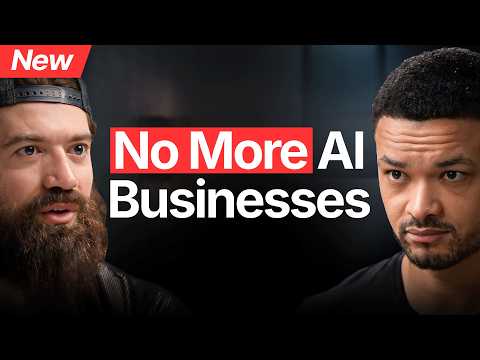
Entrepreneur Alex Hormozi speaks with host Steven Bartlett about artificial intelligence, long-term company building, customer retention, decision-making, and personal resilience. Rather than building standalone "AI" businesses or spending heavily on AI automation for tasks that are not actual bottlenecks—citing an example of a business spending roughly $350,000 trying to automate virtual assistant data-cleaning work when customer demand was the real constraint—Hormozi argues that founders should use AI to improve core operations and ask whether it actually increases profit, while solving real customer problems rather than leading pitches with hype.
Discussing an era of cheaper, more abundant intelligence and automation, Hormozi suggests that durable value centers on stakes, responsibility, judgment, and risk/upside ownership—someone has to make decisions, bear accountability or loss, and stand behind real-world actions (pointing to live/real-world examples such as sports, competitions, or high-stakes real-world events where genuine outcomes matter). He also cautions against outsourcing hard thinking and decision-making to AI models—noting that AI can be sycophantic or inconsistent across prompts/models—arguing that exercising your own judgment keeps your thinking sharp.
Long Horizons, Foundations, and Customer Stickiness
Using a block-tower and building-foundation analogy, Hormozi and Bartlett contrast short-term thinking with long-term thinking (such as 5-, 10-, or 50-year horizons or building to last, echoing ideas around building the "factory" or core infrastructure rather than just chasing quick exits or premature scale). A path that quickly reaches $1 million or $10 million is not always the same as the foundation required to reach $100 million or beyond; rushing up without a sturdy base can lead to plateaus or having to step back and rebuild.
Moving from top-line growth to retention and stickiness, Hormozi compares two hypothetical companies each generating $3 million in revenue by year three: one that loses customers and must constantly acquire hundreds of new buyers at rising acquisition costs, versus one that retains existing customers while adding new ones—showing how keeping customers compounds growth and protects margins. When a founder hits a bottleneck or feels overwhelmed at scale, he recommends checking margins, offer structure, and whether low margins or underpricing—often caused by "selling out of one's own wallet" or fearing pushback—are holding the business back.
Hiring, Standards, and Navigating Uncertainty
On hiring and team building, Hormozi notes that founders often over-rely on the business to meet emotional needs or search for a single "unicorn" hire who can do everything—whereas breaking roles into distinct capabilities, setting clear standards from the top, collapsing learning curves through clear training/playbooks, and recognizing that an employee's willingness to stay or excel ties to incentives and clarity make scaling far smoother.
Reflecting on his own early leap—weighing opportunity costs (such as not attending business school / Booth), reading widely without acting at first, and stepping away from a conventional path despite family caution—Hormozi emphasizes naming the specific voices or fears of judgment holding someone back, embracing early imperfection/cringe rather than waiting for certainty, and keeping personal overhead lean early on so you can endure uncertainty. As a business grows, options and decisions multiply ("more doors"), making clarity on what you want and committing to choices—rather than staying stuck in unmade decisions or chasing every option—essential.
Marriage, Fatherhood, Grief, and Mental Toughness
Turning to personal life, Hormozi calls marrying his wife Leila the single best financial and life decision he has made—highlighting her belief in him during early scrappy days, her operational strength and loyalty to the team, and how she challenges apathy when stakes rise—while noting that relationships involve trade-offs and knowing what you truly value rather than chasing status alone. With a child on the way (Leila pregnant, four months out), he reflects on parenting: rather than getting caught up solely in uncontrollable outputs or wishing a child into a predetermined mold ("a plant is going to grow based on its seed, water, and sunlight"), a parent can focus on controllable inputs, environment, and equipping children with practical skills.
Hormozi also shares candid reflections on grief, loss, and difficult seasons: following his mother's passing—which happened roughly four weeks after a $106 million launch she got to see—and a challenging stretch around early 2025 involving multiple lawsuits and Leila's serious health/colon recovery (alongside reflections on mortality, aging, and quotes/lessons from figures like Arthur Brooks, Albert Camus, and Bill Ackman). He breaks down how he evaluated his own response across fortitude (how much hardship it takes to shift behavior), tolerance (how low you drop), resilience (how fast you recover), and adaptability (whether you come back stronger), explaining why he rejected the idea that suffering proves love, kept up daily habits/controllables that helped him feel steadier, and treats feelings like weather—recognizing that a rough or "bottom 10%" day does not mean his whole life or business needs to be torn up.
Closing with a look at his books (the $100M series) and his YouTube competition series, Hormozi answers the closing question about facing a world with superintelligent AI by pointing to real-world proof, trust, and distribution on the business side, and reflecting deeply on what it means to be human and why we are here on the personal side.
Full Transcript
00:00I do a $106 million launch. My mom got
00:02to see it, which is really cool. She
00:03dies 4 weeks later.
00:06It was just like, how am I supposed to
00:07show up right now? So, I write these
00:09tweets as notes [music] to self.
00:11>> I had never heard you talk like that
00:13publicly before.
00:14>> Yeah. I'm like, what do I need to hear
00:16right now? And I was like, I will write
00:17that, which is like, I just have to keep
00:18fighting. And people [music] will judge
00:20how much you love someone by how much
00:21you choose to suffer. I don't think the
00:23person that you lost probably wants you
00:25to suffer. One of the lessons that I've
00:26learned from an entrepreneurship
00:28perspective translated into life is we
00:30[music] will get these moments of
00:31dissatisfaction or discomfort and be
00:32like, I'm life sucks. I need to change
00:35something. But my emotional discomfort
00:37is not an adequate reason to change what
00:38I'm doing. And so, there's all these
00:39other skills that are still required to
00:41be successful in business. But if I can
00:42compress 14 years of business advice and
00:45the first thing I'd say is you have to
00:46decide whether you care more about your
00:47future than what other people think
00:48about your future. Like, someone's
00:50version of you has to die because
00:52everything in the very beginning of
00:53entrepreneurship comes down to one
00:53thing, which is fear. And it makes sense
00:55to be afraid. It's because we want
00:57certainty. But the only way to know is
00:59to start. The second thing I've learned
01:01is that the fastest way to build a $10
01:02million business is not the fastest way
01:03to build a $100 million business because
01:05focus and [music] patience are the two
01:07enduring competitive advantages because
01:09they're so anti-human. And so, this is
01:11where entrepreneurs will skyrocket. And
01:12I'll unpack that concept.
01:14>> So, how are you thinking about your
01:16business in a world of AI?
01:17>> I'm a big AI advocate, but people are
01:19using AI in the wrong places. Like,
01:21outsourcing thinking and decision-making
01:22to AI is a really bad decision because
01:25you will just get dumber. This is the
01:26best asset I've got for now. So, I want
01:28to keep it as sharp as I can. Finally,
01:29this is like the the absolute raw truth
01:31I could possibly give, which is the
01:32single best financial decision that I've
01:34ever made. And that is [snorts]
01:38>> This is super interesting to me. My team
01:40gave me this report to show me how many
01:41of you that watch this show subscribe,
01:43and some of you have told us, according
01:44to this, that you are unsubscribed from
01:46the channel randomly. So, favor to ask
01:48all of you, please could you check right
01:50now if you've hit the subscribe button.
01:51If you are a regular viewer of this show
01:53and you like what we do here. We're
01:54approaching quite a a landmark on this
01:56show in terms of a subscriber number.
01:58So, if there was one simple, free thing
02:00that you could do to help us, my team,
02:02everyone here, to keep this show free,
02:04to keep it improving year over year and
02:06week over week, it is just to hit that
02:08subscribe button and to double-check if
02:09you've hit it. Only thing I'll ever ask
02:10of you.
02:11Do we have a deal?
02:12If you do it, I'll tell you what I'll
02:13do. I'll make sure
02:15every single week, every single month,
02:17we fight harder and harder and harder
02:18and harder to bring you the guests and
02:19conversations that you want to hear. I
02:21stayed true to that promise since the
02:22very beginning of The Diary of a CEO,
02:24and I will not let you down. Please help
02:26us. Really appreciate it. Let's get on
02:28with the show.
02:29>> [music]
02:33>> Alex, I I feel like we have to start
02:35with
02:36AI.
02:37Because it is front of mind for both, I
02:40think, my audience, but also for
02:41entrepreneurs that I speak to at every
02:43step in the journey, whether they are I
02:45was with Adora, who's the CEO of Uber
02:47the other day, um in New York, and he
02:49that's what the conversation was about,
02:50AI. But then I speak to startup founders
02:52who are trying to build a software
02:53company and can't find a moat that is
02:56defensible. Those conversations are
02:57about AI. What is your How are you
02:59approaching this as an entrepreneur?
03:01>> How can we use AI to do the things that
03:03are the the normal functions of the
03:04business at a way better, way faster,
03:06etc. What I'm seeing a lot, especially
03:08with founders or people starting out, is
03:10they're using AI to do a lot of dumb
03:12things really fast.
03:15And they're trying to build companies
03:17that the models are going to swallow up
03:18pretty much immediately anyways or
03:19already have for super users, and it's
03:21just going to like become easier. And
03:24the question that I would ask for the
03:25entrepreneurs who are, you know, AI
03:27maxing right now, and it's again, I
03:28think it's very good to adopt new
03:29technology, is are you making more
03:31money?
03:33Just the very simple, are you making
03:35more money now? And
03:37even though you're token maxing
03:38>> [laughter]
03:39>> and spending all this money on tokens,
03:40like, are you making more money? And I
03:42had a business I looked at the other
03:43day, they had 11 VAs that were doing, I
03:45can't remember, some sort of like data
03:47cleaning work.
03:48>> VAs?
03:48>> Yeah, virtual assistants. So,
03:50low-skilled labor overseas that was
03:52doing work, and I think it was something
03:54in the neighborhood of like $11,000 a
03:56month is what they were paying for these
03:5711 VAs. And they were doing a good job
03:58and it all worked.
04:00And they then spent $350,000
04:03to try and create an AI system that
04:06would replace what these 11 virtual
04:08assistants were doing. But that means
04:10they spent three plus years of costs on
04:14what these 11 virtual assistants were
04:16doing
04:17and it wasn't even the constraint of the
04:19business.
04:20It was just a process they could
04:21automate, not that they should automate
04:24it because it's not the thing that's
04:25limiting their growth. And so they still
04:27need more customers. And that wasn't the
04:28thing. This was like part of their their
04:30quote process or something, but that
04:31wasn't the limitation. They didn't have
04:32enough demand.
04:33>> Mhm.
04:34>> People are using AI in the wrong places.
04:37They're trying to start AI businesses
04:38when they shouldn't start AI businesses.
04:40They should use AI in their business.
04:42They're trying to advertise as AI
04:43businesses when you should just
04:44advertise the thing that your customer
04:46cares about, which is the solution to
04:47their problem, the outcome. None of
04:49that's changed but because you got
04:50really excited about it. You think your
04:52customers are going to be excited about
04:53it, but most people are a lot of people
04:54are afraid of AI.
04:55Um so it's not necessarily even a
04:56positive and it's not making you more
04:58money, which is the final question.
05:00>> When you hear listen to someone like
05:01Elon Musk, he says that work will become
05:02optional
05:03>> Yeah.
05:03>> in in the in the future. And I sat here
05:05with a couple of experts on AI. They
05:07>> Yeah.
05:07>> They kind of explained to me what it is.
05:09And from a very simple simplified
05:10perspective, this machine that has these
05:12neural nets in it which have lots of
05:14parameters, basically connections like
05:15the human brain does. And when they
05:17train it, the parameters become
05:19reinforced the the ones that made the
05:21right decision and the ones that made
05:23the wrong decision are like basically
05:24cut out. I'm I'm going to simplify this.
05:26These
05:27brains, these digital brains are getting
05:28bigger and bigger and bigger. Um it's
05:30it's like almost inconceivable to me
05:32based on what they've said to me, these
05:33AI experts, that at some point it isn't
05:35able to do a lot of the cognitive work
05:38that people are currently doing. My
05:40question really here is like where does
05:42the value it remain in a world where
05:43intelligence
05:45is cheap
05:47>> Yeah.
05:47>> and abundant and um higher, one could
05:50say, and also in a world where robotics
05:52are coming over the horizon, too. Like,
05:54where is the value?
05:55>> I think stakes. For example, AI can give
05:58all of the recommendations in the world,
05:59but someone has to own the decision.
06:01>> Mhm.
06:01>> And so, as of right [clears throat] now,
06:03maybe it will in the future, AI isn't
06:04isn't a citizen of any, you know, any
06:06country. It doesn't pay taxes. And so,
06:07somebody has to be responsible.
06:09>> So, liability.
06:10>> Yeah.
06:10>> Yeah.
06:11>> And upside. On on on the flip side, and
06:13to take this into different domains from
06:14the media perspective, imagine Jimmy,
06:16say Mr. Beast, has a video and they're
06:18like Mr. Beast is going to replace by
06:20AI. He's not going to replace by AI.
06:22Because
06:23if he had a video that said $5 million
06:25and the $5 million wasn't real and the
06:27Lamborghini wasn't real,
06:29there'd be no stakes.
06:30>> Yeah.
06:31>> Like, chess, right, has become more
06:33popular now than it's ever like than
06:34it's been in recent history.
06:36But, robots can beat humans at chess.
06:38>> Mhm.
06:39>> But, no one cares.
06:40>> I think about the F1 as well. You'd
06:41still want Lewis Hamilton in the car.
06:42You take him out of the car, you stop
06:43watching F1.
06:44>> Right. So, humans want stakes. And so,
06:48there's the compensation side of it,
06:49which is that somebody's going to be
06:50responsible. Someone has to risk the
06:51money. Somebody paid for the tokens.
06:52Someone owns the LLC. Someone is is owns
06:54this. And so, there is value in the
06:56judgment and the assumption of risk and
06:59upside.
06:59>> Mhm.
07:00>> Which can be money or just the
07:01responsibility.
07:02From a media perspective, we still have
07:03to introduce stakes into the into the
07:05show. Now, of course, there's going to
07:06be the fictional. They're going to be
07:07much harder hit. But, if you're trying
07:08to do a reality TV show,
07:11the real part has to be there.
07:12>> One of the things that I find really
07:14interesting about you is you spend a lot
07:15of time thinking. And in a world of
07:17artificial intelligence, a lot of people
07:19are now deferring their thinking to
07:21these frontier models like ChatGPT or
07:23Claude or Gemini or whatever. And
07:26we've spoken about this before, but one
07:27of the things we both agree is that
07:28knowing the right questions to ask,
07:29clarity of thought, critical thinking,
07:31making the decision is going to be one
07:32of the things in the world of AI that's
07:34critically important. So, my question to
07:35you is like, how are you having good
07:37ideas, cultivating good ideas, and
07:39giving your space your sort of mental
07:40space to be able to think about
07:43problems.
07:44>> Mhm.
07:44>> What's your practice?
07:45>> Oh, I'll take this from two different
07:46angles. So, first is I think outsourcing
07:49thinking to AI as of right now is still
07:51a really bad decision. If you
07:53It's like I think anybody who's used AI
07:55for any period of time knows that you
07:56can get it to agree to anything
07:58and that's frightening when it comes to
08:00making decisions. And so, every time I'm
08:02like, you know, I think it's got a
08:03little bit better. I'll just give it a
08:04like a really obvious decision to make.
08:06I'll go, "Okay, let's open up uh Claude.
08:08Let's open up OpenAI. Let's Let's open
08:09up all of them up and I'll ask the same
08:11question to all three and they're just
08:13all over the place. And so, I'm like,
08:15"Okay, this is still back to my trash
08:17can, right?" Number two is that if you
08:19do delegate your decision-making to it,
08:21you get dumber. Now, there's all this
08:23research from Shreyas that people on the
08:24podcast have talked about it and it's
08:25like, I for sure like this is the best
08:27asset I've got for now. So, I want to
08:29keep it as sharp as I can. Do not
08:31delegate the hardest work you have the
08:32hardest thinking work you have because
08:34you will just get so weak so fast.
08:35>> A new idea that's sprung into my mind
08:37over the last I'd say three to four
08:39months that I've kind of been chewing
08:40with is this idea of what happens when
08:42you go long.
08:44>> Mhm.
08:44>> So, long-term thinking and how you build
08:47differently today if you just extend the
08:49time horizon and then how you can like
08:51beat competition just by like instead of
08:54thinking in terms of okay, you know,
08:55what founders they all always think in
08:56terms of five years and then exit. But
08:58what happens if you think in terms of
08:59like 50 years? What are the different
09:01decisions you make in terms of
09:03the foundational blocks?
09:04>> Yeah.
09:05>> And this is why I have these blocks cuz
09:06I saw you do something on YouTube with
09:07some blocks before.
09:08>> Mhm.
09:08>> Could you explain this idea of sort of
09:09long-term thinking in terms of
09:10foundations?
09:11>> We do this exercise in person with
09:13entrepreneurs cuz I think it's so
09:13powerful, which is if I were to say,
09:15"Hey, build me the tallest tower using a
09:17series of blocks."
09:19If I say, "You have 5 seconds."
09:23You're going to You're going to You're
09:24You're You're right here, right? And
09:25that's that's all you got. You're like,
09:26"Oh, it's time. Hands off."
09:28If I said, "Okay, now let's assume we
09:29had a little bit more blocks than I
09:30could build in in 5 seconds." And I
09:32said, "Okay, what if I said you had 5
09:33minutes? Would you build it
09:34differently?" What if I said you had 5
09:36days?
09:37What if I said you had five years and
09:38you have unlimited blocks?
09:39>> Right.
09:40>> Yeah.
09:40>> And so what happens is the foundation
09:42completely changes based on the height
09:43of the building because of the time
09:45horizon you're thinking in.
09:46>> Yeah. I had a mentor tell me this um a
09:48long time ago that like really stuck
09:49with me, which is
09:51the fastest way to build a $10 million
09:52business is not the fastest way to build
09:54a $100 million business.
09:56>> Well, even in the fastest way to build a
09:57million dollar business is not the
09:58fastest way to build a $10 million
09:58business. Like you could probably build
10:00a one-person agency to a million dollars
10:02a year pretty quick.
10:04>> Right. It's just like it's just you
10:06could do it really quickly. Getting to a
10:07hundred though, you you think about it
10:10differently. You would And so I think um
10:13to your point, one of the still
10:15outstanding competitive advantages that
10:17you can have as an entrepreneur from a
10:18thinking perspective is just thinking
10:19longer.
10:20>> Yeah.
10:21It's really been from the mindset of
10:22It's funny cuz when I start thinking
10:23about Do you know why it is? It's
10:25because I told myself in this season of
10:27life
10:27>> Mhm.
10:28>> that I was going to do the business that
10:30I'm running now, which is our holding
10:31company called steven.com, forever. And
10:33I immediately noticed that I made a
10:34different set of decisions. I started
10:36thinking about the factory, I called it,
10:38which is you know, Elon's example of
10:40it's building a prototype is easy,
10:41building the factory that builds the
10:43cars is 50x harder. I started obsessing
10:45over the factory, which in in part in
10:47this analogy could also be seen as the
10:48foundations that we lay
10:50>> Mhm.
10:50>> to make this durable over the long term.
10:52And then speaking of Elon, I look at the
10:54decisions he made with both SpaceX,
10:55which I'm an investor in, and Tesla,
10:58where he was like, you know, I could
10:59have bought the batteries from Ford, but
11:01I'm going to make a completely new
11:02battery from scratch. Do you know? Um I
11:04could have used other people's
11:05electricity but I'm going to build the
11:07entire charging network across the
11:08United States from scratch.
11:10And this is someone who's thinking long
11:11term. And what happens then is they have
11:13the most durable moat
11:15>> Yeah.
11:15>> seven years from now.
11:17And and that's you So this is that
11:19becomes the value of the business. And
11:20actually it was all a byproduct of just
11:21thinking over a longer time horizon.
11:24Entrepreneurs and startup founders, as
11:25you know, we like rush to like get the
11:27exit, raise as much money as we can.
11:29>> foot, yeah.
11:29>> And it looks like you're you're in an
11:31unstable building there.
11:32>> Yeah.
11:33>> It looks like that.
11:34>> Strong wind, right?
11:35>> [laughter]
11:36>> I could blow that over.
11:37>> Even during the exit process, if it's a
11:39fast, you know, company, it's like
11:41you're kind of like, "Just please stay.
11:43Just everything stay fine. No one
11:46leave." You know, like no big accounts
11:48go away. Like you're just like holding
11:50your breath for 6 months and you're
11:52like, "Please [laughter] just go
11:53through." And then if it goes down to
11:55this for like
11:56a week or two and they're like, "Hey,
11:57why are the billables down?" You're
11:58like,
11:59"No, it's a it's a momentary blip. It
12:01was expected. It was actually in our Did
12:02I not send you the update before
12:03>> [laughter]
12:04>> It's a whole thing."
12:05Um and I'll do it with the drawings cuz
12:06it might be it might be a little bit
12:07easier, but like
12:09if you were to build a 100-story
12:11building,
12:12you'd have to dig way deeper. You'd have
12:14to have a much You'd have to build with
12:16different materials going up. And so
12:18there's 100 decisions that get made that
12:21if you're doing 100 stories versus one,
12:24you [clears throat] would you choose
12:24differently. And so where it gets really
12:26tough is that people will they want to
12:28have it all. And so they'll say, "I want
12:30to have the speed of building a
12:31one-story building." But then they get
12:32to one story and say, "Well, actually I
12:34I want to get I want to have a 10-story
12:35building." But the foundation wasn't
12:37right. And so this is where
12:39entrepreneurs will they'll do this.
12:41They'll they'll skyrocket here and then
12:43they and then they plateau.
12:44>> Mhm.
12:44>> And then [clears throat] sometimes,
12:46unfortunately, the correct step is that
12:47you have to take two steps back, rebuild
12:49the foundation, and then it goes up
12:50again.
12:51>> Mhm.
12:51>> And so I think
12:53to your point, focus and patience are
12:56the two enduring competitive advantages
12:58because they're so anti-human.
13:00>> Yeah, so anti-human. So anti-Instagram.
13:03I've got no announcement to make this
13:04month because I'm doing boring
13:08Like hiring.
13:09>> Like Bezos. Like
13:10the decision I still think about this.
13:12Like the decision that he made that he
13:13was just like, "I'm going to have a
13:15logistics company be my competitive
13:18moat." He's a
13:20like he started as a bookstore online.
13:23And to go from there to like, "No, we're
13:24going to own the trucks and the
13:26warehouses and be better at warehouse
13:28and delivery than anyone else.
13:31That's what we're going to do with our
13:32online internet business. Like just but
13:34like who can unseat Amazon right now?
13:37Really tough.
13:38>> What's interesting as well is that is
13:39that particular moment now where the
13:41entrepreneur is they they come to people
13:43like me and you in the street and they
13:44say
13:46they are can't get past your bottleneck.
13:48>> Yeah.
13:49>> What is it that they should have done?
13:50So many entrepreneurs come up to me they
13:51might hit I don't know 500k revenue a
13:52million revenue and they come up to me
13:53and they go I don't know what to do how
13:55do I get to 10 million from here?
13:56>> Yeah.
13:57>> And I think in part what you're saying
13:58is they they should have made a decision
14:00earlier on to build a slightly different
14:01type of company from zero.
14:04>> I'll say what the million dollar
14:05business owner is missing when they're
14:06trying to get to 10 is what they would
14:08have done differently is they would have
14:10stayed longer in the product market fit
14:12phase or trying to make sure that the
14:14customers who come in keep wanting to
14:16spend money with them which they either
14:17do periodically so like if you buy a
14:19soda that you like you keep buying it
14:21it's not like you're on a subscription
14:22but you just buy it regularly. On the
14:23other hand there's subscription revenue
14:25which is truly recurring like a your
14:27Netflix subscription whatever.
14:29But they know that when that customer
14:32comes in contact with the business
14:33they're going to stay and that money's
14:34going to keep going which is what allows
14:35it to stack. And so if we think at the
14:37most basic level if every time you get a
14:39customer they never left then the
14:41business would do nothing but grow. It
14:42would [clears throat] either stay the
14:43same or it would grow whenever you get a
14:44new customer it just keeps growing. And
14:46the difficulty of get the the the one
14:48million dollars owners that getting to a
14:49million dollars you can do really
14:50quickly or 10. And I know that the the
14:52the world is like I can't believe that I
14:53promise you you can do it if you just
14:54learn enough skills. Um but that can
14:56happen really quickly because it just
14:57doesn't take a lot of moving parts to
14:58make it happen. Getting to 100 or
15:00getting to a billion dollars revenue I
15:01haven't gone to a billion yet but I I
15:03feel confident I know what we need to
15:04do. The million dollar entrepreneur is
15:06trying to fit a billion dollars of new
15:08sales in in one year.
15:09>> Mhm.
15:09>> [clears throat]
15:09>> And that's the problem is that at the at
15:11the end of next year because all the
15:13customers they signed up to make their
15:14million dollars are gone because
15:16they aren't good enough they have to go
15:18back to the market market and sell and
15:20get another million dollars of
15:20customers. So they think oh if if I if I
15:22want to get to $2 million a year, I have
15:24to go sell twice as many customers."
15:25Which is true. But, if we had to compare
15:27two companies, let's say we have company
15:29A and company B. All right, we got
15:30company A and company B. They both are
15:32selling 100, you know, new widgets a
15:35year. Okay.
15:37Let's say company B loses all of the
15:40100, but they want to double because
15:42it's an entrepreneur. He's like, "I got
15:43to grow." And so, he sells 200 people
15:45year two. Well, then let's say he's got
15:47$2 million in revenue and he's got $1
15:48million revenue here. And let's say year
15:49three, uh he sells 300 units because he
15:52lost all 200 again because he has no
15:54stickiness. And so, he makes $3 million.
15:56Okay, cool.
15:57Now, [snorts] let's say this company A
16:00sells 100 year one, they make a million
16:01dollars. They keep all 100 customers.
16:03Okay? But, let's say that that company
16:05keeps the same number of people they're
16:08selling new. So, 100 new customers come
16:09in this year, but they keep their old
16:11100. So, now they have also have 200
16:13customers and do $2 million. And then
16:15year three, they keep their same 100 and
16:18then the 100 from year two. So, now they
16:19have 300 total customers because they
16:20got 100 new. And they have $3 million.
16:22So, both of these businesses on paper
16:26your entrepreneur friend comes to you
16:27and says, "Hey, I've got a $3 million
16:29business
16:30and I've got a $3 million business.
16:31Which one do you invest in?"
16:32>> [clears throat]
16:33>> Now, you and I do this every day and
16:35we're like, "All day we do [snorts] this
16:36one, not this one." Because next year
16:39he's got to go and sell 600 new
16:41customers. Now, where this gets you can
16:43start seeing this in the financials
16:44because
16:45I can tell you that the cost of getting
16:46300 new customers costs significantly
16:48more than the cost of getting 100 new
16:49customers and having 200 customers that
16:51are existing and still paying you. And
16:53so, you're going to see that in the
16:54bottom line getting compressed. And this
16:56is where, you know, growth at all costs
16:57becomes a problem.
16:59But, for this entrepreneur, he spent the
17:01time to figure out how to get all 100
17:04customers to stay. Now, if he encounters
17:06your distribution or my distribution,
17:08and then all of a sudden we say, "Great.
17:10Now, I know that I can bring this thing
17:1110,000 new customers." Then this thing
17:13becomes a billion dollar business
17:15because we solved the most important
17:17part first, which is that the revenue
17:18stays. And so, when people build in a
17:20rush, they don't build a good enough
17:21thing. And so, as a result, you scale
17:23really quickly, and this is where
17:24knowing marketing and sales can be
17:25dangerous because the better you are at
17:27marketing and sales, the faster you can
17:28grow revenue. But you get to a point
17:30where you you have a certain velocity of
17:32sales. I can only sell 100 people or 200
17:34people or 500 or 1,000 people a month,
17:35whatever it is. And at that point, you
17:37either have to always be seeking more
17:39distribution because you have a hole in
17:40the back of your bus, but the moment the
17:42sales stop, the business craters. And I
17:44would say that that is more common than
17:46the alternative, which is that you
17:47actually have a sticky business.
17:49>> The other thing people talk to me about
17:50when they come up to me in the street,
17:51when they hit that moment when they're
17:52doing about a million in revenue, is
17:53they say, "You know, my customers love
17:55me. They keep coming back, but I've run
17:57out of time, basically."
17:58>> Yeah. This is an interesting one because
17:59a lot of times, if I have the same
18:01response where someone says, "Hey, I'm
18:02running out of time," the first question
18:04I'll ask is, "What's your margin?"
18:06If they have really thin margins,
18:09they can't afford to get help.
18:11That's the symptom, but not the root
18:12cause. The root cause is either that
18:15their offer is incorrect in that what
18:17they're offering, the price and the
18:19terms of their delivery, are too low
18:21compared to each other. You're offering
18:22too much for too little.
18:23>> Mhm.
18:24>> [clears throat]
18:24>> Or you don't have a marketing or sales
18:26motion that allows that value to be
18:28demonstrated to someone so they'd be
18:29willing to pay a premium.
18:30>> On pricing then,
18:32how do you think about pricing? Is it a
18:33subjective thing or is it an objective
18:35thing? I Do I go look at the market and
18:37see what everyone else is charging and
18:38then decide that? Or is it what I feel
18:40like I deserve?
18:42>> [laughter]
18:42>> I think what we feel we deserve matters
18:43the least in that in that
18:45I think it's all about what the customer
18:46is willing to pay. And so, one of the
18:48hardest parts for for newer
18:49entrepreneurs is they sell out of their
18:51own wallet.
18:52>> What do you mean?
18:52>> And so, it's like if I have somebody
18:53who's really good at fixing cars,
18:55they're like, "Well, it's not that hard.
18:56You just, you know, do a little screws
18:57here." Like, I wouldn't I wouldn't pay
18:59anybody for that. Like, I do it for
19:00free. It's like, "Yeah, but I don't want
19:01to do it, and I would pay you a lot to
19:03do it cuz I don't want to fix my car."
19:05And so, because it's been easy for you,
19:07you think it's easy for everyone, and
19:09because you think it's easy for for
19:10you're not willing to charge a lot for
19:11it.
19:12>> Mhm.
19:12>> And so they get into this vicious cycle
19:14of undercharging and having not enough
19:16margin and then as a result having to do
19:18more of the work and then if they get
19:20more work coming in, they don't want to
19:21say no. And so then they basically fill
19:22up their entire plate so they have no
19:23excess capacity but then they can't they
19:25don't have the time to train anyone,
19:26they don't have the time to interview,
19:27they don't have the time or or the or
19:28the cash, right? To to afford the next
19:30person. And so usually when someone's
19:33like, "I'm overwhelmed." If I say, "Do
19:35you have a lot of margin?" Then either
19:38yeah, you're running 70% margin, dude.
19:39Like hire some help. If they don't, then
19:42it's two or three steps earlier where
19:43the offer's wrong, the sales motion's
19:45wrong, which is typically the they're
19:46mispriced.
19:47>> Do you get it all the time where people
19:48say to you, um you know, Alex I tried to
19:50hire someone and they up and so I
19:52can't I can't trust anybody to do it as
19:53well as I can and the clients love me.
19:56>> I think it's ego.
19:57>> Yeah.
19:58>> I think we want to be special and I
20:00think we like to be needed. And I think
20:02that
20:04it is not the business's job to solve
20:06your emotional needs.
20:07>> Mhm.
20:08>> The business's job to serve the
20:09customers.
20:10>> Mhm.
20:10>> And so
20:11we are not as unique as we think. If you
20:13could go back in time you could teach
20:14yourself in a tenth of time because you
20:15know all the mistakes that you made and
20:16the right things that actually ended up
20:17working. So it's like great, instead of
20:19taking ten times as long as you did it
20:20to learn it the first time, go back as
20:22though you were teaching it the right
20:23way
20:24to somebody else. And so you can
20:25collapse the time it takes to to teach
20:26someone how to do the job. And most
20:28times
20:29what founders are looking for is a
20:31unicorn, right? They're like, "Okay, uh
20:34I have two employees and I do everything
20:37and so I need to hire someone who's just
20:38going to be like me and just do
20:39everything else." It's like it's not
20:40going to work that way. And so I use
20:41this little analogy that I like, which
20:42is so we have our our horn of the
20:44unicorn. This is going to be so bad. All
20:46right, here we go. So we've got our
20:47>> [laughter]
20:49>> All right, here we go.
20:51We'll give it a little hoof, maybe a
20:52little some tail. Here we go. And here
20:54we go. And we need to have some some
20:56sparkle, right? Cuz it's a unicorn, it's
20:58special. Okay, it's going to be a little
20:59donkey there but they're trying to
21:00replace themselves with a unicorn but
21:01there aren't any unicorns and we know
21:03this. And so they go through interview
21:03and interview interview and then they
21:04never find anybody cuz they can't find a
21:06unicorn. But if you're like, "How do I
21:08find an animal that's got a horn?"
21:10Well, you can go find a rhino. Okay,
21:12I've got a rhino, they've got the horn.
21:14It's like, "Okay, and then I need a
21:15horse." Well, I can go find a horse.
21:17And then I got to find the sparkle. So,
21:19I get some fireflies for the sparkle,
21:21and then I'll get a horse for the horse.
21:22And so, just like that, instead of
21:23saying, "Oh, I someone has to live my
21:26exact life and have gone through the
21:28exact exact same trial and tribulations
21:30to figure out all the unique things that
21:31I know." It's like, "No."
21:32>> Mhm.
21:33>> They try to find in one person what they
21:34can more easily find in three.
21:35>> This is relationship advice as well,
21:37isn't it?
21:37>> [laughter]
21:38>> Right. Yeah, demanding your your partner
21:40be all things to you.
21:41>> Yeah.
21:42>> Your coach, your you know, your your
21:43guru, your therapist,
21:45your biggest cheerleader.
21:47>> Yeah, it's exactly that. It's it's just
21:49and I think in some ways there's an ego
21:50element that I think is very
21:51reinforcing, which is that I'm so
21:53special no one can do what I can do. And
21:54I think that's a very attractive lie
21:56that we like to believe.
21:58>> I guess there's also inherent in that
22:01insecurity and fear
22:03that you see in these early
22:04entrepreneurs, that if I hire another
22:06person, I now have the responsibility of
22:08paying them. Right now, it's me, it's
22:10safe, I can control this.
22:12But, if I bring on other people, they've
22:13got mortgages and families, so now now
22:16it's terrifying. So, a good way to
22:17justify my fear to myself is by saying
22:19that I tried I can't trust anybody, I
22:21couldn't find anybody good.
22:22I guess it's just going to be me,
22:23myself, and I.
22:24>> And I think if that's what you want,
22:27like, go for it.
22:28>> Yeah, I just like I I I think I think
22:29there's I think there's going to be a
22:30lot more solopreneurs, you know, in the
22:31in the coming future. There already are.
22:33I think it's it's a goal question.
22:35>> It's what do you want?
22:36>> What mistakes did you make when you
22:37start hiring?
22:38>> Uh, my bar wasn't high enough.
22:40>> Okay.
22:40>> I think at the most basic level, like,
22:42what is the job? Like, if you remove
22:44everything else, what survives? And I
22:46think holding the standard
22:48survives. Because if you're the one
22:50responsible, then you have to be the one
22:51who determines what is good enough.
22:52>> Mhm.
22:53>> It's my [clears throat] view that in
22:55every given department,
22:57the person who's highest up should have
22:58the highest standard. And if somebody
23:00ever gets to a point where they have a
23:01higher standard for SEO than I do, they
23:03should run it not me.
23:05>> There should be a button just down below
23:07here. And if it says subscribe, you're
23:09already subscribed. If it says subscribe
23:11bar, that means you're not yet. And if
23:13you're not subscribed, please could you
23:14do us a favor and hit that button. It
23:15helps to show more than you know. And
23:17according to the algorithm, you're
23:19someone that watches our show, but you
23:20haven't yet hit that button. Thank you
23:21so much.
23:23Well, have you seen a change in the
23:24types of questions that you're being
23:25asked because because the world has
23:27changed, people are more interested in
23:28personal branding or business or
23:29whatever else? Are people asking you new
23:31questions?
23:32>> No, actually I don't think. Yeah.
23:34>> What are the questions that you get
23:35asked?
23:36>> I get asked a lot of like, "Hey, I'm
23:38thinking about doing this this thing.
23:40What do you think? I'm thinking about
23:41starting this kind of business. I'm
23:42thinking about starting a podcast
23:43agency. What do you think?"
23:45I'm like, "It doesn't matter what I
23:45think."
23:47>> [laughter]
23:48>> I'm like and so I'll just ask the next
23:50question which is like, "Well, what have
23:51you done so far?"
23:52>> Why do you ask that?
23:53>> Well, because the answer nine times out
23:55of 10 is
23:56Well, I mean, I haven't I was just
23:57thinking about it. I'm like, "Okay,
23:59well, then nothing's happened."
24:01>> What's going on there with those people
24:02that come up to you and they say they're
24:03thinking about something, but they
24:04haven't done anything about it?
24:06>> I'm guessing that they want to talk to
24:07me about business stuff. And so this is
24:09the only business related thing that
24:10they can talk about. And so that's
24:11probably why they talk about it. Or they
24:12bring it up. Um
24:13or they want to feel like in some ways
24:15it's kind of like progressive productive
24:16procrastination or that I'm going to
24:17somehow give them one answer that's
24:19going to like finally get them over the
24:20hump of starting. But
24:23most people start because one, starting
24:25feels like this very amorphous thing.
24:27When
24:28like
24:29I was about to say like have you Has
24:31there ever been something that you don't
24:31know how to do?
24:33Well, whenever I approach something that
24:35I don't know how to do it, it always
24:36feels amorphous. It's like this big
24:38thing and I don't know where to start.
24:40Like how do like how do I grab onto a
24:41piece of it? And so having gone and
24:45attacked like these amorphous things
24:46like start a business, which actually
24:47means nothing, you have to break things
24:50down to much smaller steps of action.
24:52That's why that for me the most basic
24:53thing to start a business is like get an
24:55LLC,
24:57open [clears throat]
24:57>> a bank account. Have the ability to
24:59process money and then ask a stranger if
25:01you can do something for them in
25:02exchange for money. As soon as you do
25:04those four things, congratulations,
25:05you're a business owner.
25:06You've already beaten like 95% of people
25:09who and you've also changed your title
25:11from wantrepreneur
25:12to entrepreneur.
25:14And I think that is one of the most just
25:15like uh when you when a customer buys
25:17from you versus just consuming your free
25:18stuff, their identity completely
25:20changes. They're now a customer, which
25:21means they're far more likely to
25:22purchase uh future things from me than
25:24somebody who's not bought something.
25:25That's why, you know, ascensions and
25:26renewals are much easier than getting
25:27somebody to buy the first time, right?
25:28And so I think to the same degree for us
25:29as entrepreneurs or people who aspire to
25:31be an entrepreneur, it's like go make
25:32the first dollar. And then as soon as
25:33you have that taste of like, oh, this
25:35isn't I I actually grabbed the corner of
25:37this thing. I I I understand. I just got
25:39to get them to give me money to do
25:41something. Or I can build something and
25:43then have them buy it from me and then I
25:45have to figure out how to build more of
25:46them, right? If it's a thing. But like
25:48that's it at the most basic level and
25:49everything else is just is is confusion.
25:51>> If you could go back to the starting
25:53blocks and whisper something in Alex's
25:55ear when he was starting up,
25:57advice that would have made the journey
25:59easier, more profitable, whatever. What
26:01is what are the sort of layers of advice
26:03you would have given him at the starting
26:04blocks?
26:06>> [sighs and gasps]
26:06>> So I've actually thought about this a
26:07lot.
26:08If I went back in time and I saw an
26:10older version of myself, if he appeared
26:12in this room right now, let's say 20
26:13years from now is looking at me,
26:16my hope is that he would say nothing.
26:18Because it would mean that it worked.
26:21Now, if I if I was going back and let's
26:22say that I I I hadn't taken the step and
26:24I hadn't been able to to make the jump,
26:26what would I say in that instance? Um
26:30is you have to decide whether you care
26:31more about your future than what other
26:32people think about your future.
26:34Someone's version of you has to die.
26:38It's either your desired version of you
26:40or someone else's desired version of
26:42you. And the thing is is you're going to
26:43be with you a lot longer than they are.
26:45I think everything at the very beginning
26:47of entrepreneurship comes down to one
26:48thing, which is fear.
26:49And justified. It's It makes sense to be
26:52afraid. Like there's a lot of risk,
26:53there's a ton of unknown, there's so
26:54much stuff that you don't know.
26:56But the only thing I can also say is
26:58that it also puts you in the exact same
26:59position as every other person starting
27:00an entrepreneurship. They didn't know.
27:02The only way to know is to start.
27:05And to have faith that you will not know
27:08the way up the mountain,
27:10but as you walk up the mountain, the fog
27:12starts to clear. And the fog will always
27:14be there, but you'll always be able to
27:16see the couple steps in front of you.
27:17And so your responsibility is to only
27:19take the steps that you can see in front
27:20of you. That is it.
27:21And then once you take those steps, the
27:23next steps will become clear.
27:24And I think that's where there's an
27:26obsession with knowing the entirety. And
27:28And it's because we want certainty.
27:31We want to know that if we do all of
27:32these things it's going to work. And you
27:33don't. You want certainty from a world
27:35that will give you none.
27:36And if you're uncomfortable with that,
27:38entrepreneurship might not be for you.
27:39Yeah. But I I even say that and I almost
27:42I almost
27:43I almost regret saying that because
27:45I was so risk-averse when I started.
27:46Like people see the content now or they
27:48see you now and you're so confident and
27:50and great on podcast and like but I'm
27:52sure the first podcast you did you like
27:54look at it and you just absolutely
27:55cringe, right? I had a video that I put
27:57out that was like the first content that
27:59I made that I was like reacting to my
28:00own first content. And it's horrendous.
28:02It's horrible.
28:03But the thing is is that you have to be
28:05willing to be cringe.
28:06You must embrace cringiness. You will
28:08not be cool. It will not look good. You
28:10will suck. And everyone will know you
28:12suck. And you will know you suck.
28:14But again, it's do I care more about
28:16their version of me or my version of me?
28:18And am I willing to be a work in
28:19progress or am I unwilling to do it
28:21because I want to keep my current
28:23station in life? But the thing is is
28:25that you're at a local maximum. And
28:27there's a desire in you probably if I'm
28:29talking to my younger self to be at a
28:30higher maximum than I am right now. I
28:32feel like I'm capable of doing more,
28:34but I'm so afraid of risking this tiny
28:36little bit that I've built for myself.
28:38But the the the reality is that the only
28:41guarantee that you have and of all the
28:43paths in front of you is that you stay
28:44on the current path you will not get
28:45what you want.
28:47So
28:47>> there is a chance that you get what you
28:49want if you move, but there is zero
28:51chance if you stay. And I think those
28:53were some of the thought processes that
28:54actually got me to take action was
28:56knowing that I for sure guaranteed 100%
28:59would be dissatisfied with my life if I
29:00had not taken the shot.
29:01And then playing out plan B with
29:03excruciating detail. And I think that's
29:05also one of the big ones for fear is
29:07that like fear only exists in the vague,
29:09never in the specific. Also, so does
29:11confusion.
29:12Right? So,
29:14the fear is
29:15I'm going to do this thing and I'm going
29:17to fail. Fail's not specific. And I'm
29:19And then everyone's going to hate me.
29:21And then eventually I'm going to get
29:22ostracized and die. Like we
29:24catastrophize everything cuz we're
29:25evolutionary beings, right? We're we're
29:26we're we're mammals.
29:27But if you really think, what is failure
29:29like what does failure even mean? I I I
29:32ask someone to buy and they say no, is
29:34that failure? What if I ask another
29:35person? What if I ask 100 people?
29:37Okay, well what if I ask 100 people and
29:38all 100 people say no?
29:40Am I allowed to change what I'm when I'm
29:41offering? Yes. Okay, so you get another
29:44100 people and maybe one of them says
29:45yes. Okay, but even in that period of
29:47time where you had the 100 people who
29:48all said no to you. And let's say you
29:50quit your job and so you have no income.
29:52Okay, what are what are the options
29:54available to you? Can you talk Can you
29:55go and sleep on a friend's couch? Can
29:57you go back home with your tail between
29:59your legs? Well, it's only tail between
30:00your legs if you stop trying. If you go
30:02home and say mom and dad, I want to save
30:03up some capital so that I can I can
30:05extend my runway so that I can go after
30:07this big goal, mom and dad might be cool
30:09It might be friends. It might be or
30:10might be 10 friends going together. And
30:11And cuz I split a bedroom.
30:13So, I had a house with six people in it.
30:16Um and I split one of the bedrooms with
30:17another guy I paid 400 bucks a month and
30:19I had a mattress on the floor and I was
30:20never there. But it was just like I
30:22tried to keep my living expenses low as
30:23possible and I think
30:25one of the big ones especially is that
30:27um people are unwilling to sacrifice
30:28their short-term lifestyle and
30:30appearances in order to achieve their
30:32long-term goal and so they're handcuffed
30:34to their lifestyle.
30:34>> Mhm.
30:35>> And [clears throat] so you'd be
30:36astonished at how little you can
30:37actually live on if you try to live on
30:39little.
30:39>> This goes to back to the long-term
30:40thinking argument as well. It's just
30:42like if you think about your status in
30:4310 years versus today.
30:45>> Yes, and I'm I'm willing to take this
30:47dip.
30:49>> One thing you said was really
30:50interesting and I it's dawned on me that
30:51most people might not realize this about
30:53people like you, which is that you said
30:55there's uncertainty all the way up. Now
30:57I imagine imagine an 18-year-old
30:59entrepreneur listening to Alex Hormozi,
31:00they're going to be thinking, "Oh, he's
31:01got it everything figured out all the
31:02way up and he's no longer living with
31:03uncertainty, fear, confusion, ambiguity.
31:06He's no longer having to think hard
31:07about how to solve a problem because
31:08he's got all the answers."
31:10But actually as you described it, my
31:12head I I imagined all of these
31:14the sequence of an almost never-ending
31:16doors that all just have
31:19a cryptic message on on them. And you
31:21imagine you go through one door and
31:22there's 10 more and they all have
31:23[laughter]
31:23You you go through one and you're okay,
31:25this was the right one and then there's
31:2610 new ones that all have a vague
31:28language on them and you've got to pick
31:30which one to go through next. You go
31:31through Okay, you bounced off that one,
31:33You took an L, lost some money.
31:35You go through another one. Okay, this
31:36was the right one and then there's 20.
31:38>> [laughter]
31:38>> Actually, your optionality's increasing
31:40with more success you have. So there's
31:41more doors and more decisions to make,
31:42more uncertainty, which most people
31:44don't realize but actually as you were
31:45saying it I was thinking, "Fuck, this is
31:46exactly what I'm going through now."
31:47Like I I was up till the early hours of
31:50the morning with one of my colleagues
31:51yesterday night and we're just figuring
31:53out which door to walk through.
31:55>> So, this is really interesting because
31:57the earlier you are on your journey, the
31:58more specific the advice is.
32:01Because if you do not have a business,
32:03the first step is the same for everyone,
32:04which is you must start an entity and
32:07then you have to have a bank account so
32:08that you can exchange money and you have
32:10to have a a way or manner of collecting
32:12that cash. Now, of course you could have
32:13cash business but I would say most
32:14people use credit cards now. So you have
32:15a processor, a bank account, and an
32:17entity.
32:18It doesn't matter what business you
32:19start, that is the first step. Now, as
32:21the business grows, you have more
32:22resources, the the nature of the
32:24business is different and so the number
32:26of doors that are ahead of you are
32:27actually multiplied by a huge factor.
32:30And so right now, it's actually never
32:31easier to know what to do than when you
32:33start. And so it has nothing to do with
32:35you not knowing. Of course you know, I
32:36just We just said it.
32:38It's everything to figure out why you're
32:40not doing it.
32:41And more specifically, whose voice
32:45you're listening to that is not yours
32:47that you are afraid of disappointing
32:49or afraid of their judgment. And if you
32:51can identify that voice cuz and you
32:53actually put a name on it, it's not
32:54like, "Oh, what are people going to
32:55think?" It's not people. It's probably
32:56like two people. And if you name it,
32:58you're like, "Oh, it's just James and
32:59Betty."
33:01So, this is really real. So, one, when I
33:03was about to sell Gym Launch, I really
33:05I It was actually a very hard decision
33:06for me, super hard. Um and when I
33:09exited, one of the reasons I almost
33:11didn't exit was because there was
33:13somebody that I knew in my circle, not
33:14even like a super close friend, that I
33:16realized when I got really clear on
33:18whose voice I cared about. I thought
33:20that they didn't think that $46 million
33:22was enough money.
33:24That they wouldn't think it was legit.
33:25>> [laughter]
33:26>> I'm dead serious. No, it was It was like
33:27That was my That was my legit That was
33:28my It's like, "He's not going to think
33:29I'm legit." He's not [laughter] going to
33:30think he's not going to think I'm legit.
33:32>> It was only when I was like, "Am I going
33:34to not do this and let him control me?"
33:37Cuz that's what it is. They control you.
33:39>> Mhm.
33:39>> And I think when you say it in those
33:40terms, it feels like much heavier. Like,
33:42"I'm letting my mom or my uncle or my
33:44brother or the the coworker John control
33:46me."
33:47Because I That's how much I care about
33:49this guy's approval?
33:51I care I have to care about my approval
33:52more.
33:52>> Mhm.
33:53>> I want to say say this in more detail
33:54cuz I think it's it's important. The
33:56person that you see in front of you is
33:57not the person who who took the leap to
33:59start the business.
34:01I belabored that decision
34:04for 6 months.
34:06I had almost like a pre-canned answer
34:07when people were like, "Oh, so what are
34:08you doing in your career?" I was like,
34:09"Oh, you know, I'm consulting like to
34:10your business school and then someday
34:10start my own business." It was like I I
34:12could say it in my sleep. But the
34:14someday start my own business, when I
34:15tried to think a little bit more first
34:17principles, I was like, okay, well, in
34:18what way is this business school going
34:20to help me start a business? And when I
34:22looked at the starting salaries of
34:23business school, it was like $120,000 a
34:25year after you went to a good business
34:27school. And then I thought to myself,
34:28well, it cost me $60,000 a year and I
34:29can't make money during that period. So,
34:30I'm going to lose 120 for sure, and at
34:33the time I was making 50-60,000 dollars
34:35a year. And so, I was like, so it's
34:37240,000 dollars is my call it my
34:39opportunity cost for the in 2 years. Do
34:41I think that I can take the money that I
34:42had saved up and in 2 years get to
34:4410,000 dollars a month? I was like, I
34:46think I can do it. And so, that was part
34:48of the reason that I ended up not going
34:50to business school, and it was because
34:51of a question on the business school
34:52test. Was, how will a Booth MBA help
34:54with short and long-term goals?
34:56And I sat there for 3 days trying to
34:57answer it, and I realized I was like, I
34:58don't know if it will help my long-term
34:59goals. So, I mean, it's good that they
35:01have these questions cuz they actually
35:02forced me to answer it. Now,
35:04back to the the the 6 months. I read I
35:06got I was probably reading
35:09no joke, a book every 2 days. Cuz I the
35:11job that I had had high seasons and low
35:13seasons, and during low season I
35:14basically just read books. And they were
35:15almost all self-help books.
35:17And I got to this point after reading
35:18however many of them, that I looked back
35:20at my life and realized it was exactly
35:21the same.
35:22And I thought,
35:23"Oh, if I don't do anything, my life's
35:26not going to change."
35:27And so, I had this idea that if I just
35:28keep reading these books, somehow my
35:30life was just going to change. And that
35:32was like one of the realizations that I
35:34had. I had a friend who was also in a
35:36white-collar, you know, job like I was,
35:38and every night we'd probably get on the
35:39phone for 2 to 3 hours and talk about
35:42how we were going to start a business.
35:43And I had this I had this this IKEA
35:45carpet that I bought that was a a
35:46cowhide carpet, and the spot where I'd
35:49walk back and forth was like worn out on
35:51the cowhide because of how much I would
35:52just pace in my small uh flat just going
35:55back and forth, just talking about the
35:57ideas that I had to start a business.
36:00Every time I wanted to start it, I would
36:01tell my dad I want to start the
36:02business, and he he would be like,
36:04"Let's let's not be unreasonable here.
36:05He's like, you've got a good job. He's
36:07like, you're following the plan. You did
36:09Vanderbilt in 3 years, you had good
36:10grades, you got you're going to do 2
36:11years here, then you go to one of the
36:13top Ivy, you know, MBA schools. Like,
36:15it's you're good. Don't like, this is
36:17part of it. This is part of it, right?"
36:19I acted with such cowardice that I had
36:21to
36:23I had to drive halfway across the
36:25country
36:26before I could call my dad to tell him
36:28that I would that I had quit my job and
36:30that I was going to start a business.
36:32Because I knew that if I had done it
36:33while he was there, he would talk me out
36:35of it. Because he had already talked me
36:37out of it a bunch of times.
36:38>> Why was he doing that? I learned a
36:39little bit about his background over the
36:41last couple of days. Got some photos, I
36:42mean
36:43>> Uh
36:43That's right. The OG.
36:45>> And I think there's context in his own
36:47story which
36:48>> Yeah.
36:48>> completes the picture.
36:50>> So whatever people see of my success, I
36:52think in a lot of ways what my dad
36:53accomplished, the more I think about it,
36:56is bigger.
36:57My dad fled during the Iranian
36:59revolution, right? And then he went to
37:01go to France to become a doctor.
37:05But he didn't speak French.
37:07And so he had to go try to go into
37:09medical school and take Orgo in a
37:11language that he didn't understand. And
37:13so he failed two years in a row. His
37:15brother was like, "Go to Belgium, start
37:17fresh, go to a new place." And so he
37:18ended up
37:19getting all the way through medical
37:20school and then he met my mother in
37:22medical school and then they came back
37:23to the US. Now, his medical degree
37:25didn't transfer to the US. And so he had
37:27to get a US fellowship in order a
37:29residency or whatever, but no one would
37:30take a Middle Eastern guy who had a
37:32super thick accent who was fresh out of
37:34medical school and there was all these
37:35US-based people here. And so for two
37:37years he ran X-ray slides. He finally
37:39gets a residency and then he decides
37:41when he comes back to Baltimore, which
37:42is where my where where I'm from, that
37:44he's going to instead of join the
37:47practice that my mother had with her
37:48father,
37:49he was going to go out on his own.
37:51Which is pretty ballsy, right? He didn't
37:53have foreigner, didn't have anything.
37:55And so he asked to find out how much a
37:57construction costs for building your own
37:59surgery center and it was like $250,000
38:00then, so it was a lot of money.
38:02He didn't have that. And so he looked at
38:04all the legal requirements for what what
38:06it entails to be a surgery center. And
38:08then he went to Home Depot and built
38:10a surgery center that met all the specs
38:11and got it inspected so that he could
38:13have his own surgery center in his
38:14practice.
38:15Then right as his practice is starting
38:17to work, my parents got divorced, they
38:18changed the the locks on the door
38:20because he had like a separate thing.
38:21His patients show up and they didn't
38:23know where to go. It was an ugly
38:24divorce.
38:26And so then he's he's starting his own.
38:28And this is when he was talking to me
38:29then. So fast forward now. He's like,
38:32"I've been in practice for, you know,
38:3320, 30 years, whatever." He's like,
38:35"Those years,
38:37I didn't even think about them." I think
38:38I was like, "I feel like I'm not moving
38:40fast enough. I feel like I need to need
38:41to do these things." And he's like,
38:43"Dude, a year or two years now." He's
38:45like, "It's nothing." He's like, "When
38:46you're my age, you're not even going to
38:47You're not even remember it."
38:48>> Mhm.
38:49>> The The honest truth of the matter is
38:51that I
38:53really desperately wanted to prove that
38:55I could do it on my own.
38:56>> Who did you want to prove that to?
38:57>> I don't know. Everyone.
38:59Me, him, the world. I remember being
39:02terrified about the idea of
39:04of winning the lottery. Sounds really
39:06weird.
39:06>> [laughter]
39:07>> When I was in college, I bought a Super
39:08Bowl ticket cuz it was like a billion
39:09dollars. It was like, "Let's do it for
39:11fun." Whatever. And I And I remember
39:12having this this moment right before the
39:14the number was going to get called of
39:15sheer terror of what if I win?
39:18Because I was like, "I will never be
39:19able to prove that I I have the metal,
39:21that I can do it."
39:23And so And of course people would say
39:25that Now, if someone was to give me a
39:26billion dollars, I'm happy to use it
39:27because To be fair though, because I
39:28already have this I already have the
39:29status and the track record that I that
39:31I built this.
39:32>> Mhm.
39:32>> And this also the reason that like when
39:34I started my my business like I didn't
39:36take a loan. Like I used my own money
39:38that I had saved because
39:40I I wanted to be mine. And I knew I
39:42would know. And I think yeah, my dad had
39:44absolutely perfect intentions. He gave
39:46me what I believe to be for vast
39:47majority of people probably pretty good
39:49advice.
39:50>> Mhm.
39:50>> It just wasn't the advice that I needed
39:53for the goals that I had.
39:54>> It's an interesting thing because people
39:56like me and you make business content
39:57and we talk about entrepreneurship a
39:58lot. Um I I often wonder if we're
40:00leading some people astray in the
40:02context of some people actually should
40:04take that advice. Some people shouldn't
40:05become entrepreneurs. Um and how does
40:07one know if entrepreneurship in its
40:09broad definition is for them or not? Or
40:12like working in a company, having, you
40:14know, having a great job is for them.
40:16It's funny. We we were I was doing this
40:18show once and I said to the producer who
40:20was just off camera, I said um
40:23"Do you think I'm happy?" So, this is
40:25This is someone who gets to see who's
40:26seen me for 6 or 7 years behind the
40:28scenes every day since we were at my
40:29kitchen table. He's been there with me
40:31every corner of the world, the the best
40:32and worst of times. I went, "Do you
40:34think I'm happy?" He went, "Yes." He
40:36said it quickly. And then he And then I
40:38said, "Would you want my life?" And he
40:40he couldn't have said no more violently.
40:42So much so that it was almost offensive.
40:44>> [laughter]
40:44>> He was like, "You're having" And then I
40:45went, "Do you want my Would you like my
40:46life?" He goes, "No!"
40:48And he was like And And he was like
40:50laughing. He would not want my life, but
40:52at the same time thinks and believes,
40:54having seen me behind the scenes for 7
40:55years, that I'm happy. And in there I
40:57think you have something, which is the
40:59the sort of subjectivity of
41:01of of journey. Like, is this your
41:03journey? How does one know, listening to
41:05this now, if they should be an
41:06entrepreneur or not?
41:08>> So, I'll give a couple of frames cuz
41:09decision making's what probably both of
41:11us do with a lot of our time. So, one is
41:12what's the goal? What do I want to have
41:13happen?
41:14>> Everyone says the same things here. They
41:16say, you know, I want freedom to make my
41:17decisions. I want, you know, my
41:18financial freedom.
41:19>> then we have to be specific. And so,
41:20just like fear only exists in the
41:22specific, goals have to exist in the
41:24specific in order for them to be real.
41:26And for you to make accurate decisions.
41:28>> Mhm.
41:29>> And this is why I'm so obsessive about
41:30language and like observables and things
41:31like that. So, what is What is What do I
41:33What do I actually want to have happen?
41:35And then number two, what is that change
41:38about my actual daily life?
41:40>> On this first point, funnily enough, if
41:41I said to you freedom
41:42>> Mhm.
41:43>> and then I immediately realized that the
41:45least free person in this
41:46>> [laughter]
41:46>> room is
41:48>> Dude, this gets Okay, this is great. So,
41:50I think about this. It's the freedom to
41:52choose.
41:53>> Mhm.
41:53>> But I think people stop at freedom.
41:55There's this almost fetishization of
41:57independence and keeping your options
41:59open and and options maxing, right? For
42:02your life. But all of the best parts of
42:05life come on the other side of
42:06exercising an option and and walking
42:08through a door. But in so doing, leaving
42:11the other doors that you could have
42:12walked through behind.
42:14And so, the secret to getting a life you
42:16want is making a commitment.
42:18But you will not get all lives you want.
42:21And so, at some point, you have to sit
42:23at the precipice and you have to make a
42:24trade. And if you say, "I want this more
42:27than something else."
42:28It means I know I'm not going to get
42:30this, and I choose to say that I want
42:32this more.
42:33And I think this is where people just
42:34sit at the crossroads, and that is what
42:36takes the majority of time. Not just
42:38getting into business, but also when
42:39you're in business. People sit at the
42:40crossroads of like, "What type of
42:42company do I want to build? What type of
42:43product? And what type What What type of
42:45business do I want?" And we sit there,
42:47and I when I see people get stuck,
42:50it's almost always unmade decisions.
42:52Cuz unmade decisions can last forever.
42:53>> Mhm.
42:54>> Whereas, if you're in if you're in a
42:56trial loop of feedback, feedback,
42:57feedback, like you'll figure it out.
42:59Like you'll move.
42:59>> Mhm.
43:00>> But if you're in an unmade decision, it
43:02can sit there forever.
43:03And that's that's like the freedom to
43:06choose. We have to choose.
43:08>> Are you seeing this sort of new
43:10generation that I've grown up with all
43:12the tools to start their own business?
43:14They were in this personal brand era,
43:16where everybody can make content and
43:17build a brand and then do like panel
43:19talks for a living or sell like ads on
43:21LinkedIn. Um
43:23What What is going on here? This sort of
43:25younger generation under 30 now,
43:29keeping their options open, wanting
43:30freedom. If you compare that to say
43:32maybe my dad who, you know,
43:34one job, did that career for 20, 30
43:37years of his He did like 40 years of his
43:38life. It's a very different world we're
43:40living in.
43:41>> There are more people starting
43:42businesses than ever before. I know
43:44since COVID, there's there's at least in
43:46the US, the stats that I looked at
43:47recently, it's like there's been more
43:48new businesses per quarter. It's been
43:51growing really aggressively, at least in
43:52the US. And so, more people are starting
43:54businesses. And so, I think that
43:56lowering the cost of entry has got more
43:58people across the line. I think having
43:59more access to information has got more
44:00people across the line. But why aren't
44:03Why isn't everyone going across the
44:05line? I think there's a couple things.
44:06One is
44:08to your point earlier, I don't think it
44:09is for everyone.
44:10And so I think the issue there is one of
44:12motivation.
44:14They have too many carrots, so good
44:17things, keeping them in their current
44:19position, and not enough sticks, or bad
44:21things, getting them out of their
44:23current position.
44:24And I think I think it's a it's a Tony
44:26quote, Tony Robbins quote, which is uh
44:28the pain of staying the same has to be
44:29greater than the pain of change.
44:31>> Mhm.
44:31>> And I think [clears throat] that
44:33when that happens, and it could be the
44:35pleasure of change could be has to be
44:36greater than the pleasure of staying the
44:38same, e- equal opposite, but I think
44:39most people who are in that slice
44:41there's pain.
44:43And so you will change the moment it is
44:45more painful to stay the same.
44:47>> I've spent the last decade building and
44:49investing in companies, and so often the
44:51conversation around marketing budgets
44:52follows the exact same pattern. The
44:54budget gets approved, but then the
44:55results don't come back. And most of the
44:57time the creative pitch and the offer is
45:00fine. The problem lies with the
45:02audience. Ads reach people who will
45:04never buy or refer, nor do they have the
45:07power to sign off anything at all. And
45:09this is why so much budget gets wasted.
45:11LinkedIn Ads, a sponsor of this podcast,
45:13lets you reach them specifically by job
45:15title, seniority, company size,
45:18industry, the skills that they have, and
45:20much more. You're no longer hoping your
45:22ad reaches the right person. Instead,
45:24you're defining exactly who sees it. And
45:27LinkedIn Ads drives the highest B2B
45:29return on ad spend across all major ad
45:31networks. Give them a try at
45:33linkedin.com/diary.
45:36And if you spend $250 on your first
45:38campaign, you'll get a $250 credit for
45:41your next one. Just by going to
45:42linkedin.com/diary.
45:45Keep this to yourself. Terms and
45:46conditions apply.
45:48For the last couple of years I've been
45:49working on something that I realized
45:50every podcaster listening to this, but
45:52actually probably every creator
45:53listening to this, might just need.
45:55Podcasting is difficult for many
45:56reasons, and one of them is that these
45:58hosting platforms don't give you much
45:59information, and also because they're so
46:01fragmented, you kind of have to go
46:02through every single platform uploading
46:04it to YouTube and then taking the same
46:06big old video file and uploading it to
46:08Spotify's platform. It takes huge
46:10amounts of time and that friction means
46:12most of us don't do it. That is the
46:13problem we set out to solve and so we
46:15built something called Flight School
46:16which you can find at flightschool.com.
46:18And today Flight School is also one of
46:20our show sponsors and some of the
46:22world's biggest podcasters are now using
46:24our platform to run their shows because
46:26it gives you an edge. It saves you time.
46:29It gives you analytics most people won't
46:31typically get. It allows you to use AI
46:33to be more informed on your show and it
46:36has growth tools that other hosting
46:38platforms don't have. So podcasters that
46:39are using Flight School have this unfair
46:41advantage. So go to
46:42flightschool.com/doac
46:45now.
46:46Do you think life rewards you somewhat
46:49proportional to the hardness of the
46:51problem that you solve?
46:53>> So I think um a hard problem doesn't
46:56necessarily guarantee that it is a
46:57valuable problem.
46:58>> Mhm.
46:59>> [clears throat]
46:59>> Like if you run a marathon very hard
47:00doesn't necessarily make you more money.
47:02So like there's lots of hard things that
47:03are out there that will not turn into
47:05monetization.
47:06>> Mhm.
47:06>> The second thing is I think it depends
47:07on the size of your goals.
47:10And so if you want to be a millionaire,
47:12you do not need to solve a hard problem.
47:14You just need to do a little bit better
47:16than other businesses that are wildly
47:17under serving their customers which I
47:19promise you there are plenty.
47:21>> Mhm.
47:21>> You can just have a pool cleaning
47:22business that just cleans better than
47:24the other guy and like shows up on time
47:26and all you got to do is knock on doors
47:28and ask if they want to switch because
47:29their current company probably doesn't
47:30pay attention to them.
47:31>> One of the things that you know a lot of
47:33founders entrepreneurs are thinking
47:34about at the moment is producing
47:35content.
47:36>> Mhm.
47:36>> We're living in in in an interesting
47:37time where a kid in Mumbai or a kid in
47:39Manhattan can both produce content using
47:41LLMs at AI. They can produce videos
47:44theoretically. If you imagine any rate
47:46of improvement, they're going to be able
47:47to make videos, photos,
47:49turn out your quotes. They could use
47:51your quotes, change them a little bit
47:52and have an agent post them for them.
47:54Where is the moat in content? Where you
47:57think about if you think about supply
47:58demand dynamics, there's fixed demand.
48:00The Financial Times did a report saying
48:01that time spent on social media is
48:04starting to dip a little bit since 2022
48:06for younger generations. For older
48:08generations, it's still sort of like
48:09going up or flat, but for Jonesy's it's
48:11like starting to come down a little bit.
48:13So it's stagnant demand, tsunami slop
48:16coming in of AI content.
48:18Huge supply shock. Every unit of content
48:21itself is going to become less valuable
48:23therefore. And the algorithms are
48:25getting more violent or I should say are
48:27becoming more
48:28someone with 10 million followers can
48:29get 2,000 likes. Back in my day, like 15
48:32years ago when I started on social
48:33media, if you had a million followers
48:34you got a million a million likes or a
48:36million views should I say. What's the
48:37game of content in such a world?
48:39Everyone's everyone's making content
48:40now.
48:41>> To your point, what's the moat?
48:43Reality is the moat.
48:45>> Reality is the moat.
48:46>> I'd say the number one biggest business
48:48influencer, I think on the planet,
48:50is Elon Musk.
48:53And he happens to own the biggest
48:54business
48:55on the planet, be the richest man.
48:57Uh Jeff Bezos, huge business influencer
49:00cuz he has Amazon.
49:01Warren Buffett,
49:03probably the number one investing
49:04influencer. Like people fly around the
49:06world and when he when he talks,
49:07everyone listens.
49:09And so even if a teacher in Des Moines,
49:12Iowa,
49:13word for word quotes Warren Buffett, and
49:15let's do one better. Let's say he makes
49:16even better advice than Warren Buffett
49:18does.
49:19It's still not going to get the same
49:20views because they just forgot to build
49:21Berkshire Hathaway
49:23and have a hundred years of a track
49:25record. And so what I'm saying there is
49:28that when reality is the moat, it means
49:31that your brand is the moat. It means
49:32your reputation is the moat, which can
49:33only happen in reality. Now that said, I
49:35do think it's going to affect different
49:36types of content differently.
49:38If you're in the world of making
49:39fictional whatever stuff, then yeah, I
49:41think it's going to hit I think AI is
49:42going to hit you much harder. But even
49:44then, there's still going to be the the
49:46standard holder. Somebody has to
49:47determine that this slop is too sloppy
49:50>> [laughter]
49:51>> and that you still have to work really
49:52hard to make the AI
49:55make exactly what you want and have it
49:56at the caliber that you want it to be
49:57at.
49:58>> Have you made any changes to your
49:59content because of everything that's
50:01going on with algorithms and AI?
50:03>> Yeah.
50:05I'm focused on only doing things that
50:06only I can do.
50:07>> Mhm.
50:08>> [clears throat]
50:08>> Most people can't get
50:10hundreds of business owners to fly out
50:12in person every month that are all
50:14million-dollar-plus business owners
50:16to seek advice on real business problems
50:20at 3 million, 5 million, 10 million a
50:22year, 500K a year.
50:24Most people don't have that. And so, I
50:26can demonstrate expertise in a live and
50:28interactive fashion in a way that other
50:29people can't do.
50:31I think that
50:32live is something that I mean, AI maybe
50:34in the future we'll have some AI avatars
50:36that can go live, but at least in the
50:38short to medium term, I think live is
50:40good. I think IRL, as in like it's
50:43actually real people talking, which is
50:45we talked about the Scalar Velocity that
50:46we just launched, it's real
50:48entrepreneurs and there's stakes
50:50>> [laughter]
50:50>> involved. I think that is something that
50:52is not going to be replaced. But if we
50:55think about
50:56content on this continuum, all right?
50:58Let's make this continuum
51:00risk.
51:02When I say risk, it's the risk that a
51:03consumer has in consuming the content
51:06and executing on it. And so, if we
51:08differentiate entertainment and
51:09education, is entertainment the point of
51:11the content is to be consumed. It's the
51:12only objective of entertainment. The
51:14point of education is to change
51:15behavior.
51:16>> Mhm.
51:16>> Right? So, if that's our that's our
51:17split. Now, entertainers will get hit
51:20harder
51:21than educators will.
51:23The entertainers that have stakes
51:25involved will be able to maintain that
51:27moat by still focusing on IRL, real
51:29stakes, real stories.
51:31Now, in the education world of risk,
51:33let's put something that's really low
51:35stakes.
51:36There we go.
51:37So, we've got beauty on this side. If I
51:39have an AI influencer
51:40>> Mhm.
51:41>> who does a makeup tutorial,
51:43I don't think the risk is super high
51:44that if, you know, if the tutorial is
51:46good, that a girl's like going to not
51:49use the tip that they made in the thing.
51:51I think that's pretty likely.
51:53If you go maybe a little bit riskier,
51:56let's say I have some personal finance
51:57stuff.
51:58Well, what's the credit So, the
51:59credibility in beauty is beauty.
52:03The credibility in personal finance is
52:05do you have personal finances?
52:07Right? So, who's the number one
52:08influencer in personal finance? In my
52:09opinion, I think it's Dave Ramsey.
52:11He also happens to be I don't think he
52:12he calls himself this, but I think he's
52:14a billionaire. And he's got a massive I
52:16think he's public, $300 million a year
52:18revenue that he's done. And I think
52:20there's some other newer newer age
52:21people
52:23I think Vivian Tu is is she's a personal
52:25finance person. I think
52:27Erika Kullberg touches in this. She's
52:28the legal legal gal.
52:31Um
52:32Anyways, all this to say
52:33all of them have more credibility.
52:36Like if you just start giving out tips
52:37on how to save money, there's no
52:39credibility.
52:40Reality. There's no reality. You have
52:41nothing to back it up.
52:43Now, as you keep moving further, let's
52:44say business where if you make a wrong
52:46call, you could lose your business. Here
52:49you lose some money.
52:50Here you lose a bad day of makeup.
52:53So, the risk goes up. The riskier the
52:55higher the consequences of being wrong,
52:57the more people are going to, I think,
53:00double down on credibility of source.
53:03>> What's interesting is I also heard, as
53:04you're describing flying these 100
53:07business owners out to Vegas, is I heard
53:11scarce, hard and scarce. And I still
53:13thought a lot about these two words as
53:15sort of the pillars of my own content
53:16strategy, which is
53:18with an LLM, yeah, Kid MBA could churn
53:20out a video.
53:22But the reason why we have, you know,
53:24somewhat of a moat here still is because
53:27it is hard to shoot on nine cameras. It
53:30is hard to bring Alex Hormozi here. It
53:33is hard to get Alex Hormozi to say yes
53:35to doing this.
53:36>> [laughter]
53:36>> It is hard to get Michelle Obama or J.D.
53:37Vance to say yes to doing this. So,
53:38there's it's hard from a production
53:40perspective, but also from like to
53:42accomplish this is hard. And then what
53:44you described, I heard a lot of the like
53:46I heard hard and scarce. Who can bring
53:48100 entrepreneurs to Vegas who are all
53:51successful in their own right and and
53:52have them ask you questions? So that's
53:54great content for us to watch. It's like
53:56really impossible to to
53:57>> Very hard. If I had only had a $46
54:00million exit, I don't know if I would
54:01attract the number of entrepreneurs that
54:03that we do now. But now that we do 250
54:06plus schools, a billion dollar plus
54:08company, it's like I have credibility
54:10that
54:11the the the YouTube, the content, right?
54:14Is not like I we I still do business.
54:18You know what I mean? We have chains of
54:19brick and mortar that that we're
54:20involved in. I just don't talk about it
54:21because it doesn't it's not relevant for
54:22most people.
54:23>> Let's look at the opposite then as well
54:24just to show people what the opposite of
54:26hard and scarce or of of this approach
54:28is. What types of content should we all
54:30kind of stay away from now?
54:32>> So I think commoditized tips and tricks
54:35um when you have no again
54:37like proof is in the pudding. Reality is
54:39the mode. It's basically the opposite of
54:40that. So if you are posing, if you are
54:42pretending, if you have no proof
54:44um that you are good at this thing.
54:45Again, this is on the education side,
54:47then
54:48there's a big I call it the big Vegas uh
54:50wispy. Why should I listen to you?
54:52Right? Why should I listen to you?
54:54And if you can't answer that question
54:56for I'll say a a prospect, you know, a
54:57prospective customer within the first
54:59like couple seconds,
55:01they'll just listen to somebody else.
55:02Because the reason that credibility
55:03matters so much is that it's actually
55:05lower effort to consume information from
55:07somebody who's an authority.
55:08And so if I'm if I'm listening to
55:10somebody who doesn't have proof and I'm
55:11listening to investing advice, I have to
55:12really think like is this true? Does
55:14this make sense? If I'm listening to
55:15Warren Buffett, I don't have to think
55:16that. I'm like I'm sure he's right.
55:18Now when someone's like how do I get
55:19into this, you do what no one else can
55:21do. Well, if you are getting in, then
55:23document like document the proof of
55:26effort. So you can do you can have proof
55:28of outcome just like what we do, right?
55:31What you do.
55:32But then there's when you're starting
55:33this proof of effort. Jimmy's first
55:34viral video is him counting to like a
55:36million.
55:37It's proof of effort. When you have
55:39nothing else, you have time, you have
55:40work. If you want to make If you want to
55:42say, "Hey, I want to I want to get into
55:43into sales stuff." It's like, record
55:45your entire day of you selling,
55:48and then when you overcome something
55:49that's really good, that's real life
55:51with real stakes, clip the moment,
55:53right? And show yourself as like, "I
55:55took 22 calls today. Let me tell you the
55:57best moment." I did it I did a 12-hour
55:59day in 3 minutes. I'll give you the best
56:01moments. It's like, people want a deal.
56:04And so I think about that as a
56:05compression of time. And the reason that
56:06people listen to the people who are
56:08further ahead, who've done all these
56:09things, is cuz we can compress time. You
56:11say, "Hey, you could try and figure this
56:13out on your own,
56:14but if I can compress 14 years of
56:16business advice into 37 minutes, that's
56:19a good deal."
56:19>> Do you know what it reminds me of? 7 or
56:218 years ago, when I used to have, you
56:23know, big clients, Uber, Coca-Cola,
56:24whatever, around the world, um we used
56:26to do a lot of like social competitions,
56:27social media competitions. And I used to
56:29have this mental framework for the
56:30perfect competition. And I I I remember
56:32the day that I when I first heard of
56:34you, and you were coming on my show, and
56:35I was looking through some of your
56:36writings, and you almost had an
56:38identical framework.
56:39>> Yeah, so the the core So, each of the
56:41books has one core
56:43concept, and then it breaks down how to
56:45use it, etc. But the value equation
56:48comes down to what's the outcome,
56:51and some outcomes are worth more than
56:52others. If I can help you cut your hair
56:53versus I can get you be in perfect
56:55shape, perfect shape is worth more. If I
56:57can get you be a billionaire versus
56:58perfect shape, billionaire's worth more.
57:00Right? So, we have outcome,
57:02and then we have perceived likelihood of
57:04achievement.
57:06>> Perceived likelihood of achievement.
57:07Okay, so this is the Okay, interesting,
57:09yeah.
57:09>> It's the inverse of risk.
57:10>> Yeah.
57:11>> How likely do I think it is?
57:14And then we have on the downside of
57:15this, we have um
57:17time delay. [clears throat]
57:19How long is it going to take me to get
57:21the thing?
57:22And then we have
57:23effort.
57:26>> Is this Is this
57:28>> Is this effort and sacrifice?
57:29>> No, different.
57:30>> No?
57:30>> Yeah. So, effort is all the things that
57:32you have to begin to do as a result of a
57:35decision that you don't want to do.
57:37Sacrifice are all the good things that
57:38you have to stop doing as a result of a
57:40decision. So, if I get into fitness, I
57:42have to stop eating the stuff I like and
57:44I have to start eating stuff I don't
57:45like. I have to start waking up earlier.
57:47I can't sleep in as much. I have to be
57:49sore where I wasn't before.
57:52And so, that's my effort and sacrifice
57:53piece. The time delay is, okay, if I can
57:55get in shape in 3 minutes versus getting
57:57in shape in 3 months or 3 years.
57:59>> Okay.
58:00>> The outcome is, am I getting in shape or
58:01am I being a billionaire? And then, how
58:03likely is this to happen? Cuz on some
58:05level, like if I buy a PDF of a fitness
58:07program for $19 or I pay $3,000 for a
58:10personal trainer to train me in person
58:11three times a week, my perceived
58:13likelihood of achievement of buying the
58:14PDF versus personal trainer is much
58:16higher. Now,
58:18the effort and sacrifice actually going
58:19to be relatively fixed. But, this is the
58:21part that goes up. Now, the time delay,
58:23if done right, should also be fixed
58:24there. But, this is what explains the
58:25difference in value on a product level.
58:28But, the value equation works for
58:29everything. Just like it Just like
58:30consuming content. What's my outcome? I
58:32think I'm going to learn some about
58:33investing. How likely is it that I think
58:35he can provide value or if I consume
58:37this? Pretty high. What's my time
58:39commitment of consuming this? If I'm
58:40going to watch a 4-hour video, fewer
58:41people do it than a 3-minute video.
58:43Right? And then, you don't really
58:45actually have to do any work when you're
58:46just purely consuming content. But, if I
58:48wanted to take action as a result, then
58:49that's that's another part of it.
58:51>> But, it's still going to cost me 20
58:52minutes, which is a sacrifice. I could
58:53be watching Netflix.
58:54>> true. I think if we're using consumption
58:56of media as the thing, the effort and
58:58the time delay Basically, are we talking
59:01time delay to outcome? I'm going to be
59:02rich.
59:03Or am I talking Yeah, cuz the time is
59:05always going to be a component. What's
59:06interesting is that having looked at a
59:08zillion different offers over my life
59:10and thinking about value,
59:12the one that I think is most slept on
59:15is this one.
59:16>> How quickly they can accomplish X amount
59:18>> If you want to get into a business and
59:19just completely disrupt it, do Look at
59:21what everyone else is doing and do it
59:22half the time. You can do that in just
59:24about any business, cuz there will
59:25always be someone who's willing to pay a
59:26premium that.
59:27>> Goes back to what um Jeff Bezos said
59:29about betting on things that won't
59:30change.
59:31>> Yeah. That that like the his whole
59:33mantra around that has been one of my
59:35like I'd say one of my true pillars of
59:36like how do I plan for the future?
59:38>> Give people context on that for those
59:39that have never heard Jeff talk about
59:40that and what that means.
59:41>> So he I think I saw it as an interview
59:43that he did and they said so given X, Y,
59:46and Z, what do you think about the
59:47future? And he said, "You know, I don't
59:49really think that much about what's
59:50going to change." He said, "I spend a
59:52lot more time trying to think what's not
59:53going to change and then we bet really
59:55heavily on those things. We believe that
59:56customers will prefer cheaper prices
59:5910 years from now just as much as they
01:00:00do now. We believe that customers will
01:00:02prefer more selection to less selection
01:00:0510 years from now as much as they do
01:00:06now. We believe that if customers can
01:00:07get something in 2 hours, they will
01:00:09value that more than if it takes them 2
01:00:10days. We believe in that and we can bet
01:00:12in that." And so he just thinks about
01:00:13these elements and if we're thinking
01:00:15about the like the value equation,
01:00:18how easy did they make buying? It's one
01:00:19click. How fast does it come? It's
01:00:21almost immediate. You have a history of
01:00:23buying from them. So you This is also
01:00:25where the reviews come in. How likely is
01:00:27it? Well, if it's a five-star with 5,000
01:00:29reviews, it's pretty high. If it's got a
01:00:30one and a half and it's got two reviews,
01:00:32I'm probably not going to buy it
01:00:33>> [laughter]
01:00:34>> even if it's the same product just
01:00:35because of our perception of it.
01:00:36Right? And then the outcome is what I'm
01:00:37willing to do for the price, right? I
01:00:39think about this time delay for a moment
01:00:40because of one thing that kind of loops
01:00:42over the whole conversation of this
01:00:43point is that people will abstract the
01:00:46value of a positive future outcome to
01:00:49zero if it is long enough in the future.
01:00:51>> True.
01:00:52>> Even if it's guaranteed.
01:00:53>> Mhm.
01:00:53>> You can guarantee that you will be rich
01:00:55if you invest, you know, $100 a week or
01:00:58$200 a week, whatever, into into an
01:01:01index fund. Right? Pretty much. And if
01:01:03you do that for 30, 40 years, you you
01:01:06will be fine.
01:01:07>> Mhm.
01:01:08>> Because it's 30 or 40 years and because
01:01:10the latte is today,
01:01:12the discount basically takes it to zero.
01:01:14There's two lessons that I think that
01:01:15are really, really hard to learn. Um I
01:01:17think um Williamson talks about this
01:01:19with like unlearnable or unteachable
01:01:20lessons, things like that. Lessons that
01:01:22are difficult to observe unless you go
01:01:24through them. One of my One of the guys
01:01:26who worked for me, he said, "You know I
01:01:27consumed your content for, you know,
01:01:28years." He said, "But
01:01:30seeing you at the office at 4:00 a.m.
01:01:33every day,
01:01:34when you don't need to do this at all,
01:01:37the consistency of it." He's like, "I I
01:01:39don't see that in the content. I mean, I
01:01:40I see the output of that."
01:01:42And one of the things with consistency
01:01:44is that you need to be consistent in
01:01:45order to witness consistency.
01:01:48Like, you can't even You can't even
01:01:50observe Like, even if I did a time lapse
01:01:52that takes 10 seconds of me doing it,
01:01:54you still don't perceive it. So, there's
01:01:56there's the consistency piece. And I
01:01:57think the other one with it with regards
01:01:59to the long-term component is patience.
01:02:03Yeah, also to be to fair, focus, because
01:02:05um Sharon, my partner, says this. He
01:02:07says, um "People only see the choices
01:02:09you made, not the options you had."
01:02:11>> Mhm.
01:02:12>> And so, you can't really witness focus.
01:02:15You just see winning.
01:02:16>> Mhm.
01:02:17>> And so, to the same degree with
01:02:18patience,
01:02:20again, you only see the win. Like, if
01:02:22you look at a marathon, people are there
01:02:23at the beginning, they're there at the
01:02:24end. No one's here in the middle.
01:02:25>> Yeah.
01:02:26>> Cuz it's the only fun part. The content
01:02:28of a marathon would be the the intro and
01:02:29the exit. Like, you'd literally make it
01:02:30into a clip that's 30 seconds. It'd be
01:02:32like, "Haha, yay!" And then maybe a
01:02:33couple mile markers, and it's like,
01:02:34"Wait, we compressed this. What a What a
01:02:36bargain. Great great return on time."
01:02:38You can't really witness patience unless
01:02:39you've literally followed it from the
01:02:41beginning, which of course you'll have
01:02:42your OG people who are with you the
01:02:43beginning of Diary of a CEO, and they've
01:02:45they've seen the patience start to play
01:02:47out. But, it's one of the things that
01:02:48like when the the the ultimate gifts
01:02:50that I would hope and
01:02:51the equal opposite of this is Steve
01:02:52Wynn, I think, talked about how his the
01:02:54best thing in the world is that someone
01:02:55comes their first time to one of his
01:02:57casinos, bets big, and wins. It's the
01:02:59best thing ever. The worst thing that
01:03:01can happen is that the first time they
01:03:02come, they lose their money, cuz then
01:03:04they never gamble again. And so, it's
01:03:05like they he wants that big reinforcing
01:03:07event up front, because then you can
01:03:08become a a gambling addict, right? And
01:03:10so, to the same degree, my my hope for
01:03:13like my kid in the future or or anyone
01:03:16who's trying to start out is that they
01:03:18have something that happens in their
01:03:20life where they are rewarded for
01:03:22delaying the outcome and having a big
01:03:24jackpot as a result of the consistent
01:03:26effort where they they delayed the
01:03:28reward.
01:03:29>> Mhm.
01:03:30>> Cuz as soon as you do learn that lesson,
01:03:31you see how big the big can be when you
01:03:35wait.
01:03:36>> Yeah.
01:03:37It goes back to what we were saying
01:03:38about long like long-termism as a
01:03:40strategy. But also, yeah, like
01:03:43I I only needed to look at that graph
01:03:45the compounding returns graph once.
01:03:47Actually looking at my own audience
01:03:48growth and seeing that I did 1,000 posts
01:03:50on Instagram and reached 1,000
01:03:51followers. And then in my last three
01:03:54when I had 7,000 followers, I gained
01:03:56300,000 followers in three posts because
01:03:58carousels had dropped and Instagram was
01:04:00rewarding everybody for carousels back
01:04:02then. And me seeing that graph and then
01:04:04going, "Oh, it's slow then it's fast in
01:04:06success." And then starting the diary of
01:04:07a serial for 3 years nobody
01:04:09listening. And then all of a sudden it
01:04:10was like it was just crazy. It
01:04:12just went vertical line I think it Oh,
01:04:13it's the same Instagram graph I saw all
01:04:15those years ago. So actually, you know,
01:04:18it's slow then it's fast. But most
01:04:19people if you've never experienced slow,
01:04:21you think, "Oh, I'm inadequate. I
01:04:23up. I'm dumb."
01:04:25But you know, you have that religion.
01:04:27>> Yeah. There are mistakes of picking the
01:04:28wrong path, but I think there are more
01:04:30mistakes of abandoning the right path.
01:04:32>> Mhm. How would you How do you know
01:04:34though?
01:04:34>> So there's a handful of I think
01:04:36entrepreneur questions that are
01:04:37eternally unanswerable.
01:04:39Which is when do you push and when do
01:04:40you pivot?
01:04:41>> Mhm.
01:04:41>> Like how much risk do I take on?
01:04:43>> Mhm.
01:04:43>> Like should should a consumer invest?
01:04:46Well, you don't know when you die.
01:04:48>> True.
01:04:48>> Right.
01:04:49Right? And so with the push and pivot
01:04:50one, the best answer that I have to this
01:04:52cuz I I get this one a lot like, "Hey,
01:04:54it's really hard. Should I Should I
01:04:55pivot the business, change it, or should
01:04:56I try to like push through?"
01:04:58My actual answer is if you had a
01:04:59fundamental assumption that you based
01:05:01the business on that has been proven
01:05:03untrue from your business activities, I
01:05:05think it makes sense to pivot.
01:05:07If none of your original thesis are
01:05:09incorrect, it's just not happening as
01:05:11fast as you want or as easily as you
01:05:13want, then you push. What's interesting
01:05:15is like the nature of being a founder as
01:05:17well on that is going earlier than the
01:05:19world. Like when you think about outside
01:05:21success, like everyone understands space
01:05:23now and they're like, "Oh, we can do
01:05:24reusable rockets now. We get it." But
01:05:26being being the first guy or the first
01:05:28woman, um I think is really the essence
01:05:31of a founder. They go earlier than than
01:05:33the world's current available evidence,
01:05:35and thus there needs to be some kind of
01:05:36framework that you have. One of my
01:05:39frameworks that I've never articulated
01:05:40before, and I don't even know if this is
01:05:42going to sound correct, but it's just
01:05:43always guided me, is um
01:05:46do I believe that I'm offering
01:05:49even a tiny group of people
01:05:51scarce value? So, when I start The Diary
01:05:53of a CEO,
01:05:55I was making Facebook videos with people
01:05:56like J Shetty. We we we could get tens
01:05:58of millions of views on Facebook watch
01:05:59back then. No one was mentioning it. So,
01:06:02I remember that I made this video about
01:06:03relationships. It did 33 million views.
01:06:04I'd get No one would mention it. No one
01:06:06like no one. And then I start this
01:06:07podcast called The Diary of a CEO in my
01:06:09bedroom. I'd go went to Apple, bought
01:06:11this microphone for $100, plugged it
01:06:12into GarageBand, tried to edit it
01:06:14myself, uploaded it. And like my two
01:06:16best friends, the look on their faces in
01:06:18the office, Ash and Oliver, when they
01:06:20listened to it,
01:06:22they had never reacted to me like that
01:06:23ever before for the Facebook videos I'd
01:06:25made. And then, when I didn't upload the
01:06:27next week, Oliver Yoncheu came to me and
01:06:29said, "When's the episode coming out?"
01:06:31For me,
01:06:33that that was it.
01:06:34>> Yeah.
01:06:34>> For me, I was like I've done something
01:06:36here that's delivered scarce value to
01:06:37the world, so much so that one of my
01:06:38best friends, who's very honest with me,
01:06:40is asking me when the next one is. And
01:06:41so, now I follow that. So, when I'm
01:06:42thinking about the bets we make on the
01:06:43future, I'm obsessed about finding
01:06:45things that are delivering scarce value
01:06:47even if they're unscalable.
01:06:48>> I think you bring up a really good point
01:06:49about the unscalable part.
01:06:51Because so, two two two parts to this.
01:06:53So, one is
01:06:55people will not do things. I see I see
01:06:57beginning entrepreneurs say like, "Well,
01:06:58that's not scalable." And I'm like,
01:07:00"You're broke."
01:07:00>> Yeah.
01:07:01>> You're broke. It's okay. You can You can
01:07:03not be skilled. You can just make money.
01:07:04That's okay.
01:07:05But it also assumes that your future
01:07:07self with more skills and more resources
01:07:10won't have the ability to figure out how
01:07:11to scale it.
01:07:12>> Yeah.
01:07:13>> And most things are like we're building
01:07:15cities in the middle of the
01:07:16ocean.
01:07:18If you're starting a business
01:07:20and this is where you have to not sell
01:07:21out of your own wallet is and that's the
01:07:23the nature of the offers book is start
01:07:25with the most absurdly viable thing you
01:07:26possibly can. So, whatever price you
01:07:28want to charge, add one or two zeros to
01:07:30it.
01:07:31Okay, and it's like that's crazy. I
01:07:32agree, crazy.
01:07:34What would you have to do in order for
01:07:36that to be worth it? And then you list
01:07:37out all the things you would I mean well
01:07:39if I was going to get somebody in shape
01:07:40I'd I probably go to their house, I
01:07:41would I'd help them grocery shop, I
01:07:43would I'd drive them to the gym and back
01:07:44from gym to make sure that they actually
01:07:45did it. For a hundred grand, is it worth
01:07:47it? And they're like
01:07:49well, it's not scalable.
01:07:50>> [laughter]
01:07:51>> It's like well, you only need five.
01:07:53>> Mhm.
01:07:53>> And I think [clears throat] when you're
01:07:54starting out, there's huge value in
01:07:56having unscalable services
01:07:58because one, you'll get better customers
01:08:00because you're going to be charging much
01:08:01more for something that's a little bit
01:08:02more premium. And the value of talking
01:08:05to people richer than you will do more
01:08:07for you than what you were doing for
01:08:08them.
01:08:09>> Mhm.
01:08:09>> So, like they will shift your worldview
01:08:11which is why like a lot of people like
01:08:12caddies who talk to all these
01:08:13millionaires when they're when they're
01:08:14playing golf, it's like they learn so
01:08:16much from the people like how do you
01:08:17make your money? Like they learn so much
01:08:19worldview of oh, I shouldn't be thinking
01:08:21this way, I should be thinking like
01:08:22this.
01:08:23So, one is you get that. The second is
01:08:25that you are able to practice the
01:08:28unscalable thing.
01:08:29>> Yeah.
01:08:30>> And then you can figure out how do I how
01:08:32do I take the scarce value? Okay, this
01:08:35is not scalable. Fine, we can just let's
01:08:36just say it's not scalable. Okay, are
01:08:39there elements of this that are scalable
01:08:41that I now know because I've done it
01:08:43rather than because I thought about it?
01:08:44Because your thought experiments and I'd
01:08:46say for myself too are pretty terrible.
01:08:48Like our ability to predict the future
01:08:50is pretty got awful. And so, we think we
01:08:52know what it's going to be like and we
01:08:54usually have no idea.
01:08:55>> [laughter]
01:08:55>> And so, and so it's like go do it,
01:08:58you'll collect way richer data and that
01:09:00no one else has done cuz it was
01:09:01unscalable and then you can actually
01:09:03create something that's more scalable
01:09:04that is unique because you actually went
01:09:05through it. And from a This is getting a
01:09:07little bit more business hatty, but from
01:09:09a branding perspective, saying, "Hey, I
01:09:11have a handful of clients that pay me
01:09:13$2,000 a month to do this premium
01:09:15thing." For those of you who can't
01:09:16afford that,
01:09:18I now have this thing you've already
01:09:20anchored high. They see you as the
01:09:22person on the hill because you deal with
01:09:23these unscalable, my private clients,
01:09:26and then you can have like you look at
01:09:27the Tesla model of start with the
01:09:29Roadster, and then you have the Model S,
01:09:31and then you work your way down to the
01:09:32masses.
01:09:33And so I'm a big believer in
01:09:35price as high as you can, make the very
01:09:37premium thing first, let that be high
01:09:39cash flow, high margin, low scalability,
01:09:42so that you can then have the money to
01:09:44start working your way down
01:09:46to more people.
01:09:47>> Well, if I was to forensically analyze
01:09:50your business
01:09:50>> Mhm.
01:09:51>> now and then I brought in Alex who
01:09:53started that business on day one, and I
01:09:54go, "Look at how unscalable all this
01:09:57stuff is that he's accomplished." I
01:09:59actually would not make the case from
01:10:00what you were just saying that actually
01:10:01the essence of value creation in
01:10:03business is solving problems that didn't
01:10:05look scalable.
01:10:06>> Yeah.
01:10:06>> I I was just thinking about even the
01:10:08Diary of a CEO process here from the
01:10:09minute you leave. Like so right now, the
01:10:11team in there that are doing the
01:10:11testing, they're actually making you a
01:10:12book as as we speak. They took They took
01:10:14photos of us while we were sat here, and
01:10:16when this interview ends, they're going
01:10:17to walk in and hand me the book. I'm
01:10:18going to sign it and pass it to you.
01:10:20That book is going to contain quotes
01:10:21from fans that loved our last
01:10:22conversation. They're currently printing
01:10:23them off on Polaroids. They're writing
01:10:25in it. When this conversation's done,
01:10:26we're going to test your name 300 times
01:10:28using ads to see how to introduce I know
01:10:30Alex I mostly going to win cuz you're a
01:10:31big you're big name now. But you think
01:10:33about when we started the podcast,
01:10:34imagine me there with Ungaraged Band
01:10:37>> [laughter]
01:10:38>> That's not scalable.
01:10:39>> It's not scalable. I use this this this
01:10:41frame a lot, which is that
01:10:43you were trying to solve tomorrow's
01:10:45problems with today's resources.
01:10:48>> Mhm.
01:10:48>> It's a fallacy. It's ridiculous. You
01:10:50don't have the money, you don't have the
01:10:51skill, you don't have the connections,
01:10:52you don't have resources, you don't have
01:10:52the experience and the track record.
01:10:55But future you will, but the hard part
01:10:57is future is a stranger.
01:10:58>> Mhm.
01:10:59>> And so I think we make a lot of this
01:11:00content to try and approximate as
01:11:02closely as possible to just pull the
01:11:04first step for someone to take to say
01:11:06believe like you will figure it out.
01:11:08Like as long as you do not quit, you'll
01:11:10win.
01:11:12Like you just have to not stop. That's
01:11:13basically it. You just have to not stop.
01:11:14As long as you get feedback and you take
01:11:16the feedback and you improve and you do
01:11:17that a long enough time horizon, you
01:11:18win.
01:11:19>> Let's be So just to be clear that you're
01:11:20not saying pursue a bad idea all the way
01:11:23and just not
01:11:24be stubborn about the pursuit of a bad
01:11:25idea. You're saying
01:11:27iterate your way.
01:11:28>> Yeah, we have to get feedback.
01:11:29>> Yeah.
01:11:30>> I mean, if you want to have a doggy
01:11:31skateboard and you pitch 100 dog owners
01:11:34on the doggy skateboard and then none of
01:11:37them want it and you're like, well, I
01:11:37really believe in this doggy skateboard
01:11:39idea and then you bring them the doggy
01:11:40skateboard and then they really still
01:11:42don't want it. You probably shouldn't
01:11:44sell doggy skateboards.
01:11:45>> So you should quit the doggy skateboard
01:11:46business.
01:11:47>> Yes, but you shouldn't quit business.
01:11:48>> Okay, the other
01:11:49>> I think it's local versus global. Even
01:11:51if [clears throat] you just reframe
01:11:52failure in that way, it makes it way
01:11:53more palatable.
01:11:54Like you figuring it out is a lot of
01:11:56failures. I mean, how many failed
01:11:58episodes, failed headlines, packaging,
01:12:00you forgot to turn the the mic on and
01:12:02did the whole
01:12:03>> Yeah. Someone came in stole the
01:12:04hard drive with the audio on it and it's
01:12:06like
01:12:06>> [laughter]
01:12:07>> There's there's going to be 100 of
01:12:08those. But as long as it it doesn't
01:12:09become a global failure of I'm no longer
01:12:11doing this,
01:12:13then you're good.
01:12:15>> One of the smartest things a business
01:12:16can do is build like a bigger company
01:12:19without actually hiring like one. But
01:12:22the problem we will face is that most
01:12:23companies don't have every skill in
01:12:25house. So when I look at the businesses
01:12:26seeing real success today, the
01:12:28consistent pattern with all of them is
01:12:30how quickly they move. They bring in
01:12:32specialists with skills in emerging
01:12:33areas to keep themselves ahead. Even in
01:12:35our company, we spent the last year
01:12:37pulling in talent across areas like AI
01:12:39native strategy, no code builds and
01:12:41product workflows. And we find this
01:12:43talent through our long-time partner
01:12:44Fiverr Pro. Their premium service only
01:12:47shows you vetted talent, so you've
01:12:48always got the safeguard that anyone you
01:12:51pull in to help you with a complex
01:12:53project has the skills that you're after
01:12:55and will deliver to the same high
01:12:57standards as your internal team. And
01:12:59most importantly, they'll keep up with
01:13:00the pace. It's a simple strategy, but it
01:13:02lets us stay agile without compromising
01:13:03on quality. So, if you need these kind
01:13:05of skills in your business, head to
01:13:06pro.fiverr.com to find pioneering talent
01:13:09to fill your business's gaps. That's
01:13:11pro.fiverr.com.
01:13:14One of the great fascinations I have and
01:13:15almost one of the unteachables is self I
01:13:17think it's self-awareness.
01:13:18>> Yeah, I'd say judgment, yeah.
01:13:20>> Judgment again, yeah. Cuz I
01:13:22Have you ever had someone come up to you
01:13:24and say something you look at them and
01:13:26you go, you're not a spaceman.
01:13:28Do you know Do you know what I mean?
01:13:32>> [laughter]
01:13:32>> And how do you How do you What How do
01:13:33you then give them that advice, which is
01:13:35like raise one's self-awareness, know
01:13:36what you're good at and what you're bad
01:13:37at?
01:13:38>> I think what people are are trying to
01:13:40get is a
01:13:42an understanding a more accurate
01:13:43understanding of base reality.
01:13:44>> Mhm.
01:13:45>> And the people who are achieving these
01:13:47things that you want to achieve and you
01:13:48have been able to, fundamentally, if
01:13:50you're doing stuff and what you want to
01:13:52have happen is not happening, your model
01:13:54of the world is either incorrect or the
01:13:56variables you have are incorrect.
01:13:57>> How do you cultivate a more accurate
01:13:59vision of reality?
01:14:01>> So, I'm
01:14:03I'm a big believer in behaviorism.
01:14:04>> What's that?
01:14:05>> Operant conditioning, which is basically
01:14:08how you train machines, how they figured
01:14:09out how to train AI, which is
01:14:10reinforcement training, is the exact
01:14:12same way you train humans.
01:14:13>> Okay.
01:14:14>> And so, when you see yourself as the
01:14:15subject that is being trained,
01:14:18then we can make better predictions of
01:14:21will people buy, will people take this
01:14:23offer. Let's say, I've got
01:14:26a grandpa and he doesn't want to take
01:14:28his medicine. And the medicine the
01:14:30doctor said was going to extend his life
01:14:31by 10 years. Okay.
01:14:33The nurse is at home with me and she's
01:14:36going to try and give grandpa the the
01:14:39pill and he says, "Tastes like I
01:14:41don't want to have it." He just brushes
01:14:42her away.
01:14:44She comes back, she's throws her hands
01:14:45up and she's like, "You lead a horse to
01:14:47water, you can't make it drink, right?
01:14:50The operationalist or the behaviorist
01:14:51would say, "No, you've made many other
01:14:53options the more likely option than
01:14:55taking the pill." And so, what we need
01:14:57to do is make the pill the nicest and
01:14:59easiest option available to him.
01:15:01And so, the first thing you would do is
01:15:03you'd crush the pill up. And then, I
01:15:05would say, "Okay, let's put it in some
01:15:06lemonade. Put it in the in the fridge,
01:15:07make it ice cold. All right, I'm going
01:15:09to bring out some peanuts that are salty
01:15:11and I'm going to put it in front of the
01:15:12grandpa."
01:15:13Right? And then, I'm going to come out
01:15:15with a you know, a chessboard or a
01:15:17backgammon board. And I'm going to sit
01:15:18in front of him and set it all up and
01:15:19say, "Hey, I know you said you wanted to
01:15:21play backgammon and I've said no the
01:15:22last 3 weeks."
01:15:24Here's the lemonade.
01:15:26Do you want to play? If you finish the
01:15:27lemonade, we can play.
01:15:28How likely is it that grandpa now drinks
01:15:31the lemonade? Super high. But at the end
01:15:34of the day, we just
01:15:36we didn't persuade. We arranged the
01:15:38conditions to maximize the likelihood of
01:15:40the outcome that we wanted.
01:15:42What people miss is that the the amount
01:15:44of attack vectors that people who
01:15:47succeed approach problem with
01:15:50is orders of magnitude greater than
01:15:52someone who's starting out. Is they're
01:15:54like, "I talked to three people and that
01:15:55was it. And they said they didn't want
01:15:56it." And I I tell this this story
01:15:58because it was it was one of those big
01:15:59moments for me, which is I I had a
01:16:01mentor, he said,
01:16:03"You should put some flyers out." That's
01:16:04how he advertised. He had a big chain,
01:16:0522 locations. And I was like, "All
01:16:06right, I'll put some flyers out." I put
01:16:08300 out. Um and then, nothing happened.
01:16:11Uh well, one person called and they said
01:16:13I dinged his car and then I was like,
01:16:16Thank god he didn't I didn't have any
01:16:17money. Um so, he called me up or I
01:16:19called him like a week or two later and
01:16:20he's like, "Oh, how'd the you know,
01:16:21how'd the flyers go?" And I was like, I
01:16:23was ready to I was like, "I'm going to
01:16:24show you. Yeah, I'm going to show you."
01:16:26Dude, nothing happened, man. And he
01:16:28didn't even like I was like I was
01:16:30waiting for him to try and fight me on
01:16:31it. He's like,
01:16:32"Well, what was your test size?"
01:16:34I was like, "Hm?"
01:16:36I was like, "I put out 300 flyers."
01:16:40And he was like, "Yeah, it's tough to
01:16:41know if anything works at 300." He's
01:16:43like, "We usually put out 5,000 um per
01:16:45test batch until we know it works." He
01:16:47said, "Then we do 3,000 a day after
01:16:49that."
01:16:50And so, he was doing 150,000 flyers a
01:16:52month.
01:16:53And I'd put out 300.
01:16:56And so, as much as people don't think
01:16:58that like it's like work harder,
01:17:01it's the the volume of activity and
01:17:03output that people who are 100 steps
01:17:06ahead of you really is often times 100
01:17:09times more.
01:17:09>> Seems unfathomable cuz you're looking at
01:17:11the top of the hill and it's like, "How
01:17:12do I get there?" But you start by making
01:17:13one.
01:17:14>> Mhm.
01:17:14>> And then you learn through how painful
01:17:16the inefficiency is. Like when you're
01:17:18editing that you're doing the split test
01:17:19for the headlines at 300 of them at a
01:17:20time, you learn because you're like,
01:17:22"This is so painful. It works, but my
01:17:24god is it painful." That that is what
01:17:26motivates you because you want the
01:17:27payoff, but you don't want the pain to
01:17:29figure out ways to make it more
01:17:30efficient. And then when it becomes
01:17:32efficient, you did the scarce work that
01:17:33no one else wants to do cuz no one even
01:17:35knows it works as well as it does.
01:17:36>> Mhm.
01:17:36>> And then all of a sudden you have that
01:17:38um you have a scarce competitive
01:17:41advantage over everyone else.
01:17:43>> At the very top of that, I heard this
01:17:44idea of like doing and listening at the
01:17:46same time. And this sounds very simple.
01:17:48You're talking about reinforcement
01:17:49learning being the way that you tune
01:17:50yourself to reality. But you even said
01:17:52yourself, once upon a time you were
01:17:53doing a lot of listening, but
01:17:55>> you were reading and there wasn't much
01:17:57doing. Some people just do the doing and
01:17:58no listening.
01:17:59>> Yeah.
01:18:00>> And then so they don't tune, but this
01:18:01sort of like doing and then sort of
01:18:03reinforcement learning based on the
01:18:04outcomes is how one cultivates their
01:18:07self-awareness. That's actually the most
01:18:09accurate definition I've ever heard of
01:18:10like That's actually how you get more in
01:18:11tune with the world is through painful
01:18:14sometimes feedback.
01:18:15>> Data.
01:18:16>> And then the other thing I heard was you
01:18:17talking just about like just believing
01:18:19in human incentives.
01:18:20>> Yes.
01:18:21>> And and this like it it sounds like a
01:18:23>> [laughter]
01:18:23>> It took me 10 years to just si- settle
01:18:26on this simple idea that humans don't
01:18:29really behave outside of their
01:18:30incentives unless they're psychopaths.
01:18:32And that's like why they go to jail,
01:18:34because they acted outside of social
01:18:35incentives. They like killed someone or
01:18:36something. Actually, when you think
01:18:38about team building or customers, the
01:18:40first question should be why aren't they
01:18:41It's like what are the What are the What
01:18:43are the incentives in which they are
01:18:44making their decision? And you talked
01:18:46about that example there of giving
01:18:47someone the the gammon board and some
01:18:49>> Yeah.
01:18:49>> You're changing his incentives.
01:18:50>> Yeah. We just need to move the levers
01:18:52around. And so it's like if you're not
01:18:53selling well to get to a business
01:18:55situation, it's like you haven't made
01:18:57buying from you the most convenient,
01:18:58nicest option.
01:18:59>> It's such an important way to think like
01:19:01you offer someone a job and they say no,
01:19:02I don't want the job.
01:19:04You can think lots of things, but
01:19:05actually if you just
01:19:06reason it down to the the first
01:19:07principle incentives,
01:19:09what did What was And you could get it
01:19:10could be a seesaw, like kind of like
01:19:12your value trade. Yeah.
01:19:14What did I offer them?
01:19:15Um what did it cost them?
01:19:17>> Yeah.
01:19:17>> And was that net positive?
01:19:19>> So I have this So I write all my
01:19:21persuasion like this. This is This is
01:19:23the way how I do it. So we say
01:19:25uh
01:19:26plus plus, plus minus,
01:19:29uh minus plus, minus minus. All right?
01:19:32This is the easiest way to write copy,
01:19:33the easiest way to to think about
01:19:35marketing. If you do the thing, you get
01:19:37more good stuff.
01:19:39>> Mhm.
01:19:40>> If you uh don't do the thing, you get
01:19:42more
01:19:43>> [snorts]
01:19:43>> bad stuff.
01:19:45>> Mhm.
01:19:45>> If you do the thing I want or so you
01:19:47don't do the thing, you get less good
01:19:50stuff.
01:19:51And if you do what I want, you get less
01:19:53bad stuff. And so this
01:19:55and this
01:19:57are our persuasion elements that we say
01:19:58to do the thing, but we also have to I
01:20:00call playing the don't, which is like,
01:20:02"Hey, also, we have these situations of
01:20:05Let's say that you don't sign up for my
01:20:06fitness program. Well,
01:20:09that means that you're not going to have
01:20:10these times with your kids in the
01:20:11future, right? More good less good
01:20:13stuff, right? You're going to have more
01:20:15health issues, more bad stuff.
01:20:17>> Mhm.
01:20:18>> And the people who you care about, who
01:20:20you want approval from, aren't going to
01:20:22give you that approval that you so
01:20:23desperately yearn for.
01:20:24And so we just ping-pong between these
01:20:28persuasive elements, but all they are is
01:20:29saying more good, less bad if you do
01:20:33the stuff I want.
01:20:33>> And as a as someone who employs hundreds
01:20:35of people now, this is kind of how I
01:20:36think about behavioral change in a group
01:20:38big group of people. You can you can
01:20:39stand in front of the team and say, "Hey
01:20:40everybody, adopt AI, by the way, please
01:20:42please adopt AI." But their incentive
01:20:44structure is to do their job.
01:20:46>> Mhm.
01:20:47>> And have you read The Innovator's
01:20:49Dilemma? It's one of my favorite books
01:20:50of all time on the subject of
01:20:51>> No, but I'm familiar with it.
01:20:52>> Talks to the same thing as well, which
01:20:53is just humans just act inside their
01:20:55incentive structure. Want to change
01:20:56humans, change their incentive
01:20:57structure.
01:20:58>> A lot of people who are delusional when
01:21:00they start out
01:21:02think that they're going to change
01:21:03people.
01:21:04>> Yeah.
01:21:04>> And I think one of my favorite market I
01:21:05think Gary Halbert said this, his
01:21:07copywriter, um
01:21:09he said, "We don't want to
01:21:11create demand." He said, "We want to
01:21:12channel it."
01:21:13>> Mhm.
01:21:14>> It's just such a such an interesting
01:21:15nuance. He's like, "That demand like the
01:21:17demand needs to be there. We just need
01:21:19to just carve a little bit of that river
01:21:20and point it towards us."
01:21:21>> Mhm.
01:21:22>> And I think when you're thinking about
01:21:23for you with the show
01:21:25the attention is there. The attention is
01:21:27being spent every second of every day
01:21:29from every human.
01:21:30>> Mhm.
01:21:30>> And so we're not going to create
01:21:31attention.
01:21:32>> Mhm.
01:21:32>> We're going to channel it.
01:21:34>> Mhm.
01:21:34>> And we're going to make our option the
01:21:36nicest more most convenient option
01:21:37compared to alternatives. And then it's
01:21:39really just getting into the very gritty
01:21:41details of who I need to make this for,
01:21:43then you get into avatars and sub
01:21:44segments and markets because what makes
01:21:46attractive one person might not make it
01:21:48attractive to another. And that is why
01:21:49probably one of the highest leverage
01:21:50decisions that you make with the
01:21:51business is who do I serve?
01:21:53>> Mhm.
01:21:55>> Do you have to be intentional about that
01:21:56when you're starting a business or
01:21:57offering any product to anyone, whether
01:21:58it's content? Do you have to like at the
01:22:00start decide who it's for?
01:22:02>> Yes and no, which is a terrible answer,
01:22:04but to start you just need to get
01:22:05anybody to give you money. You have then
01:22:07met the the requisites for being an
01:22:09entrepreneur. You've accepted money from
01:22:10a stranger, congratulations, you have a
01:22:11business.
01:22:12Most businesses that I encounter,
01:22:14especially in services, cuz it's 80% of
01:22:16at least in the US is 78% of all
01:22:18businesses are service based. Typically
01:22:19it starts with accepting all money from
01:22:21everyone.
01:22:22Cuz you're like, "Oh, I do podcast
01:22:23agency stuff. Oh, you have a Oh, you
01:22:25want to start up? Yeah, I can help you
01:22:26too." Like because they have a pulse and
01:22:28a credit card and one of those was the
01:22:29requirement for being a customer, right?
01:22:31>> [laughter]
01:22:33>> And so, you you take what you can get,
01:22:35right? But, you quickly realize that it
01:22:37becomes very difficult to scale that,
01:22:39and that's okay, because you had to do
01:22:40what you need to do to survive and get
01:22:41started, and that's fine. But, usually
01:22:43between 1 and 3 million, you have to
01:22:45make a decision where you say, "Hey, in
01:22:47order for me to scale this, now that I
01:22:49have the resources and the experience
01:22:50and the skill, I can say, these
01:22:52customers are easier to deal with and
01:22:54pay us more
01:22:55>> Mhm.
01:22:55>> than these customers.
01:22:56>> Mhm.
01:22:56>> And if I didn't have to serve 10
01:22:58different types of customers, and I only
01:23:00had to serve one type of customer, it
01:23:01would make the operations on the back
01:23:02way easier, because I could start
01:23:04templatizing and start systematizing
01:23:05what our delivery is.
01:23:07And on the front end, if we're
01:23:08advertising people, instead of saying we
01:23:09do advertise your podcast agency for
01:23:11everyone, we say, "We help doctors
01:23:13generate patients using podcasts."
01:23:16>> Mhm.
01:23:17>> oh, all of a sudden, the correct
01:23:18customer knows that this is for them,
01:23:21right? And so, now we're attracting the
01:23:22right people, and then those people are
01:23:24the ones that we already figured out
01:23:25through trial and error and feedback are
01:23:27worth the most, and then we have a more
01:23:29scalable product, because we don't have
01:23:30to make 10 things for 10 people, we make
01:23:32one thing for 10 people.
01:23:33>> Mhm.
01:23:34>> Right? Cut once, sell twice. Right? Sell
01:23:36twice. That's the idea. Not cut once,
01:23:38sell once.
01:23:39>> I almost hate this question, but I'm
01:23:40going to ask it anyway. Um are there any
01:23:43obvious businesses that have emerged in
01:23:46your point of view because of what's
01:23:47going on in the world that a young
01:23:49person that wants to cut their teeth
01:23:50should probably be aiming at? 15 years
01:23:52ago for me, it was starting an agency. I
01:23:54think that opportunity is a little bit
01:23:55saturated now, if I dare say.
01:23:57>> I think that the nature of agencies has
01:24:00changed. I think you like if you want to
01:24:01do like a Reddit reputation management,
01:24:04now that's kind of a more emerging
01:24:05offer, because Reddit's become a bigger
01:24:07and bigger platform, and people look
01:24:08there. Like I think the the old school
01:24:10meta ad agency might be harder to crack
01:24:12into than some of the more newer
01:24:14opportunities that exist, and clipping
01:24:15agencies, things like like those things
01:24:17are still opportunities right now, I
01:24:18think. So, if we have beginner
01:24:20opportunities, and then we have what I
01:24:22think are great opportunities that are
01:24:23let's just say non just AI cuz there's
01:24:25the obvious answer of like start an AI
01:24:26thing and automate for small businesses.
01:24:28And yes, you should absolutely do that
01:24:29and then there's lots of money to be
01:24:30made there. Great. Okay. Outside of
01:24:32that, what's not going to change? What
01:24:34can you bet on? I'm going to bet that
01:24:36humans are going to want to still want
01:24:39to look beautiful in the future as they
01:24:41do now. I think people are going to want
01:24:43to stay young looking. And so I think
01:24:46the longevity med spa look a certain
01:24:50way, peptide, all of that world is going
01:24:52to crush and is already crushing right
01:24:54now. There's a huge supply demand issue.
01:24:56Believe it or not, I think wealth
01:24:58advisors I can cuz I see so many
01:25:00businesses and ones I pay attention to
01:25:02are the people who are making more money
01:25:03than I think their skill level
01:25:05um
01:25:06would connote, right? Would would would
01:25:08make sense for it. Like on the flip side
01:25:10I say like if I see somebody who's who's
01:25:11doing $20 million a year as a
01:25:12restaurateur, I'm like, bro, you could
01:25:14probably do $200 million a year in a
01:25:16different business. Um I had a
01:25:18conversation with a gym owner that was
01:25:19doing $10 million a year.
01:25:21And it was a service-based gym, not a
01:25:23facility-based gym, which is different.
01:25:25Like a Crunch Fitness is just like you
01:25:26use the equipment, whatever. But a true
01:25:28service-based gym, which is either
01:25:29personal training or semi-private
01:25:30training, really hard business to scale.
01:25:32Easy to start, hard to scale. And he's
01:25:34like, what do I think you know, what do
01:25:34you think the the opportunities for me?
01:25:36I was like, honestly, dude, you could
01:25:36take your exact skill set cuz you've got
01:25:38100 employees and you're trying to
01:25:41deliver an amazing experience, but with
01:25:43low-skilled labor. You have to maintain
01:25:44culture. There's all of this stuff that
01:25:46you have to do. I was like, if you took
01:25:47that same skill set and just applied it
01:25:49to a superior vehicle, you'd make more.
01:25:51Now, you might not want that and you
01:25:53might be happy with your existing
01:25:54business, which keep on. Just know that
01:25:55it's a harder it's a harder business.
01:25:57So,
01:25:58all that to say, I think wealth is a big
01:26:00bucket. Um wealth related services are
01:26:04still crushing. Insurance risk is still
01:26:06going to exist in the future.
01:26:08So, there's going to need to be
01:26:09insurance. People are going to to to
01:26:11fractionalize risk, which is what
01:26:12insurance functionally does. The
01:26:14longevity, looking nice is one, and then
01:26:16anything that's not cool has like a
01:26:19discount applied to it is always
01:26:20something that's very interesting to
01:26:21look at. It's kind of like trash. Like
01:26:23no one wants to be like, "Oh, so what do
01:26:25you do?" It's like, "I I'm in trash."
01:26:27You know, like it just it doesn't have
01:26:28the same gravitas as I'm a doctor.
01:26:29Except that guy could be a billionaire.
01:26:31>> [laughter]
01:26:32>> Right? And so, if I look at like, "Oh, I
01:26:34I do, you know, I do waste management
01:26:36for old people." Like, you know, human
01:26:38fecal matter. It's like there someone's
01:26:40got to, you know, like someone's got to
01:26:41figure something out, right? And so,
01:26:42those are the types of businesses where
01:26:43it's like look where no one wants to
01:26:45look. Look at Look for things that
01:26:47people would not want to say at parties.
01:26:49There's usually big opportunities there
01:26:50if there's obviously money where I said
01:26:53old people cuz right now it's so wealth
01:26:55is so concentrated on the I did my
01:26:57favorite video of the year. I I did this
01:26:59breakdown.
01:27:00And because it was my favorite video, I
01:27:01think I got like 300,000 views. But like
01:27:03>> [laughter]
01:27:04>> But what I did was really interesting is
01:27:06that I took wealth in the United States,
01:27:07and I had a had it represent $100. 100%
01:27:10of wealth is $100. If you looked at it,
01:27:12right? And you had a circle for all, you
01:27:16know, 100 people at different
01:27:17percentiles, right?
01:27:19There's like $2 in the bottom 50th
01:27:22percentile.
01:27:23>> The bottom 50% of people has roughly $2
01:27:25of the 100.
01:27:25>> Of the 100 in wealth.
01:27:26>> Wow.
01:27:27>> It's crazy. And then you've got your
01:27:28next 40.
01:27:30And I think that was like $27, something
01:27:33like that.
01:27:34Then you have your next 9%, which has
01:27:37like $36.
01:27:39And then the top 1% has 31.
01:27:43Hopefully the math maths, but it's
01:27:44somewhere somewhere in the neighborhood.
01:27:45And so, when you look at that division,
01:27:48and then you're like, "Who should I
01:27:49serve?"
01:27:51Many people who are starting out are
01:27:53here.
01:27:55And the only people they see
01:27:57are here.
01:27:58And so, their view of the world is not
01:28:00accurate.
01:28:02And this is why they stay broke.
01:28:04Because they try to sell to other people
01:28:06who have no money, and then assume that
01:28:08no one has money.
01:28:11>> The interesting [snorts]
01:28:11thing I noticed, and I think anybody
01:28:13that's run a service business will be
01:28:15able to relate.
01:28:15>> Yeah.
01:28:16>> Is when I started out, I was selling to
01:28:19startup founders who had an app idea
01:28:21whose marketing budget was approximately
01:28:23$10,000 and I was asking for $10,000.
01:28:26>> [laughter]
01:28:28>> And they were watching me. They were
01:28:30counting every download they got on
01:28:31their apps. And slowly we managed to
01:28:33move up. And the remarkable thing is
01:28:35this is a crazy thing to say, but it was
01:28:37easier from a client management or a
01:28:39client account management perspective to
01:28:41deal with Coca-Cola than it was Dave
01:28:43with his dating app idea.
01:28:45Coca-Cola who would give you potentially
01:28:47six figures in budgets
01:28:49would would be a little bit more casual
01:28:51than Dave with his app dating app idea
01:28:54where he'd put his mortgage on the line.
01:28:56>> [laughter]
01:28:56>> But it's it's not easy to move up
01:28:58because to get that meeting with
01:28:59Coca-Cola, to be able to talk to them,
01:29:01you've got to earn it somehow.
01:29:03So it's all well good saying it, but the
01:29:04reality of getting up there is
01:29:06they they think more about credibility,
01:29:08track record. They'll they'll work with
01:29:09people who are highly credible and who
01:29:11who they can see a reality behind.
01:29:14>> And so it's not there's nothing wrong
01:29:15with starting to sell to friends and
01:29:17family, but the the goal again, that's
01:29:19if your goal is to make more money with
01:29:20a business,
01:29:21should be to move up market. And if you
01:29:23look so this is kind of interesting,
01:29:24something I've noticed.
01:29:28If you look at the price of a service,
01:29:30this is specifically for service
01:29:31businesses,
01:29:32>> Mhm.
01:29:33>> the price of the service almost has a
01:29:34one-to-one correlation with how advanced
01:29:37the business and business owner are.
01:29:40Just as a forcing function. Because in
01:29:43order to go up in price, like a service
01:29:46business done well means you did a good
01:29:47job, you have more demand than you have
01:29:49supply. And so what do you do when
01:29:51supply and demand crisscross? You go up
01:29:53in price. And so you continue this loop
01:29:55and as long as you continue to deliver
01:29:57more value than you're charging for, you
01:29:59continue to have more demand. And you
01:30:00just keep laddering up. And this is why
01:30:02price is such a strong signal for value,
01:30:04which That's when you're starting out
01:30:05it's hard to hear us say, "Hey, add a
01:30:07zero to your price tag. Add two zeros to
01:30:09your price tag." Because if someone
01:30:10comes to me and says, "Hey, I want to do
01:30:12all of your social media management for
01:30:13$2,000 a month." I'm like, "Dude, you
01:30:15can't even handle me."
01:30:16Like you could like even if I said yes,
01:30:18you can't. It does The math doesn't
01:30:20math. There's no way you can do it. And
01:30:22so if someone comes to me like the
01:30:23minimum I'm probably going to be willing
01:30:25to spend is, I don't know, 15,000 a
01:30:26month for a vendor? Like the minimum I
01:30:28could really possibly and it'd be
01:30:29probably a smaller shop and I know the
01:30:31founder's probably still integrally
01:30:32involved in final next. I'm like, "Okay,
01:30:33with some founders like being good and
01:30:35basically as a fractional employee that
01:30:37I'm paying less and that works fine."
01:30:38All that to say like
01:30:39you want to have your price go up. One,
01:30:42cuz you serve better customers. Two, cuz
01:30:43you'll have better margins. Three,
01:30:44because it'll be less headache. And
01:30:45four, because it's a signal of how good
01:30:47you are at what you do.
01:30:48>> Mhm.
01:30:48>> And the best businesses and business
01:30:49owners will know, "Oh, this is for me."
01:30:52You signal to them that you like
01:30:54you want to go up market, but you have
01:30:55low market prices. There's um there's
01:30:57something called the Van Westendorp
01:30:58pricing analysis. You might have heard
01:30:59of it. It's from the 1970s. I do this
01:31:01most times when I launch a new offering.
01:31:02And so there's four questions you ask.
01:31:04Number one, at what price would this be
01:31:05so expensive that you wouldn't even
01:31:07consider it?
01:31:07>> Mhm.
01:31:08>> Number two, at what price would this be
01:31:10so cheap that it would be impossible
01:31:12that it would be able to be valuable. It
01:31:13It'd be too cheap.
01:31:15At what price would it be right at the
01:31:16edge? You'd have to really consider it,
01:31:17but you'd end up buying it. And then at
01:31:19what price would it be a bargain? A good
01:31:21deal.
01:31:22And so when you actually take a scatter
01:31:23plot to this and now I have to I used to
01:31:25have to do these manually. Now you can
01:31:27literally just take the data and put it
01:31:28right into AI and say, "Hey, run a Van
01:31:29Westendorp analysis on this." which is
01:31:30amazing. So you can get it in 6 minutes.
01:31:32Um and so you get these there's four
01:31:34points on the graph.
01:31:37If you have the scattered dots. And so
01:31:39you have the point of marginal
01:31:40cheapness.
01:31:42Which is basically beyond this point,
01:31:44the majority more people will think it's
01:31:46too cheap to be believable.
01:31:47>> Okay.
01:31:48>> And above this price, it's too expensive
01:31:50to be considerable.
01:31:52And so what you can find is you can do
01:31:54area under the curve to see at what
01:31:56price would I make the most money if I
01:31:58had a higher friction sales process.
01:31:59>> Mhm.
01:32:00>> [clears throat]
01:32:00>> And if I want to people to simply
01:32:01purchase it, so I wanted to have an
01:32:03automated sales process, where my range
01:32:05is. And so there's a range in there
01:32:07where it says, "Okay, right here is the
01:32:08point where you'll make the most number
01:32:10of sales." Now, you have to factor in
01:32:11margin, like gross margins of the
01:32:12product, but you can guess like this is
01:32:14how when you want to launch a shampoo,
01:32:17this is how they do it.
01:32:19And so we can price it precisely.
01:32:22>> Is it a bell curve or is it
01:32:24>> Oh, yeah.
01:32:25>> So, is it like a
01:32:26>> Yeah. But sometimes it's so
01:32:31>> Mhm, cuz it's different customers. Yeah.
01:32:33>> So, when So, when I run these, I ask
01:32:35those four questions, but I also ask for
01:32:36the customer stats.
01:32:38So, then I can slice it by saying, "What
01:32:40do you the rich customers think? What's
01:32:41the pricing curve for them? What's the
01:32:43pricing curve for poor customers? What's
01:32:44the pricing curve for home services?
01:32:45What's the pricing curve for And so then
01:32:47you can get really, really accurate with
01:32:49initial pricing.
01:32:51>> Of all the ideas that you've put out
01:32:53into the world, what are the the sort of
01:32:54headline ideas or questions that you
01:32:57found to be most compelling to people?
01:33:00>> Almost all the core concepts in this
01:33:01book come down to figuring out who you
01:33:04want to sell,
01:33:05what you want to sell them,
01:33:07and how to get them to buy.
01:33:12And most of my concept focuses more on
01:33:14acquisition since
01:33:16the vast majority of small businesses,
01:33:17say 1 to 50 million, not always,
01:33:20um
01:33:20but I'd say 70% of businesses, this is
01:33:23rough estimates, that come through our
01:33:24doors are demand constrained. They could
01:33:25use more customers than they than they
01:33:27have. 30% are supply constrained. The
01:33:31phone's ringing, but they just don't
01:33:32have enough account reps, they don't
01:33:33have enough technicians, whatever it is.
01:33:35And so, what's really interesting about
01:33:37this all of these books when taken in
01:33:39aggregate
01:33:40is that
01:33:42every problem is a marketing problem,
01:33:45and I'll and I'll sell you on this idea.
01:33:47So, if we were to think about a business
01:33:49as, okay, we've got lead gen, right?
01:33:52As activity number one, we've got
01:33:54nurture
01:33:56as number two, we've got sales.
01:33:59Uh we've got uh onboarding.
01:34:02And then we've got retention
01:34:03/ ascension, right? Getting them to keep
01:34:06paying and getting them to buy more
01:34:08Now, this is the demand side for
01:34:10customers, right? Everyone Hopefully
01:34:12everyone's kind of aligned with that.
01:34:14Now, if you're supply constrained,
01:34:16which means which means that you uh have
01:34:19more customers than you can handle and
01:34:20more people are interested in your
01:34:21stuff. Let's say you're the solopreneur
01:34:22and you're like, "How do I like There's
01:34:24only one of me. What do I do?" Like
01:34:26you're supply constrained.
01:34:27If you had unlimited you, you could make
01:34:28more money, right?
01:34:30So, what's the equivalent version of
01:34:32this? On the supply side, you have
01:34:34application generation.
01:34:35And then you have application nurture.
01:34:39>> What does that mean? What does that
01:34:40mean, application nurture?
01:34:41>> Basically,
01:34:42we're working these leads.
01:34:43>> Yeah.
01:34:43>> We have these applicants. We need to get
01:34:45them scheduled. We need to get them
01:34:45booked. We need to make sure that
01:34:46they're not getting lost in the process,
01:34:48you know, like how how quickly can we
01:34:49line these interviews up, all that,
01:34:50right? We have the interviews
01:34:52themselves, which is the sale, right?
01:34:56And then we have onboarding, like you do
01:34:58for a new employee.
01:34:58>> Mhm.
01:34:59>> And then you have retention.
01:35:01And then the ascension is
01:35:03they're go- they're going up, right? Are
01:35:04they Are they Are they Are they moving
01:35:05up? Which means that you just treat
01:35:07humans the way you treat humans in a
01:35:09pipeline in a business.
01:35:10And so, if you have a demand problem,
01:35:14but you know how to get
01:35:16employees, then do the stuff that you
01:35:18get to get employees to get more
01:35:20customers. If you know how to get
01:35:22customers, but you don't know how to get
01:35:24employees, use the exact same process,
01:35:26which means
01:35:28who's writing the copy for your your ads
01:35:31and your promotions and your outreach
01:35:32attempts?
01:35:33Well, somebody probably should take a
01:35:34look at it. If you haven't looked at
01:35:35this, by the way, and you're slightly
01:35:37bigger business owner, you will be
01:35:38horrified by the outbound messages that
01:35:40are getting sent on your behalf to
01:35:41people. You'll be horrified by the job
01:35:43postings that your company is putting
01:35:45and you're like, "No one would respond
01:35:46to this.
01:35:47>> How would you think this would work?"
01:35:48>> From a nurture perspective, the leads
01:35:50aren't getting worked. No one's
01:35:52following up. We're not giving them any
01:35:54materials to sell them on our just like
01:35:57you would with a prospect. Like why
01:35:58don't we have case studies? Why don't we
01:36:00have a video sales letter that tells it
01:36:02tells the whole business. So every
01:36:04person comes in Apple's in the home
01:36:05watches a VSL for me and it's a 13
01:36:08minute thing of just be like here's how
01:36:09the business works and it's this is our
01:36:11real estate arm. This is like and it
01:36:12shows everything. And like I'm giving
01:36:14proof and this is John and John's an
01:36:15employee and John loves it here. You
01:36:16know, whatever. And so then in the
01:36:18interview itself it's like do you have a
01:36:20script? Well you have a sales script.
01:36:21Why would you not have an interview
01:36:22script?
01:36:23>> Mhm.
01:36:23>> [clears throat]
01:36:24>> Pre-canned questions. Do we role play
01:36:25this? Oh, we role play this? Isn't this
01:36:28just as important if not more important?
01:36:29Is there more leverage on getting one 10
01:36:30out of 10 talent person than just one
01:36:32customer? Yeah.
01:36:34On the onboarding are we just do we have
01:36:36any process? Do we have 30 60 90 of what
01:36:38what's going to happen over the next 30
01:36:3960 90 days? And what is required for
01:36:42them and what information do you consume
01:36:44so they can become proficient?
01:36:46And then once they are onboarded
01:36:48what's their what's their career path
01:36:50look like? How do they like one of my
01:36:51favorite questions is when I have
01:36:53somebody I like I really like
01:36:54I'd say what would it take for you to
01:36:55work here forever?
01:36:57What would it take? Just tell me what it
01:36:59take. I can say no. Just tell me what it
01:37:01take. And then I can start moving the
01:37:03pieces around to figure out how I can
01:37:04get this person to stay forever. But the
01:37:07same thing happens if I have a customer
01:37:09that I like a lot like what would it
01:37:09take for us to be your your sole
01:37:10provider forever?
01:37:11>> Mhm.
01:37:12>> Especially this cuz I know you have more
01:37:13enterprise experience. Sometimes saying
01:37:14hey let me be the sole provider. Let's
01:37:16get let's go exclusive. Let's lock in a
01:37:18three year contract and I'll give you
01:37:20these other things for free if we lock
01:37:21in it.
01:37:22>> And I'll never work with
01:37:23>> Yeah. These three competitors. Yeah. And
01:37:25so almost all problems in business can
01:37:28be solved by more people finding out
01:37:29about your stuff either to work for you
01:37:31or to buy from you.
01:37:33>> Mhm.
01:37:33>> [clears throat]
01:37:34>> Which also means that you probably have
01:37:36ongoing marketing to your customers.
01:37:39Think there shouldn't be ongoing
01:37:39marketing to your team and employees?
01:37:41Do we want our customers to give us
01:37:43referrals? Yeah. Do we want our
01:37:44employees to give us referrals? Do we
01:37:46have a incentive for people to bring
01:37:48referrals? There's a great story.
01:37:50A friend of a friend had a had a
01:37:52$10 million a year business. He talked
01:37:55to somebody in the exact same space as
01:37:56him
01:37:57who was way further ahead and he he was
01:37:59in business that had like agents
01:38:01that worked for him like kind of like a
01:38:02brokerage. And the mentor told him, "So,
01:38:04what's the incentive that you have for
01:38:06your agents to bring more agents?"
01:38:08He's like, "Oh, I you know, I pay them
01:38:09500 bucks if they bring a new agent on."
01:38:11And he was like, "Okay.
01:38:12What do you make on a productive agent
01:38:14per year in gross profit?" It was
01:38:16250,000 a year.
01:38:17Productive agent.
01:38:19Gross profit.
01:38:20He's like, "So, you're only willing to
01:38:21spend $500 to make 250,000?"
01:38:26He's like, "What would you spend for
01:38:26250,000?" He was like, "I mean, I don't
01:38:29know, 50 grand." He was like, "Yeah. So,
01:38:31why don't you make your incentive 25 to
01:38:33start?"
01:38:34So, he took his incentive from $500 for
01:38:36a referral to 25,000.
01:38:39And he took his company from
01:38:4010 million to 400 million.
01:38:42>> Yeah, it's crazy.
01:38:43>> [laughter]
01:38:44>> I think about this a lot. Even with like
01:38:45recruiting, like people are like, "Oh,
01:38:46headhunters cost a lot of money." I'm
01:38:48like, hell. For really
01:38:49exceptional talent, it's almost
01:38:52it's always a deal. It's always a great
01:38:53deal.
01:38:54>> Going back in time, if I were to give
01:38:56the like what has changed about
01:38:59me then versus me now is that my
01:39:01standards for talent are significantly
01:39:02higher and my tolerance for letting
01:39:05someone be mediocre and stay are lower.
01:39:08>> I think probably all the entrepreneurs
01:39:10I've ever interviewed would say that
01:39:12exact thing. I remember one particular
01:39:14entrepreneur who's got a hundred million
01:39:15dollar business, publicly listed. He
01:39:17said at 20, I thought hiring mattered.
01:39:19At 30, I thought it was kind of
01:39:20important. At 40, I've realized it's the
01:39:21single most important thing.
01:39:23And this is a guy that's built a hundred
01:39:24billion dollar publicly traded company.
01:39:26And I was like, but it's funny cuz
01:39:28that's what all of them say.
01:39:29>> Yeah.
01:39:30>> But I think this is a broader
01:39:31relationship advice lesson, which is
01:39:32just the best and worst decisions you'll
01:39:34make in your life are people. And I
01:39:35mean, I look at I look at some of these
01:39:37things here and I go
01:39:38I mean, it's true for you.
01:39:40>> Yeah.
01:39:41>> And all right. This is a photo of your
01:39:42lovely wife.
01:39:43>> Nugget's own.
01:39:44>> Do you think about the variance of your
01:39:46outcome if you'd chosen someone else?
01:39:48>> I do think about that. I do think about
01:39:49that. It's
01:39:53probably the single best financial
01:39:55decision that I ever made was marrying
01:39:57Leila.
01:39:59Because
01:40:01and this is this is no shade to any any
01:40:04any relationship that exists of mine or
01:40:06anyone's, you know, people optimize for
01:40:08different things and I'm not saying I
01:40:09optimize for finances is what I'm
01:40:10saying, but within that lens
01:40:14she was just down.
01:40:16And she believed in me
01:40:19a lot of times more than I believed in
01:40:21myself. And I think
01:40:23I think that's all
01:40:25anyone really wants or at least it for
01:40:26me that I that I wanted was and thing is
01:40:30is that hasn't stopped. As the stakes
01:40:32have gotten higher
01:40:33I remember there was this business that
01:40:35I was that I was working with I was
01:40:36going to meet with all team. I was like
01:40:38this is like a really tough problem that
01:40:40they're asking me to help with and I was
01:40:42like
01:40:43and she just like cut me off and she's
01:40:44like good thing you're the best at it.
01:40:45And that you're going to give them more
01:40:46help than anyone else could.
01:40:48And she's like
01:40:50whether that's true or not
01:40:51it was exactly what I needed to hear in
01:40:53that moment. And so I I also say this to
01:40:56people who are starting out is just like
01:40:58I I do not have perfect
01:41:00um self-security. You know what I mean?
01:41:03Like
01:41:04I wouldn't say it's impostor syndrome
01:41:05cuz that's not true, but like I have
01:41:07doubts of like I don't know if I'm able
01:41:08to solve this. I mean I hope I am and I
01:41:10keep working on it, but like I don't
01:41:12know.
01:41:12>> Mhm.
01:41:13>> And as the the problems become more
01:41:15complex and have higher stakes, it's
01:41:17like this is harder and will cost more
01:41:19if I fail.
01:41:20Um
01:41:21the pressure feels the same. I'd say the
01:41:23only difference is that we have more
01:41:24resources to to to to handle them.
01:41:27>> Mhm.
01:41:27>> And so in a lot of ways when you're
01:41:29starting out, it's kind of like
01:41:31fighting a bear with your bare hands.
01:41:34But when you're further down, it's like
01:41:36trying to slay a dragon, but at least
01:41:38you have an army.
01:41:39>> Mhm.
01:41:39>> And so, [clears throat]
01:41:40the foe is bigger, but your resources
01:41:42are bigger, too. And in some ways, it's
01:41:44almost easier later than it is when you
01:41:47start, but you only earn the right to
01:41:50face those foes by going through the
01:41:52earlier stages when you didn't have the
01:41:55resources because you learn the grit,
01:41:56you learn the scrappiness. And I think
01:41:58that like it's a it's a right of
01:42:00passage. And Leila
01:42:03was willing to go all in. And I would
01:42:04say that like if anything, kind of like
01:42:06a jockey bet uh for VCs, like you bet on
01:42:09the horse, not the or side of the
01:42:10jockey, not the horse. When she saw me,
01:42:12I had, you know, a handful of gyms. And
01:42:14it wasn't like I'm Alex Hormozi, the you
01:42:17know, whatever I am now. I was just a
01:42:19gym owner, and I was 26, and I worked
01:42:21really hard, and she was like,
01:42:23I don't know where we're going to go,
01:42:24but
01:42:26I know Alex is going to work tirelessly
01:42:28to get there. And she just always
01:42:30believed, and I think that if like I
01:42:32think the person that you're married is
01:42:33either going to increase the likelihood
01:42:35that you hit your goals or decrease.
01:42:36And
01:42:38you just need to decide whether that's
01:42:40important to you.
01:42:41>> If you were single,
01:42:42>> Yeah.
01:42:43>> do you think you would be
01:42:45as successful as you are now?
01:42:47>> I wouldn't be as successful.
01:42:49Because number one, there've been plenty
01:42:51of moments cuz I don't struggle with
01:42:53anxiety, I struggle with apathy.
01:42:55Um not caring. Why do I even bother
01:42:57doing this? We already have enough
01:42:59money. Who cares? Leila, in a lot of
01:43:01ways, has bigger dreams than I do.
01:43:04Um I've always [clears throat] had big
01:43:05goals for finances, but at a certain
01:43:07point, um and I think I hit this kind of
01:43:09like last year for me, which is weird
01:43:10because I always like people always
01:43:12like, "When is enough enough?"
01:43:14And it's kind of like working out. Um I
01:43:17got to a point where I was like almost
01:43:18250 and lean, and I was like, "This is
01:43:21more than enough. I I'm going to come
01:43:22back down." [laughter] And so, I've had
01:43:24bigger goals than most people for my
01:43:26fitness or muscles or whatever. Um I've
01:43:28had bigger goals than most people for
01:43:30money, but I also was like at that point
01:43:32when I hit it, I was like I think this
01:43:34is enough for me.
01:43:35And Leila was like, it was never about
01:43:36the money for me.
01:43:38It never was. And I think that's why our
01:43:40dynamic worked really well, but she's
01:43:42always cared about the team
01:43:44um more than anything. And she's like I
01:43:47Her dream when she and I met was to
01:43:48build a place that people love to come
01:43:51to work.
01:43:52And if you do that and it also has a
01:43:54good business model behind it and
01:43:55marketing and sales and pricing and all
01:43:57this other stuff, it's like you end up
01:43:58making a lot of money.
01:43:58>> Mhm.
01:43:59>> But I would have probably taken my foot
01:44:01off the gas earlier if it hadn't been
01:44:04for Leila. I think I would have
01:44:05struggled more operationally uh because
01:44:08Leila is
01:44:09Leila will never get the credit that she
01:44:10deserves. Um
01:44:13but Leila is Leila is the is the pure is
01:44:15a pure operator. Like unbelievable
01:44:17leader that talent that I probably
01:44:19wouldn't have been able to either get or
01:44:21keep stay because of her.
01:44:23Like I think if there if there was like
01:44:24a a a divorce in the business I think
01:44:27the vast majority of people would go
01:44:28with
01:44:29>> [laughter]
01:44:30>> I'm serious. Like I I know I like
01:44:32self-awareness. I People know what I'm
01:44:34good at.
01:44:35>> Mhm.
01:44:35>> And
01:44:37I know people are loyal to Leila.
01:44:40Because she is just there for people. Um
01:44:43and so for those reasons I don't think I
01:44:44would have I I don't think I would have
01:44:45kept my foot on the gas. Um I don't
01:44:47think I would have been able to operate
01:44:48nearly as complex of a business as we
01:44:49currently have. And on the inevitable
01:44:51like troughs of my motivation, she was
01:44:54the one who kind of carried me.
01:44:57>> A lot of people will be listening now
01:44:59and they might be listening with their
01:45:00partner.
01:45:01Maybe they're listening alone and
01:45:02they're thinking, you know what, my
01:45:03partner isn't all that supportive
01:45:05of me. And dare I say, some people will
01:45:07be listening now and think their partner
01:45:09is actually against
01:45:10>> Yeah.
01:45:11>> their ambition.
01:45:14What do you say to those people?
01:45:16>> Figure out what you want.
01:45:18Like we have to make trades.
01:45:20>> How do you Do you know what? It's it's
01:45:21tricky because
01:45:24some of those people might say, right,
01:45:26it, I'm going to dump her or him."
01:45:28>> And then they pursue the business for
01:45:302-3 years, they become successful, and
01:45:31they're lonely as hell.
01:45:33And they look back and go, "Do you know
01:45:35what?
01:45:36That was actually my insecurity and my
01:45:37shame that drove me to do this, but I've
01:45:40Now I've got the mansion and I'm here
01:45:41alone. I should have She was a good
01:45:43girl. He was a good guy."
01:45:46>> I speak only from the perspective of how
01:45:49do you align the conditions to maximize
01:45:52the the business outcome. That's where I
01:45:54come from in terms of how I'm speaking
01:45:55about this.
01:45:56In terms of maximizing subjective
01:45:58well-being and your happiness, um those
01:46:01factors are completely different.
01:46:03And so I think Arthur Brooks has this
01:46:05just this amazing visual example that I
01:46:07love, which is imagine two scenarios.
01:46:09One of them is that you drive your brand
01:46:10new Ferrari to a three-star Michelin
01:46:13restaurant, um and you have the corner
01:46:16corner booth eating the best food in the
01:46:18world looking out of view alone,
01:46:20or piling into your beat-up, you know,
01:46:23Camry,
01:46:24uh going to a Denny's with your five
01:46:26best friends.
01:46:28Which one is the one you think you're
01:46:29going to enjoy more?
01:46:31It's obvious. It's obvious it's the
01:46:33second one.
01:46:35But we live our life like the first.
01:46:37And so I think if
01:46:39again, it comes down to what you want.
01:46:40If you're like, "This girl, guy,
01:46:42whatever like satisfies so many things,
01:46:46like you will not find the perfect
01:46:47person cuz you're not perfect."
01:46:50And so it's just what on the stats of
01:46:52this person am I willing to make
01:46:54trade-offs on? Am I willing to have
01:46:56somebody who's maybe not the most
01:46:58supportive of my career, but maybe
01:46:59they're supportive of my subjective
01:47:00well-being. Maybe they're supportive of
01:47:02my of my extracurriculars. Maybe they're
01:47:04supportive of my spiritual journey,
01:47:05whatever. They might just be supportive
01:47:06in different ways. And so again, it's
01:47:08what do you want? And I think people I
01:47:10had a my my first boss um or last boss,
01:47:13rather, said this thing to me and it's
01:47:15really stuck with me. She said,
01:47:18uh
01:47:19"Figuring out what you want is 99% of
01:47:22the work. She said the easy part is
01:47:23getting it.
01:47:25And I thought about that a lot because I
01:47:26was like, "No, the hard part is getting
01:47:27it." And it's just like, "No, but it's
01:47:28like it's how many layers deep did you
01:47:30figure out what you really want?" And I
01:47:31think that's cuz when you when you
01:47:33really know what you want, then it's
01:47:35then you just align the world to go get
01:47:37it.
01:47:39>> It's very hard to know what you want.
01:47:40>> Yeah.
01:47:41>> Because there's all these near-time
01:47:43temptations. There's this external
01:47:45noise. There's Instagram telling you
01:47:46that you want this.
01:47:47>> Yeah.
01:47:48>> No, you need this.
01:47:49So, being able to drown out all of that
01:47:51noise and get to some kind of signal and
01:47:53also to your point about sacrificing
01:47:55everything you could have had.
01:47:58You know, two, three, four, five.
01:48:00>> We want the upsides of our paths without
01:48:03the cost of each. And so, it I just
01:48:06this is the why I still believe that
01:48:08decision-making, which is this the least
01:48:10sexy topic of all time, but still the
01:48:12most important. Decision-making is the
01:48:13highest leverage thing that you can do
01:48:14in life. Making good decisions.
01:48:16>> And it's the I mean, we've talked about
01:48:18frameworks. Is there any framework for
01:48:19making a better decision as it relates
01:48:21to what we're talking about here?
01:48:23>> I think it's answering the first part,
01:48:24which is what do I want to have happen?
01:48:26>> What do I want to have happen? Yeah,
01:48:29that's um
01:48:30even that that's I do you know what? I'm
01:48:32probably speaking from experience here
01:48:33cuz when I was what? 20 years old? Was
01:48:36it 20 or 19? I had Mark Canor, friend of
01:48:38mine, mentor of mine gave me this diary.
01:48:40I remember the first page I wrote in it
01:48:42what I wanted. And what I wrote was
01:48:44before the age of 25, Range Rover Sport
01:48:46be my first car, million dollars,
01:48:48six-pack, girlfriend. After all, there's
01:48:50a picture of it on the screen. I
01:48:51actually took a photo of it in my Range
01:48:52Rover at 24 years old as like a
01:48:55um but did was that actually what I
01:48:57should have written down?
01:48:59>> Well, I think it's probably what you
01:49:00wanted and then you updated your wants
01:49:02because you got it.
01:49:04>> Yeah.
01:49:04>> You found out that you wanted different
01:49:06things.
01:49:06>> Sure, fortunately there my time horizon
01:49:08was quite small so I could figure out in
01:49:09three or four years without any without
01:49:10any like damage that that was not the
01:49:13right thing to write down. But some
01:49:14people orient take their lives to like I
01:49:16need to become a let's say billionaire
01:49:19and the sacrifice to use one of your
01:49:21words along the way is family, friends,
01:49:24mental health, health.
01:49:26And then you get there
01:49:27and you go gosh
01:49:30I can't turn back time. I can't rebuild
01:49:31relationships. I can't call my mom now
01:49:32she doesn't answer or she's gone.
01:49:35So that's kind of why I always pause on
01:49:36this question of what do you want cuz I
01:49:37think we actually like as you say like
01:49:38terrible at knowing.
01:49:40And I don't know a better way of knowing
01:49:42>> than getting in and deciding whether you
01:49:43want it or not.
01:49:46I think um one of the one of the
01:49:47interesting things with wanting is that
01:49:49we only want what we don't have.
01:49:51>> Mhm.
01:49:52>> You know, [clears throat] uh people who
01:49:53don't have kids want to have kids.
01:49:54People who have kids remember the times
01:49:56they didn't have kids. People who are
01:49:57single want to get married. People are
01:49:58married you know, reminisce about the
01:50:00times they get single but I see that as
01:50:02inherently human which is that we
01:50:04only remember good and not bad. And
01:50:08that's a So that's a behavior thing.
01:50:10That's not a So like the reason that
01:50:11when you get drunk and then you're
01:50:12hungover the next day and you say I'm
01:50:13never going to drink again and then 7
01:50:14days later you drink again is because
01:50:16punishment fades, reward sticks which is
01:50:18why you go back to the old girlfriend
01:50:20and you still long for them even though
01:50:22when you get back you're like oh my god
01:50:23I heard she was crazy.
01:50:24What was [laughter] I thinking? Right?
01:50:25But it's because we only remember the
01:50:27good which is
01:50:28good to know and I think evolutionary
01:50:29cuz like you remember you got berries
01:50:30there but you don't remember the
01:50:31sacrifice like also to the same degree
01:50:33from like pregnancy. Horrible experience
01:50:35for many women not all but many women
01:50:37it's a horrible experience.
01:50:39But then you get this reward at the end
01:50:41which is this baby
01:50:42and that just like fades away and then
01:50:44you're like you know what I want?
01:50:45Another baby.
01:50:47>> [laughter]
01:50:47>> Speaking of babies Alex.
01:50:48>> Yeah.
01:50:49>> There you go. You give me a jump off
01:50:50point.
01:50:51Leila's pregnant?
01:50:51>> Yeah.
01:50:52>> How how long till the baby arrives?
01:50:54>> Four months.
01:50:54>> Four months.
01:50:56>> Yeah. Exciting.
01:50:58>> What are all the feelings? I can see
01:50:59some
01:51:00>> [laughter]
01:51:00>> a mixture of feelings on your face.
01:51:02>> Um I'm stoked, you know, uh
01:51:05I'm stoked. Uh
01:51:07I'd say I have elements of
01:51:10fear mostly that I
01:51:12I want to do a good job, you know, being
01:51:14a father.
01:51:16Um
01:51:18>> I can see, Alex, that you're scared. I
01:51:20can tell because I know you're I sat
01:51:22here probably for 10 hours over the
01:51:23last, I don't know how many years.
01:51:25>> Yeah.
01:51:26I'll tell you what the issue that I've
01:51:27been struggling the most with, which is
01:51:30how do I define a good parent?
01:51:33And how do I define
01:51:34a good child or a successful child?
01:51:37Which then just gets into sort of a
01:51:39meaning of life question, which is why I
01:51:41think it's so difficult. But like, I'll
01:51:42take the parent one for example. If if
01:51:45we define a good parent as a successful
01:51:48outcome for a child,
01:51:50one, in what domains?
01:51:52Right? Is it a billionaire who's lonely
01:51:53and sad? Is that a successful outcome? I
01:51:55don't know.
01:51:56Um
01:51:57but let's just assume the world's
01:51:59version of success and I won't enumerate
01:52:01it.
01:52:02How many people who have all that
01:52:03success had bad childhoods?
01:52:07Do we now call their parents good
01:52:08parents?
01:52:10>> Can I pose it something in this I've not
01:52:12had I've not had kids either. But what
01:52:14would happen if you removed both
01:52:15questions?
01:52:16>> Oh, just like I'll just take it as it
01:52:18is. Well, I I'll say it's very I it
01:52:20would I I almost want to say it's
01:52:22impossible for me.
01:52:23>> [laughter]
01:52:23>> Because of control. You like to be able
01:52:25to control your I want to know what I'm
01:52:26doing. I want to know where like I want
01:52:28I ask what I want to have happen so that
01:52:30I can align all of my life to try and
01:52:32make that happen. And so if it's like
01:52:35and even even the question of like what
01:52:37is a successful child is is it a child
01:52:40who's happy?
01:52:40>> Mhm.
01:52:41>> Many people would say I just want my kid
01:52:43to be happy. That's fine.
01:52:44>> [clears throat]
01:52:45>> Is it my child is the maximum makes the
01:52:48maximum impact on society?
01:52:50Different upbringing.
01:52:51>> Mhm.
01:52:52>> [clears throat]
01:52:52>> And like the trades that we make at the
01:52:54beginning, I probably won't be able to
01:52:55have a kid who has both. Or at least the
01:52:58degree to which I can steer.
01:52:59>> So I have um three other siblings. I'm
01:53:02the youngest of four. Yeah. And one
01:53:03could theoretically say my parents were
01:53:05were constant The environment to some
01:53:07degree was a constant. There were slight
01:53:08changes.
01:53:09>> Mhm.
01:53:09>> Us four.
01:53:10>> Mhm.
01:53:10>> You've got this me the youngest is crazy
01:53:12like entrepreneur didn't go to
01:53:14university blah blah blah. Got Jason
01:53:16super genius at school rewrote the
01:53:17textbooks to make them smarter smarter
01:53:19works in this business now in my
01:53:20business. Mathly rewrote the you know
01:53:22like on the front of the newspapers.
01:53:23Kevin smarter than all of us savant
01:53:26level genius could said to me when he
01:53:27was younger that he could learn any
01:53:28language in four four weeks fluently if
01:53:30you gave number one in the world in
01:53:31Runescape at one point. People would
01:53:33watch him online play super genius. Um
01:53:36decided he doesn't want to go into the
01:53:37world of work.
01:53:39And then my sister who you know I think
01:53:41she qualified as a lawyer um and she's
01:53:44worked in hospitality and stuff. All of
01:53:46us extremely different. My parents were
01:53:49a constant environment was a constant
01:53:50constant. I say all this to say that
01:53:52maybe just like running experiments as
01:53:54we do in business maybe [laughter] like
01:53:55the job and you know Jeff Bezos talks a
01:53:57lot about this is to like stay out of
01:53:58the business of the output. And focus
01:54:00purely on the input cuz you you know
01:54:02some of the questions you were saying
01:54:02there were like what do I want them to
01:54:03accomplish? Are they happy? They're
01:54:05>> These are all outputs.
01:54:06>> No for sure.
01:54:07The other thing that I noticed when I
01:54:08interview executives I always ask them
01:54:09tell me about your kids.
01:54:10>> Yeah.
01:54:10>> And they tell me about the kids and I go
01:54:11are any of them the same? I always ask
01:54:13the same question and they go no. We've
01:54:15got this one who won't stop bouncing off
01:54:16the walls. This one that's an empath and
01:54:18is like super shy.
01:54:20>> Yeah.
01:54:20>> Did you do anything different? No.
01:54:22>> [laughter]
01:54:23>> So like you know I think you'll you'll
01:54:24almost probably be guaranteed to miss
01:54:27expectations and be let down if you get
01:54:29involved in the output.
01:54:30>> Yeah. So obviously there's nature and
01:54:31nurture there's kids are going to have
01:54:33genetic predispositions for different
01:54:34things. So let's say that's half and
01:54:36then the other half is the nurture or
01:54:38environment. Now that is still something
01:54:40that I'm not going to be able to control
01:54:41100% anyways because you guys did have
01:54:43different environments. You grew up in
01:54:44different grades talking to different
01:54:45people having different teachers went to
01:54:46different universities like
01:54:48>> I had the older siblings.
01:54:49>> Yeah there's yeah all of those are are
01:54:50variables and so in some way it's a bit
01:54:52of chaos of you can't you can't control.
01:54:56But if we if we eliminate all control
01:54:58then what's the point? And so I I still
01:55:01come I I come back to the like, well,
01:55:02I'm going to try to control the
01:55:03controllables.
01:55:04>> Yeah, inputs.
01:55:04>> And Right. It but if I had if I'm
01:55:08So, it's like I need to know where I'm
01:55:09going.
01:55:11The output. In order to direct my car.
01:55:14But what I'm focusing on a day-to-day is
01:55:16I need to shift gears, I need to drive
01:55:19the car, I need to fill it up with gas.
01:55:20Me focusing on the output is not going
01:55:21to get us there any faster. But I have
01:55:23to know where I'm going. And so, this is
01:55:24again what I've struggled with. Now, to
01:55:25be fair, I cannot figure it out and the
01:55:27kid's going to come either way.
01:55:28>> [laughter]
01:55:30>> He's not going to wait for me to to
01:55:31figure this out and I'm sure maybe
01:55:32someday he'll look at this podcast and
01:55:33be like, my god, dad, Jesus.
01:55:35Um
01:55:35>> You know what's interesting, the car
01:55:36analogy I think might not be apt because
01:55:39I I I do you know what, I was trying to
01:55:40find another analogy and the one that I
01:55:41stumbled upon was
01:55:43a a plant growing a plant in your house.
01:55:45You put the seed in the in the the soil
01:55:48and you might think, I really want this
01:55:49to be 6 ft and I really want 100 leaves.
01:55:52But you
01:55:53>> [laughter]
01:55:53>> Yeah.
01:55:54>> all you can do is water it and give it
01:55:56sunlight.
01:55:56>> Yeah.
01:55:57>> And it's going to be what it's going to
01:55:58be.
01:55:58>> Yeah.
01:55:59>> And you can say, please be 6 ft, please
01:56:01be a football player or whatever, but
01:56:03you can control the input which is the
01:56:04water and the the sunlight.
01:56:06>> funny cuz like my my immediate situation
01:56:08goes back to the grandpa story, which is
01:56:10like, well, I could put it in front of
01:56:11the I could put it in front of the sun
01:56:12or I could put it in a shady [laughter]
01:56:13room. I could like I could determine how
01:56:16much I'm going to water it, what kind of
01:56:17soil it's going to get. Um like there
01:56:19are other variables that like and so,
01:56:21again, I would be like, do I want to
01:56:22grow the tallest plant? Do I want to
01:56:23grow the plant that has the most fruit?
01:56:25Well, I would either prune the plant or
01:56:26so that it would grow taller. Like these
01:56:28are all things. Now, can I change
01:56:29whether it's going to be a peach tree or
01:56:30an apple tree? No, that's going to be
01:56:31based on the seed that I plant and that
01:56:33I don't have [clears throat] any control
01:56:34over.
01:56:34>> Mhm.
01:56:35>> There are some things that I can control
01:56:37and of those things that I control, I
01:56:40would like to know what I'm optimizing
01:56:41towards.
01:56:42>> [laughter]
01:56:43>> And I'm sure that this will just be a
01:56:45wonderful lesson in humility for myself
01:56:47and it'll [laughter] be great and people
01:56:48will laugh in the comments for sure. Um
01:56:50but yeah, I like I [clears throat]
01:56:51to to ask me
01:56:54like what we we were talking about Layla
01:56:55earlier. I would say like one of the the
01:56:57foremost things that I love the most
01:56:59about Layla is that Layla has never
01:57:00tried to change me.
01:57:02She's like, "That's Alex. Like you can
01:57:05want him to be a peach tree or an apple
01:57:06tree, but like he's going to be Alex.
01:57:08He's going to dress that way. He's going
01:57:09to And if tomorrow he feels like shaving
01:57:11his face and having a Fu Manchu, he's
01:57:12going to do that. Like I'm going to try
01:57:14and optimize to the degree that I can to
01:57:16equip the you know, my son and hopefully
01:57:19future kids
01:57:20um
01:57:21with as many skills as possible to get
01:57:22what they want out of life.
01:57:24And I think that's That's what I would
01:57:25say that I That's where where I have
01:57:27settled on is I'm going to use all the
01:57:30resources I have to give them as many
01:57:32skills as I can
01:57:34to handle life.
01:57:35And if I can do that, then if they want
01:57:37to go to London or they want to go to
01:57:40LA,
01:57:41at least they'll have the skills to get
01:57:42there.
01:57:43Um
01:57:44that's as far as I've gotten.
01:57:46>> I can't wait to see. I saw this quote
01:57:48that you you tweeted.
01:57:49>> Oh.
01:57:50>> And there's two quotes you tweeted that
01:57:51I was very curious about. The first one,
01:57:54which took caught me off guard. I
01:57:55actually text you when I saw this. Was
01:57:56this one? Do you want to read this one
01:57:57out?
01:57:57>> Yeah.
01:57:58>> So this was February 2025.
01:58:00>> At your funeral, friends and family will
01:58:02argue over who gets your belongings.
01:58:04People will talk about the food in the
01:58:05venue. Your life will be summarized in
01:58:07two to three paragraphs. Conversations
01:58:09will shift from your life to their
01:58:10lives. Your friends will drive away
01:58:11thinking about what's next on their
01:58:12to-do list. Some people won't be able to
01:58:14make it because something came up. And
01:58:16most of the people you know today won't
01:58:18even be there. You're going to die.
01:58:20People move on in weeks, not years. Do
01:58:22what you want.
01:58:25>> Why is that so important to hear?
01:58:28I think about death
01:58:31>> probably multiple times a day.
01:58:33Um and I think that that's actually been
01:58:36positively correlated with subjective
01:58:38well-being. I mean, older people are
01:58:40incredibly aware of the fact that
01:58:42they're going to die and I think that's
01:58:43what allows them Like I look at So
01:58:46there's a I'm sure you've seen this, but
01:58:47there's this graph that shows how people
01:58:49rate their subjective well-being over
01:58:50their lives. And it's a smile graph,
01:58:52which I think is ultimately hilarious.
01:58:54But, kids are really happy. And then,
01:58:56they just become they get more and more
01:58:57responsibility. And then, your peak
01:58:59unhappiness is like 45 to like 55.
01:59:03Somewhere in there is like it's the
01:59:05crunch. You're taking care of kids,
01:59:06you're taking care of parents, you have
01:59:08a career.
01:59:09And to be fair, in some ways it's good
01:59:11because you're at your peak earnings, so
01:59:12you're making your your
01:59:13Most people are making their most money
01:59:15in this window. And but they also need
01:59:17to do it. But, there's they're very
01:59:19stressed, right? They're stressed really
01:59:20thin. And then, as they kind of get into
01:59:2260, 65, 70, and when I think about each
01:59:25of these two extremes on the child side
01:59:27and the elderly side, and elders are
01:59:29often a lot like kids. If we think about
01:59:31what like they
01:59:33they rely on other people. They're
01:59:35mostly just like they play games.
01:59:37They're
01:59:38Like [laughter] in each of these
01:59:39situations, they have very little
01:59:40responsibility, and they don't care
01:59:41about what other people think. If you
01:59:43have If you have a toddler go out with
01:59:44like a tutu and cowboy cowboy boots,
01:59:45it's cuz like they don't care what other
01:59:46people think. And when you're at the end
01:59:48of your life, you're like, "I'm going to
01:59:49die, dude."
01:59:50And one of the things that I've been
01:59:51very obsessed with is is borderline, but
01:59:53probably accurate, is I'm trying to
01:59:55think
01:59:56how am I going to see the world when I'm
01:59:5880? And how how fast can I can I get to
02:00:01there now? Cuz I care more now about
02:00:04what other people think than I will when
02:00:05I'm 80. And I just want to pull as much
02:00:07of that forward as I can because when I
02:00:08see those 80-year-olds, I'm like, "That
02:00:09guy does not give a fuck."
02:00:11And I'm like, "I really want that." And
02:00:14so,
02:00:15I I write a lot about death because it's
02:00:17I like these tweets are notes to self.
02:00:19They're like they're not It is not a It
02:00:21is not a from a pulpit that I say those.
02:00:23These are um as a self-help to to Alex
02:00:26when I write these things. Cuz it's like
02:00:27I probably when I was writing that in
02:00:29Feb- Oh, yeah, February 25. So, February
02:00:3125, the first quarter of 25 was the
02:00:35hardest
02:00:37quarter that I've had personally in 8
02:00:39years.
02:00:40>> You tweeted this at the same time.
02:00:42>> Yeah.
02:00:43I haven't felt this miserable in years.
02:00:44Shit's just hard sometimes. You have
02:00:46tough seasons, bad losses, and what
02:00:48makes it harder is you don't know when
02:00:49it'll end, but know it will end. So, for
02:00:52anyone going through it right now, you
02:00:53do the only thing you can do. Keep
02:00:55fighting.
02:00:58>> I text you when you tweeted that because
02:01:00I had never heard you talk like that
02:01:01publicly before.
02:01:03>> Yeah.
02:01:04Yeah, I mean, it was it was a really
02:01:05tough quarter for me. I mean, mind you,
02:01:07I don't have kids, so that variable
02:01:08wasn't there, but every other variable
02:01:11that probably could have
02:01:13gone, quote, wrong was out Actually,
02:01:15ironically, outside of business,
02:01:17business was fine. Uh but it was just
02:01:18everything else.
02:01:20Um
02:01:21and
02:01:22>> What do you mean by that?
02:01:23>> So, I'd say we were making plenty of
02:01:25money. Yeah. Um but I had I think I had
02:01:27nine lawsuits that were open at that at
02:01:29that point. It was a lot. It was nine
02:01:31nine open lawsuits. Um and they all like
02:01:33it was like
02:01:35And they're all different. Like
02:01:37uh ex-employee, investment that two or
02:01:39two or two or three were investments
02:01:41that we had made that like one of them
02:01:42got caught and stuff, and then it's
02:01:43like, are we going to get pulled in?
02:01:44It's just all this just stuff. Um
02:01:48Just a lot. Um and and then Leila uh had
02:01:52a like I think I had told you she um she
02:01:54had a really horrible She like tore her
02:01:56colon, and so that's been It's like It's
02:01:57like an 18-month recovery. And so, she
02:02:00was in the thick of like going through
02:02:01the pain of that before about to get the
02:02:02surgery.
02:02:03And so, it was just like everything
02:02:05sucked.
02:02:07And Bill Ackman had this really great
02:02:09interview where there's a snippet that I
02:02:11ended up saying, which was
02:02:12he was he had just lost like a billion
02:02:14dollars. He was getting divorced. And
02:02:17there was like one other thing. Yeah, I
02:02:18think there was lawsuits because of the
02:02:20billion dollars, whatever. And and he
02:02:21said
02:02:22when you're going through that that
02:02:24those rough patches,
02:02:25he said he focused on the only thing he
02:02:26could do, which is like, you can't
02:02:27you're not going to solve this in a day.
02:02:29Like it you can't finish it. And I think
02:02:30that's what that's what's so painful
02:02:31about it is you have this open loop that
02:02:33whenever it whenever something reminds
02:02:35you of it, it's like you get into this
02:02:36loop again of like rumination and just
02:02:38like, oh, what if it goes wrong and
02:02:39catastrophizing.
02:02:40And he's like,
02:02:42you just have to take one bite at a time
02:02:45and then every, you know, month or two
02:02:47months you can look back and be like, I
02:02:48made some progress." He's like, "You
02:02:50just focus on making progress and
02:02:52chipping away at the problem." And I
02:02:54think that was more or less the approach
02:02:56I had, which is kind of like the the two
02:02:58feet in front of you. Like, what are the
02:02:59things that I can actually do right now?
02:03:01I will do those. And sometimes, and I
02:03:03remember in that season a lot of what I
02:03:04was thinking about was
02:03:06So, I wrote So, when my mother passed
02:03:08this year, I wrote an article for
02:03:09myself. Yeah.
02:03:11Um I wrote an article for myself about
02:03:13mental toughness. And it was because I
02:03:14wanted to Of course, it's not like be
02:03:16mentally tough when your mother dies.
02:03:17That's not the point. It was just like,
02:03:19how am I supposed to show up right now?
02:03:21That was kind of like the the thought
02:03:22process I had. And so,
02:03:24I basically Here, I don't know if this
02:03:26So,
02:03:27I thought like this, which is
02:03:31bad thing happens, right?
02:03:34There's
02:03:35these
02:03:37vectors of what happens as a result.
02:03:41So, you have how long or how many bad
02:03:45things have to happen before you change
02:03:47your behavior. So, let's imagine this
02:03:48line is how we're acting.
02:03:50How many bad things have to happen in
02:03:51order for us to change how we act? Are
02:03:53we short with our spouse? Do we not pay
02:03:54attention at work? Like, what How many
02:03:56bad things? If somebody the perfect
02:03:59perfectly mentally tough person would be
02:04:01able to have an unlimited amount of
02:04:02things happen to them and then their
02:04:04behavior would remain the same.
02:04:06From from Surely from that perspective.
02:04:08The next issue is, okay, well, let's say
02:04:10that you're not a perfectly mentally
02:04:11tough person and something crosses your
02:04:13tolerance threshold and then your
02:04:15behavior changes. And so, we have this
02:04:17next measurement. So, we have how long
02:04:20and how much can you handle? We have how
02:04:22deep do you go when you fall? How how
02:04:25badly do you change your behavior? Do
02:04:26you just Are you short with your staff
02:04:28or do you get into heroin?
02:04:29No, like how bad how badly do you fall?
02:04:31And then the next piece is
02:04:35how long does it take to you to recover?
02:04:37Return back to original function.
02:04:40And then the part that I added to this
02:04:41is and then when I return back to
02:04:43original function, am I better than I
02:04:45was before? Do I Am I the same as I was
02:04:47before? Or am I permanently worse?
02:04:50>> In what dimension? Resilience or
02:04:53happiness?
02:04:54>> I I basically have term one, term two,
02:04:57term three, and then this is I did term
02:04:59this as adaptability.
02:05:01Which is
02:05:02how
02:05:03How do you respond after
02:05:05a bad thing happens? Do you get better,
02:05:07the same, or worse?
02:05:08>> You have tolerance.
02:05:10I'm sorry, I think I did this fortitude.
02:05:12Um
02:05:13which is how much bad stuff
02:05:15can you handle before it hits you? You
02:05:18have resilience here.
02:05:20Which is how long does it take you to
02:05:21return to baseline?
02:05:23And then you have tolerance.
02:05:25Which is how how low do you go?
02:05:28And so through mapping these four
02:05:30vectors of behavior, I was able to look
02:05:33at myself during this harder season. And
02:05:35this was such a mindfuck because think
02:05:37about this.
02:05:38I do a $106 million launch. My mom got
02:05:40to see it, which is really cool.
02:05:42She dies 4 weeks later.
02:05:44I realized the goal that we talk about
02:05:46long-term, right? $100 million, $100
02:05:47million, $100 million. The goal of the
02:05:49books was to have $100 million at the
02:05:50end. The Offers book was an offer so
02:05:52good people sell stupid stuff. I gave it
02:05:54away for free, made it 99 cents, gave a
02:05:55course with it. No one had done that.
02:05:57Um and it was an offer so good. Leads, I
02:05:59did a huge gigantic launch, but I didn't
02:06:01monetize. Cuz I just wanted to show what
02:06:03having crazy advert advertising for
02:06:05something would do. And I used all the
02:06:06stuff in the book to advertise the book.
02:06:08This book's about monetization. And so I
02:06:10had an amazing offer and crazy
02:06:12advertising and a money model behind it,
02:06:14which is why I made $100 million in a
02:06:15weekend.
02:06:15>> Mhm.
02:06:16>> So this is a multi-year project. And so
02:06:18I get to have this this moment of like
02:06:20all these things come to fruition. And
02:06:22then my mother dies. 3 weeks it was the
02:06:2319th, right? So yeah, literally a month
02:06:25later.
02:06:26And so
02:06:27>> a freak accident.
02:06:28>> Yeah.
02:06:29And so I'm I'm just like, what am I am I
02:06:32supposed to like what am I How do I
02:06:33think through this? And so, I wrote this
02:06:35for myself to think, okay, how am I
02:06:37supposed to show up? And also, one of
02:06:39the things that I found really
02:06:41interesting was that people will judge
02:06:43how much you love someone by how much
02:06:44you choose to suffer.
02:06:47And why does how much I suffer have
02:06:48anything to do with how much I love
02:06:49someone?
02:06:51And I don't think that the person if you
02:06:52did lose somebody, I'm sorry.
02:06:54Um
02:06:55I don't think the person that you lost
02:06:56probably wants you to suffer.
02:06:58And so, we have this
02:07:00this idea that we need to suffer to
02:07:02prove our love, which I was like, well,
02:07:04that's an assumption I'm coming in with.
02:07:05Do I reject that? I was like, yeah, I
02:07:07think I reject that.
02:07:08And so,
02:07:10bad thing happens, that crossed my
02:07:11threshold. How low am I going to go? I
02:07:14was probably not like the most thrilled
02:07:16about life during that period, but I
02:07:17thought, well, what can I do? What are
02:07:18my controllables? Well, I'm still going
02:07:20to write more content.
02:07:22I'm still I'm still going to help
02:07:23businesses cuz I feel good when I help
02:07:25businesses. Why would I stop doing that?
02:07:26Well, I'm still going to work out cuz I
02:07:27feel good when I work out. Why do I Why
02:07:29would I stop
02:07:30>> doing that? Did you have motivation,
02:07:31though? Were you motivated in the sort
02:07:33of cliché sense of the word? Did you
02:07:34feel like it? I would say yes, but not
02:07:36for the reason that people think. I was
02:07:38motivated for two reasons. One, because
02:07:40I don't think she would want me to stop.
02:07:42And number two, because those things
02:07:45made me feel better when I felt bad.
02:07:48And so, I wanted to feel better.
02:07:49>> Mhm.
02:07:50>> I tried to change as little about my
02:07:51life as possible. And that is what got
02:07:54me through that.
02:07:55And now, some people say, like, oh, you
02:07:56need to take time to mourn. This is
02:07:58like, why does the way I mourn have to
02:07:59look like the way you mourn? And why do
02:08:01you Why is Is there a right or wrong way
02:08:02to mourn?
02:08:04>> She must have been so proud of you.
02:08:06>> She was.
02:08:07She was.
02:08:07>> We talk a lot about your dad, but we've
02:08:08never really spoken much about your mom.
02:08:10>> No, I don't.
02:08:16She's a sweet lady.
02:08:21Yeah, she always She always believed.
02:08:32>> And so I think this last one, right,
02:08:34adaptability, which is
02:08:37in what world
02:08:39can this make me better?
02:08:42Like how can how can this loss
02:08:45make me better?
02:08:46And
02:08:48also by the way, like this
02:08:54trauma
02:08:55bad thing happens, you're permanently
02:08:57worse.
02:08:58Right?
02:08:59And so it's like what would that look
02:09:00like?
02:09:01What would me going through this look
02:09:03like? And I think part of that was
02:09:05proving that
02:09:07I can continue as my way of honoring her
02:09:12and her memory.
02:09:13And
02:09:15I'm going to
02:09:17continue to try and pursue the the path
02:09:20that she knew I started pursuing when I
02:09:23left home.
02:09:25And I talked to her when I when I left,
02:09:26you know.
02:09:27Um
02:09:29And so like what's changed between then
02:09:31and now?
02:09:32I'm just closer where I was trying to
02:09:33go.
02:09:34And I don't think she'd want me to
02:09:35abandon that path.
02:09:37And so I just
02:09:39you keep fighting.
02:09:41>> You had that conversation with Tony
02:09:42Robbins, which I found to be amazing.
02:09:43It's a fantastic conversation. I spoke
02:09:44to him about it actually.
02:09:46Um I wondered if it had changed you in
02:09:47any way. You talked to him about
02:09:49happiness. You you'd said that, you
02:09:50know, you'd said some similar things to
02:09:51me that happiness had never been a high
02:09:52priority for you.
02:09:53>> Yeah.
02:09:54>> Did that conversation change your
02:09:55perspective at all on happiness?
02:10:00>> [snorts]
02:10:01>> I would I would love to say that it did.
02:10:03Um because I think it would be like a
02:10:05better sound bite.
02:10:06>> Yeah.
02:10:07>> Um
02:10:10Not really.
02:10:11>> So where are you now on the subject of
02:10:13happiness? Are you are you happy?
02:10:16>> I have a tough time with that. Mostly
02:10:18because I just I don't really even know
02:10:19what it means.
02:10:21Um because like there's some people that
02:10:23you say like, do I feel joy? Of course,
02:10:24but you can feel joy at a at a funeral.
02:10:26>> Are you excited by your life? Are you
02:10:28excited about life on a daily basis?
02:10:30>> Yes. I'm I'm intensely interested in my
02:10:33life. I'm very fascinated by the things
02:10:35that I work on.
02:10:37>> Does it feel good to be you?
02:10:38>> Sometimes.
02:10:40I think I think
02:10:41>> More days than not?
02:10:42>> Probably.
02:10:44One of the things that Arthur Brooks has
02:10:45been really helpful and you you know his
02:10:47stuff um and he talks specifically to
02:10:49strivers and I'm like Stop talking to
02:10:50me.
02:10:51>> [laughter]
02:10:51>> So strivers he defines as people who are
02:10:53like, you know, are strivers. They're
02:10:54they're high achievers.
02:10:55And what's really interesting is he
02:10:57describes what the childhood of a
02:10:58striver is. He's like, almost to a T
02:11:00this is what it is. He's like, it's
02:11:01typically an immigrant parent or
02:11:04something like that where they're trying
02:11:05to do a good job and they basically
02:11:08withhold approval only when the kid does
02:11:11uh a good thing and then what happens is
02:11:13the kid learns that love is earned and
02:11:14then you learn that loop, you're
02:11:16reinforced for that loop and then you do
02:11:17win more and you earn more love and then
02:11:20you get into the big wide world and then
02:11:21you're like, how do I get more of this
02:11:22drug, this love drug, which means I need
02:11:24to earn as much as possible. I need to
02:11:25earn as much as possible. So you just
02:11:27get addicted to the loop of working. And
02:11:29so I find this really fascinating. But
02:11:30the other part of
02:11:32of of his work that
02:11:35has been actually in some ways very like
02:11:36grounding for me is about half of your
02:11:39subjective well-being is genetic.
02:11:40>> Mhm.
02:11:41>> Half.
02:11:42And so and to be clear like I'm I'm
02:11:45super blessed. I have a lot of good
02:11:46things that have come for me. My
02:11:47mother's side of the family tree has a
02:11:48lot of tough mental stuff.
02:11:51Uh very bad stuff.
02:11:53But they're also really brilliant. In
02:11:56some ways I think to myself like
02:11:58maybe I'm just maxed out on my 50 and
02:12:00I'm crushing it.
02:12:02But the thing is is like I don't know
02:12:04because like we don't you know, if if
02:12:06you're if you're born 7 ft tall everyone
02:12:07can see it. But some people are born
02:12:09probably 1 ft tall in terms of happiness
02:12:11and they learn to play basketball really
02:12:12really well at 1 ft and people are still
02:12:14like, oh, he's only 1 ft tall. So I
02:12:16don't I don't know how to judge how well
02:12:17I'm doing. I would say that I have been
02:12:19way worse than I am now. I aggressively
02:12:21want to keep living.
02:12:23And to me, that's a that's a really
02:12:25strong indicator for me.
02:12:27Um
02:12:28and
02:12:29to answer like Albert Camus is one of my
02:12:31favorite philosophers. Um and he has
02:12:33this quote that I I love, which is what
02:12:36is the meaning of your life?
02:12:37And his answer to that is the reason you
02:12:39don't kill yourself.
02:12:41And it's it sounds dark, but a lot of
02:12:43very dark things can be flipped into
02:12:44very light things, which is that when
02:12:46you ask someone that question,
02:12:48they'll typically answer like, well, I
02:12:49mean, my my kids, my wife, the people
02:12:51that rely on me. And it's like, great,
02:12:52that's why you're alive.
02:12:56And that thing can also change. Because
02:12:58like if you ask me 10 years ago, I'd
02:12:59have a different answer than I do. This
02:13:00This time and maybe in 20 years it'll be
02:13:01different.
02:13:03>> One of the remarkable things I learned
02:13:04from doing this podcast is a real
02:13:06appreciation for people's predisposition
02:13:08as it relates to mental health and the
02:13:10way that their mind is with them. Like
02:13:12growing up, I thought everyone's mind
02:13:14was like mine as you do. And then for
02:13:16you know, you stumble across this thing
02:13:17called podcasting, you start
02:13:18interviewing people and going, what's
02:13:19going on in your brain?
02:13:20>> [laughter]
02:13:21>> And then they they play it to you and
02:13:22you go that they can't possibly be
02:13:24telling me the truth. It can't possibly
02:13:26be the case that there's other people.
02:13:27And I remember sitting here with
02:13:29a comedian who told me that inside his
02:13:31brain there's a voice that literally
02:13:33roots for his failure, that literally
02:13:35tells him he's he's pathetic, he's going
02:13:36to fail, he's terrible, this was
02:13:38terrible, you've embarrassed yourself.
02:13:40And I thought, gosh, isn't that crazy
02:13:41that there is like a
02:13:43mental health mindset privilege, which
02:13:45most of us don't don't even
02:13:47acknowledge the privilege of.
02:13:49And when you speak, I
02:13:51it's fascinating to me. In the same In
02:13:53the same way that I might assume that
02:13:54it's fascinating when you hear someone
02:13:56answer the question, are you happy? And
02:13:57they just go, yes, of course.
02:13:58>> Yeah, right. [laughter]
02:13:59>> Like is that really curious to you when
02:14:00you hear people say, yes, I'm I'm
02:14:01amazingly happy.
02:14:02>> Yeah.
02:14:02>> Is that curious to you?
02:14:04>> Um sort of. I think when when I hear
02:14:06someone say that, like probably my
02:14:08immediate gut response before I even
02:14:10like think about my response,
02:14:12um is they probably haven't even defined
02:14:14what happiness is and they just wanted
02:14:15to give an easy answer.
02:14:16>> Interesting. [laughter]
02:14:17>> Like that's like that's what I
02:14:17immediately think. But like I
02:14:21I it's like
02:14:24This is like the the absolute as as raw
02:14:26truth as I could possibly give to
02:14:27anyone, which is that like
02:14:29I
02:14:30I'm very proud of the things that I've
02:14:31done up to this point in my life. Like I
02:14:33I can look back and be like I'm proud
02:14:34that I did that and I and I feel that
02:14:36sense of accomplishment and I and I
02:14:38What is the emotion attached to proud?
02:14:40I don't know. Is is pride itself an an
02:14:42emotion?
02:14:42>> I don't know.
02:14:44And well, how does one experience pride
02:14:46as an emotion? Is that like a
02:14:47>> If you If you feel very full. I'm like
02:14:49very happy that I did these things. Like
02:14:50the books that you have in front of you,
02:14:51I'm incredibly proud of.
02:14:53>> If it was a facial expression, how would
02:14:54pride look?
02:14:57Yeah. Hm, no.
02:14:59>> No, not for me. I mean, I'm just very
02:15:00It's It's very soulful for me. Like I'm
02:15:02I'm very filled by this work and that's
02:15:05why that's why I keep doing it. And I
02:15:07know that when I die, I think the thing
02:15:08that will actually
02:15:10the the only thing that I think has a
02:15:11chance of living on past me, past when
02:15:13people even know who I am, is these
02:15:14books. Hm. My YouTube videos are going
02:15:16to disappear. Like all that stuff will
02:15:17go away, but I think I think these books
02:15:18will survive and I write them that way.
02:15:21Like I write them
02:15:22kind of thinking that like the people
02:15:24who read this will not know who I am.
02:15:25>> Should people come to you for happiness
02:15:27advice?
02:15:28>> No. Go Go find somebody who's really
02:15:30happy. Um
02:15:31here's Here's really tough though,
02:15:33right? Is that no one knows base what
02:15:36someone's base level is and that's
02:15:37what's so tough.
02:15:38>> I think I asked that because one I think
02:15:39a lot of people assume that this work,
02:15:42learning how to be financially free and
02:15:44to build a business,
02:15:46is in service of this North Star, which
02:15:48we all agree upon, which is happiness.
02:15:50>> Yeah.
02:15:50>> So, one would think, okay, what's the
02:15:52point building a business and getting a
02:15:53hundred million dollar deal or whatever,
02:15:55if it doesn't then lead to the happiness
02:15:57payoff?
02:15:58And if you're telling me that you're not
02:15:59the person to come to for happiness
02:16:01advice, I go, well, then what's
02:16:03what's this then? Why do I need to do
02:16:04this if this is not going to make me
02:16:07Do you see what I'm saying?
02:16:07>> Oh, I totally see what you're saying,
02:16:08which is why bother pursuing this to
02:16:10begin with.
02:16:10>> Yeah, if it's if you're not promising me
02:16:12happiness as the North Star.
02:16:13>> Yeah.
02:16:14>> I won't do that.
02:16:15Okay.
02:16:15>> Many people will sell you happiness. I
02:16:16will not be one of them. Um I try to
02:16:19sell quantitative things.
02:16:21Like I know that if more people find out
02:16:22about your stuff,
02:16:23you'll make more. If you have a better
02:16:25way of monetizing and a faster way to
02:16:27bring cash forward, your business will
02:16:28grow more. If you have an offer that's
02:16:30so good people stop being saying no,
02:16:31they won't say no, they'll say yes.
02:16:32>> But you make no promise or guarantee as
02:16:34where that would lead you in your life.
02:16:35>> No, that's to me like that's beyond my
02:16:37scope.
02:16:37>> Fine.
02:16:38>> Like I know, yeah. And so
02:16:40I I enjoy the topic of of the happiness
02:16:43stuff because I I love amorphous topics.
02:16:45>> [laughter]
02:16:47>> Um
02:16:48but
02:16:49the the conclusion that I said I started
02:16:51with when you asked about the Tony thing
02:16:53was
02:16:54I at least my it is my worldview, which
02:16:56could be wrong,
02:16:58that human beings
02:17:00our internal feelings are like the
02:17:01weather.
02:17:03>> Mhm.
02:17:03>> There's sunny days and there's rainy
02:17:05days and there's rainy seasons and
02:17:06there's sunny seasons
02:17:08and we go through them all. And even if
02:17:11things get better, our baseline adjusts
02:17:14so that yet again, cuz like if we think
02:17:16about a year, I actually give this
02:17:17example to my sales team.
02:17:19So if you think about this as a year and
02:17:21we have all the days of the year,
02:17:24half the days are going to be above
02:17:25average
02:17:26and half the days are going to be below
02:17:27average. And
02:17:29every month
02:17:30you're going to have a bottom 10% day
02:17:33three times.
02:17:34Cuz you have 36 days per year
02:17:37that are going to be bottom 10% days for
02:17:39no reason, purely because law of large
02:17:41numbers.
02:17:42And you're also going to have three days
02:17:44per month, which is almost one a week,
02:17:45that's going to be top 10% day of the
02:17:46whole year.
02:17:48Pretty impressive. But it's one a week,
02:17:49almost.
02:17:50Right? And so I think about this
02:17:52variability a lot because when I'm
02:17:54having a quote bad day, cuz I have them.
02:17:56I have I have them all the time. Um
02:17:59and I just think this is probably just a
02:18:01bottom 10% day.
02:18:02>> Mhm.
02:18:02>> And like
02:18:03>> [clears throat]
02:18:03>> and I think the the one of the one of
02:18:05the lessons that I've learned from an
02:18:06entrepreneurship perspective translated
02:18:08into life is
02:18:10my emotional discomfort is not an
02:18:11adequate reason to change what I'm
02:18:12doing.
02:18:14And so we will get these moments of
02:18:16dissatisfaction or discomfort and be
02:18:17like, I'm life sucks. I need to change
02:18:20something.
02:18:21And if you don't like your life in
02:18:23general, change something. But if you
02:18:24don't like your life today,
02:18:26maybe don't break up with your wife.
02:18:28Maybe give it a day, right? And so I
02:18:31think again, I come from the
02:18:32entrepreneur perspective, which is that
02:18:33people will have a bad day and then
02:18:35basically take it out on their business.
02:18:37And then change a bunch of things and
02:18:39then destroy what they're what this
02:18:40fledgling business that's getting going
02:18:42because they had an emotional need that
02:18:43they could not tolerate.
02:18:45And so that's why this graph
02:18:48has been so valuable to me, which is is
02:18:50my bottom 10% day a big enough thing for
02:18:52me to change my behavior?
02:18:54If I determine that I can have a bad day
02:18:55and still do good work,
02:18:57that is a good day.
02:18:59>> I don't know. We have a closing
02:19:00tradition where the last guest leaves a
02:19:01question question for the next guest not
02:19:03knowing who they're leaving it for.
02:19:04Funny question. What would you do if you
02:19:05believed that super intelligent AI,
02:19:08better, faster, cheaper, etc. than the
02:19:10best humans at everything, was just a
02:19:13few years away?
02:19:14>> Mhm.
02:19:16What would you do?
02:19:28On the business side, I would build as
02:19:29much real world proof as I possibly
02:19:32could and as much track record with as
02:19:34track record with as many customers as I
02:19:36could so that I could reinforce a brand
02:19:39that would give me some differentiation
02:19:40in that future marketplace.
02:19:42>> So you'd focus on building a stronger
02:19:43brand from a business perspective.
02:19:45>> Why?
02:19:46Because I think in a world where
02:19:47everyone has access to a super
02:19:49intelligence,
02:19:50um
02:19:52what are the things that are going to
02:19:53like will people still care about
02:19:54reputations in the future? Probably.
02:19:57And so I see that as something that
02:19:58won't change. Distribution will still
02:19:59cost money.
02:20:01Like, those things I think those things
02:20:02will be true.
02:20:03Might be less, but it will still cost.
02:20:05And just because again, cuz there's
02:20:07there's still marketplace dynamics.
02:20:10Not to get into the the weeds on this,
02:20:11but from an entrepreneurship
02:20:12perspective, I would continue to build
02:20:14trust and distribution.
02:20:16From a personal perspective, I would
02:20:18think really hard about
02:20:21what it means to be human
02:20:22and
02:20:24why I'm here to begin with.
02:20:27>> You're going to buy a farm one day?
02:20:29>> I'm It's not out of the equation.
02:20:31Um I mean, Leila's Leila's super gung-ho
02:20:34on that. So,
02:20:35>> On a ranch?
02:20:35>> Yeah.
02:20:37We almost did We almost bought one
02:20:38actually the first time we sold.
02:20:40>> Where do I drink?
02:20:41>> So, if people want to learn more from
02:20:42you, you've got your YouTube channel
02:20:43where you've just started this brand new
02:20:44series, which is really interesting.
02:20:46I'll link that below as well for people
02:20:47that um want to watch it. It's kind of
02:20:48like a
02:20:50Dragons' Den Shark Tank-y format where
02:20:52you're bringing entrepreneurs that are
02:20:53competing for $100,000
02:20:55um through this knockout series of
02:20:57episodes. Very interesting.
02:20:59These four books in front of me, there's
02:21:01another one over there, but these four
02:21:02here that from the $100 million series
02:21:04have all sold more than 5 million copies
02:21:08since inception. You've actually broke
02:21:09the world record for selling so many
02:21:11copies of
02:21:12this book, this one?
02:21:14>> Yeah.
02:21:14>> Um in the short sort of a 24-hour period
02:21:16or something crazy like that?
02:21:18>> in 24.
02:21:19>> Staggering. I'll link all of these books
02:21:21below. They are essential reading for
02:21:23anybody that's wants a cheat code. Um
02:21:25probably a decade worth of a decade head
02:21:28start into the world of business um
02:21:29explained in a phenomenally accessible
02:21:31way with lit- literally your drawings
02:21:34>> Yeah.
02:21:34>> inside them. Um and the thing that I
02:21:36think has made these books so successful
02:21:38and become the Bible for many
02:21:39entrepreneurs, start-up entrepreneurs,
02:21:40but also entrepreneurs that are looking
02:21:41to scale through different seasons of
02:21:43business
02:21:44is is just it's so um actionable.
02:21:48A lot of books are like highly
02:21:49philosophical and there's lots of jargon
02:21:51and stuff. These are like this is what
02:21:53to do.
02:21:54This is what to do.
02:21:55And I think I think ultimately that's
02:21:57the most valuable thing. So, thank you
02:21:59for writing these incredible books. Is
02:22:00there anything else that people should
02:22:01know about that you're working on or
02:22:02thinking about before we tune up tune
02:22:03out?
02:22:04No? Just grab the books. You're welcome.
02:22:06I'll link all of them below. Alex, thank
02:22:08you as always. Um I love talking to you
02:22:10not just for cuz it makes great content
02:22:11cuz I feel I can learn so much and I've
02:22:13written so many notes down here from
02:22:14just bouncing off you that I'm going to
02:22:15go and apply in my own business. So,
02:22:17thank you as always. I really appreciate
02:22:18it.
02:22:18>> Thank you very much.
02:22:20>> YouTube have this new crazy algorithm
02:22:21where they know exactly what video you
02:22:23would like to watch next based on AI and
02:22:26all of your viewing behavior. And the
02:22:27algorithm says that this video is the
02:22:30perfect video for you. It's different
02:22:32for everybody looking right now. Check
02:22:34this video out and I bet you you might
02:22:36love it.
Description
Every founder is being told to build an AI company. Alex Hormozi says almost all of them will be gone within months, that the best move is the exact opposite of what the market is saying, and that in a world of AI the only moat left will be reality and your reputation.
Alex Hormozi is a entrepreneur, investor and author. He is the co-founder of Acquisition.com, a portfolio of 16+ companies generating over $250 million a year, and the author of the $100M series: '$100M Offers', '$100M Leads' and '$100M Money Models', whose 2025 launch sold 2.9 million copies in a single day and broke the Guinness World Record for the fastest-selling non-fiction book in history.
He explains:
◼ Why the practical businesses, like plumbing, are the real opportunity, not the ones built on top of AI models
◼ Why delegating your hardest thinking to a machine makes you weak
◼ Why reality and reputation are the only moats AI can't erode
◼ Why revenue retention matters more than marketing or sales
◼ Why marrying his wife Leila was the best financial decision he ever made, and how the right partner changes your odds
◼ He opens up about one of the hardest years of his life, in the same year he made more money than ever
The views expressed are those of the guest, and this conversation is intended for general informational purposes only. This podcast and its associated materials should not be used as a substitute for professional financial, legal or business advice.