 Astrum
AI Summary
The Mysterious Signal of GW190521
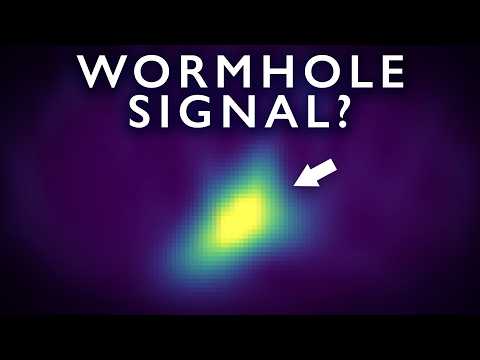
On May 21, 2019, ground-based detectors captured an unusual gravitational wave signal designated GW190521. Measuring just a fraction of the diameter of a proton, the ripple in space-time had traveled more than 17 billion light-years before reaching Earth.
Detected by the Laser Interferometer Gravitational-Wave Observatory (LIGO), the event initially thrilled astronomers because it appeared to represent the first direct detection of an intermediate-mass black hole—a long-theorized third category of black holes sitting between stellar-mass black holes (under 65 solar masses) and supermassive black holes (hundreds of thousands to billions of solar masses), typically measuring between 100 and 100,000 times the mass of the Sun. Under standard interpretation, GW190521 was produced by two black holes—one of 85 solar masses and the other of 66 solar masses—colliding to form a single 142-solar-mass black hole, instantaneously converting nine suns' worth of mass into pure gravitational energy.
However, the signal had an anomalous shape: it lasted just 0.1 seconds and appeared to be missing the entire first half of a normal black hole merger waveform. In 2025, a research team led by Key Lai at the Hangzhou Institute for Advanced Study, University of Chinese Academy of Sciences, re-examined the data and proposed a radical alternative: rather than originating from a standard black hole collision in our cosmos, GW190521 might be an echo from a black hole merger in a parallel universe that traveled through a wormhole to reach us.
Anatomy of a Standard Black Hole Merger
When massive objects like neutron stars or black holes collide, they send ripples through space-time that observatories like LIGO in the United States and Virgo in Italy can measure to determine the distance, mass, and nature of the event. A standard binary black hole collision produces a recognizable three-part waveform:
-
The Inspiral Phase: As two black holes orbit each other, they radiate orbital energy away as gravitational waves. Losing energy causes their orbit to shrink, pulling them closer and making them orbit faster, which in turn emits even more energy in a runaway feedback loop. In the signal, both amplitude and frequency rise steadily—producing an upward-sweeping "chirp" when converted into sound.
-
The Merger Phase: The instant the two black holes collide, the wave reaches its absolute peak amplitude and tightest compression.
-
The Ringdown Phase: Immediately after merging, the newly formed black hole is distorted and wobbly, vibrating like a struck bell as it settles into a stable spherical shape. For GW190521, this ringdown emitted two simultaneous frequencies—a fundamental tone at 63 hertz and a second tone at 98 hertz—both fading out within 26 to 30 milliseconds. As Colin Capano of the Albert Einstein Institute noted, analyzing these fading tones reveals the mass and spin of both the final black hole and its parent objects.
Because GW190521 completely lacked a clearly identifiable inspiral phase and displayed only the merger and ringdown, Key Lai's team explored whether a wormhole could explain the missing half of the signal.
Wormholes, White Holes, and Exotic Matter
Although never observed in nature, wormholes are mathematically permitted by Albert Einstein's general relativity as tunnels or shortcuts connecting distant regions of space-time—or even separate universes. Rather than looking like a dark, flat tunnel, a wormhole would appear as a spherical 3D window displaying a warped view of its destination, surrounded by gravitational lensing that distorts background starlight.
The classic wormhole solution, known as an Einstein-Rosen bridge, links a black hole on one side to a hypothetical white hole exiting into another universe. Because Einstein's field equations are time-symmetric, reversing the mathematics of a black hole (where matter collapses inward past an event horizon and can never escape) produces a white hole—essentially a black hole running backward in time, from which matter and information are ejected outward past an event horizon that nothing can ever enter. However, mathematics indicates that an Einstein-Rosen bridge is fatally unstable, collapsing so fast that not even light could cross it.
To make a wormhole traversable, astrophysicists Michael Morris and Kip Thorne proposed in 1988 that the narrow "throat" of the tunnel could be propped open against gravity using a theoretical scaffolding of exotic matter. Unlike antimatter—which is real, observable, and has positive mass—exotic matter would possess negative mass, negative energy density, or negative pressure. Because negative mass accelerates in the opposite direction of an applied force and repels normal matter gravitationally, its outward push could theoretically hold a wormhole open. While never observed, exotic matter does not violate the conservation of energy or momentum and is not strictly forbidden by physics.
Quantum Entanglement and the ER = EPR Conjecture
Even if a traversable wormhole could stay open, passing a signal through it connects directly to one of the deepest puzzles in physics: reconciling general relativity (which governs gravity and the large-scale universe) with quantum mechanics (which governs subatomic particles).
In 2013, theoretical physicists Leonard Susskind and Juan Maldacena proposed the ER = EPR conjecture (named after the 1935 papers on the Einstein-Rosen bridge and Einstein-Podolsky-Rosen quantum entanglement). They suggested that two quantum-entangled particles—which remain instantaneously correlated across vast distances without transmitting faster-than-light messages—are physically linked by a microscopic wormhole through space-time.
This idea also offers a resolution to the black hole information paradox and the firewall paradox. Quantum mechanics forbids the destruction of information, yet black holes appear to erase everything that falls into them as they slowly evaporate via Hawking radiation (proposed by Stephen Hawking in 1974). In 2012, the AMPS team at UC Santa Barbara argued that if information escapes via Hawking radiation while quantum rules hold, a black hole's event horizon must be a lethal wall of high-energy radiation—contradicting general relativity's prediction of a smooth, unremarkable horizon. Under ER = EPR, if outgoing Hawking radiation particles remain entangled with particles inside the black hole via tiny wormholes, information is preserved and recoverable without requiring a firewall.
Previously, ER = EPR had only been shown to work for idealized, symmetrical black holes in perfect thermal equilibrium—unlike real black holes, which are chaotic and messy. In 2025, however, researchers modeled a pair of deeply entangled black holes (a complex EPR pair) and progressively scrambled their quantum entanglement. Rather than breaking down, the connecting tunnel remained a stable, traversable structure obeying classical gravity, growing longer and bumpier into what they dubbed an Einstein-Rosen caterpillar—and displaying no firewall at the horizon in models starting from rest.
Simulating a Wormhole on a Quantum Computer
For GW190521 to have traveled from another universe, wormholes must not only stay stable enough to exist, but also allow information to pass through. In 2016, Harvard physicist Daniel Jafferis calculated that coupling two entangled quantum systems in a specific way would act like injecting negative energy, propping open a holographic wormhole and pushing information across it.
Six years later, in 2022, a team led by Maria Spiropulu at Caltech tested this using Google's Sycamore superconducting quantum processor:
-
Researchers injected a quantum bit (qubit) of information into a single particle on one side of a simulated two-sided entangled system, where it diffused across all particles on that side like ink dissolving in water.
-
They applied a specific rotation across the qubits—mathematically equivalent to sending a pulse of negative energy through a wormhole.
-
The encoded information re-emerged on the opposite side of the system, refocusing from its scrambled state back onto the single entangled partner of the original particle.
While some physicists cautioned that the quantum circuit was far too simple to represent a literal gravitational black hole, the experiment demonstrated that a purely quantum system can follow the exact same mathematical dynamics as information traversing a wormhole.
Did GW190521 Really Come From a Parallel Universe?
Applying these concepts back to GW190521, Key Lai's team proposed that two black holes in a parallel universe spiraled together and merged normally, keeping the inspiral signal confined to their own universe. Instead of forming a standard black hole, the collision briefly formed a wormhole connecting their universe to ours, allowing waves from the ringdown phase to spill through to our detectors. They suggested the signal lasted only 0.1 seconds—appearing as a single pulse rather than a train of fading echoes—either because the wormhole rapidly collapsed into a black hole or because subsequent echoes were too faint for LIGO and Virgo to detect.
Ultimately, while a parallel-universe wormhole cannot be ruled out with zero probability, the study's authors acknowledge that a conventional binary black hole merger within our own universe still fits the observational data better. Even so, the research provides astronomers with a concrete method for testing exotic wormhole physics against real gravitational-wave detections. With LIGO and Virgo operating at 30% higher sensitivity since 2023 and detecting mergers every two to three days, increasingly precise observations will continue to test the boundaries between quantum mechanics and general relativity.
Full Transcript
00:01On the 21st of May, 2019, we captured a
00:05strange pulse coming from the other side
00:08of the universe.
00:09A gravitational wave, the fraction of a
00:12diameter of a proton, that had traveled
00:14more than 17 billion light-years to
00:17reach us.
00:19Usually, signals of this magnitude are
00:21caused by black hole mergers.
00:23But, there was something a little off
00:25about this wave. It didn't look like
00:28other black hole mergers we were used
00:29to. It was too short and missing half of
00:33the waveform.
00:34This signal bamboozled the scientific
00:37community until, in 2025, a team
00:40proposed an explanation so wild it sent
00:43theoretical physicists into a frenzy.
00:46What if this signal wasn't produced in
00:49our universe at all? What if it had
00:52traveled through a wormhole from a
00:55parallel universe?
00:57I'm Alex McCollum and you're watching
00:59Astro.
01:00Join me today as we break down the
01:02physics of wormholes, untangle the
01:05mind-bending relationship between
01:07quantum entanglement and space-time
01:09geometry, and examine whether we really
01:12eavesdropped on an echo from another
01:15universe.
01:18When the Laser Interferometer
01:20Gravitational Wave Observatory, or LIGO,
01:23detected the signal of gravitational
01:25wave GW190521,
01:29researchers realized something
01:31exhilarating.
01:32If their interpretation of the colliding
01:34black hole size and mass was correct,
01:37they just made the first detection of an
01:40intermediate-mass black hole in human
01:43history.
01:44I've made another video about these
01:46types of black holes before that you can
01:48watch here.
01:49You see, until then, we had only
01:51observed stellar mass black holes, any
01:54black hole under 65 solar masses, and
01:57supermassive black holes, or black holes
02:00measuring hundreds of thousands to
02:02billions of times the mass of our sun.
02:05The math says there should be a third
02:07category, intermediate mass black holes,
02:10measuring about 100 to 100,000 times the
02:14mass of our sun, and computer
02:15simulations agree. But, we've never seen
02:18one directly.
02:20Until this gravitational wave floated
02:22across our radars, hinting that one
02:25might be out there.
02:26The signal seemed to be an echo of two
02:29black holes colliding, one measuring 85
02:32solar masses, and the other 66.
02:35They merged to form a black hole 142
02:38times the mass of our sun. And, if
02:41you're doing the math here, yes, that
02:43means nine full suns' worth of mass were
02:47instantly converted into pure
02:49gravitational energy. As if this weren't
02:52exciting enough, in 2025, a research
02:55team led by Key Lai at the Hangzhou
02:58Institute for Advanced Study, University
03:00of Chinese Academy of Sciences, took a
03:03closer look at the signal left behind by
03:05gravitational wave GW190521,
03:09and they noticed something unusual.
03:12No matter how they sliced it, this just
03:15didn't look like a typical black hole
03:16merger signal.
03:18They started to wonder, what alternative
03:21explanation could there be for what they
03:23were seeing?
03:26Normally, when two supermassive cosmic
03:28bodies collide, like neutron stars or
03:31black holes,
03:32that collision emits tiny ripples in
03:34space-time that travel outward in every
03:36direction. Sometimes, these
03:38gravitational waves eventually reach
03:40Earth, where we can detect them with our
03:42ground-based laser interferometers, such
03:45as LIGO and Virgo, based in the US and
03:48Italy, respectively.
03:50Depending on what the signal we receive
03:52looks and sounds like, we can deduce
03:54what type of event occurred, how far
03:56away it was, and how big the objects
03:59involved were likely to be.
04:01When two black holes merge, they go
04:03through a three-part process, which
04:06gives its signal key characteristics
04:08that are easy to identify. In other
04:10words, scientists know if a
04:12gravitational wave was created by a
04:14black hole merger thanks to its shape.
04:17The whole universe is filled with
04:18spectacular patterns, structures, and
04:21signals like this. It's one of the
04:23things I find most fascinating, and not
04:25to mention beautiful, about the cosmos.
04:28It's this mix of beauty and intrigue
04:30that I really try to get across in
04:32Astrium videos. But, it's also what
04:34inspired me to create a book. Incredible
04:36Universe, Volume 1, is all about our
04:39solar system, and it's filled with
04:40[music] beautiful images of and facts
04:43about its planets, moons, and more. This
04:46stunning hardback book is back for
04:48another limited run, and I'm pleased to
04:50report that they're selling fast. It's a
04:53spectacular journey through the solar
04:54system filled with not only the very
04:57best [music] images, but explanations
04:59that bring our cosmic backyard to life.
05:02Incredible Universe was a real labor of
05:04love, and you don't want to miss it.
05:06Click the link below or scan the QR code
05:08on screen to make sure you get your
05:10hands on one before they're gone. For
05:13now, though, let's head back to the
05:14gravitational wave signals that black
05:16hole mergers send out.
05:19The first phase is the inspiral phase.
05:22As the black holes circle each other,
05:24they're constantly radiating energy away
05:26in the form of gravitational waves.
05:28Since they're losing energy, their orbit
05:30gradually shrinks, which makes them move
05:33faster as the gravity they exert on each
05:35other increases. The faster they move,
05:37the more energy they emit, creating a
05:40positive feedback loop. They [music] get
05:42closer and closer, and move faster and
05:44faster.
05:45So, what does this mean for the
05:47gravitational wave signal?
05:49Well, it increases in amplitude and
05:51frequency as time goes on like an upward
05:54tick.
05:55If you convert that signal into sound,
05:57it creates a rising tone, kind of like a
06:00bird. That's why we say black hole
06:02collisions produce a characteristic
06:05chirp.
06:09The second phase is the merger, the
06:11moment the black holes actually collide.
06:14At this moment, the amplitude of the
06:15signal reaches its absolute maximum,
06:18marking not only the highest peak, but
06:20also the most intense, rapid compression
06:23of the wave. It's immediately followed
06:25by the third and final phase, the ring
06:28down.
06:29It takes a while for the newly formed
06:30black hole to stabilize. Initially, it's
06:33[music] wobbly and distorted before
06:35finally settling into a spherical shape.
06:38And all the while, it continues to
06:40produce gravitational waves, but in a
06:42different capacity than before.
06:44In the case of GW190521,
06:48the ring down occurs simultaneously in
06:50two distinct frequencies, a fundamental
06:52tone at 63 hertz and a second at 98
06:56hertz, both of which faded out within 26
06:59to 30 milliseconds. [music]
07:01"The black hole is similar to a bell
07:04that rings, producing a spectrum of
07:06multiple fading tones that encode
07:08information about the bell," explains
07:10Colin Capano from the Albert Einstein
07:13Institute.
07:14"Analyzing the ring down of a black hole
07:16merger can give us insights into the
07:17mass and spin of both the new black hole
07:20and its progenitors.
07:22So, that's exactly what you usually see
07:25with a black hole merger,
07:26but GW190521
07:29was different somehow.
07:32This particular gravitational wave
07:33signal completely lacked a clearly
07:36identifiable inspiral phase.
07:38It just showed the merger and ring down
07:41phases.
07:42And this led Key Lai and his team to
07:45propose an absolutely outlandish idea.
07:49What if this signal was the echo of a
07:51black hole collision not in our
07:53universe, but in a parallel one? A
07:56signal that traveled through a wormhole
07:59to reach us.
08:01Wormholes might sound like science
08:03fiction, but they are a mathematical
08:06possibility. In fact, as Einstein worked
08:09on his theory of general relativity, the
08:11concept of bridges arose naturally from
08:14his field equations as hypothetical
08:16geometric and topological features of
08:18the universe.
08:19Later, as scientists in the 1980s
08:21speculated about traveling from one side
08:23[music] of the cosmos to another, this
08:25theoretical bridge evolved into the fan
08:27favorite we now call a wormhole.
08:30So, what are they?
08:32Essentially, wormholes act as shortcuts
08:35through space-time. A tunnel that
08:36connects two very distant parts of the
08:38universe or potentially even parallel
08:41universes. But we've never observed a
08:44wormhole in reality.
08:46But if we did somehow stumble across
08:48one, it wouldn't look like the tunnels
08:50you might think of. Instead of a flat
08:52hole that gets darker and darker, a
08:55wormhole would act as a spherical 3D
08:58window showing you a warped view of the
09:01final destination on the other side of
09:04the hole.
09:05Much like a black hole, it would be
09:07surrounded by gravitational lensing that
09:09distorts the surrounding star field.
09:12Now, we're moving deep into hypothetical
09:14territory, so bear in mind some things
09:16we cover will be contested, debatable,
09:19and [music] just downright strange.
09:22There are different kinds of wormholes,
09:24but let's start with the classic one,
09:26the Einstein-Rosen bridge. This is a
09:28geometric structure where you have a
09:31black hole on one side and a white hole
09:33on the other that exits into another
09:35universe.
09:36Let me break that down.
09:38As you probably know, matter can only
09:41enter but never exit a black hole. Once
09:44an object crosses the event horizon, it
09:46cannot return.
09:48A white hole is the opposite. A
09:50hypothetical structure where information
09:52can only exit into the universe but
09:55never fall into the white hole. The
09:58Einstein field equations that define
10:00black holes are symmetric with respect
10:02to time. This means that the
10:04mathematical solution for a black hole
10:06where everything collapses into a
10:07singularity at some point in the future
10:10can be reversed.
10:12In this setup, the singularity becomes
10:14the past and the matter is ejected from
10:17the white hole. The white hole's event
10:19horizon would effectively act as a line
10:21beyond which nothing can enter. Because
10:24of this, white holes are commonly
10:25described as acting like a black hole
10:28running backward in time.
10:30The Einstein-Rosen bridges theorized
10:32[music] to connect a black hole with its
10:33white hole counterpart via a one-way
10:36street of sorts. But, the problem is the
10:38math says that this structure should be
10:41incredibly unstable. It would collapse
10:43so instantaneously that even light
10:46wouldn't be able to travel through it.
10:48So, if the GW190521
10:51signal couldn't have passed through an
10:53Einstein-Rosen bridge, what other kind
10:56of wormhole might it have traveled
10:58through?
11:00In 1988, astrophysicists Michael Morris
11:03and Kip Thorne proposed a way to make
11:05wormholes traversable.
11:07Thorne went on to consult on the film
11:09Interstellar and later won a Nobel Prize
11:12in physics for his contributions to the
11:13LIGO detector and the first direct
11:16observation of gravitational waves. So,
11:18let these credentials lend weight to the
11:20bizarre theory I'm about to share.
11:23Morris and Thorne suggest the choke
11:24point or throat of the wormhole could be
11:27held open against gravity by a kind of
11:30scaffolding which would make it
11:32traversable.
11:34However, this would require a
11:35theoretical type of material known as
11:37exotic matter to act as said
11:40scaffolding, holding the tunnel open.
11:43Exotic matter is not the same thing as
11:45antimatter, which does have positive
11:47mass and is a real observable material.
11:51Instead, it refers to materials that
11:53possess unusual properties such as
11:57negative mass, negative energy density,
12:00or negative pressure, meaning it often
12:03acts in bizarre and counterintuitive
12:05ways.
12:07For example, in the normal world, when
12:09you push a glass to the left, it will
12:11topple over to the left. But if the
12:13glass has negative mass, pushing it to
12:16the left would make it fall to the
12:18right. It will accelerate in the
12:20opposite direction of the force applied.
12:23Normal matter attracts other matter
12:25through gravity. Drop a shoe and it
12:28falls to the ground. But exotic matter
12:30with negative energy does the opposite.
12:33Instead of being pulled towards other
12:35matter, it's pushed away from it. And
12:38crucially, it pushes back. That
12:40repulsive force is what could
12:42theoretically prop a wormhole throat
12:45open against the crushing pull of
12:47gravity.
12:48Even if this breaks your brain a little,
12:50these kinds of properties aren't
12:52technically forbidden by the maths, and
12:54they don't violate the laws of
12:56conservation of momentum or energy. In
12:58other words, they can't officially be
13:01discarded as impossible even though
13:03we've never seen them.
13:05Thus, follows the question.
13:07If a traversable wormhole like this
13:09could exist, could we really hear a
13:12signal ring down through it from the
13:14universe on the other side?
13:16Wouldn't the information get lost or
13:18distorted somehow?
13:20Well, turns out wormholes might connect
13:23more than just black and white holes.
13:26They could be the missing link between
13:28general relativity and quantum
13:30mechanics.
13:32General relativity describes the
13:34universe at its largest scales, gravity,
13:37black holes, the fabric of space-time
13:39itself.
13:40Quantum mechanics describes it at its
13:42smallest, particles, energy, the
13:45subatomic world.
13:46But when you try to use both at the same
13:48time, say at the center of a black hole,
13:51the maths breaks down completely.
13:54However, in 2013, theoretical physicists
13:57Leonard Susskind and Juan Maldacena put
14:01forth a conjecture that, if true, could
14:04unify these two rival fields. And you
14:07guessed it, the answer has to do with
14:10wormholes.
14:12How exactly?
14:13Well, they propose that wormholes and
14:15quantum entanglement might actually be
14:18the same thing.
14:19That when two particles become
14:21entangled, they're linked in such a way
14:24that whatever happens to one instantly
14:26affects the other, even if they're
14:29galaxies apart. For example, if you
14:31measure the spin of one, its entangled
14:33partner will instantly snap into the
14:36opposite spin.
14:38At first glance, it might seem like this
14:40would violate the law that nothing can
14:42travel faster than light. Surely these
14:44particles are somehow communicating.
14:47But there isn't actually any information
14:49passing from one to the other. The
14:51outcome of both particles are random.
14:54Susskind and Maldacena suggested these
14:57entangled particles might literally be
15:00connected by a geometric structure, a
15:02tiny wormhole that links them through
15:05space-time. Sound familiar?
15:08This is known as the ER = EPR
15:11conjecture, named after two famous
15:14papers from 1935, Einstein-Rosen Bridge
15:17= Einstein-Podolsky-Rosen
15:20and
15:22If this idea proves true, it blows black
15:25hole science wide open. Quantum
15:28mechanics states that information cannot
15:30be destroyed, ever. Yet, everything that
15:33falls into a black hole eventually seems
15:35to evaporate and vanish forever. This is
15:38the information paradox.
15:41In 2012, a group of physicists tried to
15:43resolve it, but ended up creating an
15:45even bigger problem.
15:46The AMPS team from UC Santa Barbara,
15:50named after the initials of its authors,
15:52showed that if you insist on both
15:55quantum mechanics being correct, and
15:57that information can escape the black
15:59hole, then the event horizon would look
16:02like a wall of incredibly high energy
16:04radiation, not the smooth, unremarkable
16:08boundary predicted by general
16:09relativity.
16:11Therefore, these two theories seem to
16:13directly contradict each other, creating
16:15what is known as the firewall paradox.
16:18But, this is where things for once slot
16:21together nicely. The ER = EPR conjecture
16:24offers a way out of this tangle.
16:27See, back in 1974, Stephen Hawking
16:30postulated that black holes have quantum
16:33effects near the event horizon that
16:35cause them to slowly emit what has
16:37become known as Hawking radiation,
16:40evaporating over incomprehensibly long
16:43time scales.
16:44The question [music] is whether that
16:46radiation carries any imprint of what
16:49originally fell in, or whether it's just
16:52random noise.
16:53If these Hawking radiation particles
16:55escaping the black hole are entangled
16:57with particles inside it via a wormhole,
17:00then information was never truly trapped
17:02in the way we always assumed.
17:05If the inside and outside of the black
17:06hole share a quantum connection, the
17:09information is recoverable in principle
17:11from the Hawking radiation itself.
17:13But, the problem with ER = EPR is that
17:17it had only been demonstrated for
17:18[music] an extremely idealized scenario.
17:22Two black holes in perfect thermal
17:24equilibrium.
17:26Real black holes are certainly not that.
17:29They are chaotic and messy.
17:31They are constantly being bombarded by
17:33infalling matter, radiation, and quantum
17:36fluctuations.
17:37If ER = EPR only works for perfectly
17:41neat black holes that don't really
17:43exist, it's not much of a solution.
17:46So, in 2025, a team of researchers set
17:49out to test if the conjecture would hold
17:52up in more realistic conditions.
17:54They created a model of a theoretical
17:56pair of deeply entangled black holes
17:59connected by an Einstein-Rosen bridge,
18:01known as a complex EPR pair.
18:04They started with an idealized wormhole,
18:07one which is smooth and symmetrical
18:09inside, and progressively scrambled the
18:11quantum entanglement between the black
18:13holes, making them increasingly chaotic.
18:16And they found something no one
18:18expected.
18:20Even when quantum entanglement is messy
18:23and random, the wormhole remains a
18:25predictable, stable tunnel. It gets
18:28longer, bumpier, more deformed, and
18:31develops lumpy segments, earning it the
18:34title the Einstein-Rosen caterpillar.
18:38And crucially, it remains a
18:40geometrically stable, traversable
18:43structure where the classical laws of
18:45gravity still hold.
18:47And perhaps most intriguingly, nowhere
18:50in their typical models, those that
18:52started from rest, did they encounter a
18:55firewall at the event horizon.
18:58So, coming back to our gravitational
19:00wave, for it to have actually traveled
19:02through a wormhole to us, two things
19:05need to be true.
19:06Firstly, wormholes connecting entangled
19:09black holes need to be real and stable
19:11enough to transmit a signal, which the
19:14Einstein-Rosen cataclysm seems to
19:16demonstrate as, at the very least, a
19:18theoretical possibility. Secondly,
19:21information needs to be able to travel
19:23through it. And in 2022, a Harvard-led
19:27team managed to do just that in an
19:29experiment that sounds stranger than
19:31fiction. They built a holographic
19:33wormhole on a quantum computer and
19:36successfully sent information through
19:38it.
19:40While we all pick our jaws up off the
19:43floor, let's break down what that insane
19:46sentence actually means.
19:48The experiment [music] traces back to
19:49Daniel Jafferis at Harvard, who in 2016
19:53calculated that if you can take two
19:55entangled quantum systems and couple
19:57them together in the right way, you can
19:59perform an operation on one side that,
20:02according to ER = EPR, should physically
20:05hold the wormhole open and push
20:07information through it. But the question
20:09was, could you actually build that
20:12system and test it?
20:14Six years later, a team led by Maria
20:17Spiropulu at Caltech did exactly that.
20:20They used Google's Sycamore, a
20:23superconducting quantum processor, to
20:25simulate two entangled quantum systems
20:28that, by the rules of ER = EPR, should
20:32be connected by a wormhole.
20:34And here's what happened.
20:36A unit of information, a quantum bit or
20:39qubit, was injected via a single
20:42particle into one side of a two-sided
20:45system. That encoded information
20:47diffused from just the one particle
20:49across all the particles on that side of
20:52the system, like a drop of ink
20:54dissolving into water. Then, the team
20:57performed a specific rotation across all
20:59the qubits, equivalent, in the
21:01gravitational picture, to sending a
21:03pulse of negative energy through the
21:05wormhole or propping it open with exotic
21:08matter.
21:09Eventually, the encoded information
21:11reemerged on the other side of the
21:13system.
21:14Not only that, but it had converged or
21:18refocused itself from its diffuse state
21:21back onto a single particle, the
21:23entangled partner of the original
21:25particle that carried the qubit into the
21:28system in [music] the first place.
21:30In other words, researchers had sent
21:32information into a quantum tunnel and
21:35successfully retrieved it on the other
21:37side. Spiropulu couldn't believe her
21:40eyes, saying the moment felt like seeing
21:43the first data from the Higgs boson
21:45discovery.
21:46However, the physics community quickly
21:49urged caution.
21:50>> [music]
21:51>> Some analyses argued that the quantum
21:53model was far too simple to capture the
21:55true complex properties of black holes,
21:58meaning the demonstration shouldn't be
21:59thought of as a literal holographic
22:02wormhole.
22:03Yet, even if it wasn't a perfect cosmic
22:06replica, her team had just shown that a
22:08quantum system governed purely by the
22:11rules of quantum mechanics
22:12>> [music]
22:12>> could, in principle, behave in a way
22:15that is mathematically identical to a
22:17wormhole in a gravitational theory. The
22:20physics of both the quantum and the
22:21gravitational scales are similar, even
22:24if the physical reality looks completely
22:26different. So,
22:27coming back to the strange gravitational
22:29wave that started it all in May 2019,
22:33if it really did travel through a
22:36wormhole to reach us, this experiment is
22:38the closest thing we have to a proof of
22:41concept that such a journey is both
22:43mathematically and experimentally
22:46demonstrable.
22:47But, can we conclusively say, one way or
22:50the other, whether it did?
22:54Well, knowing everything we know about
22:56wormholes, quantum entanglement, and
22:58information, let's reassess the paper
23:01that launched us on this topsy-turvy
23:03journey.
23:04Kylaf and his team put forward the idea
23:06that the gravitational wave signal
23:08GW190521
23:11is the echo of a black hole merger in
23:13another universe.
23:15In that reality, two black holes
23:17spiraled and merged together normally.
23:20But instead of creating a larger black
23:22hole, they created a wormhole with one
23:25end in that universe and the other in
23:27ours.
23:29We didn't hear the in-spiral part of the
23:31signal because it stayed in the parallel
23:33universe.
23:34But as the ring down phase radiated
23:36outward, some of those waves traveled
23:39down the wormhole and emerged on our
23:41side.
23:42We know it's theoretically possible for
23:44the wormhole to be held open by negative
23:46energy and for information to pass
23:48through it. So, this isn't as outlandish
23:51as it might have initially seemed.
23:54The authors go a step further to explain
23:56why the signal was so short, just 0.1
23:58seconds long.
24:00They postulate we only detected one
24:02pulse rather than a series of
24:04progressively weaker echoes as you'd
24:06expect with a ring down because the
24:08wormhole rapidly collapsed into a black
24:10hole or the later echoes were simply too
24:13weak for our detectors to pick up.
24:16Technically, this can't be ruled out as
24:18a theory since there is a non-zero
24:20possibility that this could accurately
24:22describe what we saw. But the authors
24:24admit that even with the missing
24:26in-spiral phase, a binary black hole
24:28merger in our own universe fits the
24:31gravitational wave data better than this
24:33explanation.
24:35Still, this study brings more value than
24:37a fun theoretical thought experiment.
24:40It's important because it gives
24:41astronomers a concrete way to test an
24:43exotic idea against real detected data.
24:47The Harvard quantum computer experiment
24:49showed that wormhole-like dynamics could
24:51potentially be mathematically real and
24:53testable. The Einstein-Rosen caterpillar
24:56shows that wormholes connecting
24:58entangled black holes aren't just
24:59science fiction. They can emerge
25:01naturally from the massive quantum
25:03chaos. And these two findings together
25:06along with the ER equals EPR conjecture
25:09build an ever stronger case for a
25:11mathematical connection between quantum
25:13mechanics and general relativity.
25:15By studying real merging black holes
25:17like the ones behind GW190521,
25:21we get to play with the systems where
25:24this frontier pushing physics might
25:26apply.
25:27In the future, our detection of these
25:29events will only get more precise. Since
25:312023, LIGO and Virgo have been operating
25:34with a 30% increased sensitivity,
25:37allowing detection of a merger every two
25:40to three days. Given that we've only
25:42been able to detect gravitational waves
25:44for a decade, this field is in its
25:46infancy. With improvements to our models
25:49and technology, who knows? Maybe one day
25:52we'll not only be able to conclusively
25:53find worm holes, but even be able to
25:56send stuff through them. I for one am
25:58hopeful that they won't always remain
26:01elusive and confined to equations and
26:03sci-fi stories.
26:05But for now, we'll have to wait and see.
26:11There's a reason these educational mini
26:13documentaries are free for everyone.
26:16It's not just the ads or sponsors, but
26:18it's thanks to our hundreds of Patreon
26:20members who make it possible for
26:22everyone to get the best possible
26:24content.
26:25They're the foundation that keeps
26:27Astrium steady and focused on quality
26:29over clicks. Every video you watch
26:31exists because there's a community
26:33behind it that values learning and
26:35curiosity.
26:36If you'd like to be part of that group,
26:38the people who keep space education open
26:41to everyone, join us on Patreon through
26:44the link below. We would love to have
26:46you.
Description
Did we just discover a real wormhole?
The Astrum hardback book is available now, for another limited run. If you’re fascinated by the cosmos, want to learn more about our Solar System, or just love
In 2019, scientists detected a signal that no one could explain. But now, they have proposed a mind-bending theory that could solve the mystery, and makes it a whole lot weirder… The signal might have come from a wormhole. Weirder yet, it could even be an echo from another universe.