Raj Shamani
AI Summary
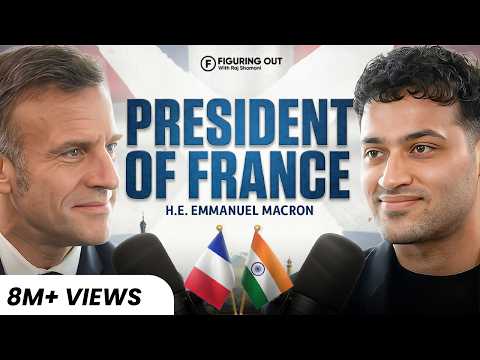
Innovation, AI Infrastructure, and Risk in France and Europe
Speaking in Mumbai while visiting India, French President Emmanuel Macron reflects on why major consumer and platform technology giants today are predominantly American or Chinese—even though France and Europe have strong scientific and research traditions, mathematics talent, and active startup/tech ecosystems—pointing to three core gaps:
-
Market Scale: Fragmentation across Europe compared to operating seamlessly across a single market of roughly 450 million people.
-
Capital Mobilization: While Europe holds high savings, financial structures, regulatory friction, and risk aversion often steer money toward bonds or outside markets rather than high-growth tech scale-ups.
-
Risk Appetite: A cultural willingness to take bold bets and accept setbacks or failures along the way rather than avoiding risk.
Addressing the roughly €109 billion AI infrastructure investment push announced a year earlier—including major capital tied to Gulf/UAE backing and partnerships involving U.S. technology—Macron argues that hosting data centers and compute in France, enabling domestic innovators to use that capacity, securing technology transfer and foreign investment, and ensuring compliance with European rules strengthens sovereignty far more than simply buying external services and exporting data without local safeguards, alongside supporting homegrown European AI models such as Mistral AI.
Talent, Culture, and Future Bets Like Quantum Computing
Highlighting France's appeal for students, researchers, and founders—including strong higher-education institutions (such as Polytechnique, Paris Sorbonne, and École Normale Supérieure), English-taught programs alongside linguistic diversity, startup hubs/initiatives, and a blend of established institutions, creative/cultural industries, and quality of life—Macron notes efforts to expand Indian student numbers in France (referencing growth from around 9,300 toward a target of 30,000) and praises India's engineering output and digital public infrastructure such as UPI (comparing its rapid scale with France's domestic card network, Carte Bleue).
Asked about a future technology "moonshot" toward 2035, Macron cautions that innovation rarely follows a single top-down bet and often involves multiple attempts and failures before breakthroughs emerge, but identifies quantum computing / quantum technology as an area where France's mathematical strength, labs, and startups can compete for leadership, stressing that big breakthroughs require taking risks and trying again after setbacks.
India–France Ties, Strategic Autonomy, and Global Order
Describing India and France as close partners—pointing to joint initiatives like the International Solar Alliance, IMEC (India–Middle East–Europe Economic Corridor) announced around the G20, and AI summits/cooperation—Macron links their alignment to respect for cultural and linguistic diversity rather than uniformity, and to a shared commitment to strategic autonomy and multipolarity: building strong ties with major powers like the United States and China without becoming dependent on any single superpower, and upholding international rules, multilateralism, and democratic decision-making rather than a world governed purely by raw force.
Asked about friction with the U.S. administration—including public disputes over leaked/shared private messages, tariff threats (such as talk of steep tariffs), and tensions over European autonomy—Macron emphasizes respect in diplomacy and democratic politics, arguing that disagreement should be handled respectfully and lawfully rather than through hostility or rolling back norms of civility.
Currency Dynamics, Hopes, and Security Concerns
On global currency shifts and talk of alternatives to U.S. dollar dominance—amid bilateral/local-currency trade, Chinese currency push, and euro usage—Macron notes that the dollar remains dominant today, while arguing that Europe can strengthen its international role and make the euro a deeper, safer, and more liquid global asset over time through competitiveness, investment, trade agreements, and swap lines.
Looking ahead beyond the remainder of his term, Macron says his greatest source of optimism is a better-educated global generation with talent and energy to solve problems around innovation, culture, climate, and biodiversity (while noting more work is still needed on education, including in parts of Africa), whereas what worries him most is the erosion of predictable security frameworks—citing Russia's war in Ukraine as a destabilizing return to border/territorial aggression by a nuclear-armed UN Security Council member—and a global arms buildup, which he says drives him to bolster credible defense capacity while working toward frameworks that limit misuse.
Full Transcript
00:00France invented a lot of early
00:02technologies in the world.
00:10But today if you look the scenario, the
00:11largest technology companies in the
00:13world are either American or Chinese.
00:17Many of them are led by Indian origin
00:19CEOs.
00:20Where did France lack?
00:22>> I I I think the missing point is first
00:24scale, not just for the French but for
00:26all the Europeans. Second, capital. And
00:29the third point, we have to find more
00:32appetite for risk.
00:35France has been an all-weather friend
00:38for India. The question is no longer
00:40whether India innovates. The question is
00:43who will innovate with India?
00:49And France
00:51is the unique clear answer.
00:54Jai Ho.
00:57Do you think this is going to be an
00:58example for the world that now the new
01:01world order is about multipolarity? Do
01:03you think India and France are setting
01:04an example?
01:05>> French President Emmanuel Macron is the
01:07chief guest.
01:08>> Emmanuel Macron has been invited as the
01:10chief guest at Republic Day parade. We
01:12have developed during the last few years
01:14a series of cooperation and partnerships
01:16in different sectors
01:18with your country.
01:20I I really believe that when we team up,
01:22we deliver. Second, we don't want to be
01:26dependent on one of the two big power.
01:31We want to have a good relation with the
01:33US and China. We have different
01:35relationship by the way with both of
01:37them between India and France. And we
01:40are supporter of this approach.
01:43India leapfrogged in technology. Our
01:46Aadhaar, UPI, DigiLocker, things like
01:49this we created and got so many people
01:52in the system, right? If you have to bet
01:54on one technology for France,
01:57Which will be your moonshot for 2035?
02:01Quantum computer would be a war we can
02:03take the lead and have a leadership.
02:05Quantum computer. Quantum technology.
02:08What on Earth is a quantum computer?
02:10Whichever nation first develops a
02:11practical [music] quantum computer will
02:13have a tremendous advantage.
02:14>> Quantum supremacy.
02:16Is it's a work happening in the back end
02:18like Yeah, I think so because we have a
02:19unique mathematicians, new capacities
02:21and a lot of very performing startups
02:23[music] and labs.
02:27I saw that you announced about 109
02:31billion euros one year ago for the AI
02:34infrastructure for the technology to
02:36lead it forward. But here's a question.
02:38Out of that 50 billion euros coming from
02:40UAE. So money is foreign funded,
02:43infrastructure is going to be largely
02:45owned by UAE. The technology and
02:47intelligence is coming from America and
02:49China. What's going to be sovereign
02:51about this when it's actually
02:52collaboration of the world not just
02:54Europe.
02:55If some founder is watching this or a
02:58student who's 22 year old is watching
03:00this, they want to come to France. Then
03:02what does France offer which today a US
03:05and UK doesn't offer for the young
03:07startup founders or the people [music]
03:08who want to build for the future? A
03:10unique ecosystem. First I want to convey
03:12the message to your your students,
03:14Indian students. If you come to France,
03:16you can get access to the the best
03:18quality universities and high schools.
03:20Second, the language is clearly is
03:22English. And I I really believe that
03:24France provides the unique mix of large
03:27companies, a lot of institutions and at
03:30the same time the most vibrant startups
03:33innovation ecosystem in Europe.
03:39Donald Trump shared your private
03:40messages. Private message meant for
03:42diplomacy [music]
03:43has exploded into a public political
03:45storm. He threatened to put 200% tariff
03:48on you. You have called his
03:49administration anti-Europe. Does this
03:51convey something about American
03:53leadership today? Should the world be
03:54scared?
03:55>> I really believe that respect is is part
03:58of the leadership. You can share ideas
04:00or not. You can disagree, but you have
04:02to do it in a respectful way. Within
04:04democracies as well. This is why I've
04:06always been extremely committed to fight
04:08against any sort of hatred speech or
04:10violence in our societies because when
04:12you have democracy, you have the right
04:14to change your leadership. You you
04:15decide who will take the law and pass
04:17the law on your behalf. So, no need to
04:19be violent. And disrespectful, but
04:27Me and my team we're trying really hard
04:29and trying all our best to make sure
04:31that India's voice reaches at the world
04:33stage. And for that, I have a favor to
04:36ask from you. If you have ever gotten
04:38value from this channel, please
04:40subscribe to our channel. It's free and
04:42it takes only 1 second because the more
04:45you subscribe, the more of a chances get
04:48to get the kind of guest which we have
04:51today on our show. Our today's guest is
04:54president of French Republic
04:57Emmanuel Macron. It's his first ever
05:00podcast in the world. This for the first
05:03time it's happening on our show on
05:05figuring out. We've spoken about India
05:08and France relationship. We've spoken
05:10about his relationship with America, his
05:12relationship with world leaders. We've
05:14spoken about what is Europe trying to do
05:16differently. What does it mean for
05:18India? How is he making sure that India
05:22not only becomes a trade partner, but a
05:25strategic partner in the world which is
05:28heading towards multipolarity.
05:31How do we challenge the global world
05:33order? And do we even challenge or no?
05:36All these questions have been answered
05:38by the French president in today's
05:40podcast. Beyond the honor, we see this
05:42as a responsibility.
05:44Because when someone like President
05:45Macron sits down with us. It's an
05:48opportunity to talk about India.
05:51What we are getting right, where we are
05:53heading, and what the world needs to
05:54understand about India, about us right
05:57now, so that we can show the world where
05:59India stands, and what are we doing, and
06:02get
06:04the president's and global leaders'
06:06perspective on it as well. So, thank you
06:08so much for being part of this journey,
06:10and for the audio experience of this
06:12podcast, please follow us on Spotify.
06:20Well, thank you so much to
06:22for doing this and agreeing to do your
06:24first podcast with us. It's a pleasure.
06:26This is mine. Thank you for being here.
06:29Thank you. I'm happy to be in Mumbai
06:31with you. Tell me
06:33before we start, actually,
06:35for 0.01%
06:38people who don't know who you are, and
06:41they're watching you for the first time.
06:42They have no clue.
06:44What would you tell them about yourself
06:47in next 30 seconds? Who you are and what
06:48you do? I'm French guy
06:51>> [gasps and laughter]
06:51>> here in Mumbai because I am invited
06:54invited by your Prime Minister,
06:56and happy to be here, by the way.
06:58And um
07:02involved in a in a
07:04in a very particular job, and uh
07:07>> [laughter]
07:07>> for for the past few years,
07:09and um
07:11full of appetite and enthusiasm,
07:13especially for other culture. Lovely.
07:16And you're also an enthusiast. I saw
07:18that yesterday
07:19that you're the guy who loves breaking
07:21protocol and running around the street
07:23to jog, right? Exactly. We
07:24[clears throat] jogged yesterday
07:25morning. Yeah, how was that experience?
07:27Uh wonderful.
07:28It was a little bit hectic
07:29>> Okay. because of uh
07:31I mean, the all all the traffic in the
07:33city,
07:35but [snorts] it was great. It is. And
07:36I'm in those fun first to exercise, and
07:39second to to have the interactions
07:41without too much security. You always
07:43have a little bit security, but
07:45when it's
07:47I would say unexpected and not
07:49organized, you can indeed break the
07:51protocol. So, early in the morning I I
07:53want to jog and and later in the evening
07:56I went to your to the station to
07:59as well as see your your perfect
08:01beautiful architecture and not just
08:03architecture, but
08:05this the city. Yeah. Okay, let's dive
08:08into
08:10the technology part because
08:12I love what you're doing these days. I
08:14went through so many of his speeches and
08:16the reason that you're here,
08:18you know, I was reading a lot of history
08:21and I I found out that France
08:24invented a lot of early technologies in
08:26the world, right? But today if you look
08:28the scenario, the largest technology
08:30companies in the world are either
08:32American or Chinese. Many of them are
08:34led by Indian Indian origin CEOs. What
08:37do you think?
08:38Where did France lack? Like what
08:41happened? Is it the culture? Is it the
08:42taxes? Or is it something about the way
08:45Europe thinks about failure and risk?
08:49A mix of that, probably.
08:52But you're right to say that uh
08:54um we've had a lot of um great
08:57researchers, scientists.
09:00Uh we invented a lot of uh
09:02a lot of big innovation.
09:04Even if science is a is a global
09:06approach and cooperation between the
09:08academics and researchers all over the
09:09world
09:10is what makes sense and not just one
09:12country. But we we do have this
09:15this culture of
09:17research, invention, entrepreneurship as
09:20well.
09:21I always uh remind people that
09:22entrepreneur is a French word.
09:25And and it was taken by the English
09:27language, but entrepreneur is a French
09:29is a French word.
09:30>> [gasps]
09:30>> And and and we we are still extremely
09:33active. If you take in Europe, probably
09:35the two main ecosystem in terms of
09:38innovation, startups, AI, quantum.
09:40Our our our friends and UK
09:43uh largely ahead of the others.
09:45And uh and if you take um
09:49uh math and a lot of um
09:51uh a lot of disciplines, we are we are
09:53still in very in a very good position.
09:56But it's true that when you when you
09:58look at the um the tech sector,
10:01it's largely uh driven by the US the la-
10:05I mean these big seven companies. Yeah.
10:08And uh and uh and the Chinese companies.
10:10Why? First, you have a question of
10:12scale.
10:14I I I really believe that uh
10:17Europe is the right approach.
10:19And um still in the digital sector, but
10:22in a lot of sectors, we are too much
10:23fragmented. So, I I I think the missing
10:26point is first scale, not just for the
10:28French, but for all the Europeans. So,
10:30we have to
10:31finalize to strengthen uh our our single
10:35market to be sure that your domestic
10:37market is a 450 million inhabitants
10:39market, meaning Europe and not just
10:41France.
10:42Second, capital.
10:45In the US, you have a lot of capital, a
10:47lot of deep pockets, so they invested a
10:48lot of money. Mhm. And um and uh the
10:52paradox is that in Europe, you have a
10:53lot of savings, much more than in the
10:55US.
10:56But this saving is not properly invested
10:58because of a too much
11:00um uh
11:01I mean, too many regulation in the
11:03banking and insurance sector, and the
11:04structure structure of our our financing
11:07system, which is unadapted to uh
11:09to uh the tech industry because we are
11:12this this savings are are largely
11:15channeled towards the bond market,
11:18or they they go outside Europe to search
11:21profitability. And the third point,
11:24>> [snorts]
11:24>> uh you mentioned it, and I I I fully
11:26agree with you, is probably
11:30um
11:31we have to find a um
11:34more more appetite for risk.
11:38More appetite for risk. You should be
11:40more much more risk-taker. So, scale,
11:43money, and risk-taking uh
11:46mindset.
11:47>> Mindset. So,
11:48you sort of are addressing these things
11:51in multiple of your speeches and
11:52conversations.
11:54I saw that you announced about 109
11:58billion euros. 1 year ago. 1 year ago
12:01for the AI infrastructure, for the
12:03technology to lead it forward, right?
12:06But, here's a question that
12:08you talk about scale, you talk about
12:10risk, and you talk about investments.
12:12Out of that almost 100 billion euros, 50
12:15billion euros coming from UAE.
12:18Right? Then, so money is foreign-funded,
12:21infrastructure is going to be largely
12:23owned by UAE. The technology and
12:26intelligence is coming from America and
12:28China. And you're talking about Europe
12:32and building sovereign Europe AI. What's
12:35going to be sovereign about this when
12:36it's just it's actually collaboration of
12:38the world, not just Europe.
12:40>> This is a very good question, in fact.
12:42Um
12:421 year ago, we we announced this 109
12:45billion euro investment.
12:48Uh which which is a big bunch of money,
12:50and we are deploying it, by the way,
12:52because more than 60% is already
12:54deployed, and uh and we plugged a lot of
12:57sites.
12:58It's it's in order to build data
12:59centers.
13:02Uh you're right. We speak about UAE, US
13:05projects. Why? Because the technology is
13:07largely in the US.
13:09But, the data center which will be
13:10deployed in France will be used as well
13:13by our own players. If you don't have
13:15the computing capacities, you cannot
13:16deploy. Mhm. And uh we are we there are
13:19more cash today in the Gulf,
13:22and the technology for data centers in
13:23the US. But, what we want to do is not
13:25to buy the solution. When we When you
13:28want to be more sovereign, more
13:29independent, you want to
13:31transfer technologies and attract
13:33foreign direct investment. This is
13:35exactly what we are doing. I created 8
13:37years ago an event called Choose France,
13:39where a lot of Indian players come every
13:41year.
13:42And and this event plus all the reforms
13:46we implemented made France number one in
13:49terms of attractiveness
13:51during the past 6 years. Yeah.
13:53>> [snorts]
13:53>> And and this is good
13:55what we what what we what you mentioned.
13:57I mean, this AI data centers and all
14:00these investments are good for the
14:01European sovereignty. Why? They are
14:02located in my country.
14:04Second, they could be used by my my my
14:06players. So, it would improve my
14:09AI ecosystem. Third, it will transfer a
14:12lot of these technologies.
14:13And fourth, it's I have the guarantee
14:16that these solutions are compliant with
14:18the European regulation.
14:20What's the What's What's the alternative
14:22to that?
14:23As I don't have the technology and other
14:24cash, it's not to make these investments
14:27and to buy elsewhere. If you buy these
14:30solutions, you buy solutions and you
14:31provide your data without any protection
14:34for your data and without any tech
14:37transfer. So, I think it's a much better
14:38solution.
14:40Um so, we not excel in this market.
14:43And the the big winners were these
14:46these US hyperscalers. So, you have to
14:48work with them but to to encourage and
14:50force sometimes them to to comply with
14:52your market. And in parallel, you have
14:55to accelerate the deployment of your own
14:56solutions. If you take LLMs, we have
14:59Mistral AI, which is probably the
15:01I mean, the the which is definitely the
15:03best European player and a clear
15:06alternative of the
15:08LLM US LLMs. So, this is what we are
15:11doing. Interesting. So, one more thing
15:13you would need in this is attracting
15:15talent, attracting founders from all
15:17around the world, right? And attracting
15:20students at the same time. Right now,
15:22there are about 9,300 students from
15:24India and France. You want them to go to
15:2630,000, right?
15:29So, every founder who's watching this,
15:31you have announced the F station in
15:33France, made it a a big startup world
15:35for everyone. So, if some founder is
15:39watching this or
15:41a a student who's 22 year old is
15:43watching this,
15:44they want to come to France. Then, what
15:47does France offer which today a US and
15:50UK doesn't offer for the young startup
15:53founders or the people who want to build
15:54for the future? A unique ecosystem.
15:57First, I want to convey the message to
15:58your your students, Indian students. Um
16:01if you come to France, you can get
16:03access to the
16:05the best quality universities and high
16:07schools
16:08from Polytechnique to Paris Sorbonne,
16:11from Ecole Normale Supérieure to
16:14a lot of engineer schools.
16:16Second, the the language is
16:19clearly
16:20is English. So, because I know that a
16:22lot of
16:24sometimes
16:26it is received
16:28as a fact that you will be taught in in
16:30French, which it's totally wrong. So,
16:32you you have the opportunity to have the
16:35obviously
16:37all these years in the in the English
16:39language, but you get access as well to
16:41um
16:42the diversity of the language, which is
16:44very important and when you are Indian,
16:45you know that.
16:47Given the number of official language
16:49and this diversity is a source of of
16:53um
16:53not just energy, but creativity. But,
16:56you will have the best in class
16:58higher schools,
17:00English spoken professors and research,
17:03access to a good ecosystems.
17:06And I I really believe that France
17:07provides the unique mix of um
17:11a mature economy
17:13with a lot of large companies, a lot of
17:15institutions. And at the same time, this
17:17is a more vibrant uh the most vibrant
17:20startups innovation ecosystem in Europe.
17:24And third, uh
17:26>> [snorts]
17:26>> it's it's clearly a vibrant place in
17:28terms of creativity,
17:31culture,
17:32and and I think it's very important
17:34because when you speak about innovation,
17:36never forget the place of culture, art,
17:39cinema, and so on. And and France is and
17:41this is one of the
17:43the link we have with with India. We are
17:46extremely strong in in creative and
17:48cultural industries. And and I think
17:51this is it's a very important point and
17:53not to forget to mention um
17:55fashion. Yeah. And and this is a unique
17:58nexus where where you have gastronomy,
18:00fashion, creativity, cinema,
18:04tech, entrepreneurship, and
18:08the old institutions, I would say, in
18:10the same place. Mhm. And this is a
18:12unique occasion. And and France is a
18:14natural entry point to the rest of
18:16Europe and and continental Europe. But
18:19this mix of
18:21of
18:22I would say assets is quite unique.
18:25You know, French French people and
18:27France in general definitely has
18:29something
18:30which we call here is taste.
18:33That taste is very, very
18:35like the moment you talk to a French
18:36person, the way they think about arts
18:39and culture, and their ability to
18:43to judge fine things in life is amazing.
18:45That's that's something to be
18:46appreciated or I'm sure the world
18:48appreciates it already. But it we are
18:51talking
18:51>> But the French taste indeed is a
18:54is this capacity of
18:56of um
18:58mixing a lot of not just competences,
19:00but art,
19:02innovation, and life in general. Mhm.
19:05And this is the approach to say that
19:07life is something very special. Being
19:09together is something very special.
19:11Sharing moments and experiences is
19:13something very special.
19:14And uh and in this world, given the
19:17current environment,
19:18uh never forget that uh the most
19:21important thing is to share
19:24unique moments and experience, too.
19:27True.
19:28Tell me, apart from culture, arts,
19:30taste, okay,
19:32we're talking about technology.
19:34India leapfrogged in technology when it
19:36comes to DPI. Our Aadhaar, UPI, uh
19:40e-locker, things like this we created
19:44and escaped the 10 years of financial
19:46exclusion and actually now build got so
19:49many people in the system, right? If you
19:51have to bet on one technology for
19:54France,
19:55which will be your moonshot for 2035?
19:59Which technology would you bet on that
20:02the France will lead and dominate the
20:03world in?
20:05Uh first, let me let me say how
20:07uh how right you are when you mention
20:09India.
20:10Uh I mean, your country is super
20:11impressive in terms of India
20:12leapfrogging, but
20:14uh educating people and training people.
20:17I mean, today in in India, you you you
20:20you you train every year
20:22more engineers
20:24than in US and Europe together.
20:26Yeah. So, it's I mean, it's such a
20:28resource. It's unique. True. And it
20:31means a lot of talents, a lot of people
20:33um
20:34and on top of that, you have
20:36you leapfrog in terms of education and
20:38competences.
20:40And you you have the same appetite of an
20:42big emerging countries. And you you you
20:45were right to mention payment system and
20:47UPI. And I'm obsessed by that because by
20:49the way, a lot of people are are super
20:51dependent on US solutions on payment. Uh
20:53I mean, it happens that in France, we we
20:55do have our own solution as well
20:57with the the Carte Bleue system, but um
21:01it's uh UPI reached such a scale in such
21:05a few years that it's very impressive.
21:08It's very hard to say what the moonshot
21:10will be because you never know.
21:12And especially as a president, it's very
21:14hard to say it will be this one as a
21:15moonshot because it's not a way
21:18innovation function. You will probably
21:20lose several times and the one you
21:22didn't see will will be the one to
21:24succeed. I think the most important
21:26thing is to be sure that you provide the
21:29capacities and all the opportunities for
21:32a series of of very disruptive
21:34innovation to succeed. And to make sure
21:37that one of them will succeed and to
21:38accept that a lot of others will fail.
21:41>> [snorts]
21:41>> And and if I if I if I accept if I
21:45accepted to take the risk of your
21:46question, I would say
21:48um
21:50probably
21:52in quantum.
21:54I would say
21:56quantum computer would be where we can
21:58we can we can take the lead and have a
22:01have a
22:03leadership. Is is there work happening
22:05in the back end? Like
22:06>> Yeah, I think so because we have a
22:08unique mathematicians, new capacities
22:10and a lot of very performing startups
22:12and labs. So I I really believe that in
22:14this field we can we can deliver and and
22:17have a moonshot. But but more more than
22:20that, I I just want to convey
22:25a very simple message. When we speak
22:28about innovation and moonshot,
22:30it's it's all about taking risk.
22:34And it's all about accepting to lose.
22:37True. And it seems to be super
22:39counterintuitive.
22:41>> [snorts]
22:41>> But if you want to think and deliver
22:43big,
22:45you have to take a lot of risk.
22:48Except by chance, you never succeed the
22:50first time.
22:52So if you don't accept to
22:55to fail
22:56and to start again, you will never
22:58succeed.
23:00And for me, the question for innovators,
23:02but it's true for countries and so on,
23:04is not to have people being super
23:06successful the first time. It's doesn't
23:09exist.
23:10But it's to make sure that
23:12we have people ready to
23:16to lose eight time
23:18but try nine times.
23:20Yeah. [snorts]
23:23You know, moving away from technology
23:26because you said it right, it's it's a
23:27mix of risk and accepting that you'll
23:30fail.
23:32And yet, even if you know there are five
23:35things which are popping right now, you
23:37can't choose which one is going to
23:39dominate, right? But
23:42one thing you seem to be very certain
23:44about, which is very reflective in your
23:47relationship with our country, which is
23:50France has been an all-weather friend
23:53for India. It's not only a good-weather
23:54friend, right? And you can see that like
23:58when the world is against France, all
24:00all this stood up, your relationship
24:02with Prime Minister Modi has actually
24:04deepened as well. And after 2018, the
24:06Indo-Pacific
24:08announcement in the world, our
24:10relationship has gotten even more
24:12stronger, right?
24:14This kind of geopolitic certainty and
24:18friendship is rare to see in the world.
24:20Do you think is it
24:22this is going to be an example for the
24:23world that now the new world order
24:26is about multipolarity where things are
24:29going to be balanced in friendships and
24:31not going to be one-sided. Do you think
24:32India and France are setting an example?
24:34I I really believe that when we team up,
24:37we deliver.
24:39We launched together with Prime Minister
24:40Modi the Solar Alliance initiative, we
24:43delivered.
24:45We launched together during the G20 the
24:47IMEC, we are delivering and we will
24:49deliver.
24:50We decided together to deal with
24:52artificial intelligence and the global
24:54regulation or conversation, we are doing
24:56it.
24:57Last year in France doing our action
25:00summit.
25:01Now in India.
25:04So, I think we we clearly delivered
25:07concrete results because it's based
25:10with all our differences because we we
25:12we we are different as countries, as
25:16civilizations, as as people, but I have
25:19indeed this great relation with your
25:20Prime Minister and our countries have
25:22this great relation. Why? Because we
25:23have
25:24beyond the differences and similarities.
25:26Mhm.
25:27A taste for for precisely culture,
25:29innovation, and diversity, I would say.
25:32When you speak to a French person, I
25:34mean
25:35the relationship with language, with
25:38multilingualism, and
25:40respect of Francophonie is super
25:42important.
25:43When I see your Prime Minister, he is he
25:45speaks in Hindu and
25:47and and I know the diversity of your
25:49languages. It creates something very
25:51special because
25:53we don't like uniformity.
25:56Second, we don't want to be dependent on
26:00one of the two big power. Mhm.
26:02We want to have good relation with the
26:04US and China. We have different
26:06relationship, by the way, with both of
26:08them between India and France.
26:11But it was the all rational of of the
26:14Indo-Pacific approach.
26:15Meaning a third way. Yeah. Something
26:18which is I will not be confrontational
26:19with you
26:21but I don't want to be dependent on you.
26:23True.
26:23>> Let me let me build my own future in
26:25full respect.
26:27And and based on that, this is the fact
26:29that we really believe both India and
26:32France that
26:33democracy rule of law
26:36multilateralism delivering concrete
26:38results makes sense.
26:40And we are supporter of this approach.
26:43And in this world where the the rule of
26:45law is very often replaced by, I would
26:48say, the order of the strongest
26:51I really believe it makes sense and it's
26:53super attractive to because you can
26:55gather a lot of
26:57a lot of people, a lot of countries, a
26:59lot of goodwill.
27:00So, this is where I really believe this
27:02is approach and and our partnership is
27:05not just meaningful
27:06but has a much more potential than what
27:09we see today. True. You know, even
27:11Europe is realizing now Yeah. that
27:14strategic autonomy is the way forward,
27:16not choosing one side. And PM Modi's
27:19plan is
27:21about choosing a strategic autonomy. We
27:25we honor the Russian friendship, yet
27:27deepen relationship with US. We build a
27:29relationship with France and deal with
27:31the rest of the world. So, he has stood
27:33by it. Do you think your your way of
27:35thinking and like Europe's way of
27:37thinking is now also being inspired by
27:40India and PM Modi now that strategic
27:42autonomy is the way forward, not
27:44choosing sides anymore? Look, I really
27:46believe that the fact that we build this
27:48partnership and this trade agreement,
27:50this free trade agreement between Europe
27:52and and India
27:54is
27:55obviously due to this period of time
27:57where there is
27:58increasing
28:00skepticism or frustration vis-a-vis the
28:02US given the recent attitude.
28:05And and a lot of Europeans now see that
28:08India is a
28:10the biggest place where we can build
28:12this new partnership. I but [snorts] I
28:14really believe as well that I I
28:16advocated 9 years ago a more sovereign
28:20uh Europe. I pushed this
28:23this approach of a strategic autonomy of
28:25the Europeans. Some colleagues did
28:27follow me and wanted to cooperate. Some
28:29others were super skeptical saying,
28:31"Okay, this is a French idea. It will
28:33never work." And some others were still
28:36in the
28:38in the certainty that the relationship
28:40with the US is something with which
28:42would never change and that
28:44this is a geopolitical umbrella and a
28:47and a strong alliance which will always
28:49deliver.
28:50I mean, all this approach collapsed.
28:52Yeah.
28:53And and not to say that we want to be
28:55confrontational with the US. I mean, the
28:57more intense our relation could be, the
28:59more happy I will be.
29:02But having an ally, having a friend
29:04doesn't mean that you're dependent on
29:05your friend. True.
29:07And and I I really believe that when
29:09when a lot of Europeans see that this
29:11approach
29:12is adopted by a country like India,
29:15it gives them more more trust.
29:18And as they accept to be probably a
29:20little bit bolder.
29:22So, I I really believe on on the
29:24potential of this relation as well
29:26because it's
29:28it will increase what we want to do
29:30together, meaning being more
29:32independent. And once once again, what
29:34do we want to be more independent?
29:36First, because we are obsessed by this
29:38sovereign approach. What does it mean
29:40sovereign?
29:41Our fellow citizen decide for
29:42themselves.
29:44If you are dependent technologically or
29:46regarding defense issues,
29:48you cannot guarantee your fellow
29:50citizens that they will decide. So, in
29:52certain way, it's a bias in the
29:54democracy because
29:55I ask you to vote, but you will never
29:57decide if you go this way or this way
30:00because you have no choice. True. So, uh
30:03the strategical autonomy is super
30:04important when you are a strong
30:06democracy.
30:07And second, because we are both of us, I
30:10mean, India and France, very much
30:12attached to diversity as I mentioned.
30:14And the strength of this diversity. And
30:16we don't want to be part of a big
30:19uniformity. Mhm.
30:20But
30:21you know, we believe we believe in this
30:23approach, but
30:25recently
30:27like Donald Trump shared your private
30:29messages,
30:30like WhatsApp, right? He threatened to
30:32put 200% tariff on you. You've called
30:35this administration anti-Europe. And
30:37there's a lot of
30:39like tussle.
30:41What do you think? What does it tell the
30:43world that one of the most powerful
30:45people in the world is sharing messages
30:47publicly?
30:48Like, do you think that
30:51does this convey something about
30:52American leadership today? Should the
30:53world be scared? I mean,
30:56I I I'll let you judge. And your
30:58question [snorts]
30:58means by itself something.
31:01I I really believe that
31:04respect
31:06is is part of the leadership.
31:09And uh and we have to provide respect to
31:11each other. You can share ideas or not.
31:14You can disagree.
31:15But you you you have to do it in a
31:18respectful way. Between leaders, but
31:20within democracies as well. This is why
31:22I I've always been extremely committed
31:24to a to fight against any any sort of
31:26hatred speech or violence in our
31:29societies because when you have
31:30democracy, you have the right to change
31:32your leadership. You
31:33You decide who will take the law and
31:35pass the law on your behalf. So, no need
31:38to be uh
31:39to be violent and disrespectful. But
31:44respect was built and everything which
31:46goes with the civilization process
31:49was built years after years, decades
31:51after decades in order to improve
31:54ourselves.
31:55And uh
31:57and it's a little bit surprising. I I
31:59really believe for people to see leaders
32:03going backward. Yeah. And it's not the
32:06right message. True.
32:08You know,
32:10do you think that
32:12the dollar dominance is ending?
32:14Because India is now dealing in rupees,
32:18China's pushing yuan. You talk about
32:21the energy trades in euros.
32:23Do you think the dollar dominance in the
32:25world is now going to end?
32:26I would be super careful. Today, the
32:29dollar is clearly dominating the world.
32:31I really believe that
32:34I strongly believe in the in the in a
32:36multipolar order
32:38and I will do whatever I can to
32:40strengthen the the international role of
32:42Europe.
32:43What does it What does it mean? We have
32:45to be more innovative.
32:47We have to be more competitive.
32:49We have to invest much more.
32:51We have to on top of the trade
32:53agreements we sign to sign swap lines,
32:56to have Europe as a
32:57as the exchange currency.
33:00And we have to make sure that the euro
33:03uh is uh is seen by the the key central
33:06bankers of this world as an alternative
33:09to the dollar.
33:10Meaning, we have to provide more euro as
33:12a safe and liquid asset.
33:14We have everything to succeed in this
33:15strategy.
33:17And it will be one of the element Mhm.
33:19of a more sovereign Europe and uh and a
33:22more independent Europe. I really
33:24believe it's possible. We have a window
33:26of opportunity, but it would be wrong to
33:29say that it's the case today. It's to be
33:31delivered, and I really hope we will be
33:34able to do so. Interesting. You know,
33:36you
33:37you talk about window of opportunity,
33:39and that gets me to my last question,
33:41that
33:43your term will eventually end. You might
33:46be able to take this window of
33:48opportunity, or you might not be, right?
33:51You're deepening ties with India, you're
33:52building
33:54you're uniting Europe way more than
33:55ever.
33:57You have led France through uncertain
33:59times. You've been the youngest
34:00president in French history. You've done
34:02it all, but
34:04even after all these
34:06achievements,
34:08this window of opportunity might you
34:10might be able to achieve it or not,
34:13but that is not certain. But what is
34:15certain is your term will end, right?
34:18What scares you about the world right
34:21now
34:22after your term ends?
34:24What is going to be the most worry, like
34:27worryful thought for you? And what about
34:29the world
34:31gives you a lot of optimism
34:33after that your term ends.
34:35Look, um
34:38what provides me a lot of optimism is
34:40the fact that more and more people are
34:42are well educated.
34:45I really believe we have to do much more
34:47again because still you have a
34:49100 millions of inhabitants in this
34:51continent in Africa
34:54where we have to improve the level of
34:55education to to allow them to have more
34:57opportunities.
34:59But it never existed
35:01uh
35:02to have such a world
35:04where so so many billions of inhabitants
35:07have this level of education and
35:08training.
35:10And for me this is a source of optimism
35:12because it means that you have a
35:15a lot of young people
35:18with brain and enthusiasm.
35:21And they will invent something better
35:23for sure. Mhm. I mean for the world
35:26in terms of innovation, culture uh and
35:29how to deal with climate change and
35:31biodiversity, how to fix So, I I see
35:35that as a unique opportunity and to be
35:37to be cherished because clearly this is
35:39something we delivered during the past
35:41few years and still to be improved.
35:45What what's
35:47scares me is uh
35:50the lack of uh
35:54I would say
35:58predictable
36:00and reliable framework in terms of
36:03defense and security. Mhm.
36:05I think we entered during the past few
36:07years
36:09into uncharted territories.
36:12And the fact that Russia decided to
36:13launch this crazy war in Ukraine
36:16having a permanent member of the
36:18Security Council of the UN
36:21with nuclear deterrence deciding to
36:22launch a war which is a 19th century war
36:26meaning revising the border and trying
36:28to be
36:29in a sort of neo-colonial approach. It's
36:32totally crazy, but triggered a series of
36:36reactions everywhere.
36:38And I think the fact that yes, today a
36:40lot of big countries and big leaders
36:43seems not to see international order
36:47and the charter of the UN as sort of uh
36:51our common code and common rules.
36:54And second, this race
36:57for for more defense equipments,
37:00arms and ammunitions,
37:03is something very worrying. And I think
37:06part of the work I have to deliver in
37:08the 15 months to come is obviously to
37:10make France credible in this race.
37:12But on the other side as well, to start
37:14engaging with a lot of countries to
37:15build a new framework Mhm. in order to
37:18to limit your capacity
37:20to
37:22to have a misuse and an appropriate use
37:24of this this arms and ammunitions. Does
37:27that scare you ever? That
37:29you might not be able to finish it in
37:31next 15 months? I It doesn't scare me.
37:33It pushed me to be more more energetic
37:36and to to do my my best in order to to
37:38just to do it. Perfect.
37:40>> So, I'm I'm I'm always in the action
37:42mode, yeah, I would say. You are. You
37:44are. You are always in action mode. And
37:47I have to tell you in the end
37:49I loved that speech of yours where you
37:52said plug baby plug. Like that was so
37:54good. It was 1 year ago. Yeah, I saw
37:56that video.
37:57>> yeah, I saw it. Yeah.
37:59Plug baby plug. It was really good.
38:01Thank you so much for doing this. I know
38:03we are short on time, or else I would
38:05have spent like 3 hours digging deep in
38:07your mindset. But thank you so much for
38:09giving us this opportunity. I want to
38:11thank you. And you can be very proud of
38:13uh
38:14what your country
38:16is achieving in all the different
38:17fields, in innovation, tech,
38:20uh culture, and uh and uh and the
38:23message you're providing to the rest of
38:25the world and it was it was great for me
38:26in Mumbai here this morning to share
38:29this uh
38:30this this thought with you. So, thank
38:32you for taking the time. Thank you so
38:33much. Thank you. Hello. Hello. How are
38:36you? Very good. It's a pleasure meeting
38:38you. My pleasure. Thank you so much for
38:40taking the time. Thank you so much for
38:42agreeing to do this.
38:44Thank you. You want me to sit down here?
38:46Yes. I'm fine.
38:47By the way, je m'appelle Raj.
38:50That's all my friends.
38:51>> [laughter]
38:52>> Come on. And where do you live? India.
38:54You No, but where in India, my boy? Uh
38:56Mumbai.
38:57>> Delhi or Mumbai?
38:57>> Mumbai. Mumbai. Mumbai now.
38:59I've I've a lot of my friends who took
39:01French as their as a subject in this
39:03class. Yeah? Yeah, so they keep talking
39:05like je m'appelle comment vous vous
39:07appelez? I don't know. Like it's
39:08difficult, but I'm I'm glad I could do
39:11this with you.
39:12And they're going to be jealous.
39:14>> [laughter]
39:16>> I've been When did you stop?
39:184 years ago.
39:18>> 4 years ago I used to take Right after
39:20COVID.
39:21>> Yeah. I'm like I'm 28 now. Wow. Wow. And
39:24now we are heading towards becoming
39:25[music] world number one podcast. I
39:27think next 18 months we'll become Yeah?
39:29Yeah. We're 25 now in the world. We'll
39:31be one. There's no
39:34>> [music]
39:34>> French, Indian, Asian in top 10. There's
39:37only Americans. We're going to beat
39:38them. I love this state of Yeah. I love
39:41this mindset. Yeah. Thank you so much
39:43for watching this podcast till the end.
39:46Please let us know in the comments
39:48what all did we do right so that we can
39:50improve and keep doing that better, and
39:52what all did we do wrong so that we
39:54never repeat it. And at the same time,
39:56please give us suggestions of who's the
39:58next guest that you want to see on the
39:59podcast. And don't forget to share this
40:02episode with at least one person who
40:04will get some insights because one
40:07conversation is enough to give people
40:09enough ideas to change their lives. I'll
40:12see you next time. Until then, keep
40:14figuring out. And also, don't forget to
40:16subscribe the channel.
40:18>> [music]
40:27[music]
Description
In today’s episode, we sit down with H.E. Emmanuel Macron, President of the French Republic, for a rare and forward-looking conversation on power, innovation, and global alignment.
We discuss France’s innovation gaps, what “sovereign AI” means for Europe, and why France wants strategic independence. President Macron shares his 2035 moonshot vision, thoughts on dollar dominance, and whether Europe’s thinking is influenced by leaders like Narendra Modi. He also responds to global tensions, including exchanges with Donald Trump.
The conversation explores India–France trust, partnership potential, and India’s rapid progress in technology and infrastructure. He delivers a direct message to India’s future leaders and reflects on what concerns him most about the world after his term ends. This is a strategic discussion on sovereignty, leadership, and the next global decade.