Andrew Huberman
AI Summary
Agency, Gratitude, and the Pillars of Mental Health
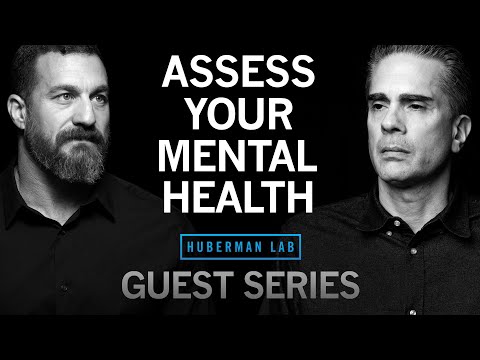
Stanford neurobiology and ophthalmology professor Andrew Huberman and psychiatrist Dr. Paul Conti (who trained at Stanford, served as chief resident of psychiatry at Harvard Medical School, and founded the Pacific Premier Group) open a multi-part series on mental health by drawing a parallel with physical health. Just as physical fitness relies on underlying systems—cardiovascular endurance, muscular strength, and mobility—that support how well a person moves through the world, Conti frames a healthy psychological self around agency and gratitude, supported by empowerment and humility.
Rather than defining mental health solely through diagnostic labels or disorders, Conti approaches it from the ground up by looking at how the mind is built and how it operates in everyday life. Drawing on neurobiology, clinical psychiatry, and lived experience, he introduces two foundational pillars—the structure of the self and the function of the self—which move from intricate underlying processes up toward simpler, more active ways of engaging with life, relationships, and challenges.
Structure of the Self: Unconscious, Conscious, Defenses, and Character
Using an iceberg metaphor, Conti describes the unconscious mind as the vast portion beneath the surface—processing immense amounts of neural, emotional, and habitual activity—upon which the conscious mind ("the I") rides above the water. Because the conscious self is vulnerable to fear, confusion, pain, and despair, unconscious defense mechanisms emerge to protect it, operating automatically in ways that can be either adaptive or maladaptive depending on context and awareness.
Around these defenses and the conscious mind forms the character structure—a set of predispositions, tendencies, and patterns (such as trust versus wariness, avoidance versus engagement, or how someone uses humor or relates to others) that shape how a person interfaces with situations, out of which grows the lived experience of the self. Conti notes that character patterns can become rigid or skewed by past experiences or trauma—such as excessive mistrust or an inflated/omnipotent stance—yet can be examined and reshaped over time through honest reflection and targeted work.
Function of the Self, Defense Mechanisms in Action, and Salience
While the structure of the self outlines the underlying architecture ("the nouns"), Conti describes the function of the self as how those elements operate dynamically in real time ("the verbs"): starting with awareness of the "I," observing defense mechanisms in action, noticing salience (what captures attention internally and externally amid countless competing stimuli), making behavioral choices, and pursuing strivings and hope toward the future.
Examining specific defenses in action, Conti distinguishes:
-
Projection: Attributing one's own unowned anger, irritation, or hostility outward onto another person or situation (such as feeling beleaguered in traffic or assuming a coworker is frustrated when you are the one feeling irritable).
-
Displacement: Shifting an emotional reaction or outlet onto a safer or different target rather than addressing the real source (a dynamic Huberman compares to "trickle-down anxiety" in high-pressure environments like labs or workplaces).
-
Projective Identification: Expressing or enacting an internal emotional state in a way that stirs or recruits matching feelings or reactions in others (illustrated by losing keys and spreading tension until others step in to help relieve the agitation).
-
Humor, Sarcasm, and Cynicism: While healthy humor can ease tension or help people laugh together, biting sarcasm can act as disguised aggression or envy, and entrenched cynicism can serve as a protective shield against disappointment—at the cost of connection, openness, and joy.
Repetition, Beliefs, and Narratives
Addressing why people sometimes repeat familiar patterns or get stuck in unhelpful loops—even when they know better or succeed in other areas—Conti notes that deeply reinforced internal narratives and habits do not vanish overnight like a quick fix; rather, building new, healthier pathways takes time, awareness, and consistent practice (much like wearing a clearer path while letting old, rigid ruts atrophy), and spotting a sharp contrast or "carve-out" in how someone handles one domain versus another can point straight to underlying defenses or unexamined beliefs.
Drives, Envy vs. Demoralization, and the Role of Medication
Expanding on human motivation, Conti discusses classic aggressive and pleasure drives alongside a generative drive—the constructive impulse to learn, create, nurture, care, and make things better—arguing that a healthy life places the generative drive at the helm so that assertion/agency and healthy pleasure serve creation rather than being eclipsed by destructive envy (on the high/competitive/hostile end) or demoralization and withdrawal (on the low/hopeless end, though people in demoralized states may also connect through affiliative bonds that can be constructive or harmful). Huberman shares reflections from his own postdoc years and career on competition, curiosity, and finding delight in the work itself.
Finally, addressing psychiatric diagnosis and medication, both speakers caution against overly reductionist "pill-for-every-ill" thinking in high-throughput care—noting stories like an emergency-room patient whose severe insomnia/anxiety stemmed from feeling unsafe at home rather than needing escalated sedatives alone, and Huberman's own past experience briefly trying a low-dose serotonergic medication before relying on talk therapy and self-care. Conti emphasizes that while psychiatric medications can play a vital biological or stabilizing role (such as mood stabilization or lowering overwhelming distress so someone can engage in deeper work), they are not a substitute for understanding the self—setting the stage for upcoming episodes on practical ways to improve mental health.
Full Transcript
00:00[Music]
00:00welcome to the hubman lab guest Series
00:02where I and an expert guest discuss
00:04science and science-based tools for
00:06everyday life I'm Andrew huberman and
00:09I'm a professor of neurobiology and
00:11Opthalmology at Stanford School of
00:13Medicine today's episode marks the first
00:16in a four episode series all about
00:18mental health the expert guest for this
00:20series is Dr Paul KY Dr Paul kti is a
00:24medical doctor and psychiatrist who
00:26completed his medical training at
00:27Stanford University School of Medicine
00:30and then went on to become chief
00:31resident of Psychiatry at Harvard
00:33Medical School he then went on to found
00:35the Pacific Premier Group which is a
00:37collection of psychiatrists and
00:39therapists who are expert in treating
00:41all types of psychiatric disorders and
00:43life stressors across the four episodes
00:45of this series on Mental Health Dr Ki
00:48teaches us about the structure of our
00:50own minds and how to think about our own
00:52minds as a way to enhance our mental
00:54health he explains how our subconscious
00:56mind and our conscious mind interact to
00:59drive our emotions our decision-making
01:01and our behavior and while any series
01:03about mental health requires that from
01:05time to time we discuss personality
01:07disorders and psychiatric challenges the
01:09main discussion in today's episode and
01:11in fact all four episodes in this series
01:13are about what it means to be mentally
01:15healthy and how to build one's mental
01:17health through specific practices either
01:20done alone or with a therapist today's
01:22episode addresses several key questions
01:25as well as provides protocols for you to
01:27address questions about your own Mental
01:29Health
01:30for instance you will learn what
01:32constitutes the most mentally healthy
01:34version of yourself you will learn to
01:35assess and indeed you will learn
01:37protocols for addressing levels of
01:39anxiety levels of your confidence how to
01:42think about your beliefs and internal
01:44narratives how to think about your selft
01:46talk and restructure your selft talk we
01:49discuss common challenges such as
01:50overthinking we talk about the role of
01:52defense mechanisms and other aspects of
01:55the conscious and unconscious mind
01:56interactions that can lead us toward or
01:59away from the healthiest versions of
02:00ourselves you'll notice that during the
02:02first 5 minutes or so of today's
02:04discussion Dr kti describes a framework
02:07of what he refers to as the structure of
02:09self and the function of self and he
02:11describes several pillars for
02:13understanding what those are I'd like to
02:15highlight that while that short portion
02:17of our discussion does bring up a number
02:19of terms that are likely to be novel to
02:21you they certainly were novel to me that
02:23as our conversation proceeds you will
02:25really come to appreciate just how
02:27simple and yet powerful that framework
02:30is it will help you understand for
02:32instance the relationship between your
02:34conscious mind and your subconscious
02:35mind in ways that you can really apply
02:37toward enhancing your mental health in
02:39addition to that Dr kti has generously
02:41provided a few PDFs which illustrate
02:44that framework for you and that are
02:46available completely zero cost by going
02:48to the links in the show note captions
02:50so you have the option to download those
02:52PDFs and to look them over either prior
02:54to or during or perhaps after you listen
02:57to these four podcast episodes as a
02:59final note before beginning today's
03:00discussion just want to emphasize my
03:03sentiment which I'm confident will soon
03:05be your sentiment as well which is that
03:08Dr Paul kti shares with us immensely
03:10powerful tools for enhancing mental
03:12health that at least to my knowledge
03:13have never been shared publicly before
03:16in fact as somebody who has done more
03:17than three decades of therapy I've never
03:20before been exposed to a conversation
03:22about the structure of the mind and the
03:24subconscious mind as well as tools and
03:26protocols for enhancing mental health as
03:28powerful as these for me the information
03:31was absolutely transformative in terms
03:33of reshaping my thought patterns my
03:35emotional patterns and indeed several of
03:37my behavioral patterns and I'm confident
03:39that the information that you'll glean
03:40from today's episode and throughout the
03:42series will be positively transformative
03:44for you as well before we begin I'd like
03:46to emphasize that this podcast is
03:48separate from my teaching and research
03:49roles at Stanford it is however part of
03:51my desire and effort to bring zeroc cost
03:53to Consumer information about science
03:55and science related tools to the general
03:57public in keeping with that theme I'd
03:59like to thank the sponsors of today's
04:01podcast our first sponsor is betterhelp
04:04better help offers Professional Therapy
04:06with a licensed therapist carried out
04:08online I personally have been doing
04:09weekly therapy for more than 30 years
04:12and while that Weekly therapy was
04:13initiated not by my own request it was
04:16in fact a requirement for me to uh
04:18remain in high school over time I really
04:21came to appreciate just how valuable
04:23doing quality therapy is in fact I look
04:26at doing quality therapy much in the
04:28same way that I look at going to to the
04:30gym or doing cardiovascular training
04:32such as running as ways to enhance my
04:34physical health I see therapy as a vital
04:37way to enhance one's mental health the
04:39beauty of better help is that they make
04:40it very easy to find an excellent
04:42therapist an excellent therapist can be
04:44defined as somebody who is going to be
04:46very supportive of you in an objective
04:48way with whom you have excellent rapport
04:51with and who can help you arrive at Key
04:53insights that you wouldn't have
04:54otherwise been able to find and because
04:56better heal therapy is conducted
04:58entirely online it's it's extremely
05:00convenient and easy to incorporate into
05:02the rest of your life so if you're
05:03interested in betterhelp go to
05:05betterhelp.com huberman to get 10% off
05:08your first month that's betterhelp
05:10spelled
05:12hp.com today's episode is also brought
05:14To Us by waking up waking up is a
05:17meditation app that offers dozens of
05:18guided meditation sessions mindfulness
05:21trainings Yoga Nidra sessions and more
05:24by now there's an abundance of data
05:26showing that even short daily
05:28meditations can greatly improve our mood
05:30reduce anxiety improve our ability to
05:32focus and can improve our memory and
05:35while there are many different forms of
05:36meditation most people find it difficult
05:39to find and stick to a meditation
05:41practice in a way that is most
05:42beneficial for them the waking up app
05:44makes it extremely easy to learn how to
05:46meditate and to carry out your daily
05:48meditation practice in a way that's
05:50going to be most effective and efficient
05:52for you it includes a variety of
05:54different types of meditations of
05:56different duration as well as things
05:58like Yoga Nidra which place the brain
06:00and body into a sort of pseudo sleep
06:02that allows you to emerge feeling
06:04incredibly mentally refreshed in fact
06:05the science around Yoga Nidra is really
06:07impressive showing that after a Yoga
06:09Nidra session levels of dopamine in
06:11certain areas of the brain are enhanced
06:13by up to 60% which places the brain in
06:15body into a state of enhanced Readiness
06:18for mental work and for physical work
06:20another thing I really like about the
06:21waking up app is that it provides a
06:2330-day introduction course so for those
06:25of you that have not meditated before or
06:28getting back to a meditation practice
06:30that's fantastic or if you're somebody
06:32who's already a skilled and regular
06:33meditator waking up has more advanced
06:36meditations and yoga needer sessions for
06:37you as well if you'd like to try the
06:39waking up app you can go to waking
06:41up.com huberman and access a free 30-day
06:45trial again that's waking up.com
06:48huberman and now for my discussion about
06:50how to understand and assess your level
06:52of mental health with Dr Paul KY Dr Paul
06:55kti welcome thank you I'm very excited
06:58for today's episode and for this series
07:01because I like so many other people out
07:03there have a lot of questions about
07:05myself and themselves and not just about
07:09ourselves but how the different
07:11personality types out there the healthy
07:15types the narcissists the you know all
07:17the things that we hear about these days
07:19gaslighting all these sorts of things
07:21what all of that really is um perhaps we
07:24can dispel some of the myths that exist
07:26during the course of this series I'm
07:28sure we will or you will thank you and
07:31also raise certain important questions
07:34that we should all ask ourselves in
07:35terms of trying to understand who we are
07:37and how we can be the best versions of
07:39ourselves how we can
07:40experience the most happiness also the
07:43the most richness in life because of
07:45course life isn't just all about being
07:47happy so to start off this question I I
07:50want to raise a parallel with something
07:51I think for most people is is more
07:54concrete which is physical health you
07:56know um while there isn't an ideal
07:59physical self that's been defined by the
08:02medical community we know for instance
08:04that there is a range of blood pressures
08:06that are considered healthy there's a a
08:09range of body mass index that's
08:11considered healthy although that's a
08:13little controversial because it depends
08:14on how much muscle how lean people are
08:16Etc but you know I think it's reasonable
08:19to say that the healthy individual is
08:22not going to get exhausted walking up a
08:24flight of stairs that they could bend
08:26down and lift an object without hurting
08:27themselves they might even have some
08:28additional strength or endurance Etc
08:31within the physical health domain all of
08:33that is fairly well scripted and there
08:36are protocols that people can follow to
08:38improve their physical health we've
08:40covered many of them on this podcast
08:42before when it comes to mental health
08:45and it comes to concepts of the self
08:48Things become much more abstract for
08:49people in fact I think most people
08:51including myself are kind of wandering
08:52around in the dark wondering whether or
08:54not we are the best versions of
08:56ourselves whether or not we're thinking
08:57about ourselves and the world around us
08:59in the best best ways so to start things
09:01off you tell us what is the healthy
09:04version of self I mean what what what
09:05should we all be aspiring to you've
09:07worked with people who uh presumably are
09:09healthy and people who have severe
09:11pathologies of different psychiatric
09:14types right bipolar narcissistic
09:17sociopathic uh and everything in
09:21between so for me and for the listeners
09:24what is a healthy self what should we be
09:26striving for well a healthy self
09:28approaches life through the lens of
09:31agency and gratitude if you look at
09:34happy people you know people who like
09:36their lives right no matter what stage
09:38of Life they're at right no matter what
09:40their socioeconomic status is you know
09:43race religion there's so many things
09:45that we we think matters right and and
09:48and and they matter to a lot of things
09:49do they matter to is someone happy or
09:51not right they they are not factors
09:55right the factors that tell us is this
09:57person enjoying life are they going to
09:58take care of themselves are they happy
10:00they're here are they engaged
10:02productively in the world is agency and
10:05gratitude and if we have those two
10:07things then it's interesting you almost
10:10never see someone go wrong right and
10:13even if if there difficulties even if
10:15there are things happen in life that
10:18that can make some unhappiness right it
10:20doesn't take away the person's
10:21engagement in life the person's
10:23enthusiasm for life and I think if you
10:25look at even traditions of understanding
10:28how are people happy whether it's in
10:29Psychiatry or it's through literature or
10:31through a religious lens it is always
10:34people who approach life through the
10:37lens of agency and
10:39gratitude could we go a little bit
10:41deeper on agency and gratitude sure when
10:44I hear the words agency and gratitude I
10:45think agency and ability to affect the
10:48world around me in the ways that I want
10:50and I think gratitude being thankful and
10:53uh and we did an entire episode all
10:55about gratitude practices some of the
10:57neuroscience and neuroimaging and Ne
11:00chemical changes that occur in the brain
11:02and body when people exert a gratitude
11:05practice but I have a feeling that when
11:06you talk about agency and gratitude you
11:08might be talking about something
11:10slightly or maybe even quite a bit
11:11different than the way that I'm defining
11:13it yeah I would say agency and gratitude
11:16are these amazing rewards right that sit
11:20on top of the highly complex brain
11:23function inside of us and the highly
11:26complex psychology in all of us so if we
11:29think about a self right that I
11:32identify a self right I'm an ie right if
11:35if I'm going to approach the world with
11:37agency and gratitude that's sitting on
11:40top of a lot of healthy things right and
11:43the idea that okay there are ways in
11:45which we can be mentally unhealthy right
11:47but to start with like what is going on
11:50inside of us right and what does it look
11:52like when we're healthy so there's a
11:55structure of the self right there's
11:57function of the self and we we look at
11:59the structure and the function and the
12:02parts the components of structure and
12:03function we can come to understand okay
12:06what is going on in us what might we
12:09change for the better how do we build
12:11empowerment right empowerment is is the
12:15the the ability to navigate the world
12:18around us and to bring myself to bear in
12:21ways that are effective and from
12:23empowerment arises the sense of agency
12:25right I have agency because I am
12:27empowered right and also from a healthy
12:30structure of self and function of self
12:34we end up with humility right we come
12:36through that with a sense of our our
12:39place in the world and our power in the
12:41world to to navigate as we choose but
12:44also a sense of the world around us
12:46that's far more complicated right than
12:48just we are extends Beyond us to other
12:51people to the climate around us to the
12:53health of the whole planet right we we
12:56feel a sense of humility that I'm here
12:58and I can do good things I'm fortunate
13:00to be here and I'm part of this bigger
13:03ecosystem right all the way up to the
13:06scale of the ecosystem of earth right
13:08and if we feel that humility then we
13:11approach the world through the lens of
13:12gratitude so the idea that a healthy
13:15structure of self and a healthy function
13:17of self leads to empowerment and
13:19humility and then upon that we are we
13:23are sort of imbued with agency and
13:26gratitude and that leads us us forth to
13:30happy lives okay so it's clear to me why
13:34having agency and gratitude would be
13:37wonderful perhaps even the goal state
13:39that we should all be seeking to achieve
13:42and it also makes sense to me as to why
13:44empowerment and humility are important
13:48components that feed into our ability to
13:50have agency and gratitude yes right
13:52because all of that at least to my mind
13:55sums to it a very clear statement about
13:59having agency and gratitude is the best
14:01way to approach life that all makes
14:03perfect sense to me and yet I've never
14:05really thought about it that way and I
14:06think most people haven't ever been told
14:08this right I mean what should we be
14:09seeking agency and gratitude yes you
14:12know we've heard endless number of
14:14podcasts including this podcast about
14:17physical health and we've been told by
14:19physicians and everybody else that you
14:22know we should seek to have a relatively
14:23low blood pressure we should seek to
14:25have a relatively low heart rate that
14:29cholesterol should be at a certain level
14:31Etc So within the physical health domain
14:33you know there are strong clear messages
14:35about what we should all be striving
14:37toward and in a similar way to how we're
14:40discussing the self in Psychology you
14:42know I don't think anyone seeks to have
14:44low blood pressure or low heart rate
14:46because that's what they want per se
14:48they want those things along with some
14:50capacity for endurance the ability to to
14:53you know lift an object so some strength
14:55Etc because of the way that those
14:57metrics of Health allow them to move
15:00through the world in the best possible
15:01way in other words having some degree of
15:03endurance allows you to walk down the
15:04block maybe a lot further or to walk up
15:07several flights of stairs or to have
15:09some strength allows you to pick up
15:11objects and effectively move through
15:13life right you're telling us that having
15:16a sense of agency and
15:18gratitude and that agency and gratitude
15:20are underg guarded by empowerment and
15:23humility and that's the best way to move
15:25through life the most effective happiest
15:27if you will way to move through life
15:30well then I think we have to ask
15:31ourselves the same thing we would ask
15:33about physical fitness which is what
15:35goes into creating a sense of agency and
15:37gratitude empowerment and humility you
15:39know what are the action steps because
15:40if I want more endurance I know to get
15:42on an exercise bike or or a treadmill or
15:45go out for a run a few times a week or
15:46more if I want to get stronger I'm going
15:48to lift objects that are difficult to
15:50lift until they're easier to lift I mean
15:52it's all pretty straightforward in the
15:53physical domain but in the in the mental
15:56health domain in the psychological
15:58domain it does become a bit more
15:59abstract I think in part because no
16:01one's ever told us certainly no one's
16:03ever told me what you really need in is
16:06agency and gratitude in order to have
16:08the best possible life so I very much
16:10appreciate that you're telling us this
16:12and I'd love for you to tell us what are
16:14the action steps that go into creating
16:16these things that we're calling agency
16:19gratitude empowerment and humility you
16:21there's actually quite a strong parallel
16:24between the physical health Dimension
16:26and the mental health Dimension so so as
16:28you're saying like why do you put in the
16:30time the energy the learning right to be
16:33physically healthy right it's a lot of
16:35effort and and we put so much of
16:37ourselves towards it if we decide that
16:39we value that right why do we do it
16:42right because as you said it's the best
16:44way to approach life like there may be
16:46something that I want to do I I want to
16:48run a race right or I you know I I want
16:50to climb a mountain right but ultimately
16:52we take care of ourselves physically
16:54because we don't know what's coming next
16:56in life and we want to be prepared for
16:58it good bad and otherwise right and the
17:00same thing is true of mental health so I
17:04can feel grateful for something I can
17:05feel grateful that I'm still breathing
17:07right now right I can exercise agency I
17:10can pick up that cup and take a drink
17:11right but that doesn't mean that I'm
17:14living life through the lens of agency
17:17and gratitude which is consistent with
17:19every opinion if you look
17:21psychologically through the lens of
17:22literature through the lens of so of
17:24sociology and psychology agency and
17:27gratitude make happiness right they ways
17:30of approaching life and just like
17:33physical health is undergirded by uh by
17:37cardiovascular health heart health
17:40muscle strength right that there's an
17:42undering of agency and gratitude and
17:45empowerment and humility are ways of
17:48describing okay what arises right from
17:53understanding ourselves taking care of
17:55ourselves that then gives us the agency
17:58and gratitude so we have empowerment we
18:00have humility but where does it all come
18:02from right so just like we have to
18:04understand the physical body and what to
18:06do to it in order to be healthy right we
18:08also have to understand the mind right
18:11the self that wants to be healthier and
18:14that comes through understanding the
18:15structure of the self and we have enough
18:18science through the lens of neurobiology
18:20and Psychiatry to understand the
18:23structure of self and then the function
18:25of self right how we work right how we
18:28interfere face with the world so it's
18:30actually not more complicated than
18:33physical health it's just that we don't
18:35spell it out that way right we come at
18:37it through the lens of pathology of
18:39what's wrong and who has some diagnosis
18:42and you know we're looking for the
18:44problematic instead of saying like what
18:45do we look like when we're happy right
18:48and then going and digging down into the
18:50mechanics of it all right and if we're
18:52not in that state right to go and look
18:55at that and to make changes just as if
18:57you were very very physically healthy
19:00right but you know your heart rate
19:01couldn't go up that much without you
19:03feeling very very fatigued we'd say well
19:05look you're doing a lot of the right
19:07things right but let's work more on on
19:10your heart right we would go look at the
19:12specifics of it because that's how we
19:15understand it and we just don't apply
19:18the same science logic common sense to
19:21mental health as we do to physical
19:23health but it's time for that to change
19:26because we have the knowledge and
19:27ability to do just that
19:30when we had Dr Andy Galpin on this
19:32podcast to do a series on physical
19:35health and uh Fitness essentially he
19:39said something that really stuck with me
19:40which was that the number of different
19:42workouts that people can do out there
19:44body weight workouts work with weights
19:46with machines you can run far you can
19:49run shorter distances more quickly you
19:51know you can do planks you know situps
19:53so many variations on exercise routines
19:57but what he very clearly stated was that
20:00there are only a few core adaptations
20:02that the body can undergo that lead to
20:06these byproducts that we call lower
20:08blood pressure enhanced endurance
20:09improved strength improved uh
20:11neuromuscular function improved brain
20:13function for that matter it sounds to me
20:15like there are a lot of parallels in
20:17creating the healthy psychological self
20:20so what are the core components that I
20:23and others should think about in terms
20:25of understanding I think he described
20:27them as the structure of the self and
20:28the functions of the self again just to
20:30draw a parallel if we were talking about
20:31physical health we'd say okay there's
20:33connections between nerves and muscle
20:34that allows us to move our limbs if you
20:37apply a certain amount of resistance you
20:38get a certain adaptation which is the
20:40the neuromuscular connection get
20:41stronger the muscle might get bigger or
20:42just stronger Etc flexibility you know
20:45you just push your range of motion just
20:47a little bit into discomfort you do that
20:50we it so happens to be the case that you
20:52do that for just a couple of minutes
20:53each day over the course of about a week
20:55or so you get a significant increase in
20:56flexibility okay so it's all very clear
20:58in the physical domain in the
20:59psychological domain I hear you telling
21:01us that the action steps that we all
21:03should be taking in order to be the
21:05happiest version of ourselves by
21:07achieving agency and gratitude is to
21:10explore the structure of self and the
21:12function of self so if you could tell us
21:15about what is the structure of self like
21:17what goes into Andrew being Andrew and
21:20Paul being Paul and whoever The Listener
21:22is into being who they are what is that
21:25and what is the function of self how how
21:28does a Psy Christ think about that how
21:29should we think about that okay if I
21:32could start maybe to set the stage for
21:34that right by pointing out that as we go
21:37up the hierarchy right of Health right
21:41everything should get simpler right not
21:44more complicated right if you think
21:46about physical health right there's so
21:48much complexity on the initial levels
21:51right so we think about you know your
21:53physical health status versus mine right
21:55it's going to be different right we're
21:56going to have different cardiac function
21:57and muscle function and pulmonary
21:59function and if we're going to be
22:00healthy we could do a lot of different
22:02things right there might be a whole set
22:03of choices that would work well for you
22:06different choices that would work for me
22:07and we can gauge intensity timing
22:09frequency right it's very complicated
22:12when we're on the the lower levels of
22:15the hierarchy as we get higher up let's
22:18say you and I both do the right things
22:20right then what happens we both have
22:21endurance right we both have some
22:24strength we're both robust right things
22:26are getting simpler because we're we're
22:28we're approaching the unique
22:30idiosyncrasies in all of us right and we
22:32have to look at that and look at that in
22:34a very specific way but what we're
22:36trying to get to is is something that's
22:39common for all of us so stamina for
22:41example in physical health and endurance
22:43right and agency and gratitude in mental
22:47health right so then if we go and we
22:49look and we look at the structure of the
22:51self and the function of self we find
22:54that there's more complexity but that it
22:56is also understandable I mean there's
22:57tremendous complexity in the body just
23:00as there's tremendous complexity in the
23:02mind and we can understand what is the
23:05structure of self what is the function
23:07of self and we can look at that and
23:10assess that in the same way we would
23:11physical health parameters so that we
23:14arrive at the place we want to be be it
23:17endurance or agency or gratitude so
23:20structure of self right we all have an
23:24unconscious mind right and we pay so
23:27little attention to this part of us that
23:30really is the biological supercomputer
23:32right so millions of things are going on
23:35all the time like in every Split Second
23:38so for example I can say these words
23:40right you can listen to the words you
23:41can say things back and I can listen
23:43right they're millions and millions of
23:45things going on under the surface much
23:48of which comes from either biological
23:51predispositions right or habits over
23:53time right thought processes patterns
23:56right so this unconscious mind this
23:59supercomputer is doing all of these
24:01things like you know at the speed of
24:03light right there are electrical and
24:05chemical signals and you know multiple
24:07Pathways as common as complicated as
24:10super highway systems that then get
24:12Consolidated and communicate with others
24:14right and then what comes up from all of
24:17that is the conscious mind so imagine an
24:20iceberg right and it's a really really
24:22big Iceberg right and and we see the
24:25part above the surface right that's the
24:27conscious mind right but there's a huge
24:31part of this Iceberg maybe 95% of it
24:34that's underneath the water right that
24:36there's this hulking mass that we don't
24:38see that's the unconscious mind right
24:41and it's feeding up to the conscious
24:43mind which is a much smaller part of our
24:46brain function right but it's the part
24:48that we're aware of right it's sitting
24:51on top of all the unconscious things
24:53which are extremely important but then
24:55we become aware so that we can engage in
24:58the real world in order for us to have
25:00this conversation the millions of things
25:02per second have to be going on
25:03underneath the surface so that you and I
25:06as conscious eyes right as conscious
25:09selves Can Ride Along on top of it so
25:11that's the part of the iceberg that's
25:13above the water it's the conscious self
25:16then imagine that the conscious self is
25:19girded by by uh a a set of um you know
25:24long uh tendrils that come out from
25:27under the w water right that there are
25:29defense mechanisms that are unconscious
25:31to us that sort of GD the conscious mind
25:34so do we rationalize automatically do we
25:37avoid automatically do we act out
25:40automatically are these things in Us in
25:43ways that we can observe and change but
25:46that are there to try and protect the
25:48conscious mind from the the slings and
25:51arrows of the world around us right so
25:54if you imagine there's the big part of
25:55the iceberg under the water the
25:57unconscious mind the conscious mind is
25:59riding on top of it but the conscious
26:01mind that part sticking out of the water
26:02is vulnerable right so imagine that
26:05there's a defensive structure then that
26:07arises from the part of the iceberg
26:09that's underwater that is there to
26:11defend and protect the conscious mind so
26:15when you say to defend and protect when
26:18you say that the conscious mind is
26:20vulnerable what do you mean do you mean
26:22that it's vulnerable to physical attack
26:24or that it's vulnerable to us realizing
26:27that we're just a neurons that are
26:29clicking away underneath like in other
26:31words where does the vulnerability of
26:32the conscious mind really reside um not
26:35physically where does it reside but you
26:37know what am I so worried about in terms
26:40of my safety I mean right now we're in a
26:41room I feel pretty safe um I don't think
26:44you're going to attack me verbally or
26:45physically I suppose it's possible that
26:48could happen but it seems like a very
26:50distant possibility So when you say that
26:52these defenses are there to protect us
26:54from some sort of awareness what
26:56awareness are we trying to avoid so the
26:58the vulnerability of the of the
27:00conscious mind is to fear confusion
27:04despair right there's so many things
27:07that that we can fear right some people
27:09are afraid of snakes or spiders some
27:10people are afraid of death some people
27:12are afraid of health issues that could
27:14come to them or to people they love we
27:17can get confused and not know what
27:18decisions to make and how to navigate
27:20the world and how to be who we want to
27:22be to ourselves and to others right we
27:24can feel tremendously vulnerable and
27:27despairing if we lose others or you know
27:29we start to see things happening in the
27:31world around us that that that we don't
27:33like right we start to feel like what
27:35will happen to the planet we live on
27:37where there'll be War where I live will
27:39my children be safe right there's so
27:41much that we need to protect ourselves
27:44again so that vulnerable part of of us
27:48right the part of the iceberg sticking
27:50out above the water needs a defensive
27:52structure around it to protect it
27:55against the vulnerability of fear
27:57confusion despair right and because the
28:00conscious mind is is sticking out of the
28:02water with a defensive structure around
28:04it right it is the the raw material from
28:09which we create our character structure
28:11so the character structure is all of
28:13that the part under the water the part
28:15above the water the defensive structure
28:17so imagine like a nest around all of
28:20that and that's the character structure
28:22that we utilize to interface with the
28:25world right so the character structure
28:27is it's like the thing that I'm using
28:30right it's like if you're driving
28:31somewhere in a car right the car is the
28:33thing that you're using to go there
28:34right the character structure is the
28:36thing that we're using to interface with
28:38the world so for example how trusting am
28:41I versus suspicious right how readily do
28:45I come to make friends with people right
28:48how uh how much do I act out if I'm
28:51frustrated right how much do I um you
28:54know exclaim something negative right as
28:56opposed to holding it inside of me how
28:58much do I rationalize if something isn't
29:00going well do I want to look at it and
29:02maybe see that it is so that I don't
29:04have to face it right how much do I
29:06avoid problems in the world around me
29:08how much do I exercise altruism right
29:11these are all the ways in which we're
29:13engaging with the world around us and
29:16this determines the self imagine that
29:18the self then grows out of this Nest
29:21from the the character structure that we
29:24use to interface with the world and the
29:26decisions that we make so if our
29:28character structure is it's the thing
29:30through which we engage with the world
29:33then we're enacting right what is inside
29:36of us right what we've determined
29:38through our unconscious mind our
29:39conscious mind our defense mechanism
29:41there's a certain us that that comes at
29:43the world in a certain way and if we're
29:46more or less trusting more or less
29:48avoidant we rationalize more or less
29:50these are the factors that determine
29:53like where do where do our lives go
29:55right because on top of all of this
29:57imagine that the nest of the character
29:59structure around all of this grows from
30:01it the self right the product of the
30:04feelings inside the things that we know
30:06about ourselves and don't know about
30:07ourselves the decisions that all of it
30:10leads to so I may choose to be for
30:12example more trusting and that may bring
30:15an opportunity to me that I wouldn't
30:16have otherwise had right I may choose to
30:19be more trusting and it may bring risk
30:21to me that I wouldn't otherwise have had
30:24so we want to be as healthy as we can as
30:27knowledgeable of ourselves and the world
30:29around us so that it's safe for us to
30:32have a healthy character structure
30:34through which we can engage in the world
30:36around us with a sense of prudence right
30:39taking reasonable risks right not too
30:42little so that we shut ourselves down
30:43and maybe end up despairing not so much
30:46that that scary things can happen to us
30:48and we end up fearful right but the idea
30:51that if we know ourselves well the
30:54character structure is healthy right
30:57because it's built upon a structure of
30:59self and a function of self that are
31:00healthy and out of it is coming
31:03empowerment right and empowerment and
31:05humility right that then lead us to
31:07agency and gratitude right the idea here
31:10is that this is the character structure
31:13that we create that can then interface
31:15with the world in a way that's good for
31:17us and good for the world around us that
31:20leads us to be able to live in much more
31:22Harmony inside of ourselves and outside
31:25of ourselves so if I understand
31:27correctly defense mechanisms that grow
31:29up out of this portion of the iceberg
31:32that we're calling the unconscious mind
31:35they protect our conscious self in ways
31:38that can be adaptive or that can be
31:41maladaptive in other words defenses can
31:43be healthier they can be unhealthy yes
31:46and perhaps in a in a few minutes we can
31:47get into what a healthy versus an
31:50unhealthy defense looks like but the way
31:52you describe character structure sounds
31:55to me like an array of contextual
31:59dispositions I don't want to add
32:01unnecessarily um complex language but it
32:05sounds to me like a bunch of
32:06dispositions like like if I'm walking
32:09into the office where I know everybody
32:10and I see familiar faces there's no
32:12reason for me to be on guard if I trust
32:15those people but if I'm walking down a a
32:18street at night that I'm not familiar
32:20with and and I'm starting to get the
32:21sense that you know this neighborhood
32:22might not be the best it makes sense for
32:24me to be on relatively high alert so
32:27different dis positions depending on
32:29different conditions I can't help but
32:31mention my uh Bulldog Costello who had
32:34basically three dispositions it was
32:36asleep but in all seriousness the second
32:39one was um kind of bored the Bulldog
32:42face is kind of bored or if something
32:45was given to him that he liked or if we
32:46were doing something he liked Delight he
32:48Bas had three dispositions as far as I
32:50could tell um I think one of the reasons
32:52we like dogs so much or that many of us
32:54like dogs so much is that their
32:56decisions are very predictable take him
32:59to the park he's happy unless he
33:00happened to be ill that day which was
33:01rare um you know feed him he's happy
33:04right there wasn't a lot of uh I don't
33:06like this particular meal or I don't
33:08like this particular park or this Bean
33:10fris doesn't smell so good to me you
33:12know there's a it was so simple and and
33:15yet people are very complex right I I I
33:18can look at myself and say okay what
33:19like what is my character structure
33:21character structur is certain things I
33:23like certain things I dislike certain
33:24things really irritate me certain
33:26environments and people I just lighten
33:28okay so is the definition of a healthy
33:31character structure one in which the
33:35dispositions match the context perfectly
33:38I mean I don't know how any of us could
33:39be like that but is is that sort of the
33:42ideal much in the same way that um you
33:45know we could probably arrive at at an
33:48ideal degree of stamina that one could
33:51have I mean some people want run
33:53ultramarathons you know 100 miles or
33:55more some people want to run a marathon
33:56some people like me don't really desire
33:58to run a marathon but I want to be able
33:59to run a mile if I need to without being
34:01completely exhausted and injured so you
34:04know when we when we ask ourselves about
34:05character structure are we asking
34:08ourselves about context driven
34:10dispositions and you know how do we
34:12start to evaluate that for ourselves
34:14right I think because we're more
34:15complicated I think it's not
34:17dispositions as much as it's
34:19predispositions right so so in the
34:21example that you gave right you have a
34:24certain predisposition to be either
34:26trusting or wary right and and you're
34:29and that's healthy in you right so when
34:31you come into a setting where there's
34:34not a a good reason to feel mistrustful
34:37to feel anxious to feel vulnerable right
34:39then you feel at ease right so you walk
34:41into the work setting there are people
34:43you know there're people you like
34:44everything is okay right you have a
34:46different pre predisposition when the
34:49context is different right so if the
34:50context could bring a lack of safety
34:53then you respond accordingly with a lack
34:55of safety right but but it's possible
34:57certainly those predispositions can be
35:00in unhealthy places right so for example
35:04you might have been traumatized in a
35:06certain way or you might approach the
35:08world in a certain way because of Prior
35:10experience that you may not register as
35:12trauma but it may be that within you is
35:15a predisposition to be mistrustful so
35:17you could walk into a room of people
35:19that you know of people who've never met
35:21you any harm and still feel unsafe right
35:24now this happens most often after trauma
35:27but there are other ways people can get
35:29to that where the predisposition isn't
35:31so healthy the converse is true too
35:34right there are people who can have too
35:36much of what's called an omnipotence
35:37defense and then they don't recognize
35:39danger when danger is around them so the
35:42idea the character structure that Nest
35:45right that's built around the defensive
35:46structure and the conscious mind that's
35:48sitting on top of the part of the
35:50iceberg the unconscious mind underwater
35:52right it's that Nest that is interfacing
35:55with the world through a whole whole set
35:58of
35:59predispositions I'd like to take a brief
36:01break and acknowledge one of our
36:02sponsors ag1 ag1 is a vitamin mineral
36:06probiotic drink that meets all of your
36:07foundational nutrition needs I started
36:09taking ag1 way back in 2012 so I'm
36:12delighted that they sponsoring the
36:14podcast the reason I started taking ag1
36:16and the reason I still take ag1 once or
36:18generally twice per day is that it's the
36:20easiest way for me to ensure that I'm
36:22getting all of the vitamins minerals
36:24probiotics and fiber that I need in my
36:26diet now of course it's essential to get
36:28proper nutrition from Whole Foods but
36:30most people including myself find it
36:32hard to get enough servings of fruits
36:34and vegetables each day and especially
36:36to get enough prebiotics and probiotics
36:38to ensure gut health as you may know
36:40your gut contains trillions of little
36:42microbiota the so-called gut microbiome
36:45which establishes critical connections
36:47with other organs of your body to
36:49enhance brain health as well as to
36:50support your immune system and other
36:52aspects that relate to mental and
36:54physical health one of the most common
36:55questions I get is if if you were to
36:57take Just One supplement which
36:59supplement would that be and my answer
37:01is always ag1 because by taking ag1 I'm
37:04able to ensure that I'm getting all of
37:06the vitamins minerals and probiotics
37:08that I need to enhance my mental health
37:10physical health and performance if you'd
37:11like to try ag1 go to drink a1.com
37:15huberman to claim a special offer
37:17they'll give you five free travel packs
37:19and they'll give you a year supply of
37:20vitamin D3 K2 again that's drink a1.com
37:24huberman to claim this special offer I
37:27think most of us are familiar with
37:30assessing and assigning names to the
37:32character structures of others and at
37:35least for most of us we do that with no
37:36professional training or authority right
37:38we say that person is great they're
37:41super nice person's a jerk they're like
37:45weird you know etc
37:47etc I think very few of us are familiar
37:50with assessing our own character
37:52structure right right and I have to
37:54presume that some of what happens when
37:56somebody comes to you as a psychiatrist
37:58or to a psychologist is that certain
38:00questions are asked and certain
38:02narratives are told that start to reveal
38:04to the clinician the character structure
38:07and perhaps from there some of the
38:10possible defense mechanisms and uh you
38:12know structure of the person's
38:13unconscious mind and conscious mind that
38:15obviously are unaware to them but would
38:17be clear to the
38:18clinician much in the same way that if
38:20somebody goes into the doctor and says
38:22you know I don't feel well they're going
38:24to start probing with questions or
38:25they're going to put you know take a
38:27take a listen to their breathing listen
38:29to their heart right I me get out the
38:30stethoscope and figure it out these are
38:32the probes whereas that the psychiatrist
38:33or psychologist uses words and language
38:35to probe yes so what are the sorts of
38:39aspects of character structure that we
38:43can be aware of in ourselves you know I
38:45in other words um should we be asking
38:48what type of character do I have
38:51dependent on one circumstance or another
38:54um should we ask ourselves what sorts of
38:56defenses we have and maybe this would be
38:58a good opportunity to um address this
39:00issue of what are healthy versus
39:03unhealthy defenses um because it sounds
39:06to me if I understand correctly that the
39:08defense mechanisms are a very strong
39:09component in determining what our
39:11character structure is right because the
39:14defense mechanisms are unconscious right
39:16the character structure that Nest around
39:18the defenses and the conscious mind
39:20through which we interface with the
39:22world right is very very complicated so
39:25there are as many character structures
39:26as there are human beings right so it's
39:28very very complicated but there are
39:31factors that are consistently relevant
39:33across people and get identified as such
39:36so so one example would be isolation
39:39versus affiliation right so does a
39:42person tend to group with others right
39:44or does the person tend to avoid
39:46grouping right and and go about uh
39:50thoughts tasks approaches to life in a
39:52in a more singular manner right so it's
39:55just one element not making value judg
39:57about it cuz it can be good or bad on
40:00either end of the spectrum right so
40:02we're just saying what are the factors
40:03so am I more affiliative or do I tend to
40:05isolate and be more singular that's just
40:07one example right another example could
40:10be things like for example use of humor
40:12right uh does a person use humor and in
40:15what way right does a person use hum
40:17humor to deflect uh discomfort in
40:20negative situations does a person use
40:22humor in order to belittle others or to
40:24belittle themselves or does a person not
40:26use humor right so there these aspects
40:29of character structure and so much
40:30research has been done on this over the
40:32years to determine what is most Salient
40:35right in this this thing that we use in
40:39order to interface with the world around
40:41us up out of which grows our
40:45self that makes good sense and and it
40:48makes me want to revise a little bit
40:50what I asked about before which is I
40:52said that when it comes to an exam of
40:54physical health we measure blood
40:55pressure measure um uh breathing Etc
40:59maybe even a blood test look at some
41:01biomarkers but what you're describing is
41:04a little bit more analogous to um The
41:07Physician uh addressing a patient who's
41:09having some physical discomfort or
41:11malaise and saying tell me about your
41:13day you know what do you do when you get
41:15up in the morning if the person says
41:16well you know I I drink a you know a
41:18quarter pint of Vodka it's a very
41:20different answer then you know I go
41:22outside and get sunlight in my eyes
41:23drink a glass of water and maybe have a
41:25cup of coffee right you know um or if
41:27somebody says I have six espresso if I
41:30understand correctly the character
41:31structure is better revealed by
41:34exploring the action states that
41:36somebody engages in isolation versus
41:39engagement um as opposed to a read of
41:42one specific biomarker um it's character
41:46structure brought to life right
41:49yes immediately am thinking about movies
41:52and books where we learn so much about
41:55somebody through a observing the way
41:58that they interact with people in in
42:00very um very potent ways so for instance
42:03I can think of countless movies where
42:06you learn a ton about somebody in the
42:07first scene simply because of the way
42:09they react to somebody who you know Cuts
42:11them off on in traffic they just explode
42:14okay well then we think of that person
42:16as reactive from that point on unless
42:18there's a significant amount of material
42:19to revise that but it's in the action of
42:22of of getting explosive and cursing Etc
42:25as opposed to if they just kind of like
42:27laugh it off or laugh at themselves or
42:29blame someone within their own vehicle
42:31or something like that so is are those
42:34the sorts of things that a clinician
42:36like yourself is listening for when
42:38somebody says you know I don't feel well
42:39and you say well tell me about what's
42:41going on lately and they start
42:42describing what's going on in their life
42:45and are you listening for those places
42:47where the def the defense mechanisms can
42:50are start start to reveal themselves the
42:52character structure starts to reveal
42:53itself through these action steps that
42:56the person seems to be taking is it yeah
42:58yeah I mean maybe one way of looking at
43:00at character structure is that it's it's
43:03potentialities and predispositions right
43:05that there's so much that that's latent
43:08that then interfaces with events like a
43:10person's stuck in traffic how does that
43:12person respond if that person weren't
43:14stuck in traffic there wouldn't be a
43:15response to it right so so there
43:17potentialities there predispositions and
43:20then we live through enacting them as
43:23we're moving then through life right and
43:26the the attempts to understand so using
43:29the physical health parallel right if
43:31you came in and you said I don't feel
43:32well right you know we might run a lot
43:34of tests right we might get an MRI or a
43:37CAT scan or even putting the stethoscope
43:40and listening to what's inside of you
43:41those we could say are unconscious
43:43things like you know you're not aware of
43:45what the Imaging may show or the blood
43:46tests may show or how your lungs may
43:48sound when someone puts a stethoscope on
43:50them right so so a clinician if you're
43:53trying to understand and help someone
43:55then you do want to look for those
43:56things right you want to look for the
43:58things that are underneath the surface
44:00but that but that can be very very
44:02important right you also want to look at
44:05everything that's on the surface right
44:07so if you're if you're engaging with
44:08someone you're engaging with the self
44:11right the self that grows out of the
44:13character structure Nest right so by
44:16engaging with and and doing one's best
44:18to understand the self then you learn
44:21about what is underneath of it right so
44:24I may then learn well how do you respond
44:26in certain situations right just like I
44:27could ask you questions well when do you
44:29not feel well or right so you're asking
44:32a person questions because the idea is
44:34to understand elements of the character
44:37structure so how do you respond in
44:38certain situations what's going on
44:40inside of you right what do you
44:41understand about yourself and what do
44:43you not understand about yourself right
44:45how do you bring yourself to bear in the
44:47world around you so there's a similar
44:49process going on but here we're trying
44:51to understand the self and the
44:54understanding of the self can help us
44:56understand the component underneath of
44:58the self because that's where we're
44:59going to go to make things better right
45:02the idea is there shouldn't have to be
45:04mystery or certainly not mystery any
45:06more than there is in physical health I
45:08mean you know rarely someone comes in
45:10and they're really not feeling well and
45:13and a whole set of everything that
45:14should be done is done right Labs
45:16physical examination history Imaging
45:19right and and you still just don't know
45:21right I mean sometimes that can happen
45:23but it's very rare and the same should
45:26apply here that if we're examining a
45:29self right and we're looking for the
45:31components out of which that self comes
45:34right then we should be able to
45:36understand well enough to go back to the
45:38components of self and to make change so
45:42that the self is in a better place right
45:45and and that self can then be empowered
45:48can feel humility right can then come at
45:51life through the altruism and gratitude
45:54that we seek because again you show me
45:56someone who's coming at life through
45:58altruism and gratitude and is not happy
46:00with their life and you'll be showing me
46:02something I've never seen before
46:03something entirely new so if we want to
46:06get there we want to know how to get
46:08there and there are ways as there should
46:11be that parallel physical health that
46:13aren't mysterious that we can come at to
46:16make understanding and change I'm
46:19wondering about the role of anxiety in
46:22all of this the reason I ask about
46:25anxiety is that you said said that so
46:27much of character structure is uh
46:29determined by a set of predispositions
46:32and potentialities mhm and earlier we
46:35were talking about example of either
46:36being afraid or unafraid in particular
46:39environments or feeling like we can walk
46:41into a classroom and learn or whether or
46:43not we're overly concerned about what
46:44people think about us or both right it
46:46could be a mix um whether or not we can
46:49Embrace novel environments in safe and
46:52adaptive ways whether or not we can grow
46:53from them as opposed to whether or not
46:56we can be over taken by them or perhaps
46:58even injured harmed psychologically
47:00physically or
47:01both anxiety to me is is a very basic
47:05function I think about it in terms of
47:06the autonomic nervous system and degrees
47:08of excitability and Etc an ability to
47:10sleep at night an ability to wake up
47:12feeling reasonably good but not have a
47:14panic attack but anxiety to me does seem
47:18like a key node in all of this meaning
47:21you know I most people including myself
47:25I don't walk around thinking about my
47:27character structure I don't walk around
47:29thinking about how I'm going to behave
47:31in a bunch of hypothetical
47:33environments think about the fact that
47:36most mornings I wake up and I feel
47:38pretty good to be quite honest not as
47:40good as I would like to feel necessarely
47:42because anything's wrong but because I
47:44think I'm wired to be a little bit more
47:45on the anxious side and to predict
47:47what's going to happen next and what
47:49needs to be done and so until I'm
47:50actually engaging in certain behaviors
47:52that anxiety hums a little bit high for
47:54me the gears turn a little bit faster
47:56perhaps than than I would like when I
47:58wake up in the morning but once I engage
48:00I feel like the the speed of that gear
48:02turning uh matches the demands of Life
48:04pretty well I feel um agency okay um so
48:10if you don't mind could we explore this
48:12this feeling of anxiety or lack of
48:14anxiety that I think people are pretty
48:15familiar with within themselves at
48:17different times of day and under
48:19different conditions because to me it
48:21seems like a um an interesting lens to
48:24to explore this notion of character
48:25structure and defenses is anxiety a
48:28healthy defense or an unhealthy defense
48:30or does it simply depend on the
48:33circumstances well we all have some
48:35degree of anxiety in us right we all
48:39have some awareness that like we're
48:41navigating the world and like not
48:43everything is is perfect right this is
48:45not Nirvana so there's some anxiety
48:47within us and the thought is that that
48:49anxiety can keep us Vigilant about the
48:51things we should be vigilant about you
48:53know health and safety right but that
48:55too much anxiety then becomes
48:58counterproductive and we can look at
49:00this in a very regimented way right so
49:02so some anxiety makes sense right it
49:05keeps us being careful it keeps you
49:07keeps you being careful as you're
49:08pulling out of a driveway for example
49:10right so okay it can be it can be
49:12absolutely fine but let's say you bring
49:14something to clinical attention that
49:16isn't absolutely fine right let's say I
49:18didn't know you and you come in we have
49:20the example that that we that you used
49:22before where where you you walk into
49:24work and there's a group of people that
49:26you that you know well and like right
49:28let's say you told me when I walk in
49:31there I I feel very anxious right I
49:33don't feel like things are okay right so
49:36then we would go through we say that's
49:37not good right maybe it's impacting your
49:39professional life things are not going
49:40well like you really want this to change
49:42because it's impacting your life in a
49:44negative way and we say okay let's look
49:46at that from the perspective of
49:49structure of self right so first
49:52unconscious right is it that just
49:54genetically are you built with just High
49:56levels of anxiety right so we could
49:58learn okay have you always been anxious
50:00like this is this has this always been
50:01in your life since you were a little kid
50:03no matter what so we're looking for
50:05biological nature so to speak variables
50:08we might also look for things that have
50:10happened to you that are lodged in your
50:12unconscious mind right is there trauma
50:15that you haven't processed right that
50:17now is underneath the surface but is
50:19spinning off more anxiety right let's
50:22say you tell me oh it it wasn't that
50:23long ago you started being anxious ah
50:25like did something happen happen like
50:27did you walk into a group of people and
50:29I don't know you tripped and you felt
50:30bad about something right and then then
50:31you get more anxious right so are there
50:34things going on underneath the surface
50:35that are impacting you like let's let's
50:37look into that right because that's the
50:39biggest part of the iceberg right then
50:42your conscious mind we could start
50:43thinking about okay what what's going on
50:46what are you actively thinking about
50:48right so this is where sometimes
50:49cognitive behavioral techniques can can
50:51come into mind like are you thinking
50:53like oh no I'm scared it isn't going to
50:55go well right like are you having
50:56thoughts or the thoughts and making you
50:57more anxious right what's going on in
50:59your conscious mind right I would also
51:01be very interested in the defenses
51:03around you so for example do you tend to
51:06avoid right has this been getting worse
51:08for three months but but you just your
51:11mind wouldn't acknowledge it right and
51:13by the time you have to acknowledge it
51:14now it's really bad right or do you not
51:17avoid and like this started just started
51:19happening and you want to nip it in the
51:20bud right so I would be interested in
51:22the defense mechanisms right that are
51:24ging your conscious self and and I would
51:26be interested in the character structure
51:28what decisions are you then making like
51:31are you going anyway right are you
51:34having trouble so sometimes you avoid
51:36are you then making decisions that make
51:37you late and that causes problems how
51:40does it impact you once you're there are
51:42you engaging differently with people
51:44doing your work differently so I want to
51:46understand the character structure and
51:48ultimately you understand all of this by
51:50probing the self that's writing Along on
51:54top of it and then what is the
51:55experience of that self like do you see
51:58that okay this is a problem and I want
52:00to address it but like look I know that
52:02I'm good at what I do and you know I
52:04mean this isn't some like awful thing
52:05about me I just have to deal with it
52:07right or is your self impacted where you
52:09start thinking maybe I can't do this
52:11anymore I'm not good enough or you know
52:13we want to understand what's the
52:14experience of the self right and if we
52:17do all of that how is it that we don't
52:20get to a place where we can understand
52:22that anxiety right and we can make
52:24things better so just like in physical
52:26Health okay maybe we can't but that is a
52:29dramatic outlier if we bring ourselves
52:32to Bear we would say you should not have
52:35to have this in you right because it is
52:38something negative it is making
52:39unhappiness for you it is taking away
52:41from impowerment right and it's also
52:44taking away from humility right because
52:46if someone's beating up on themselves if
52:48you're beating up on yourself about it
52:50then that's not humility right then that
52:52that's being sort of falsely persecutory
52:54right this it's not an honest humility
52:56to that it leads us away from health so
52:58it's like we don't want it to be this
53:00way right because that is working
53:02against agency and gratitude so we can
53:06understand it and we can go after it and
53:09make it
53:10better one of the most common questions
53:12I get on the internet and I get a lot of
53:15questions
53:16is what can be done to improve
53:20confidence you know and I've thought a
53:22lot about that question and you know
53:24what is confidence in the context of
53:25what we're talking about now is one
53:27reasonable definition of confidence our
53:30ability to trust our predispositions and
53:33our
53:34potentialities enough that were we to
53:37encounter scenarios A through Z we feel
53:41pretty good that we would respond the
53:43right way in a way that um wouldn't
53:46threaten our conscious mind at a core
53:49level right you know that that we
53:51wouldn't um I I used to use the term and
53:54and joke a lot in my laboratory uh with
53:56the the phrase you know dissolve into a
53:58puddle of our own tears right it's kind
54:00of this like hyperbolic explanation of
54:02of what I think many people fear like
54:04they're going to be called upon to
54:06answer a question publicly or give a
54:08speech or they're going to be at a
54:09critical moment in a relationship or
54:12something and there and just everything
54:13is just going to go so badly wrong that
54:15it's just going to dissolve them as a
54:17person it's impossible right dissolve in
54:20a ble of our own tears is impossible but
54:22I think that's a fear that a lot of
54:23people live with because
54:26we can get into this a little bit later
54:28and we will I'm sure you know this
54:29notion of like protecting one's ego is
54:32seems really vital to to being a human
54:33being some level like we don't we don't
54:35want to dissolve into a puddle of our
54:36own tears so is confidence the ability
54:39to trust ourselves in a bunch of
54:41different
54:42contexts um and at the same time I I do
54:47have to raise the this notion of
54:49narcissism I think um uh you know this
54:52word gets thrown around a lot lately but
54:54it seems to me that any um truly
54:57psychologically healthy person would
54:59also not want to be the idiot that
55:01thinks that they're better than they
55:02actually are that's a um what are your
55:06thoughts on this well I agree with the
55:08things that you that you said about
55:10confidence except I would add two
55:12factors that I think are like really big
55:15big factors right right one being State
55:18dependence and the other being
55:19phenomenology right so think about the
55:21state dependence first right when we're
55:23talking about confidence it's it's not
55:25uniform
55:26right or it's not automatically uniform
55:28right so if so if you were to tell me oh
55:30oh I lack confidence right then I I want
55:33to understand is that across the board
55:35is like is that a way that you feel
55:37about yourself that like I I'm not good
55:39enough at anything for example right or
55:42do you lack confidence in a specific
55:45area right and this is often the case
55:47right and it's it's a huge difference
55:48right it says that person has the
55:50Machinery of confidence so to speak
55:52right they have the potentialities and
55:54the predispositions for confidence right
55:57when that character structure this
55:58self-built upon it is engaging with the
56:00world right but they're not able to
56:03bring it to bear in certain in a certain
56:06special situation so to speak so for
56:08some people for example the way we most
56:11often see this is like the carve out of
56:13romance right where because it's so
56:15emotionally Laden right and like
56:17rejection can feel so bad right that we
56:19can see people who are very confident in
56:22many many aspects of life but they are
56:24very defent about romance and they'll
56:25say oh it never works out for me or no
56:28one will ever like me right and and you
56:29see like that's not how that person
56:32actually feels right about themselves as
56:34a whole human being right which which
56:37which is then we are coming at how to
56:39make that better in a way that's very
56:41robust right we might say something like
56:44hey here's the good news is you have the
56:45tools and the Machinery that you need
56:47right you're confident in so many ways
56:50right in fact maybe in all ways except
56:52this one so let's go take a look at like
56:55why is that special right and then and
56:58that where are we we're back to is it
57:00something in the unconscious mind is it
57:02something in the in the conscious mind
57:04but how that person is engaging right so
57:06we have to understand what the state is
57:09and if the lack of confidence is State
57:11dependent if the person is not confident
57:14across the board then again we go back
57:16to the same we always go back to the
57:17same places to look right but then you
57:20might more think okay is is there an
57:22impact of childhood trauma or early life
57:25trauma that that took away from that
57:27person you know the their ability to to
57:30gain confidence right because if you
57:31have no confidence across the board
57:34there's a deeper problem right because
57:35there would be this something anyone can
57:38be good about at and feel confident in
57:40right so the state dependence is very
57:42important as is phenomenology so what is
57:46your experience of being confident if
57:49you tell me well I'm let's say in a
57:52different version of this example you
57:53say you know actually I'm I'm quite I
57:56feel quite confident when I when I walk
57:58into a room of of people I say okay I
58:01want to understand more about that too
58:03right because if I ask questions about
58:05that and you say well I feel confident
58:07because you know look I'm I'm a pretty
58:10smart person I can think on my feet I
58:12can I can deal well with with people if
58:15something doesn't go right I can recover
58:17from it like I've got you know it's why
58:20I feel confident you know and say okay
58:21that sounds pretty good if you say well
58:24I feel confident because I know that I'm
58:25better than than everybody right now we
58:27have a problem right right like that's
58:29not going to go well in other you know
58:32in other uh aspects of life and
58:34engagement like there's you know it's
58:36not going to lead to humility and
58:37gratitude like so so where's that coming
58:39from and again maybe there's a deeper
58:41problem right s about narcissism right
58:43which can be a a a reaction right which
58:46is a reaction to vulnerability right so
58:48then there's was called a reaction
58:50formation and now the person uh is
58:53actually deeply diffident right but
58:55present is very very confident and with
58:57a sense of superiority and that that's
59:00not a recipe for for happiness right so
59:03so in the in approaching it we we do
59:07want to understand all the things that
59:08you said what are the factors and the
59:10the set of predispositions and the set
59:12of potentialities but then what's the
59:14real world experience of that across
59:17situations and what is the person's
59:19experience of that inside which is why
59:21if we're going to understand and help
59:23people like that's the understand part
59:25right you know it's why the conveyor
59:27belt medicine you know doesn't work
59:29right in situations where we're dealing
59:32with human beings like mental health
59:34right we have to understand something
59:36about people to understand whatever
59:38they're telling us means otherwise you
59:41have no context so you have no knowledge
59:43another very common set of questions
59:45that I get that I believe is very
59:47directly related to this is about
59:49beliefs and internal narratives you know
59:52people ask me all the time how can can I
59:56change what I believe about
59:58myself and they also ask how can I
01:00:01change the script in my head how do I
01:00:03typically it's how do I shut down a
01:00:05particular narrative in my head this
01:00:07seems to fit very well in thinking about
01:00:09structure of self because as you pointed
01:00:10out you know the the self or the
01:00:13structure of self includes the
01:00:14unconscious mind you know what's going
01:00:16on below the surface of the water in
01:00:17this Iceberg model what's going on in
01:00:19the conscious mind that the conscious
01:00:21mind is protected by these defense
01:00:23mechanisms that grow up from the
01:00:24unconscious mind
01:00:26from that comes the character structure
01:00:28and then this thing that we call the
01:00:29self right right but when it comes to
01:00:32beliefs and internal narratives those
01:00:34seem to me things that people are pretty
01:00:36well aware of in fact the very example
01:00:38that people are asking me this all the
01:00:39time how to change beliefs internal
01:00:40narratives means they are aware of them
01:00:42it also suggests that for many people
01:00:45out there their beliefs about themselves
01:00:47and their internal narratives are not
01:00:49healthy or at least they don't feel are
01:00:51serving them well or that they are
01:00:53intrusive I don't know how open people
01:00:55are about their beliefs and internal
01:00:57narratives when they come to you in the
01:00:59in your clinical practice but um if you
01:01:02could tell us a little bit about beliefs
01:01:04and internal narratives and uh whether
01:01:06or not they are important to rewire and
01:01:08and and
01:01:09reset this part is extremely important
01:01:13right so imagine for example that I'm
01:01:16saying to myself over and over again
01:01:18that I'm a loser right or I'm not good
01:01:20enough right I mean imagine trying to go
01:01:22through life and someone else were
01:01:23saying that to you all the time right I
01:01:26mean it's worse when it's inside your
01:01:27own head right so what's going on inside
01:01:29of us our internal dialogue our internal
01:01:32narratives are extremely important and
01:01:35here's where we run into a very big
01:01:37problem is that we live in an era and in
01:01:40a culture that is very attuned to Rapid
01:01:43gratification right and all of this that
01:01:46we're talking about can change but it
01:01:50does not change quickly and it's amazing
01:01:53to me when you know you you'll see
01:01:56Insurance paradigms often right no
01:01:58matter what's going on with someone they
01:02:00have 10 sessions of cognitive behavioral
01:02:02treatment right if there's something
01:02:04like we're trying to change beliefs it's
01:02:06a guarantee of failure right because
01:02:08beliefs don't change that fast right so
01:02:12imagine for example that we you know you
01:02:14and I chose a word a random word and we
01:02:16decided to say it 500 times right we'
01:02:19each be saying it tonight right like
01:02:21it's not going to be out of our minds by
01:02:23tonight because we what took a random
01:02:25word and said it 500 times right so
01:02:28imagine that there's something that's
01:02:30highly emotionally Laden and we've said
01:02:33it thousands and thousands and thousands
01:02:35of times right it's not going to go away
01:02:38quickly right but it can go away and
01:02:42during the process of it atrophying
01:02:44right our lives can get better right
01:02:46this is the opposite of hopeless right
01:02:49it's actually very very encouraging but
01:02:51in a world that's rapid gratification
01:02:54right like how do we fix this how do we
01:02:55fix this now that doesn't acknowledge
01:02:58this we hear all the time that a person
01:03:00has failed therapy right like this is
01:03:02said all the time that person failed
01:03:04what does failed therapy mean right I
01:03:06mean I think therapy failed that person
01:03:09right but we we label like oh but person
01:03:11isn't better right but there are things
01:03:13going on inside of us that could take
01:03:15months and months or years to make
01:03:17better now again that's okay if we're
01:03:20aware of what's going on just the very
01:03:22fact that we understand and we're making
01:03:24change right helps us feel better about
01:03:27ourselves and more confident right that
01:03:29we can change all of this but we have to
01:03:31approach it in the right way so let's
01:03:33say that I'm telling myself over and
01:03:35over again um you're not going to get
01:03:38there right and let's say a place I want
01:03:40to go professionally right or no one's
01:03:42ever going to really want you right if
01:03:44if it's I'm looking for a romantic
01:03:45partner right so so imagine these things
01:03:48are going on and they're going on over
01:03:50and over again and you can imagine now
01:03:53that's it's intruded into the
01:03:54unconscious mind it's going on my
01:03:55conscious mind my defensive structure is
01:03:58Shifting in negative ways I'm becoming
01:04:00more avoidant like nothing about this is
01:04:03good and I want it to change and I want
01:04:05it to change to something that says like
01:04:07you can do it right or you're lovable
01:04:10right you can be a good partner to
01:04:12someone where so I want to change it
01:04:14right so imagine now when I start to
01:04:17make that change I'm blazing a path
01:04:20right and and I'm blazing a path where
01:04:21there wasn't a path before right and I
01:04:23can blaze a path and I can go through
01:04:26that path but that path is going to be
01:04:29nothing like maybe the four-lane highway
01:04:32right adjacent to me where the thing
01:04:34that I've been telling myself for years
01:04:36and years and years born of trauma right
01:04:39is is you know is going back and forth
01:04:41right it's got a four-lane highway I'm
01:04:43cutting a path right but over time you
01:04:46cut that path more and more you tread
01:04:49that path more and more you take energy
01:04:51towards that path it becomes better now
01:04:53let's imagine like the path is well LED
01:04:55and it's 12T wide and maybe we can pave
01:04:58the path so more more traffic so to
01:05:00speak goes down it and we're taking
01:05:02energy away from that four-lane Highway
01:05:04and maybe it starts to be overgrown a
01:05:06little bit and there cracks in the road
01:05:07like we can change all of that but we
01:05:10have to understand what's going on and
01:05:13and identify it like what is going on
01:05:15inside of me uh what do I make of it
01:05:17right how do I understand the process of
01:05:19change how do I increase my empowerment
01:05:21during the process of change if we come
01:05:24at it the right way all of this can be
01:05:27changed it's not hardwired in us it's
01:05:30just very very strongly reinforced the
01:05:33same way our brains are built this way
01:05:35so like we don't forget our own names
01:05:37right you know we don't forget where we
01:05:38live you know back when we were hunting
01:05:40and Gathering we don't we don't forget
01:05:43you know where where the good fruits are
01:05:45right I mean this goes on in human life
01:05:46now like we have to remember things it's
01:05:48very very important if something is has
01:05:51high emotional veilance and we've
01:05:52thought it a lot that we don't forget it
01:05:55but that mechanism gets hijacked by
01:05:57things that are not good for us and we
01:05:59can take it back but not if we don't
01:06:02understand what are the tools or the
01:06:05questions that you uh give or ask of
01:06:08patients in order to help them along
01:06:10that pathway um because I totally agree
01:06:14that changing beliefs and internal
01:06:15narratives is very very hard uh just one
01:06:18quick example that meshes with the
01:06:21physical health realm I have a a friend
01:06:23and colleague he's a very accomplished
01:06:25scien who was very overweight for a long
01:06:27period of time he finally made some
01:06:30behavioral changes that allowed him to
01:06:32lose I think it was in upwards of 80
01:06:34pounds a significant amount of weight
01:06:35felt much better looked much
01:06:37better he just delighted in his ability
01:06:40to do that but then started to reveal to
01:06:43me that he was deathly afraid that he
01:06:48was going to lose control and start
01:06:50eating the way he was before and stop
01:06:52exercising in a way that would return
01:06:54him to his previous weight and feelings
01:06:56of
01:06:58Malay and I said well all the things
01:07:01you're doing are in the direction of
01:07:02Health none of what you're doing speaks
01:07:04to the possibility of this all crumbling
01:07:07this was the dissolve into a puddle of
01:07:09my own tears kind of narrative but at
01:07:11this point coming from him and he just
01:07:13said I know but despite doing all the
01:07:16right things I'm still incredibly afraid
01:07:20that it's going to happen it was as if
01:07:21the the beliefs and the internal
01:07:23narratives hadn't changed despite the
01:07:26fact that he was engaging in the world
01:07:27differently and more positively uh I
01:07:30haven't checked in with him recently to
01:07:31find out where he's at with this now
01:07:32several years later he has kept off most
01:07:35of the weight not all of it gained a
01:07:37little bit back but he's still far
01:07:38healthier than than he ever was so
01:07:40hopefully he's experience some relief
01:07:42but you know what do you tell a patient
01:07:45who uh is saying you know I've got this
01:07:47Loop in my head that tells me I'm not
01:07:49good enough or that even when things are
01:07:52going well they're going to return to
01:07:54that state that I fear so much once
01:07:56again this kind of like you know lack of
01:07:59agency right just lack of agency lack of
01:08:02agency lack of
01:08:04empowerment what what sorts of practical
01:08:06tools can can one give themselves or
01:08:09that you would provide to somebody no
01:08:11matter what is behind what's going on in
01:08:14that person's mind it's
01:08:17addressable but you don't know what it
01:08:19is and how to address it until we ask
01:08:22the question of what's going on inside
01:08:25right so if he's afraid that he's going
01:08:29to gain all that weight back right and
01:08:31he has a history that if significant
01:08:34negative things happen he throws
01:08:36self-care to the wind right that then
01:08:39we'd come at it through that pattern
01:08:41right because he would have a very you
01:08:43know he'd have a good reason to be
01:08:44worried right because this pattern of
01:08:47something bad happens and I can't I
01:08:48don't take care of myself for 6 months
01:08:50you know and maybe someone I'm just
01:08:51making this up and maybe someone in his
01:08:53life is ill or he's fearing a death you
01:08:55know in the future just something that
01:08:56would say that's a very legitimate fear
01:08:59to have like let's let's talk about that
01:09:01like let's look at where that comes from
01:09:03right what got that person into that
01:09:05pattern in the first place right by
01:09:07understanding the pattern and by working
01:09:09together right can we can we save that
01:09:11off right but it could be different the
01:09:13person might say well I'm really I'm
01:09:15having a lot of food cravings right and
01:09:17we like okay what does that mean where's
01:09:19that coming from or maybe he's depressed
01:09:21and when and he's getting depressed and
01:09:23when he's depressed he can't stop eating
01:09:25more right so you know you would look or
01:09:27it might just be plain old fear like
01:09:28this is so good right that that I'm
01:09:31worried it will go away right then we
01:09:32might want to reinforce like okay like
01:09:35you know you're a person who's able to
01:09:36use circumspection and perseverance and
01:09:38preserve goodness right so like you do
01:09:40that and you do that really well so
01:09:43let's let's make sure we're doing that
01:09:44here right so you know a lot of times a
01:09:47person is worried but that worry is
01:09:49coming through the lens of Health like
01:09:51they're healthy right so then we look at
01:09:52okay can we Soo that worry where where's
01:09:54that coming from right we can come at it
01:09:57and reinforce the positive but if there
01:10:00is something negative there's a trauma
01:10:02driven cycle there's depression there
01:10:04Cravings we we can understand that too
01:10:06so so I come back to this idea that
01:10:08there's answers to just about everything
01:10:11and in a very regimented scientific way
01:10:14it's not that hard to come to them right
01:10:17just like in Physical Medicine like we
01:10:19have the par we have the tools that we
01:10:20need to bring to bear but you have to
01:10:23understand the person again if you come
01:10:24in and say I'm not feeling good and
01:10:25someone else comes in and says I'm not
01:10:27feeling good the doctor better not do
01:10:29the same things right says how are you
01:10:31not feeling good okay let me understand
01:10:33that and then let let me map that also
01:10:35to you whatever underlying state of
01:10:38health you may have or diagnoses you may
01:10:39have the same is true in mental health
01:10:41if we just apply that then it's
01:10:44remarkable the good that we do which
01:10:47I've seen very consistently across 20
01:10:49years of doing this not only in my own
01:10:50practice but like who are the people who
01:10:52do really really well trying to
01:10:54understand and take care of people
01:10:56including sometimes not doing too much
01:10:58and realizing like hey this person is
01:11:00okay like there's a state of health here
01:11:02but this person is worried how do we
01:11:03reassure them right how do we help
01:11:05someone living a good life live a better
01:11:06life right if we're going to do all of
01:11:08this we have to approach people as
01:11:10individuals it's just I mean the science
01:11:12tells us that and Common Sense tells us
01:11:14that too but if we do that a person can
01:11:17get to the place they want to be I'd
01:11:20like to address a different person as an
01:11:22example a hypothetical person okay and
01:11:25I'm certain there are many many of these
01:11:27people out there these are the sorts of
01:11:29people that think okay there's a self
01:11:32and a mind and a unconscious mind Etc
01:11:35but you know at some
01:11:37level why not just do what needs to be
01:11:39done in life like the people that don't
01:11:41want to explore the self you know
01:11:43because to me it seems so absolutely
01:11:45clear that just as it's important to
01:11:46have a certain level of endurance
01:11:48strength flexibility so that one can
01:11:50extract the most joy and agency and
01:11:53gratitude and empowerment and hum
01:11:55humility from life that it makes sense
01:11:58to explore the self to ask you know
01:12:00where am I internally strong where am I
01:12:02internally weak you know where might I
01:12:04perceive myself as strong where as I'm
01:12:07actually weak right these seems like
01:12:09these seem like very important if not
01:12:11crucial questions to ask but I know that
01:12:13there are a certain number of people in
01:12:14the world think all of that is just kind
01:12:17of a waste of time right it's all about
01:12:19doing stuff it's it's all you know why
01:12:22explore the self you know and um I think
01:12:26the rest of us are looking at that
01:12:27person often and thinking well you're
01:12:29exactly the kind of person that needs to
01:12:30do this because of the ways that you
01:12:32grate on other people but but not always
01:12:34right sometimes these people just appear
01:12:36to be just very effective they're all
01:12:37about the outward expression of what
01:12:39they're doing and I certainly don't know
01:12:41how other people feel waking up in the
01:12:42morning and going to sleep at night and
01:12:44throughout the day but to the person
01:12:47that feels like introspection and
01:12:50exploring maybe even Excavating for
01:12:53trauma that they haven't been in touch
01:12:54with or haven't dealt with yet but the
01:12:56person that feels that all of that is is
01:12:59kind of not really worth the effort and
01:13:01it's all about action you know what can
01:13:04we say to that person or those
01:13:08people put differently does one need to
01:13:11change and need to believe in the power
01:13:13of these sorts of approaches in order
01:13:16for them to work uh we often hear that
01:13:18people don't change until they want to
01:13:19change and um and could we also say
01:13:22perhaps that even for the people that
01:13:24feel like they're functioning extremely
01:13:26well in all domains of life I know no
01:13:29such people and I know some very high
01:13:31achieving people as you do too I know no
01:13:33such people uh the only people who seem
01:13:35to exist in that sphere are the narc the
01:13:38clear narcissists that to them just seem
01:13:40like they're doing great but everyone
01:13:41else can't stand them by the way
01:13:43narcissist no one else can stand you
01:13:46um what do what do we say to to those
01:13:49individuals because I think it's a big
01:13:51swath of humanity and I think it um it
01:13:53accounts for a lot of suffering in the
01:13:56world including their own suffering yeah
01:13:58so I would make an appeal to common
01:14:00sense right so imagine you you take
01:14:03someone who doesn't know anything about
01:14:05health they they don't know they don't
01:14:06know how to exercise they don't know how
01:14:08to eat well they just don't know and
01:14:09they're very really really unhealthy
01:14:11right they're overweight they have low
01:14:13energy they have sleep apnea they no
01:14:15need to have you and and and you why not
01:14:18just say to them well like just go be
01:14:20different like be in fact be different
01:14:23now why aren't you different right now
01:14:25right like of course we would never do
01:14:27that because it's a it's absurd and by
01:14:30the way also would be cruel right so
01:14:33it's absurd and it's cruel so we would
01:14:35never do that right let's say now you
01:14:38let's say we fast forward some period of
01:14:40months say make it up right and we see
01:14:42that person and wow they are much
01:14:44healthier they have much more energy
01:14:46they've lost weight they're they're
01:14:47physically fit a lot will have gone on
01:14:51in between those two snapshots of that
01:14:53person that person has to learn a lot
01:14:55right how does one take care of oneself
01:14:58right then more specifically how do I
01:15:00take care of myself right what healthy
01:15:02foods you know will I like what healthy
01:15:04foods will I will I eat how will I put
01:15:06that on the table what kind of exercises
01:15:08can work for me how will they work for
01:15:09me how do I strengthen muscle how do I
01:15:12strengthen the heart how do I increase
01:15:13lung capacity right there's learning
01:15:15there's
01:15:16diligence um you know there's stick
01:15:19tutiven right there's resilience that's
01:15:22how the person gets there right it is no
01:15:25different in its mental health right if
01:15:27we say well you you feel you feel
01:15:29different across the board or you feel
01:15:31Superior across the board or whatever it
01:15:33is like life isn't going well and you
01:15:35don't have things you want and you know
01:15:37the selft talk is negative then we say
01:15:39well look but just be different right
01:15:40now right I mean it's remarkable that
01:15:43people will say that at times not just
01:15:46in a way that's denigrating and awful
01:15:48for others but to themselves too right I
01:15:51mean I hear people say this most often
01:15:54to themselves like I why am I not just
01:15:56different right I I want to be different
01:15:58or what's wrong with me that I'm not and
01:16:00I'm like yeah it's like everything else
01:16:02like you have to apply understanding and
01:16:04work and effort like the good news is
01:16:06you can get to whatever change you want
01:16:08I mean a person can get to whatever
01:16:10reasonable change that person wants like
01:16:13you know I'm 54 years old I'm not going
01:16:15to climb Mount Everest I'm not a
01:16:16mountain climber right but if I want to
01:16:18like I want to learn to climb some
01:16:19mountains I want to get out there and do
01:16:20some things I can go do that right the
01:16:22same thing is true with our Mental
01:16:24Health
01:16:25goals but not at the snap of a finger
01:16:28not by Magic right it's through applying
01:16:31the same science and Common Sense
01:16:33combination of Science and common sense
01:16:35that we apply to other things that's why
01:16:37we go through this procedure of
01:16:39unconscious mind conscious mind the
01:16:41structure and function of the self
01:16:43because that's how that's how it's done
01:16:45that's how the after snapshot looks
01:16:47different than the before from the
01:16:49mental health perspective as well that's
01:16:52very helpful and I think it's going to
01:16:54be very helpful to a lot of people in
01:16:56thinking about what to think about what
01:16:59sorts of questions to to address maybe
01:17:02even whether or not to get therapy and
01:17:05hopefully we'll remap their Notions of
01:17:07therapy I mean of course this critically
01:17:08relies on the therapist being good to
01:17:11excellent um and I think in the previous
01:17:15um sitdown we had around the uh in the
01:17:18episode on trauma specifically you
01:17:20mapped out a number of the features of
01:17:22quality therapy so we can refer people
01:17:24to that uh if they're thinking about
01:17:26it's timestamped in that episode as so
01:17:28you know what to look for in a therapist
01:17:29what how how to assess whether or not
01:17:31it's going well or not whether or not to
01:17:33move on or or or stay put with that
01:17:34therapist and so
01:17:36on you've been telling us a lot about
01:17:38the structure of our of the self
01:17:41unconscious mind conscious mind defense
01:17:43mechanisms character structure
01:17:46self we haven't talked so much about the
01:17:48function of self I realize it's been
01:17:50woven in here or there yes um could you
01:17:53tell us about the function of self self
01:17:55are the functions of self verb actions I
01:17:58mean are these things that um we are all
01:18:00doing right now that reflect our
01:18:02character structure are these things
01:18:05that um we can change more readily than
01:18:08trying to snap our fingers and say okay
01:18:10I'm now going to be a more altruistic
01:18:12person because I can decide that right
01:18:14now but then ultimately I have to engage
01:18:16in some altruistic
01:18:17behaviors to to um lend support to that
01:18:21um again same with the parallel that I
01:18:23can't just snap my fingers and say lower
01:18:24blood pressure you know I have to do
01:18:25some meditative practi some
01:18:28cardiovascular training and things of
01:18:29that sort uh what what is this function
01:18:32of self thing what goes into the
01:18:34functions of self okay so so just
01:18:38stepping back to the framing right so
01:18:40there're these two pillars upon which we
01:18:43build our lives the structure of self
01:18:47and the function of self and we've been
01:18:49talking as you said more about the
01:18:51structure which is more the nouns of it
01:18:53like there is an unconscious
01:18:55what is in that unconscious for example
01:18:57there are defense mechanisms uh uh how
01:19:01are we using them like it's not all
01:19:02nouns but it's more what are those
01:19:04things and then we start talking about
01:19:06how we put them into practice the
01:19:08function of self is much more the verbs
01:19:10right so if the structure is more nouns
01:19:12the function is more the verbs right the
01:19:15actual engagement right so so that would
01:19:17start with an awareness of eye so a
01:19:20function of self has to start with an
01:19:22awareness like there's a person there
01:19:24isn't there is a me that is separate
01:19:26from others right and I have
01:19:30responsibility for this I right like it
01:19:32is me no one else is guiding it like
01:19:34it's me I know there's a me okay then on
01:19:38top of that we start seeing defense
01:19:40mechanisms in action right because we're
01:19:41thinking about function right we're
01:19:44aware that there's an eye but the first
01:19:46thing that starts happening to that eye
01:19:47are unconscious things right so the
01:19:50defense mechanisms be because we're not
01:19:52choosing them right they start doing
01:19:55things automatically so if for example I
01:19:58have a a defense of avoidance right then
01:20:01I'm not thinking you know if it's I'd
01:20:04like to meet a new person but I
01:20:05automatically am shying away right then
01:20:09that's not it's not good it's a factor
01:20:11right but it's a factor I'm not aware of
01:20:14until I start this process of
01:20:16introspecting right so the defense
01:20:18mechanisms are then kind of determining
01:20:20the lay of the land right so in that
01:20:24example I'm sorry to interrupt but sorry
01:20:26to interrupt but in that example um the
01:20:29the Turning Away you describe as
01:20:31reflexive so you're you're talking about
01:20:32someone perhaps would like to have a
01:20:34romantic partner or meet somebody um
01:20:36have a companion and they go to the
01:20:39grocery store and somebody says
01:20:41something as they're reaching for the
01:20:42milk and you know there's that moment of
01:20:44opportunity where they could say
01:20:45something back but instead they just
01:20:46kind of go oh yeah thanks and then they
01:20:47they kind of move away and then they the
01:20:50narrative in their head might be oh gosh
01:20:51that that was silly or but they don't
01:20:54really think about the the alternate
01:20:57possibility or there might be no
01:20:58narrative they they just they head off
01:21:00to they head off to the produce section
01:21:02yeah and then they go home and and some
01:21:04says oh anything happened at the you
01:21:06mean any one at the groceries no right
01:21:08because it's all unconscious right okay
01:21:10right now again we can can we explore
01:21:12that and change that yes right but it's
01:21:15important to understand that whatever
01:21:17that nest of defense mechanisms is like
01:21:19that's what I've got right now right and
01:21:21I'm living through that right now right
01:21:24that that's is performing a function
01:21:26right just because it's an unconscious
01:21:27function does it mean it's it's not a
01:21:29very very important function I can see
01:21:32in that example how it protects the
01:21:34conscious mind from risk because there's
01:21:36always a possibility of rejection
01:21:37there's a possibility of over
01:21:39interpretation of what the other person
01:21:41is talking to them for right like is the
01:21:43person interested in them or whether or
01:21:44not this is just you know F friendly
01:21:46banter um the sort that anyone would
01:21:49have next to anybody that it's not
01:21:51special to them so I can see how the the
01:21:53uh the unconscious
01:21:55turning away is protective against all
01:21:57the negative possibilities and in some
01:22:00sense is pretty rational because the the
01:22:03probability that that one interaction
01:22:05could ratchet up to a a life of
01:22:07companionship and and romance with
01:22:08somebody is is in uh exceedingly small
01:22:12really although you could imagine a set
01:22:14of data points where you string together
01:22:16you know like 5-second Clips you know
01:22:19all like the time something like that
01:22:20has happened right so maybe this is a
01:22:23person that you know intermittently like
01:22:26people are interested in them or saying
01:22:27Hey or saying hello or showing interest
01:22:29you could string all those together and
01:22:31the person hasn't noticed one of them
01:22:33right and then could have a very
01:22:34negative see nobody no one wants me no
01:22:36one's interested in me or whatever the
01:22:38person is saying but but like it's
01:22:41different if you see from the outside
01:22:43like it's objectively different but that
01:22:45person doesn't know and that's why after
01:22:49being an awareness there is an i the
01:22:51next thing that I think of in the in the
01:22:54function of self is is the defense
01:22:57mechanisms in action what are some other
01:22:59examples of defense mechanisms in action
01:23:01because I think there's immense interest
01:23:04in this you know the idea that we have
01:23:08unconscious processes in us that are
01:23:10reaching up out of the iceberg and
01:23:13preventing us from seeing our life and
01:23:15ourselves the way that it actually is
01:23:18occurring and perhaps preventing us from
01:23:20achieving these uh ideals of agency and
01:23:23gratitude empowerment and humility you
01:23:26know I mean these seem like very
01:23:28powerful and important forces and and I
01:23:31and I know many other people out there
01:23:32want to understand whether or not what
01:23:35we're doing and what we're feeling and
01:23:36experiencing whether or not that that is
01:23:38serving us well or not so I think the
01:23:41the the place to start is to say that
01:23:43there's something very very complicated
01:23:45going on right the the part of the
01:23:47iceberg underneath the surface right
01:23:49that biological supercomputer that's
01:23:51running at a million thoughts and a
01:23:53million actions and million internal
01:23:56processes a second right is constantly
01:23:58shifting our defensive structure so so
01:24:01it's complicated and you can almost
01:24:03imagine that like one leaves and another
01:24:05comes in and they're shifting and
01:24:06there's a little bit of one and some of
01:24:08another like so it's a very complicated
01:24:10process but we can look at it and un
01:24:13understand so so an example of a defense
01:24:15mechanism that's very common and can
01:24:17cause us a lot of problems is projection
01:24:21right so I'll give two examples of of
01:24:23projection so so one is the experience
01:24:26of sitting in a car right and being
01:24:29stuck in traffic being a little bit late
01:24:31right and feeling Bel leaguered right I
01:24:33mean this has happened to me more times
01:24:35than I can count but at some point I
01:24:38started through my own therapy looking
01:24:39at like what what's going on in me right
01:24:41when when I'm doing this right so think
01:24:43about the be feeling be leaguered right
01:24:45as if what does that mean like there's
01:24:48something called traffic that exists and
01:24:51has a mind and wants to thwart me right
01:24:54is it individual cars is it the people
01:24:57in the cars right what's going on is I'm
01:24:59having a perception of hostility I feel
01:25:01Bel leaguered right but it's it's anger
01:25:03and frustration inside of me right I'm
01:25:06I'm the one feeling angry and frustrated
01:25:08there's there's there's no one and
01:25:10nothing but me that's feeling anything
01:25:12about this right but I have this sense
01:25:15of the world around me being hostile
01:25:17because I'm projecting my anger outward
01:25:21right now think this isn't good because
01:25:24instead of sitting in traffic and saying
01:25:26look maybe it totally makes sense that
01:25:28I'm stuck in traffic and that that I'm
01:25:31not happy like maybe I I should leave a
01:25:33little bit earlier and I wouldn't be
01:25:34late or if it's I'm going to work should
01:25:37I live closer to work I could make a
01:25:38whole set of decisions that I'm not
01:25:40making right or maybe I I know I thought
01:25:44it was going to be a 15-minute drive and
01:25:45like there was an accident right and
01:25:47okay there are things that I can't
01:25:48control am I supposed to control
01:25:49everything right if if you think about
01:25:51what can I control being aware of that
01:25:53and what can I not control right then it
01:25:56can make the situation much better so
01:25:58this doesn't happen with this frequency
01:26:00and it also takes away the anger and the
01:26:02frustration right so I think that's a
01:26:05good example because it it happens a lot
01:26:07it's very very common but projection
01:26:09then also happens with people right so
01:26:12let's say you and I work together and
01:26:14we're we we're going to do something
01:26:15collaborative together and I'm just not
01:26:18having a good day and something negative
01:26:20happened before I came to work and you
01:26:22know I'm not at my best and I'm a little
01:26:24bit I'm a little bit irritable and
01:26:26frustrated right this happens all the
01:26:28time where then the person sits down
01:26:29with someone and then I'm being
01:26:31irritable and frustrated which doesn't
01:26:33feel good to you right and and you may
01:26:36become irritable and frustrated right
01:26:37and then I say oh look he's irritable
01:26:39and frustrated right but even if you
01:26:41don't the fact that I feel that way
01:26:44right that projection often would lead
01:26:47me to to think that it's you who's that
01:26:49way here I come wanting to do this job
01:26:51and you're not at your best it's me
01:26:52who's not at my best right but we do
01:26:55this all the time and then we make
01:26:57incorrect or inaccurate attributions
01:27:00right so so projection it's it's an
01:27:02example of a defense mechanism that can
01:27:05cause us a lot of trouble right a lot of
01:27:10trouble uh another can be displacement
01:27:13where uh if I'm feeling anger or
01:27:16frustration say in a certain realm than
01:27:20I the idea of feeling it at work and
01:27:21then kicking the dog right like it it's
01:27:24not good that we do that we're not
01:27:25acknowledging what's going on inside of
01:27:26us at work what we could change what we
01:27:28could make better and the dog doesn't
01:27:30want to be kicked right and the dog is
01:27:32often you know also the family right and
01:27:34and it could be physical or could be
01:27:36through words right but the idea that
01:27:38that there's something negative being
01:27:40generated in us but but inside we're
01:27:43we're perceiving that it's coming from
01:27:46somewhere else right I mean the thought
01:27:48is all things to lead us astray right
01:27:50when when there are negative defenses
01:27:52right there going to be positive
01:27:53defenses too such as altruism right that
01:27:56that someone could do something negative
01:27:59to me right and instead of me passing
01:28:01that along I could decide no I'm going
01:28:03to do something I'm going to do
01:28:05something nice for the next person I
01:28:06have an opportunity to do something nice
01:28:08for right like that's a defense and
01:28:10sometimes we could think of it and
01:28:12decide that way but there are people who
01:28:13react that way like there's something
01:28:15negative that happens and they respond
01:28:17with something that's that's different
01:28:18from that so defense mechanisms can work
01:28:21against us they can work for us they're
01:28:23complicated they're combinations of them
01:28:25but we can look inside and say for
01:28:27example if I'm using projection all the
01:28:29time right and I think everyone around
01:28:31me is kind of always angry and
01:28:33frustrated right and there's always bad
01:28:35traffic right but then as we start to
01:28:37talk about it more it becomes apparent
01:28:39that there's a lot I'm angry about right
01:28:42but I'm not aware of it then then
01:28:44reflection or therapy right or a good
01:28:47friend we're talking to can help us see
01:28:50right that hey this is going on inside
01:28:52of me right and that can really help us
01:28:55same with use of humor like if I'm using
01:28:57humor and I'm I'm kind of decompressing
01:29:00uncomfortable situations or things that
01:29:02make me feel uncomfortable maybe that
01:29:03greases the wheels of social progress
01:29:06but maybe over time I come to use humor
01:29:09in a way that's self-denigrating right
01:29:11well that's not so good anymore but I
01:29:14may not be aware of the shift just
01:29:17because I can maybe be funny in certain
01:29:18situations that I'm now not using that
01:29:21for myself anymore I'm using it against
01:29:23myself and by talking to people by
01:29:25reflection like we can be aware of the
01:29:28defensive structure that's going on
01:29:30inside of us and then there's not an
01:29:32automaticity to it if you point out that
01:29:34I'm using projection a lot I can start
01:29:37to be aware of that just like if someone
01:29:40let's say you were with me at the
01:29:42grocery store right and someone says
01:29:44something nice and I shy away and you
01:29:45say Hey you know you didn't weren't even
01:29:48aware someone said hello to you and then
01:29:50I said say I want to be more aware of
01:29:52that like I want I don't want that thing
01:29:53to happen unconsciously so maybe now I
01:29:55think okay anytime someone I don't know
01:29:58says something to me I'm going to just
01:29:59stop and think like what's going on here
01:30:01right is that person being friendly to
01:30:02me is it is are they just you know it's
01:30:04just person exchanging money at the cash
01:30:06register like what's going on so we take
01:30:08what's unconscious and we make it
01:30:10conscious so that we can change it
01:30:13sounds to me like exploring and thinking
01:30:15about our reflexes is what's really key
01:30:18here um the example of displacement that
01:30:22you gave you know kicking the dog I
01:30:24couldn't help but um smile not because I
01:30:27think it's a good thing to do I never
01:30:28once kicked my dog by the way folks
01:30:30terrible thing to do also he was the
01:30:32size of a boulder it would have injured
01:30:33me more than it would have injured him
01:30:34but I never would do such a thing
01:30:36however in Academia there's this um
01:30:40phenomenon that's very common that that
01:30:42I refer to as trickle down anxiety where
01:30:44the person running the laboratory is
01:30:47inevitably under a tremendous amount of
01:30:48stress grants and papers Etc and
01:30:51graduate students in postdocs will
01:30:53immediately be familar with what I'm
01:30:54describing but um for those of you that
01:30:57haven't gone to graduate school um this
01:30:59will be a little bit foreign but you'll
01:31:00think of other examples where when the
01:31:03lab head is under
01:31:04stress it's incredibly common for labhe
01:31:08heads to walk through the laboratory and
01:31:09start asking about experiments and
01:31:11telling people to do additional
01:31:12experiments and basically just assigning
01:31:14busy work to people or pressuring what
01:31:17simply cannot be moved along any faster
01:31:20and when I was a graduate student I
01:31:21worked for somebody who was the exact
01:31:23opposite of this phenotype when I was a
01:31:25postdoc frankly I worked with someone
01:31:26who was a little bit of that phenotype
01:31:28although I still liked working for him
01:31:30very much but I used to have a response
01:31:32that at least for me was adaptive which
01:31:34was I would always say I'm working as
01:31:36fast as I carefully can because no
01:31:38scientist ever wants to uh somebody to
01:31:40cut Corners no good scientist anyway um
01:31:42but trickle down anxiety is common in
01:31:44every occupation I think we see this
01:31:46sort of displacement all the time where
01:31:49someone's anxious and so they go start
01:31:50creating anxiety for other people I mean
01:31:53you can just
01:31:54as you're describing I was just seeing
01:31:55how pathologic that is for everybody
01:31:57involved so the the academic the trickle
01:31:59down anxiety that you were just talking
01:32:02about is it's a related but but it's a
01:32:04different defense mechanism and it's
01:32:06projective identification right which is
01:32:09which is causing others to feel the way
01:32:12that you feel in order to get your needs
01:32:15met right is this a form of projection
01:32:17and actually perhaps you could um
01:32:19clarify the definition of projection
01:32:21versus displacement versus projective
01:32:23identification yeah so projection is
01:32:26when you don't own it so so it's not me
01:32:28who's mad it's you right so I don't own
01:32:30that I'm mad at all right I just think
01:32:32that it's you even though I'm the one
01:32:34who's mad right displacement is what
01:32:37comes out of us or what what we're our
01:32:39attribution can shift right it's it's
01:32:42not this person who's making me angry
01:32:44it's that person because that's a safer
01:32:46person right to to to be angry at right
01:32:49or if I'm then going to take out my
01:32:52anger right instead of metaphorically
01:32:54kicking the person who might who might
01:32:56respond to me in a way I don't want
01:32:58maybe I kick the dog that's helpless to
01:32:59respond back right so that's
01:33:01displacement projective identification
01:33:04is there's there's an expression of an
01:33:06emotional state inside of a person that
01:33:08then becomes contagious to other people
01:33:11even though the person isn't trying to
01:33:12do that if the person says I'm going to
01:33:14make you anxious that's not a defense
01:33:15mechanism anymore right so here's an
01:33:17example I think I think this is the best
01:33:19example of projective identification so
01:33:21for a little bit of time at work I would
01:33:23occasionally lose my keys right so now
01:33:26I'm trying to go and I I can't find my
01:33:28keys right so they say oh I don't know
01:33:30where my keys are right so I start
01:33:31expressing something right and I'm
01:33:32anxious and I'm tense right now people
01:33:35around me hear that right and what do
01:33:37they start feeling they start feeling
01:33:38anxious and tense the way that I do
01:33:41right and now they're like well now they
01:33:42want to now they want to find my keys
01:33:44right they want to help me so that I
01:33:45stop spreading anxiety and tension into
01:33:48the whole environment around me right so
01:33:51then they help me find my keys I say
01:33:53thank you my own emotional state comes
01:33:55down and upon reflection I think look I
01:33:58don't want to do that right I got my I'm
01:34:00getting my needs met by making other
01:34:03people feel in a way that's like not a
01:34:05good or comfortable way to feel so
01:34:07here's a way around that like put my
01:34:09keys in the same place every day right
01:34:12so then I can avoid that because it
01:34:13doesn't feel good to me like then if I
01:34:15get out to my car like I find you know
01:34:17I'm a little bit I'm breathing a little
01:34:18heavy like I don't doesn't feel good cuz
01:34:19I was just agitated right and I did that
01:34:21to other people too right so so it's an
01:34:24example of how projective identification
01:34:26works and it's kind of a simple example
01:34:29but it shows it's happening all the time
01:34:31you know all these things are happening
01:34:32all the time but we can become aware of
01:34:34it then I don't lose my keys I don't
01:34:36have to feel bad about I don't have to
01:34:37activate myself for no reason and I
01:34:39don't have to activate other people for
01:34:40no reason so so thinking and reflecting
01:34:43like change that thing for the better
01:34:45and it can do it with much bigger things
01:34:46too thank you for those
01:34:49clarifications I'd like to touch on
01:34:50humor for a moment obviously humor is a
01:34:53wonderful thing or can be a wonderful
01:34:55thing I've also seen a lot of examples
01:34:59of where very smart and or accomplished
01:35:02people because those are not always um
01:35:04uh the same thing use
01:35:08sarcasm as a form of humor and it can be
01:35:11very funny but I have to imagine based
01:35:15on everything I'm hearing from you today
01:35:17that um there's a form of sarcasm which
01:35:19is an unhealthy defense I'm thinking of
01:35:21the person that um no matter what
01:35:23someone else says that's positive or or
01:35:27no matter what someone does that could
01:35:29be viewed as positive they find some way
01:35:31to diminish it by like through sarcastic
01:35:35humor right I I I see this a lot and I
01:35:38think closely nested with sarcasm is um
01:35:42cynicism um in fact uh I have a family
01:35:45member I won't name who they are to
01:35:46protect the not so innocent who used to
01:35:49be very cynical um and I want to ask you
01:35:52know what is the the about cynicism and
01:35:54and they said well I have had a
01:35:56particular uh genre of of schooling
01:35:59growing up a formal schooling where if
01:36:02anyone behaved um too happy expressed
01:36:06too much happiness rather too much
01:36:08delight they were viewed as stupid like
01:36:11like as if to be happy is to um to be
01:36:13unaware of of of the sophistication and
01:36:16the importance of things in life right
01:36:19um and I hope that this is unrelatable
01:36:22to most people listening but um I do
01:36:24think that sarcasm is is a double-edged
01:36:26blade um in this sense and that cynicism
01:36:30is is perhaps um uh double-edged blade
01:36:33as well but that it might even be worse
01:36:35than sarcasm because it's a way of
01:36:37really reflecting back what's by
01:36:40definition what's not good about life
01:36:43what's not good about what's happening
01:36:45and and it does seem protective right it
01:36:47protects one from disappointment if
01:36:49you're already disappointed how could
01:36:51you be further disappointed it's also
01:36:53seems to me like a bit of a power move
01:36:55it's like you're going to be happy well
01:36:56I'm going to take that away for from
01:36:58everybody like as something that's like
01:36:59for myself and um does any of this
01:37:03actually hold in the inside of the CL
01:37:05clinical literature um because again I
01:37:08enjoy a good sarcastic joke in fact
01:37:10there's a collaboration around a
01:37:12sarcastic joke it can be truly funny to
01:37:14everybody but um sarcasm and cynicism um
01:37:18I feel like are often used to cut down
01:37:20what would otherwise be um benevolence
01:37:24or or or bonding experiences yeah
01:37:26absolutely look I grew up in central New
01:37:28Jersey humor is a weapon right or it
01:37:31certainly can be right and people can be
01:37:34very aggressive through humor so so
01:37:37acting out which is is letting our
01:37:38aggression flow right that's a defense
01:37:41right so just being aggressive and
01:37:43pushing someone back right however that
01:37:46means like I if I don't feel good about
01:37:48myself I want you to feel not so good
01:37:50about yourself right is where we start
01:37:51getting into into Envy right and humor
01:37:54can be used that way so so that that
01:37:56sort of biting sarcastic humor is a form
01:38:00of acting out it's a form of aggression
01:38:02right it's not humor as a healthy
01:38:04defense right we can call it the same
01:38:06thing but we could also call it
01:38:07different things it's just a Nuance of
01:38:09our language right if if if humor can be
01:38:11a defense like I I trip and fall I make
01:38:13a little joke people are laughing at
01:38:15with me instead of at me right hey humor
01:38:17is a good defense I made myself feel
01:38:19better made things flow flow more easily
01:38:21but if I'm using sarcastic humor to
01:38:24assail someone right then that's not
01:38:28it's not that thing anymore right you
01:38:29know now it's a manifestation of
01:38:31aggression right and the idea that
01:38:33cynicism you know is is more then we're
01:38:37talking about a worldview right like
01:38:38sarcasm is something that can be done
01:38:40now like we can make a sarcastic joke
01:38:41funny or not then it's over right um but
01:38:44cynicism is is a way of coming at the
01:38:47world is a different kind of Defense
01:38:49right the idea that hey it's like the
01:38:51fox and the sour grapes like I don't I I
01:38:53don't think think there's anything good
01:38:54to be had anyway right so you can't take
01:38:56anything away from me it can't make me
01:38:58feel worse right I I already feel uh
01:39:01very very bad about the world and about
01:39:02everybody in it and I'm protecting
01:39:04myself that way like that's then an
01:39:07unhealthy defense because what does that
01:39:08lead to it leads to isolation at least
01:39:10to mistrust you know we we know that
01:39:12people are happy if they live through
01:39:14altruism and gratitude and they're well
01:39:16connected with others so so the cynical
01:39:19point of view which again to some degree
01:39:21being in the world builds some cynic ISM
01:39:23in us right like that that's okay that's
01:39:25part of that's a part of awareness in
01:39:27some sense but I think what you're
01:39:29talking about is a very pervasive
01:39:31sinicism that then is an unhealthy
01:39:33defense that is very harmful to others
01:39:36like the idea that I I feel lousy about
01:39:38everything and if you don't I'm going to
01:39:40try and bring you down right like too
01:39:42much happiness we'll label that as
01:39:43something right we label it as stupid
01:39:45right so now it's like it's not okay to
01:39:47be happier than some sort of cynical
01:39:50Baseline right and again there's nothing
01:39:52about altruism and gratitude like that's
01:39:54not happy right I mean who who's happy
01:39:55in that situation Cy the people who are
01:39:58overly cynical are not happy and the
01:39:59people around them are not happy
01:40:01nobody's
01:40:03happy thanks for the clarification on
01:40:05New Jersey a good portion of my
01:40:07biological family is from New Jersey
01:40:09come out well armed I I I adore them but
01:40:11it's true there was once a moment at a
01:40:14family gathering where somebody said oh
01:40:17let's um let's hug or something and the
01:40:20reaction was like oh we're going to hug
01:40:22now you know it was like it was it was
01:40:24it was it was entirely sarcastic and
01:40:27cynical and like and the the hug that
01:40:29resulted from that was this like little
01:40:30like like distant Pats kind of thing it
01:40:32was and now I'm laughing about it and
01:40:34it's funny and and they're very loving
01:40:36people but you're right it's a it's a a
01:40:38different style of of humor and
01:40:40discourse yeah so you've been talking
01:40:41about these two pillars of the self and
01:40:44who we are and how things play out in
01:40:46the world for us as the structure of
01:40:48self and the function of self and in
01:40:51terms of the function of self you
01:40:52describe self-awareness this notion or
01:40:56this realization that there is an i
01:40:58there's a me and then we've been talking
01:41:00about defense mechanisms in action how
01:41:02these play out in in the real world both
01:41:04positive and
01:41:05negative it seems to me that a lot of
01:41:08what is happening here in terms of
01:41:10understanding the function of self has
01:41:12to do with like what we pay attention to
01:41:15and like where we place our our efforts
01:41:18or choose to not place our attention and
01:41:21not place our efforts do I have that
01:41:23right right yeah salience is a is a huge
01:41:26Concept in I think in in human existence
01:41:29right I mean there are thousands upon
01:41:31thousands of things that that you or I
01:41:33could be paying attention to right now
01:41:35right but but we're we're not paying
01:41:37attention to anything except what we're
01:41:38doing right here so we are gating out so
01:41:41many other thoughts ideas narratives
01:41:44inside now if something were to shift
01:41:46very quickly if we heard a loud noise
01:41:48right our attention would shift right so
01:41:51so our attention is it's Focus we're
01:41:53Salient to one another because this is
01:41:55what we've Chosen and we're focusing our
01:41:58minds and we are also somewhere inside
01:42:00of us aware that we could shift away
01:42:02from it if something more important like
01:42:04something dangerous like were to happen
01:42:06right so it lets us be here and be
01:42:08Salient to one another and have this
01:42:09conversation right but in the course of
01:42:13Life what's Salient to us is so
01:42:15complicated and determined by so many
01:42:17factors that is absolutely worth a lot
01:42:20of attention to so so one example is so
01:42:23many people have a negative internal
01:42:25dialogue that's running in them over and
01:42:28over again or they're running through
01:42:30images events you know they may be
01:42:32traumatic events or things that they're
01:42:34not happy with images of themselves in
01:42:36negative ways um that that these
01:42:40internal narratives or internal images
01:42:42can become so strong that there's no
01:42:45room for anything else so you know an
01:42:47example would be a a person who uh who
01:42:50really really loved music right and
01:42:53could have you know just in addition to
01:42:55enjoying music like had like good
01:42:58thoughts while listening to music like
01:42:59you know what I could go do this right
01:43:02and and and had a history of of like
01:43:04that really working out well like
01:43:06following his interests and and like
01:43:08really creating sort of goodness in his
01:43:09life right who now was going for long
01:43:12drives like longer than would be needed
01:43:14to go somewhere get something like why
01:43:17the extra time in the car and I had had
01:43:20a presumption okay the person's
01:43:21listening to music and thinking but but
01:43:23it didn't quite add up and then I
01:43:25learned that the person is not listening
01:43:27to music right that they're using that
01:43:30time so that the internal narrative
01:43:33right which was a very very negative
01:43:34repeated internal negative you're not
01:43:37going to get anywhere you're not going
01:43:38to make anything of of yourself right it
01:43:40could be there in his mind right so it
01:43:43was a form of self-punishment right it
01:43:45was a form of of taking the anger and
01:43:47frustration inside and enacting it
01:43:49towards himself and that was so salient
01:43:53that this person could not see his way
01:43:56to any goodness like nothing could
01:43:58change nothing could get any better like
01:44:00felt very sure and very resolved about
01:44:03that and the answer was yeah that's
01:44:06right right nothing can get any better
01:44:09with this constant Mantra running over
01:44:12and over again but things can get better
01:44:15right if that becomes less Salient over
01:44:18time and your own thoughts and
01:44:19Reflections become more Salient so at
01:44:22the end of that shift you know that
01:44:25narrative that was still there but it
01:44:27was weakened right because it takes time
01:44:29to really change things so it was very
01:44:31much weakened the person was listening
01:44:32to music again those thoughts had kind
01:44:35of come back to the surface and they
01:44:36were being sort of jumbled you know in
01:44:38ways that that brought new and
01:44:40interesting thoughts coming from them
01:44:42and the person was in an entirely
01:44:43different place and like completely
01:44:45changed their life right I mean this is
01:44:48it's this is true right it's a dramatic
01:44:50example but dramatic examples inform us
01:44:52right where the salience shifted and
01:44:55then the life shifted after that what
01:44:58you're describing in terms of this
01:44:59specific example um doesn't resonate
01:45:02with me in terms of my own experience
01:45:03although as you point out it's very
01:45:05striking it's very dramatic um but it
01:45:08resonates with me from a different
01:45:10perspective um I'm not seeking a free
01:45:13clinical session here but uh but to give
01:45:16meet to the example I'm about to ask you
01:45:19for insight on you know I've never
01:45:22allowed myself to stay in a bad
01:45:24professional situation for very long you
01:45:27know when things didn't feel right or
01:45:28when I sense someone I was working with
01:45:30or four wasn't the right situation I got
01:45:33out despite if I were to really think
01:45:36about it there could have been pretty
01:45:37severe long-term
01:45:39consequences fortunately it all worked
01:45:41out in fact so much so that I would say
01:45:43um you know I pay attention to whether
01:45:46or not people I work with and four are
01:45:48of the sort that I want to be working
01:45:50with and if I sense a particular type of
01:45:52danger I'll look at that and I'm I'm
01:45:55100% so far knock on wood but 100% so
01:45:59far on recognizing later that it was a
01:46:02great decision to move on and on the
01:46:04flip side of it I've made I believe
01:46:06excellent decisions in terms of who to
01:46:08work with in terms of my podcasting in
01:46:11terms of my academic career Etc but I've
01:46:13had to move aways from people that just
01:46:15weren't right for me I don't think they
01:46:17were truly Bad actors but thank goodness
01:46:19I moved
01:46:20away and thank goodness I found the
01:46:23these other wonderful people to work
01:46:25with however there are circumstances
01:46:28that have been repetitive in my life
01:46:30where I've just be honest repeatedly
01:46:35made not good decisions about who to be
01:46:39involved with over fairly long periods
01:46:41of time and there can even be an
01:46:44awareness or I should say there has been
01:46:45an awareness like this isn't a good
01:46:47situation and yet I'm persisting in in
01:46:49seeking out this and similar types of
01:46:51situations so I consider myself a at
01:46:54least partially rational human being
01:46:56with some degree of
01:46:58introspection you know when I look at
01:47:01this and I think okay this is a a choice
01:47:04to focus on placing myself in I have to
01:47:06assume it placing myself into situations
01:47:08that are challenging for me in a way
01:47:11that I know is preventing me from living
01:47:14in certain ways that I want and from
01:47:15being quote unquote happy in certain
01:47:17ways that I want when you hear a
01:47:19scenario like that like I can do it over
01:47:21here but I
01:47:23can't seem to do it over here in fact I
01:47:25see myself doing it the wrong way here
01:47:27right a little bit different than the
01:47:28example you gave a moment ago because
01:47:30the guy was driving to work not
01:47:31listening to music but wasn't putting
01:47:33two and two together about what was
01:47:35going on but when somebody can see
01:47:37what's going on I think this might even
01:47:39be called the repetition compulsion or
01:47:42yeah sometimes you know what is that
01:47:44about are are people trying to work out
01:47:47something specific or are they
01:47:48deliberately creating some friction to
01:47:50accomplish something else right I mean I
01:47:53realize this could be infinitely complex
01:47:55and again I'm not trying to extract um
01:47:58uh a clinical insight for for my own
01:48:01sake I started the clock on that thank
01:48:03you um but I think a lot of people do
01:48:07this oh yes they they do what they know
01:48:10they shouldn't be
01:48:11doing they know they shouldn't be doing
01:48:14it duh I just said that two ways and but
01:48:19they do it like it must serve them in
01:48:20some way you know think about um when
01:48:24you get a dog and you talk to a dog
01:48:26trainer they say you know dogs do what
01:48:28works right they get a reward for doing
01:48:31something they're going continue doing
01:48:32it uh you apply that to the same sort of
01:48:35thing I'm describing for myself and that
01:48:37I've observed in other people and you
01:48:38must say it must work for them you hear
01:48:40this in kind of pop psychology like it
01:48:42must work for them like it must be
01:48:43solving
01:48:46something why the hell do I do this why
01:48:49do people do this is it real pathology
01:48:51or is it around about about way to get
01:48:53to something else that's actually pretty
01:48:56adaptive yeah I mean instead of defining
01:48:58it as pathology I would not Define it as
01:49:00pathology I would Define it as humanness
01:49:02if humanness is not in and of itself
01:49:04pathological then all you're doing there
01:49:07is is describing something that is
01:49:09common widespread across human beings
01:49:12now it doesn't mean we can't understand
01:49:13it and make it healthier right I work in
01:49:15a discipline that wants to put a number
01:49:17on everything right label it as
01:49:19something and then do something about it
01:49:21that's more often than not ineffective
01:49:23right because we're not looking at
01:49:25things in a top- down way of what is
01:49:27Human Experience what are the natural
01:49:30aspects of human experience that are
01:49:32less than ideal right that we can then
01:49:35understand and make better if we come at
01:49:37it that way then we see ah this is a
01:49:40great example because here's where
01:49:41structure meets function right so on the
01:49:44structure side we said okay there's
01:49:45defense mechanisms and we imagine the
01:49:47branches right that are that are coming
01:49:49up from the unconscious mind right and
01:49:51here it meets function right defense
01:49:53mechanisms in action on the function
01:49:55side then determining salience so what I
01:49:58would imagine in your example my image
01:50:01is that your defensive structure when
01:50:04you're doing the thing that's effective
01:50:06right the professional decisions right
01:50:07looks elegant right like there's Harmony
01:50:10to where those branches are the
01:50:12Consciousness is sitting in between it
01:50:14you can see you can see the Elegance to
01:50:16it right that I can just imagine
01:50:19shifting right when to when you're not
01:50:22doing
01:50:23the thing effectively right because now
01:50:26you're using an entirely different
01:50:28defensive structure which is going to
01:50:30function differently and create
01:50:31different salients and I imagine that
01:50:33it's convoluted and you know that it's
01:50:35sort of Peace meal that it's not
01:50:37something elegant right so you say okay
01:50:40what does that actually mean let's
01:50:41translate it into what are the actual
01:50:43defenses so let's think about what
01:50:45you're not doing when you're making good
01:50:47decisions in the professional realm
01:50:49right you are not using denial or
01:50:51avoidance or rationalization or
01:50:54projection or projective identification
01:50:57or acting out right there are all these
01:50:59things that you are not doing that are
01:51:02the sort of unhealthy defenses beckoning
01:51:04to us like oh wouldn't it be easier to
01:51:06Kick the Can down the road right you
01:51:08know wouldn't it be easier to just no no
01:51:10everything's okay everything's going to
01:51:11work out okay wouldn't it be easier
01:51:14instead of being angry at one person who
01:51:17is really intrinsic to the environment
01:51:18if you you know it's actually somebody
01:51:20else you know are you displacing it
01:51:21projecting that's how people that's how
01:51:24we get ourselves into trouble right and
01:51:26and if that's going on then that set of
01:51:30defense mechanisms in action right
01:51:33creates something that obscures the
01:51:36ability to make good judgment right but
01:51:38with none of those things going on then
01:51:41what are you doing what you're applying
01:51:42your intelligence you're applying your
01:51:44discernment right you're applying your
01:51:46desire to make things better you're able
01:51:48to look at it you're able to bring
01:51:50diligence perseverance right you're able
01:51:52to bring healthy aspects of self to the
01:51:55question and decide like oh I don't want
01:51:58this and it should be different right
01:52:00and there again what's going on there's
01:52:01a complexity under the surface but now
01:52:04we're coming up towards Simplicity right
01:52:06we're coming up towards the things that
01:52:08are healthier that are simplistic if we
01:52:10look then okay what's going on if you're
01:52:12making the same mistakes over and over
01:52:14again well we could you know we would
01:52:17dive under the hood and really look and
01:52:18say okay what are you doing there but it
01:52:20has to be an array of unhealthy defenses
01:52:23there's no other thing it could be so we
01:52:25would say okay are you using a are you
01:52:27using avoidance maybe a little maybe a
01:52:29lot what about denial what about
01:52:31rationalization what about projection
01:52:33like you know you go through the
01:52:35unhealthy defenses and and you see what
01:52:38is it that you're bringing to bear that
01:52:40is leading you astray and then and then
01:52:42of course the goal is to use the the
01:52:45role modeling and you role model for
01:52:47yourself how to be healthy right so
01:52:49let's take that role modeling and apply
01:52:51it to the thing you're of carving out
01:52:54and and treating differently and and
01:52:56that's the reason when people talk about
01:52:57repetition compulsions you know that's
01:53:00it's not a formal term because because
01:53:04what we're really talking about is
01:53:05repetition right and we're interested
01:53:06like why why do we repeat things now
01:53:09that's one that's one reason right
01:53:12because we bring an unhealthy set of
01:53:13defenses and then at the end of the day
01:53:16things come out the same because we're
01:53:18bringing an unhealthy set of defenses
01:53:20right there can be other motivations
01:53:22that are related to all of that and
01:53:25there's again there's complexity to it
01:53:26but but the compulsion part can be that
01:53:29we can reenter situations that didn't go
01:53:32well with the idea that we're going to
01:53:35we're going to fix what happened in the
01:53:37past we're going to make ourselves feel
01:53:38better we're going to take away the mark
01:53:40of trauma because remember trauma
01:53:42doesn't care about the clock or the
01:53:43calendar so that's why you'll see
01:53:45someone who has had say five abusive
01:53:47relationships that looked very much the
01:53:50same right and is about to enter the
01:53:53sixth right and you said it's not
01:53:55because hopefully in most cases not
01:53:57because that person like wants to be
01:53:59hurt right I mean sometimes that's a
01:54:01different problem right but but there
01:54:03can be a drive inside of us to try and
01:54:06fix something if I can make it work this
01:54:08time I won't have to feel so bad about
01:54:09the other five right so an attempt to
01:54:12change the past through one's current
01:54:15actions right which is rooted in the
01:54:17lyic system and how and how trauma
01:54:20affects us and how again it's outside
01:54:21the clock in the calendar so that kind
01:54:23of magic so to speak can happen so the
01:54:26brain can seek that magic but again
01:54:28there are unhealthy defenses coming into
01:54:30play right there has to be denial right
01:54:33otherwise the person would map you know
01:54:35if the same thing happened five times
01:54:37and this looks the same it's probably
01:54:39going to happen now right so so anytime
01:54:41you think a person most often it's us
01:54:45right you know is smart enough or
01:54:47worldly enough to like know better which
01:54:49like happens all the time right then
01:54:51look for the answer right you say well
01:54:53shouldn't that person know better than
01:54:54to get into the six abusive relationship
01:54:57the answer is like yes right like
01:54:59because it's not that hard if you saw a
01:55:01set of circumstances five times to map
01:55:03that the six is going to have the same
01:55:05outcome right the person would do that
01:55:06in other scenarios right so then you say
01:55:09right that is true so now let's look for
01:55:12why the person doesn't recognize that
01:55:15and again we go down into the structure
01:55:17of self and the function of self defense
01:55:19mechanisms and action salience the
01:55:21things that we're talking about now does
01:55:23that fit yeah it makes sense and what
01:55:26what comes to mind is the idea of um
01:55:28getting into a car that you know is
01:55:30going to get into an accident over and
01:55:33over and over again but being quite
01:55:36cognizant of safety and its importance
01:55:39in every other domain of Life yes not
01:55:42even jaywalking right but getting into
01:55:45like if if certain Ubers arrived with a
01:55:47little flashing light that said this
01:55:49ride is going to have an accident it's
01:55:51like getting getting into that vehicle
01:55:53and I see this in others as well yes and
01:55:55and it raises all sorts of um questions
01:55:58like um is the person actually uh
01:56:01unconsciously afraid of the vehicle
01:56:03arriving where they want to go because
01:56:05then um like are people actually afraid
01:56:07of things working out um I mean this
01:56:10gets to something that I'm so sorry to
01:56:12can I can I say for that's why you have
01:56:14to know that the person right like who
01:56:16is that person right why do they not
01:56:18want to get in that car right are they
01:56:20afraid they're not going to get
01:56:21somewhere they afraid they're going to
01:56:22get somewhere right but ultimately we're
01:56:24looking for unhealthy defenses and I I
01:56:26so want to emphasize that that I you
01:56:28know I will often think that the aspect
01:56:31of my education that's most helpful in
01:56:33me doing my job when I'm when I'm in the
01:56:36job as as a practicing psychiatrist is
01:56:38is actually my mathematics minor right
01:56:41because there's a lot more math to this
01:56:44right people tend to think oh mental
01:56:45health it's all it's all esoteric and
01:56:47you can sort of say anything you know
01:56:48anything you you want and like there's
01:56:50no way of proving or disproving it's
01:56:51it's not like that at all right there's
01:56:53a mathematical aspect to it so if you do
01:56:57the correct logical Common Sense thing
01:57:01right in all aspects of your life except
01:57:03one and you're like a hundred times more
01:57:06intelligent than you need to be to
01:57:07figure it all out right then then if
01:57:09there's a carve out we say look that's
01:57:11of huge interest right I mean the
01:57:14probability that we're going to find
01:57:15something interesting there's 100% right
01:57:18because we know that you know better we
01:57:20know that you do better but but why why
01:57:22here so like that's so interesting right
01:57:24like that's where the x marks the spot
01:57:26like let's go dig there right so then
01:57:28when we go and dig there like we're
01:57:30going to find something right and and
01:57:32we'll see what is that like do we find
01:57:34that like oh it's an array of of really
01:57:36unhealthy defense mechanisms maybe we
01:57:39find that do we find that there's a deep
01:57:40unconscious motivation right like we
01:57:43might find that too right there we might
01:57:45find a lot of things right but we're
01:57:48going to find them if we go back to what
01:57:51is the structure of s
01:57:52what is the function of self if we go
01:57:54and look like that x marks the spot
01:57:56means there's Pay Dirt there right and
01:57:58then when we figure that out then we go
01:58:01through and we can make things change so
01:58:04if it's a deep-seated trauma driven
01:58:06unconscious motivation that is resulting
01:58:08in an unhealthy array of defense
01:58:10mechanisms well let's go look at that
01:58:13right let's look at the trauma let's
01:58:14take the thing that's unconscious and
01:58:16and bring it to Consciousness right then
01:58:18we can make that better and that array
01:58:20of unhealthy defenses again we're not
01:58:22going to change it overnight but can we
01:58:24change it very very significantly pretty
01:58:27rapidly probably yes and we can almost
01:58:30entirely change it across time so
01:58:32there's a mathematical aspect of this
01:58:35that I think is so important to point
01:58:38out because you know mental health just
01:58:40even as a field right just me we all
01:58:42want to be mentally healthy like there's
01:58:44a rhyme and reason to it that yes it
01:58:46follows science and yes it also follows
01:58:49common sense and if we apply those
01:58:51things we get to
01:58:53answers it's very reassuring um thank
01:58:58you thinking about the functions of self
01:59:00and again just to remind myself and and
01:59:04other people you it starts with
01:59:05self-awareness involves defense
01:59:07mechanisms in action then there's the
01:59:09salience piece but paying attention to
01:59:12what's inside of us as well as what's
01:59:15external and then you're now describing
01:59:18a lot of you know choices choic making
01:59:20and and behavior and action in the yes I
01:59:23have to assume that for for the person
01:59:25trying to improve themselves and get to
01:59:27agency and gratitude uh that paying
01:59:30attention to all of these is is
01:59:32important but of course if a defense
01:59:34mechanism is unconscious we can't simply
01:59:36decide okay I'm going to see the
01:59:38unconscious defense mechanism does that
01:59:39mean that we should ask ourselves about
01:59:41what is most Salient to us um or should
01:59:45we be focusing on our behavioral choices
01:59:47I mean in the example I just gave I'm
01:59:49aware of my behavioral choices making
01:59:51certain decisions
01:59:52to engage with certain people and and
01:59:55not with others
01:59:57uh but should I be asking for instance
02:00:01you know what Salient like like what are
02:00:02the thoughts leading up to that decision
02:00:05um in other words how does salience of
02:00:07internal and external uh cues and
02:00:11processes um relate to behavior and
02:00:13which of these should we be paying
02:00:15attention to if our goal is to
02:00:17eventually change our
02:00:19Behavior so so think about we're
02:00:22starting we're sort of starting at the
02:00:23bottom right so we're starting with okay
02:00:25there is an I right and that's just not
02:00:27not just an apprehension right there's a
02:00:29lot to that right so so for example I
02:00:32know someone who who is doing sort of
02:00:34mirror meditation staring into the
02:00:35mirror right looking back itself with an
02:00:38with a desire to be aware like there is
02:00:40a me like this me is in the world right
02:00:43this is the first I've ever heard of
02:00:44such a practice um except when I was in
02:00:48elementary school maybe it was the nth
02:00:49grade I had a teacher who t talked about
02:00:52look gave us an assignment to to look in
02:00:54the mirror and ask ourselves questions
02:00:57but if I understand correctly you think
02:00:58there's utility to people spending a few
02:01:00minutes or more looking in the mirror
02:01:02and thinking about oneself in the eye as
02:01:04a way to build up this self-awareness do
02:01:06I have that right if you want to take
02:01:08the best care of yourself that you can
02:01:10right you want to understand yourself
02:01:12the best you can you want to make your
02:01:13life the best it can be right then if
02:01:16there are answers right let's say the
02:01:17answers are in five or 10 different
02:01:19cupboards right look in all of them
02:01:22right I mean that's that's the idea
02:01:23right that if if we want to know
02:01:26something look everywhere for it and
02:01:28also realize what we are building right
02:01:31what we are creating may be a recipe
02:01:33there may be things from different
02:01:34cupboards that overlap so the way to
02:01:36translate that practically is to say to
02:01:39find the answers to what what is either
02:01:42ailing us why we're repeating things we
02:01:44don't want to repeat or even if things
02:01:45are going okay but we want them to be
02:01:47going better because we don't quite feel
02:01:49the peace and contentment we want to
02:01:51feel then look everywhere so in this the
02:01:54function of Self in the function of self
02:01:57start with the eye right there are ways
02:02:00of increasing self-awareness you know
02:02:02they can range from contemplation of
02:02:03self to meditation to looking in the
02:02:06mirror right there are things that we
02:02:08can do to more strongly emphasize to
02:02:10oursel that there is an eye and this eye
02:02:12is going through life right then we know
02:02:16that they're defense mechanisms and that
02:02:17they're present that they're acting in
02:02:19us right we can't just see them because
02:02:21they're unconscious but if we start
02:02:23thinking about them we can learn about
02:02:25them right and that's where salience
02:02:27comes into play sence kind of points
02:02:29both ways right salans can point us
02:02:31towards the unconscious mind right oh I
02:02:35I realize I'm doing this over and over
02:02:36again or I'm saying this thing to myself
02:02:38over and over again where's that coming
02:02:40from we start becoming curious about
02:02:42ourselves and we look to the unconscious
02:02:44mind and then we also look to the
02:02:46conscious mind that that's why after
02:02:48salience is behavior like what am I
02:02:51doing right and a lot of times we don't
02:02:54know just examples of we don't know why
02:02:57we're doing things right someone who
02:02:58wants to lose weight but always goes to
02:03:00the grocery store and comes home and is
02:03:01like has some sense of surprise that
02:03:03there are things there that they don't
02:03:04want to eat right like why am I behaving
02:03:06in a certain way why does certain things
02:03:08bother me when other things don't right
02:03:11why am I really touchy about one thing
02:03:13and not another why might there be
02:03:15things that bother others and not me or
02:03:17vice versa right so so you know we're
02:03:19looking at what's going on inside of us
02:03:21and then how we respond right because
02:03:23how what may be upsetting me or what's
02:03:26going on inside of me both conscious and
02:03:28unconscious right is then determining
02:03:30how I'm acting how I'm behaving in the
02:03:33world around me if I want a better job
02:03:36but I never take an interview for
02:03:37another job I'm not going to get another
02:03:39job if I want a romantic partner but I
02:03:42automatically turn away from anyone who
02:03:44Smiles at me I'm not going to have a
02:03:46romantic partner right if I want life to
02:03:48be better and there's a certain thing I
02:03:50repeat and I don't want to repeat that I
02:03:52want to understand myself better so I
02:03:53can change the behavior and that's why
02:03:56the the the function of self ends with
02:03:58strivings right because strivings are
02:04:00into the future I know there is an eye I
02:04:02know there's a network and web of
02:04:04defense mechanisms in action I know that
02:04:07there's salience going on inside of me
02:04:09and I'm only going to pay attention to a
02:04:10few things from the thousands I could
02:04:12pay attention to I want to be aware of
02:04:14that and have more control over that
02:04:16then I'm enacting behaviors I'm engaging
02:04:18in the world around me and ultimately I
02:04:21want things right I want life to be
02:04:23better I want to have that feeling that
02:04:25you can get to I want to be in the state
02:04:28of of agency and gratitude so again
02:04:32these two pillars structure of self
02:04:35function of self that's where all the
02:04:37answers are so they're all the cupboards
02:04:40right there there these five Cupboards
02:04:41in the structure of self and five in the
02:04:43function of self and I know there'll be
02:04:44a you know we'll have it out there in a
02:04:46PDF right because you can go back there
02:04:48and that's where the vast majority of
02:04:51answers are to both understanding and
02:04:54routes to change what you just described
02:04:57as incredibly helpful it's absolutely
02:05:01apparent to me why looking in all the
02:05:03cupboards is so key it's also apparent
02:05:05that um many different aspects of
02:05:08psychology and Psychiatry um at least as
02:05:11I understand them might probe for
02:05:13instance just at the level of behavior
02:05:15you know I think this is the the just do
02:05:17it Mantra well just do the right thing
02:05:19right you know you you're not finding a
02:05:21romantic like you know schedule three
02:05:23dinners with friends and ask them to
02:05:24invite over people who are looking for
02:05:25part sounds really simple right but um
02:05:28much as with the example of my friend
02:05:30who lost all this weight through
02:05:31behavioral change that the fear still
02:05:33lives within him very very strongly and
02:05:36so clearly there's some some stuff
02:05:37happening underneath there now
02:05:38fortunately he did lose the weight and
02:05:40he's kept most of it off but it's clear
02:05:42to me that until he addresses some of
02:05:44these other issues of sence and uh
02:05:46defense mechanism self-awareness Etc
02:05:49that um the fear he's still experiencing
02:05:51ing makes total sense because the
02:05:53foundation of that change is not nearly
02:05:56as strong as it could be um maybe right
02:05:59or maybe he doesn't have to have the
02:06:00fear but he's not going to learn either
02:06:02one without the exploration so he won't
02:06:05if there is risk he won't be able to
02:06:06avert the risk and if there's not risk
02:06:09he's then sort of laboring through life
02:06:11which is difficult enough without being
02:06:13worried about something you don't have
02:06:14to be worried about right so the process
02:06:16of inquiry will always make that better
02:06:18it's clear to me that his fear of
02:06:19regaining weight is absolutely sapping
02:06:22his enjoyment and his productivity in
02:06:24other domains of life so warrants
02:06:25attention right because because we're
02:06:27deciding in that sort of mathematical
02:06:28way like it doesn't have to be that way
02:06:31doesn't mean it can change overnight but
02:06:32it can be understood and it can be
02:06:34changed well it's for that reason and
02:06:36many other reasons that I'm very
02:06:37grateful that you explained these two
02:06:40pillars structure of self and function
02:06:41of self and how these flow up to uh
02:06:44empowerment and humility and how those
02:06:45flow up to agency and gratitude you've
02:06:48given us a a set of ideals and and and
02:06:51road map of of how to get there and one
02:06:53that we're going to continue with in a
02:06:55moment here um I did want to reiterate
02:06:57what you said which is that there is a
02:06:59pdf version of this this structure this
02:07:01road map of ideals and how to get there
02:07:05um that's been provided as a link in the
02:07:06show note captions um so people can
02:07:08refer to them there in visual form if
02:07:10they like if you're interested in
02:07:13understanding yourself and in having
02:07:15goodness in your life as much as you
02:07:17possibly can then you're interested in
02:07:19the structure of the mind and and this
02:07:21means that you're interested in the
02:07:23unconscious mind in all the things that
02:07:25go on a million things a second that we
02:07:27don't know or understand one by one but
02:07:30that we can explore and understand
02:07:32better in total we're also interested in
02:07:35the conscious mind in being self-aware
02:07:37we're interested in the array of defense
02:07:39mechanisms and whether or not they
02:07:42they're elegant and light passes clearly
02:07:44through them or whether they're
02:07:45distorting light and creating
02:07:47misperception right if you're interested
02:07:49in the structure of the mind then you're
02:07:51also interested in the character
02:07:54structure like what is your character
02:07:55structure what is the nest around all of
02:07:57it how do you interface with the world
02:07:59and then you're interested in the self
02:08:01that you grow from that
02:08:02phenomenologically meaning what is your
02:08:04experience of self how does it feel to
02:08:06you these are all important parts of
02:08:10this pillar of health and happiness the
02:08:13other pillar is the function of the mind
02:08:16and of course there's overlap there
02:08:17different cupboards but the cupboards
02:08:19all contain different ingredients that
02:08:20together make the recipe right so if
02:08:22we're interested in the function of the
02:08:24mind then we want to pay attention that
02:08:26there's an eye like we want to be
02:08:28self-aware and we want to cultivate
02:08:31self-awareness we're also interested in
02:08:33how those defense mechanisms work when
02:08:35they're in action right what's Salient
02:08:37inside of us and outside of us what are
02:08:39we paying attention to how are we
02:08:42behaving what are our strivings do we
02:08:44feel hopeful about ourselves and the
02:08:46world around us and if we're interested
02:08:48in all of these things we can't help but
02:08:51be respectful right of just how
02:08:53complicated this is like life is
02:08:56difficult and understanding ourselves is
02:08:58is difficult you know Wonderful Joy can
02:09:01come of living life but it is hard and
02:09:04it's hard day by day and trying to
02:09:06understand ourselves going to these
02:09:08places these pillars that hold the
02:09:10answers right they they can't but make
02:09:14in us a respect for all of it right and
02:09:16the respect for ourselves for others
02:09:19brings with it humil right when we come
02:09:23to this point of looking at ourselves
02:09:25and exploring then yes we become
02:09:28empowered right because we've gained a
02:09:30lot of knowledge right we're digging
02:09:32where the Pay Dirt is and we're figuring
02:09:34things out and along with that
02:09:36empowerment comes humility a
02:09:39respectfulness for how difficult all of
02:09:41this is how complicated we are how we
02:09:43can make happiness in our lives but how
02:09:46it certainly isn't easy and we take with
02:09:49us the empowerment and the humility
02:09:52and we express them right and if we're
02:09:54expressing empowerment and humility we
02:09:57come to living through agency and
02:10:01gratitude so here both are active words
02:10:05so agency it's it's easier to see right
02:10:07it's an active word where I'm aware of
02:10:09my ability to to project myself into the
02:10:12world around me I know that I can't
02:10:14control everything right but I'm really
02:10:17trying to understand what can I control
02:10:19right how can I control it what what do
02:10:21my decisions now lead to in the future
02:10:24so agency is very very active right
02:10:27gratitude is active too right because
02:10:30we're bringing an active sense of
02:10:32gratitude sense of the amazingness that
02:10:35we're here and and pride in ourselves
02:10:37and others for being here and and trying
02:10:40to move forward as best we can and then
02:10:42we bring that to our interactions we're
02:10:44much more likely to have a kind gesture
02:10:47towards others instead of being angry
02:10:49we're much more likely to have something
02:10:50compassion to say including to ourselves
02:10:53than we are to have something angry to
02:10:55say that gratitude accompanies agency
02:10:59they're they're active words and they're
02:11:01active together and if we're living life
02:11:05through agency and gratitude I mean
02:11:06there's a lot of wisdom about this
02:11:08there's a lot that's been written and
02:11:09researched about this and if you look at
02:11:11what is it telling us right remember
02:11:13things are getting simpler right as
02:11:15we're getting higher up the the levels
02:11:18here right the unconscious mind is most
02:11:20complicated now we're at hey can we live
02:11:22our lives with agency and gratitude at
02:11:25the Forefront and what does it bring for
02:11:27us and I think it brings what we are
02:11:30seeking that we might say okay we're
02:11:32seeking happiness and that can mean a
02:11:34lot of things you know a lot of
02:11:35different things it can be a very active
02:11:36thing am I happy in the moment and we
02:11:38can use happiness sometimes to distract
02:11:40ourselves like happiness is important
02:11:43but words when people really think like
02:11:45what is it that they want or what is it
02:11:47that they have right if if they're
02:11:49they're they're Overjoyed to be alive
02:11:51right they're finding a sense of Peace
02:11:54they're finding contentment they're
02:11:56finding Delight the ability to be
02:11:59delighted right this is what people want
02:12:02our our our human history and our our
02:12:04searchings tell us this and our own
02:12:06experiences tell us this and and now it
02:12:09could lead a person to think well okay
02:12:11what's going on I mean is is this
02:12:13someone who's you know levitating at the
02:12:15top of a mountain like is this just a
02:12:17state is this a state that people are in
02:12:19and and the answer is no it be sometimes
02:12:22we could be in that state where we can
02:12:24feel peace there's no tension inside of
02:12:26us right I could feel I have times when
02:12:28I don't feel tension inside of me
02:12:30there's contentment there's peace I
02:12:31don't have to drive towards anything
02:12:33right but it it's not the passive
02:12:36experience of it because we are living
02:12:39life it's that that feeling goes hand in
02:12:42hand with a drive within us that we're
02:12:46when we're in this healthy place we are
02:12:48living life the decisions that we're
02:12:50making what is putting the rubber to the
02:12:52road it is a generative Drive within us
02:12:56there is a drive to make things better
02:12:58to understand to explore and it's that
02:13:01drive that we access and cultivate and
02:13:05synonymous with happiness is it's not
02:13:07just the the state when people want to
02:13:09be happy in that very very general way
02:13:11yes contentment
02:13:14peace Delight right but but they're
02:13:17happening as we're living life right as
02:13:19we're enacting a generative Drive where
02:13:22we're looking at ourselves and the world
02:13:24around us and we're interested in
02:13:26understanding we're interested in making
02:13:28things better and that's the place that
02:13:31we're trying to get to I believe that
02:13:33with all my with all my heart and my and
02:13:35my brain right my education training
02:13:37experience and also experience living
02:13:40living life and and for 20 years doing
02:13:43this work with people tells me this is
02:13:45what we're seeking and it's an active
02:13:47way of of experiencing ourselves and our
02:13:51place in life I love that because it
02:13:54merges both the nouns and the adjectives
02:13:58and the verbs you know and and this
02:14:00notion of a generative drive to me is so
02:14:02compelling because um I have the sense
02:14:06and I hope I'm right that we all have
02:14:10some sort of generative Drive within us
02:14:12starting at an early stage um maybe it
02:14:15even starts as visual foraging or
02:14:19touching things with our hands as an
02:14:20infant and you know exploration of the
02:14:22world right is what brings about the
02:14:24changes in the neural circuitry that
02:14:26allow us to engage even more and in and
02:14:29in progressively on the one hand
02:14:30narrower ways but also with more
02:14:33richness and and more detail um could
02:14:36you tell us more about generative drive
02:14:38and and how this shows up in different
02:14:40types of people um is it always positive
02:14:44can there be too much of it um I
02:14:46certainly know a number of people who
02:14:48are addicted to work for those of you
02:14:51listening I'm raising my hand um but I
02:14:53would say nowadays I'm not as addicted
02:14:55to work as I once was in the sense that
02:14:57I derive far more satisfaction from less
02:15:00work now provided that the work is
02:15:03really indepth you know I think that
02:15:05there were years in in graduate school
02:15:07where I wanted to publish a bunch of
02:15:09papers and then quickly realized um
02:15:12through the not so gentle persuasion of
02:15:14my my mentors that like let's just do
02:15:16the best possible work we can do and
02:15:18there's so much more richness and and
02:15:19experience and things to be gained from
02:15:22that so I'm familiar with generative
02:15:25drive as as I understand it but maybe if
02:15:28you would if you could flush out a bit
02:15:30of what generative Drive is and and does
02:15:32it arrive um in parallel with or before
02:15:36we are able to access peace contentment
02:15:38and Delight um Can it even be separated
02:15:41out from that um now what what is this
02:15:45generative Drive yeah so drives are
02:15:48built into us so the the the synonymous
02:15:51with our existence like if we exist then
02:15:54then we have the drive I mean that
02:15:56that's how the drive is defined right
02:15:58and we understand going far back to to
02:16:01psychodynamic and psychoanalytic roots
02:16:04and and when people were really thinking
02:16:06hard about human beings and what's going
02:16:08on inside of us that we've sort of
02:16:10identified and then validated over the
02:16:13period of time since that we have
02:16:15aggressive drives within us and we have
02:16:17drives towards pleasure now this often
02:16:19gets misunderstood that so aggression
02:16:22can be uh it can be active violent
02:16:25aggression for example but aggression
02:16:27can also be sort of a sense of agency
02:16:29right the inaction of agency like I I
02:16:31want to do things I want to change
02:16:33things I want to I want to make the
02:16:34world a different place right that that
02:16:36all of that comes under this drive so so
02:16:40aggressive an aggressive drive is not a
02:16:42bad thing if we had no aggressive drives
02:16:44the thought is we just lie down and
02:16:46nothing else would happen and then we'd
02:16:47all be gone right so so there's a way in
02:16:49which this drive within us moves us
02:16:51forward right and of course it's
02:16:53extremely complicated the ways we can
02:16:55manifest too much of it or too little of
02:16:57it or how our defense mechanisms can
02:16:59intertwine with the drive but the drive
02:17:01is there it's like it's fuel within us
02:17:04that comes with our existence and then
02:17:07how that fuel moves us forward how much
02:17:09of it there is no that is determined by
02:17:12the meshing of the drive with how we're
02:17:16living life right and the same would be
02:17:18true of pleasure you know the pleasure
02:17:20Drive doesn't just mean like we all want
02:17:22to be hedonists right inside it means
02:17:24that we want things that are gratifying
02:17:26right we want to feel good right this
02:17:28isn't just you know the drive towards
02:17:30physical pleasure like a sex drive or or
02:17:33eating food or having Comfort like all
02:17:35of that can be part of it but it's a
02:17:37drive for Relief right the idea that we
02:17:40don't want to be white knuckling life
02:17:43right searching for pleasure so having
02:17:45aggression within us as we White Knuckle
02:17:48life and we search for some pleasure and
02:17:49and relief right these drives within us
02:17:53can be healthy they can be unhealthy you
02:17:55know they can be anything right they're
02:17:58they're they're Wells Springs within us
02:18:01that then fuel us forward and there's
02:18:04controversy to the idea of is there a
02:18:06generative drive and there's certainly
02:18:08at parts of the field that do not think
02:18:10so right but there have been strong
02:18:13thinkers in the field that have thought
02:18:15we do have a generative drive that it is
02:18:17within us to look around us to be be
02:18:21curious to be amazed right to think like
02:18:24how how can I engage with this and make
02:18:26this better or happier to think outside
02:18:29of ourselves right to think if I if if I
02:18:32feel good and you're in pain can I make
02:18:34you feel better right having nothing to
02:18:36do with me right the the idea of
02:18:38altruism coming to the four and having
02:18:41industriousness with us within us right
02:18:44and and the idea that there's a
02:18:46generative drive it it's strengthened
02:18:48when you look at how humans behave
02:18:51when you know we're not struggling right
02:18:53that that people are interested in
02:18:55learning you know you think about how
02:18:56how much of people give of themselves to
02:18:59learning right or to serving others like
02:19:01there's so much of this goodness in the
02:19:03world around us now if we shut people
02:19:07away right they have no you know imagine
02:19:09you know God forbid someone is in a
02:19:10solitary confinement from when they're
02:19:12the moment they're born you know then
02:19:14there there's not an opportunity for the
02:19:15generative drive to thrive right and we
02:19:18see so many so many situations where it
02:19:21doesn't Thrive enough right you know
02:19:23violence in people's surroundings lack
02:19:25of opportunities right that we can
02:19:28squelch a generative Drive anyone's
02:19:31generative drive but if we give
02:19:32ourselves opportunities if you know if
02:19:35we're healthy that we're not weighed
02:19:37down by trauma and illness and
02:19:38misperceptions of self and we can live
02:19:40life in a way that brings us to agency
02:19:43and gratitude now we're allying with the
02:19:46generative drive that I absolutely
02:19:49believe is within us I think just look
02:19:51at life look at human beings we observe
02:19:55that we have this drive within us and if
02:19:57that drive is at the Forefront and that
02:20:00drive then naturally of course allies
02:20:03with agency and gratitude then I think
02:20:06we're at the place that is the place we
02:20:08we ultimately seek right and that we can
02:20:11find it for brief periods of time so so
02:20:15by really pursuing this and and like
02:20:17really strongly in my own therapy and
02:20:19reflection and attempts to understand I
02:20:21can have periods of time where I can
02:20:23feel that way I I can feel outward
02:20:26growth and interest in the world and and
02:20:28I feel good I'm not trying to answer
02:20:30some question of like why am I alive or
02:20:31like I'm doing things that I feel good
02:20:34about and I feel good about doing those
02:20:37things and about being in the world and
02:20:40and I think this is not uncommon you
02:20:42know it may be far more common in
02:20:44societies that are allegedly less
02:20:46Advanced right that is have less
02:20:48distractions or maybe you know less
02:20:51uh knowledge of of all the awful things
02:20:53in the world that can happen to us that
02:20:54are constantly fed to us like there's
02:20:56there a whole bunch of other questions
02:20:57and topics about it but but this this
02:21:02you know I have this absolute belief
02:21:04that there's this generative Drive in us
02:21:06that wants to AE with agency and
02:21:08gratitude and that we all have it within
02:21:10us to bring those to the Forefront and
02:21:13to find that thing that we seek whether
02:21:15some this person says it's Nirvana the
02:21:17other person says it's Joy or happiness
02:21:20or peace or numbing you know whatever it
02:21:23is there's there's something to it where
02:21:25we're not feeling the tension within us
02:21:28we're not feeling the anxiety the
02:21:30pressures but we're feeling a sense of
02:21:32goodness the way you're describing it um
02:21:34makes perfect sense why peace
02:21:37contentment and Delight be so closely
02:21:40linked to this generative drive you know
02:21:42the the word peace as you alluded to is
02:21:45often um brings to mind the idea of of
02:21:50passivity
02:21:51but generative drive and the inclusion
02:21:54of things like aggression and a drive
02:21:56for pleasure are anything but passive uh
02:21:59so I think that's important uh for me
02:22:02and for everyone to understand that um
02:22:05Peace contentment and Delight can really
02:22:07be action terms again move moving them
02:22:10from uh you know from the more typical
02:22:14conception of them to to verb States so
02:22:17peace contentment and Delight are are
02:22:20not passive States I mean there can be
02:22:23periods of time where we can be just
02:22:26very peaceful and very much at rest but
02:22:28but those words are not synonymous with
02:22:31inaction right in fact they're
02:22:33synonymous with action a lot of the time
02:22:37right if we are suffused with peace
02:22:40contentment the ability to Delight then
02:22:43what we're doing is we're raising up the
02:22:46generative Drive we're making conditions
02:22:48that are permissive for the generative
02:22:50Drive dve to come to the Forefront right
02:22:52to be Paramount over the aggressive and
02:22:55the pleasure drives right and remember
02:22:57we're not trying to get rid of those
02:22:59drives right we just want the generative
02:23:01Drive in us to be at the Forefront then
02:23:04we'll be able to harness the aggressive
02:23:06drive through for example a strong sense
02:23:09of agency fueling the sense of agency
02:23:11forward as opposed to destructive
02:23:14aggression right the search for pleasure
02:23:17which sure can include physical
02:23:19Pleasures in in ways that are good and
02:23:21reasonable and healthy for us but also
02:23:23the pleasure of learning right the
02:23:25pleasure that altruism brings that we
02:23:28can take the aggressive drive that we
02:23:30know is in us and the pleasure drive
02:23:32that we know is in us and we can dial
02:23:35them to the right places like this gets
02:23:36very complicated and it's easy to dial
02:23:38that too far up and it's easy to dial it
02:23:41too far down right but if both are
02:23:44serving the generative drive because we
02:23:47lift up the generative drive and we
02:23:49bring it to Primacy by being able to
02:23:52handle Our Lives to understand ourselves
02:23:54to go back to those pillars and to build
02:23:56upon it the agency and the gratitude
02:23:59that then leads us to peace contentment
02:24:03and Delight we can put all of this
02:24:05together and like we're really and truly
02:24:07living in an active way in the world
02:24:10that's good for us good for the world
02:24:12around us and doesn't leave us with a
02:24:14sense of Yearning or sense of tension
02:24:16within
02:24:17us do you think it's also the case that
02:24:20generative drive has kind of a um
02:24:23self-amplification feature to it what
02:24:27comes to mind is your describing
02:24:29generative drive and its relationship to
02:24:31peace contentment and Delight is that
02:24:33approximately a half hour after I wake
02:24:35up I start to feel um more physically
02:24:38energized I'm not somebody who just pops
02:24:40out of bed and is ready to go exercise
02:24:42or do mental work um but about 30
02:24:45minutes or so after waking my my mind
02:24:47starts to wake up and I've noticed that
02:24:50if I read a scientific paper or if I
02:24:54read a chapter in a book or if I um do
02:24:56something that feels a little bit
02:24:59difficult cognitively difficult in
02:25:02particular that um the sense of
02:25:04satisfaction that I get from that is
02:25:08immense and it it's not necessarily the
02:25:11case that I have to learn something that
02:25:12I'm going to use that day but for me
02:25:14learning and um and often learning and
02:25:17sharing what I learn uh with the world
02:25:19whether or not they want to hear it or
02:25:20not
02:25:21um is part of my uh pleasure Loop and um
02:25:25and I've learned that if I don't capture
02:25:29some new knowledge in a way that's
02:25:31challenging um in the morning time um I
02:25:35I feel like the gears are still turning
02:25:38but but I start to lose energy whereas
02:25:40if I find something interesting in
02:25:43particular and and I write it down and
02:25:45and I feel like I own it that's what I
02:25:47enjoy so much about learning it's like
02:25:48it's in there maybe it'll be useful at
02:25:50some point maybe it won't but it's like
02:25:51a it's like a animal finding a tool that
02:25:54it can maybe use to forge more more
02:25:56effectively later in life I I get such a
02:25:58sense of satisfaction that then I find
02:26:00that I have immense energy to do
02:26:03whatever is next like whether or not
02:26:04that's exercise or learn more or prepare
02:26:07a podcast or write a grant or um or work
02:26:10on a paper and this feature of my mental
02:26:12life has is so prominent that um I
02:26:16almost have to force myself to do it
02:26:18each day and there are so many
02:26:19distractions in the world nowadays that
02:26:21I've come to a place where I almost have
02:26:23to force myself to do what I know works
02:26:26for me um but when I do it it feels like
02:26:30a almost like a chemical Rocket Fuel and
02:26:33and it doesn't make me manic or crazy I
02:26:35don't need to pick up the phone and call
02:26:37somebody or tell everybody about it or
02:26:38post on social media it's more of a deep
02:26:41sense of satisfaction and and I get
02:26:44energy from it is that the generative
02:26:46Drive well it's great that that works
02:26:48for you what what you're saying is that
02:26:50that for you like you can prime your
02:26:52generative drive that way right and then
02:26:55you prime it you prime the pump it gets
02:26:56revved up right like and then and then
02:26:59you know it's it's really manifesting
02:27:01itself inside of you I mean there's many
02:27:03different manifestations of the
02:27:05generative drive as there are people
02:27:07right so some things are going to work
02:27:09for some person other things are going
02:27:10to work for a different person right but
02:27:12but but you're saying that hey I know
02:27:14this thing works for me and even though
02:27:16sometimes it's not easy to do I do it
02:27:19and then look what it gets for me right
02:27:22and that's that's really healthy right
02:27:24it's like knowing that this thing works
02:27:26for you and then you become committed to
02:27:27it because your generative Drive is is
02:27:30is really strongly supported by it right
02:27:32and then you have this sense of Good
02:27:34Feeling right so then you have you have
02:27:37the peace and you have the you just the
02:27:39overall sense of goodness right the you
02:27:42know peace and contentment and Delight
02:27:45you're getting that in learning and in
02:27:46teaching so so you you're figuring out
02:27:49like hey this works for me right and
02:27:51again you don't have to figure it out
02:27:52through this lens it's if we find parts
02:27:54that aren't working then we go back and
02:27:56we figure them out right maybe a good
02:27:58example maybe is um so let's say you
02:28:02take someone who who really enjoys
02:28:05gardening and gets something out of
02:28:06gardening right so there are as many
02:28:08generative drives and how they're
02:28:09measured out as there are humans but
02:28:11there can be common outcomes of them
02:28:14right so the enjoyment of of fostering
02:28:16plants growing a garden is like that's
02:28:18not uncommon in humans right so imagine
02:28:21someone who hasn't been doing that right
02:28:24they really want to they have a drive to
02:28:26do it there's a plot of land in the back
02:28:28that they used to cultivate right so if
02:28:30they're not doing it there any number of
02:28:32reasons maybe maybe they were depressed
02:28:33and they needed mental health treatment
02:28:35maybe they just got away from the path
02:28:37that they were on maybe their defenses
02:28:39shifted a little bit whatever the case
02:28:41may be they go back to the pillars and
02:28:44they figure it out right and now they're
02:28:47in accord with themselves right and
02:28:50they're living through agency and
02:28:52gratitude and they feel like right I can
02:28:54go back out there and I can till that
02:28:57land I can you know I can get the hoe
02:28:58out I can you know I can make the plots
02:29:01I'm going to put the seeds in I'm going
02:29:02to nurture like I can go do that and I
02:29:05can do it even what even though I was
02:29:07depressed even though somebody assaulted
02:29:09me five months ago you know even though
02:29:11I lost my job even though even though
02:29:13even though right they overcome the even
02:29:15those right and the sense of agency
02:29:18tells them right I can go do that right
02:29:21and the sense of gratitude no one who's
02:29:23miserable and and and now is you know is
02:29:26in such an awful position about life
02:29:27because they were attacked or lost their
02:29:29job or something bad happened whatever
02:29:31it may be or they're lost in cynicism
02:29:33there's no gratitude there right it's a
02:29:35gratitude for being in life for having
02:29:38the capability of going back and and you
02:29:41and planting seeds in that Garden that's
02:29:44the alliance between agency and
02:29:46gratitude and then the person goes and
02:29:48does that
02:29:50right so think of what's going on there
02:29:52they do this thing they feel good about
02:29:54this thing they can have they can look
02:29:55out at the Garden feel some peace right
02:29:58feel some contentment to them be
02:29:59delighted by what they did remember how
02:30:01much they loved it before how much it
02:30:04means to them so yes that goodness comes
02:30:07that goodness suffuses us and it raises
02:30:10up the generative drive that says right
02:30:12it's it's good we breathe some life into
02:30:15it right enough to get that Garden done
02:30:18now the generative Drive is further
02:30:20fostered forward by the goodness the
02:30:22person feels so so the example and the
02:30:25difference between the person who's like
02:30:27wants a garden feels terrible about
02:30:29themselves and they're not doing it and
02:30:30they feels lousy every time they look
02:30:32out the window and there they are
02:30:33looking out the window right the
02:30:35difference between that and having made
02:30:37a garden and looking out the window at
02:30:38it is a night and day difference and the
02:30:42the the person who's looking out the
02:30:44window with the garden that they built
02:30:45overcoming whatever was inside of them
02:30:47because they they went and addressed it
02:30:49and and prove to themselves that they
02:30:51could that's what we're after in life
02:30:54right it's we all know this it doesn't
02:30:55look like somebody levitating at the top
02:30:57of a mountain right that's what it looks
02:30:59like the person looking out the window
02:31:00at the Garden and thinking about what
02:31:02they overc overcame to create the garden
02:31:05and seeing the goodness of it all yeah
02:31:08I'm glad you said the word creating
02:31:09because it seems It's about creating
02:31:11things real tangible things but that the
02:31:15process to get there is every bit as
02:31:17important as what's created when you
02:31:19create knowledge that that's tangible
02:31:21right like you you you create knowledge
02:31:23maybe that that person looks down the
02:31:24row of beautiful flowers and has the
02:31:27same sense of goodness inside of them
02:31:28that you do when you're well like right
02:31:30I just I just went and learned something
02:31:33as you described that I I'm thinking I I
02:31:35certainly hope so because for me it's
02:31:37it's an incredible sense of satisfaction
02:31:40and and um one that I enjoy so much that
02:31:43I almost don't want to look at it too
02:31:44much cuz to me it it sits in this um uh
02:31:48rare domain of perfect like it's just it
02:31:50just feels so good and um and that I can
02:31:54get back there is very is very
02:31:56comforting to me right and that's all of
02:31:58this that it feels so good that's what
02:32:00all this is It's the generative drive
02:32:03right it's the it's the Gratitude right
02:32:05it's the contentment it's like all that
02:32:07coming together and it's interesting we
02:32:09could contrast that to to when you
02:32:11talked about a repeated cycle that's
02:32:13negative right then you're not feeling
02:32:15that right so so think about the
02:32:17learning that can come from it right
02:32:19that you you can you can achieve this
02:32:21and feel this and be in this state in
02:32:23one aspect of your life like what can
02:32:25you learn from that to bring to the
02:32:26other place and more yes that's
02:32:28important it's more it's often starting
02:32:31with what's going on in the place that's
02:32:33not doing well right like I said why the
02:32:35repetition right so this is how we we
02:32:38can have what we're seeking in parts of
02:32:40our Lives even if we don't in others but
02:32:43if we can have it in parts of our Lives
02:32:44we can have it in others too and we can
02:32:46become role models for ourselves we can
02:32:49learn from ourselves eles we can learn
02:32:51from what brings the good to how to
02:32:53raise up the things that about us in our
02:32:56lives that aren't there
02:32:58yet I often get the question H from the
02:33:02general public how can I stop
02:33:04overthinking you know I I have to
02:33:07imagine based on the fact I get that
02:33:09question so often that there are a great
02:33:11number of people who um sense their own
02:33:14generative Drive what are your thoughts
02:33:16on that thinking can be wonderful if
02:33:20we're using thinking to learn right to
02:33:22figure things out so when thinking is
02:33:24doing that thinking is great but a lot
02:33:28of thinking is just in the service of
02:33:30something else right and a lot of
02:33:32thinking works against us so imagine the
02:33:36person making the garden right at the
02:33:38person has to think about it they have
02:33:39to think about what seeds to make they
02:33:41have to think about where the the tools
02:33:42are they have to think about what
02:33:43they're doing when they're planting when
02:33:45they're watering there's a lot to do but
02:33:48the beauty of it isn't in the thinking
02:33:50right the thinking is in the service of
02:33:53what is generative right so so that's a
02:33:56different kind it's it's just thinking
02:33:58in the service of something but a lot of
02:33:59our thinking is that you know it's it's
02:34:02planning it's projecting we tend to
02:34:04glorify the planning and the projecting
02:34:06and and it can be great when we're
02:34:07learning when we're figuring things out
02:34:10but a lot of that is is there so that we
02:34:12can do the things that are good for us
02:34:14to do right the planning and the
02:34:15projecting around making the garden
02:34:17where the point of it is the garden it's
02:34:19not the thinking part right we can also
02:34:22use thinking against us so much thinking
02:34:25is repetitive and and not just not just
02:34:28unproductive but harmful right that
02:34:31person who's looking out the window at
02:34:33the Garden may be thinking I mean
02:34:36sometimes there just pauses in our
02:34:37thinking but you know a lot of times a
02:34:39person must be thinking and and what
02:34:41often goes on there is just repetitive
02:34:44negative thinking it's you know gosh I
02:34:47used to have a garden I remember when
02:34:49that was beautiful or know remember
02:34:52before such and such a person passed
02:34:55away and then we stopped making the
02:34:56Garden or I'll never be able to make a
02:34:58garden again or gosh it's too much you
02:35:01know it's just something that's negative
02:35:03and unproductive I mean what else is
02:35:05there to think if the person's actually
02:35:06looking at the window at the Garden
02:35:08right and they're in this sort of stuck
02:35:10state they're not in a generative State
02:35:12then the thinking becomes becomes
02:35:14repetitive and it furthers all the
02:35:16negative right as we said The more we
02:35:17further the negative the more we take if
02:35:19there's a four-lane Highway that we want
02:35:21to atrophy let's not make it into a six
02:35:23Lane Highway you know but but we do that
02:35:25when when we have this repetitive
02:35:27thinking which then can evolve into the
02:35:29narratives the things that we say to
02:35:31ourselves right so so you thinking is
02:35:34wonderful it's wonderful but it can also
02:35:37just subserve something else and it can
02:35:39also be used against us so what we're
02:35:42talking about here doesn't glorify
02:35:44thinking I mean it does if it's in the
02:35:46service of the generative drive but it
02:35:47doesn't in and of itself
02:35:50I think many people um set a time say
02:35:55you know 9:30 a.m. or 10: a.m. when they
02:35:58are going to begin doing something that
02:36:00they want to do or know they should do
02:36:02that's a little bit challenging could be
02:36:04exercise could be cognitively demanding
02:36:06work and then 10:00 rolls around they
02:36:09say Okay 10:15 and they're distracted by
02:36:12often social media texting these days I
02:36:15think those are the main culprits really
02:36:17um I don't know too many people that get
02:36:18distracted by
02:36:20exercise and reading books some do um
02:36:24and doing complex puzzles or math but um
02:36:27you know social media is a little bit
02:36:29like mental chewing gum except that I
02:36:31would add to that it's the kind of
02:36:32chewing gum that um really does um sate
02:36:35the appetite in a way that prevents you
02:36:37from eating nutritious food unless used
02:36:40correctly right um and then people feel
02:36:45bad about themselves because the whole
02:36:46morning went by now it's noon then they
02:36:49require some food like any typical
02:36:52person and they eat then they might KN a
02:36:54little nap for the Post prandial dip in
02:36:56energy and then the afternoon and and
02:36:58then it goes on and on I mean I I hear
02:37:01this all the time I've experienced this
02:37:03before so I'm I'm not immune to this
02:37:04myself that's why I try and capture that
02:37:06early wave of energy whatever it might
02:37:09be adrenaline noradrenaline uh some
02:37:13combination the way you describe
02:37:14thinking and its potential relationship
02:37:16to generative drive it seems to me it's
02:37:19so important that we capture those
02:37:22moments of um potential creation how
02:37:26however small the action might be to
02:37:28remind ourselves that we are capable of
02:37:30moving things from point A to point B
02:37:33because in the description I just gave
02:37:35of the person that lets the morning
02:37:37Escape there's there's really um no
02:37:41external barrier except these
02:37:43distractions put differently all the
02:37:45tools exist within most all of us to be
02:37:47able to create what we want to create at
02:37:49least to create something right I mean
02:37:52right um and yet many many people just
02:37:56don't fulfill that um that right that
02:37:59they were and that we've all been given
02:38:01right so let's think think about what's
02:38:04going on there so so the person says I'm
02:38:06going to exercise at 10:00 right now
02:38:09they push it back to 10:15 and they do
02:38:11something on social media they push it
02:38:13back to 10:30 it'll be okay I'll get it
02:38:15all in what they're doing is they're
02:38:18they're engaging in is unhealthy defense
02:38:20mechanisms right so if we go back to the
02:38:23the pillars right the the structure of
02:38:25self the function of self there may be
02:38:27other reasons for it but let's just
02:38:29identify the unhealthy defenses of
02:38:32avoidance and rationalization right and
02:38:34then there's no thinking going on about
02:38:37that right they're just unconscious
02:38:39processes and you kick it down you know
02:38:41you kick it down the clock 15 minutes
02:38:42right they not thinking about it
02:38:44thinking then is subserving something
02:38:46different right the thinking is
02:38:47subserving the avoidance if I'm going to
02:38:49go look on something read a couple
02:38:51things reply you know I'm thinking I'm
02:38:53planning right I got to get the maybe I
02:38:55got to get the phone out I got to tap
02:38:57you know my code into it I got to go to
02:38:58a certain website like we're doing
02:39:00something that we're thinking about it I
02:39:02think about what I'm going to write back
02:39:03but the thinking is all in the service
02:39:06of the unhealthy defenses right so then
02:39:09by understanding ourselves better we can
02:39:12we can bring that right to a healthier
02:39:15Place how by by actually using thinking
02:39:19for what helps us right so let's think
02:39:21of like what okay what's going let's say
02:39:22if you're doing that okay what's going
02:39:24on when you're doing that right so so do
02:39:27you you you really want to exercise
02:39:29right but like it's not easy to exercise
02:39:31and sometimes mightbe just problem
02:39:33solving are you doing a thing you like
02:39:34maybe something you like more there's
02:39:35lower barrier Etc but let's say we're
02:39:38just working within the psychological
02:39:40right then you can come at that a couple
02:39:43of ways like I don't want to do that
02:39:44thing that thing's hard right I mean I
02:39:46think that about things in my life
02:39:48sometimes and it always makes me H makes
02:39:51me weighty and unhappy right I may as
02:39:53well put 20 lb weights on either side of
02:39:55me right I mean I can look at it that
02:39:58way right or there's a different way of
02:40:00looking at it that actually fits much
02:40:03better which is like I'm not daunted by
02:40:04doing difficult things and I can get out
02:40:07there and and apply myself and you know
02:40:09and I feel good about that when I do
02:40:11difficult things it's like part of my
02:40:12identity right it's like part of how I
02:40:14see myself so right I'm going to go do
02:40:16this thing and I'm going to feel good
02:40:17about it and and isn't it amazing that I
02:40:19get to do it right like look here I am
02:40:21I'm alive I'm healthy right I can go do
02:40:23this thing my health is is good but I
02:40:25want to make it better right by working
02:40:27out or I'm at least alive and if I lose
02:40:29a little bit of weight I'll feel
02:40:31healthier like come on this is good
02:40:33right and then I'll feel different about
02:40:35that right and and like truth is one or
02:40:38the other it's like oh both can be true
02:40:39now what will be true is what you choose
02:40:42right and if you choose the negative
02:40:44then yes the unhealthy defense is
02:40:46perpetuated even if you get yourself to
02:40:47do it today it's harder to do it
02:40:49tomorrow tomorrow that's why sometimes
02:40:50I'll say to a person like just take a
02:40:51look at it and decide if you want to do
02:40:53it or not if you don't want to exercise
02:40:55just decide you don't right and then
02:40:58okay there's a trade-off for everything
02:40:59maybe you're okay with the trade-off
02:41:00right but what am I trying to do there
02:41:02right is is bring to Consciousness that
02:41:05that person is making a choice right do
02:41:07you want to do it if you want to do it
02:41:09if you want to do it it's great to just
02:41:10do it right and if you don't it's it's
02:41:12great to not do it at least you're being
02:41:14honest and clear with yourself and
02:41:15you're not wasting all that time when
02:41:17you keep kicking it 15 minutes down the
02:41:19you know down the clock you know until
02:41:21it's too late does does that make sense
02:41:23that's I think how the structure here
02:41:26really does it works because it's it's
02:41:29pulling together what we know from the
02:41:31biology to the psychology of like how to
02:41:33understand ourselves and how to
02:41:35understand when things aren't the way we
02:41:37want them to be so that we can make them
02:41:39the way we want them to be it's not
02:41:41magic it's it's following the sort of
02:41:42mathematical aspects of you know going
02:41:45to the factors assessing them making
02:41:47changes and and then of course we see
02:41:49the outcome we want to see the way you
02:41:51describe it does make sense and I I
02:41:53appreciate it because I think ultimately
02:41:57it seems to ratchet back to actions to
02:41:59verbs to bring us to these feeling
02:42:01states that you know I think are what
02:42:04people are seeking you know peace
02:42:06contentment Delight you know through
02:42:07agency gratitude as active terms right
02:42:10there yes you know I think these are
02:42:12Universal desires and again you're
02:42:14providing this um wonderful road map for
02:42:16people to arrive there thank you I do
02:42:19have a question about some of the
02:42:20underpinnings of generative Drive in
02:42:23particular this um notion of aggressive
02:42:25Drive um I've known people that seem to
02:42:29have a lot of this they just have a lot
02:42:31of get up and go or a lot of drive to
02:42:34create in the world or to figure things
02:42:36out um they often do create great lives
02:42:39for themselves in in work and
02:42:40relationship Etc I've also observe that
02:42:43these people often don't have the best
02:42:44relationship to themselves or that they
02:42:46run up against um barriers or L
02:42:49sometimes straight into brick walls um
02:42:52in certain domains of their life perhaps
02:42:54as a consequence of having too much of
02:42:55this generative or aggressive
02:42:58drive and at the same time I know that
02:43:00there are people in the world many that
02:43:03have of a what seems to be a low
02:43:05generative Drive I I don't know if
02:43:07that's the case or not but um that they
02:43:10um they seem to have a hard time
02:43:12engaging like in doing things and and
02:43:15often you get the impression that they
02:43:17somewhat are completely given up
02:43:19like they just like life is just too
02:43:21hard or um sometimes it's even more
02:43:24subtle like I know someone who they like
02:43:27their job but they've come to the place
02:43:30that um you know like it's just work
02:43:33like it's a paycheck and and that might
02:43:34be enough but they're always talking
02:43:36about it so I have to assume that it's
02:43:38not enough they aren't able to slot
02:43:40their work into one domain and and just
02:43:41focus on the other uh aspects of their
02:43:44life that are going well it doesn't
02:43:46compensate for them to think about the
02:43:47other aspects of their life that is so
02:43:50um is there a Continuum of generative
02:43:52drives that exist in us are these
02:43:54intrinsic I I realize there are near
02:43:56infinite number of conditions that um
02:43:58could give rise to one or the other
02:44:01could be hardwired could be nature could
02:44:02be nurture but what is the relationship
02:44:05between kind of um I want to say arousal
02:44:09or um the potential for arousal and
02:44:12aggressive drive and uh and these things
02:44:16that we're seeking yeah yeah so if it's
02:44:18okay I I'd like to start like the first
02:44:21principles of the drives right so the
02:44:23the theory of drives came about when
02:44:26when people were observing very closely
02:44:29like human beings and human behavior
02:44:31individuals uh societies cultures right
02:44:35and and identifying that hey that that
02:44:38you can boil a lot of things down to to
02:44:42a drive that we call aggressive right
02:44:44there's something to like impose myself
02:44:46out there on the world around me right
02:44:49it explains a lot of what people do
02:44:51right and then the the other identified
02:44:54Drive was pleasure right was you know so
02:44:57enjoyment even relief of unpleasantness
02:45:00right that that the those like you can
02:45:01describe a lot of human behavior and and
02:45:05that to understand like what's going on
02:45:07inside of us that means that we're here
02:45:10right you see that through the lens of
02:45:13aggressive and pleasure drives and like
02:45:16that's the answer to it to how we
02:45:18survive but I think that is not the
02:45:21answer to it that if it were just
02:45:23aggressive drives and pleasure drives
02:45:26there's not a value system around that
02:45:29like you know somebody who's very
02:45:30industrious can build or destroy right
02:45:33and we see this in historical figures
02:45:35like being very intelligent and very
02:45:37industriousness has nothing to do with
02:45:39whether you're building or destroying
02:45:41right so if it were just an aggressive
02:45:44drive and a pleasure drive then we
02:45:47wouldn't be having this conversation
02:45:49right because the species would have
02:45:51would not have survived right so if you
02:45:54believe that and I believe that then you
02:45:56look for something else you say maybe we
02:45:58looked and we found two things and there
02:45:59more things right and then we start
02:46:02thinking about learning for learning's
02:46:03sake altruism things that are not
02:46:05explained right unless there's a
02:46:07self-referential where you feel good
02:46:08doing something for someone else so
02:46:10therefore it's selfish like there's a
02:46:12lot of gyration around that if you
02:46:14really observe humans you do see altruis
02:46:16altruism you see learning for learning
02:46:19sake you see people being benign when
02:46:22everything about a situation would say
02:46:24that they could would or should under
02:46:26society's rules not be benign right and
02:46:28then we start to see that there is
02:46:30another drive that how do you explain
02:46:33that we're here yeah aggression pleasure
02:46:36and generativist or generative Drive the
02:46:39drive to make things better that's why
02:46:41we build more than we destroy we destroy
02:46:43a lot right but we build more than we
02:46:46destroy otherwise we wouldn't have
02:46:47clothes on our backs let alone have the
02:46:50the technology to sit here and to be
02:46:52able to do this so it's the generative
02:46:55drive that that is most realized in the
02:46:58healthy person right and the healthy
02:47:00person has the strong generative drive
02:47:04now as you said there are other factors
02:47:06and this is sort of what you were asking
02:47:07about they're probably their natural
02:47:09levels of aggression or pleasure seeking
02:47:12or generativist that differ across
02:47:13people right because we're a product of
02:47:15you know the complexity of our genetics
02:47:18and you know all the complexities of
02:47:19Nature and nurture so we're going to get
02:47:21to a place where where some of us have
02:47:24more some of us have less right the the
02:47:27the the conclusion though is for all of
02:47:30us the generative Drive being at the
02:47:33helm is what what leads us to be to to
02:47:37live good lives right to live to the
02:47:39things that we aspire to the peace and
02:47:40contentment right so we want the
02:47:42generative drive to Rule the Day right
02:47:46whether a person is studying
02:47:47Neuroscience or growing Garden right the
02:47:49importance is about being generative
02:47:52then then aggression and pleasure can
02:47:56subserve the generative drive right and
02:47:58then the question you're asking I I
02:48:00think which is well what if there's too
02:48:02much aggression too little aggression
02:48:04right or too much pleasure seeking too
02:48:05little pleasure seeking that's when we
02:48:08we can see problems right and the
02:48:10problems then lead us back to the
02:48:12pillars to figure out the problems so
02:48:14too much aggression ultimately becomes
02:48:18and
02:48:19right too much aggression means like I
02:48:20want I I want to impose myself on the on
02:48:23the world around me more than I can more
02:48:25than is reasonable more than I can do
02:48:28without impinging upon others right that
02:48:30what you end up doing is taking from
02:48:32others right too much aggression becomes
02:48:35destructive right maybe a person
02:48:37destroys tears something down right
02:48:39takes from others uh says that the the
02:48:43nasty comment when it wasn't necessary
02:48:45and now everyone feels bad right but
02:48:46there there's that too much aggression
02:48:49start it becomes Envy right and envy is
02:48:53destructive right the same thing with
02:48:55too much pleasure seeking if I say okay
02:48:57I want you know I want my fair share of
02:48:59pleasure and you know relief of distress
02:49:01and all that but if I start if I rely on
02:49:03that too much right we now instead of
02:49:05aggression eclipsing the generative
02:49:07drive now it's pleasure eclipsing the
02:49:09generative drive then I want more
02:49:10pleasure and more pleasure and more
02:49:12pleasure and how long before I want your
02:49:14pleasure right so so then it's not
02:49:16healthy right what it becomes is envious
02:49:18right right it becomes destructive
02:49:20because now then I become Covetous of
02:49:22your pleasure or if I can't get it but I
02:49:24could bring you down then I'll feel
02:49:27better about myself that's Envy right so
02:49:30too much aggression eclipsing the
02:49:32generative drive too much of the of
02:49:35pleasure seeking the pleasure Drive
02:49:37eclipsing the generative drive and we
02:49:39end up in places of envy and envy is
02:49:42destructive and now we're in trouble
02:49:45I've never thought before about the
02:49:46relationship between aggression pleasure
02:49:49and envy but as you're describing it I
02:49:52comes to mind the movie American Psycho
02:49:55where Christian Bale placs this um well
02:49:58basically an 80s Yuppy in you know
02:50:01working in finance in New York and um
02:50:04and for anyone that scen it it's a can
02:50:06only be described as a violent parody of
02:50:09of 80s yepy culture and it's it's me
02:50:11dark comedy as there's going to be yeah
02:50:13it's as dark a comedy as it could be and
02:50:14and don't let your young children watch
02:50:16it because it's very gruesome and has
02:50:18like very sexual and but the the the
02:50:22aggressive features within the character
02:50:25that Bale plays um are immediately
02:50:27apparent in the movie like you know
02:50:29violent aggression sexual aggression um
02:50:33seeking money seeking wealth all the
02:50:35time a narcissism too an obsession with
02:50:38like everything from his skincare
02:50:39routine to uh his eight pack abs and
02:50:43like it's it's ridiculous but um but
02:50:45also an interesting window into some
02:50:47milder forms of those features that
02:50:49still exist in many people today right
02:50:51um but the Envy component starts to
02:50:54reveal itself a little bit later into
02:50:56the movie where um the scene I recall is
02:50:58one around where someone hands him a
02:51:00business card and then you hear the
02:51:01narrative in his own mind about how much
02:51:03nicer that guy's business card is then
02:51:06his and how he hates him so much he ends
02:51:08up killing the guy in very violent and
02:51:10sadistic fashion that's aggression over
02:51:12generative right right and so and the
02:51:15whole movie is about um this one uh
02:51:19aspect of culture at that time's ability
02:51:21to impose their will on EV
02:51:23everyone at their whim you know
02:51:26basically Bale just does whatever the
02:51:27hell he wants at any point goes returns
02:51:29videotapes in between and you know and
02:51:31there's so much woven into it and uh
02:51:35that is relevant and so much that's
02:51:36woven into it that's just purely for
02:51:38people's kind of sick entertainment um
02:51:41uh but that I believe it was Brett Brent
02:51:44East Ellis that wrote that and you know
02:51:46is tapping into the the aggression
02:51:48component pleasure component but the
02:51:50Envy component is really what resonates
02:51:52as as you come to the end of the movie
02:51:53is like there's no satisfying this guy
02:51:56he could kill or or sleep with as many
02:51:58people as he wants in the movie um and
02:52:00he can have as much wealth as he wants
02:52:02he can have entire buildings in fact I
02:52:04think he's living in an entire building
02:52:05at some point he takes over people's
02:52:07Apartments after he kills them it's it's
02:52:09it's wild and disgusting um but it
02:52:11really speaks to the extent to which
02:52:13Envy is woven into absolutely aggression
02:52:16and pleasure seeking and it's not
02:52:18something something that had really sunk
02:52:20in for me until you describe it now um
02:52:23because I think for most people they
02:52:25imagine okay when somebody has X number
02:52:28of millions or billions of dollars that
02:52:31they'll reach this place of Peace
02:52:32contentment and Delight right they'll
02:52:34have enough um and in the movie Wall
02:52:36Street there's that one scene where
02:52:38someone says you know what's your number
02:52:40like at what point is it enough and the
02:52:41guy says more that says all sorts of
02:52:43things about the dopaminergic system of
02:52:45reward systems in the brain Etc but I
02:52:48think it says is a lot more about Envy
02:52:50absolutely and just what in what a a pit
02:52:52of despair Envy is for everybody
02:52:55involved right right look Envy may not
02:52:58be the root of all evil but Envy plus
02:53:01natural disasters may
02:53:03be so much evil and destruction arises
02:53:08from envy and it may be that it's at the
02:53:10root of all of it and we so
02:53:13underappreciate that right we so
02:53:15underappreciate why people are
02:53:17destructive right which is why the roots
02:53:19aren't always in trauma but but a
02:53:22significant uh uh aspect of of where
02:53:26Envy arises from can often be trauma
02:53:29creating a sense of guilt and shame and
02:53:31vulnerability but but wherever a person
02:53:34may come by it and it's a larger
02:53:35discussion of envy and where it may come
02:53:37from is it drives destruction and if the
02:53:42aggressive Drive is greater than the
02:53:45generative drive or if the pleasure
02:53:47Drive is greater than the the generative
02:53:48drive or if both are greater than the
02:53:51generative drive it will drive
02:53:54destruction and that destruction the
02:53:56vast majority of times if you look deep
02:53:59enough you find at its roots envy that
02:54:01Envy may arise from guilt and shame
02:54:03within the person but as soon as it
02:54:05becomes about another right I feel guilt
02:54:07and shame and inadequacy inside of me
02:54:10but then I feel Envy of those around me
02:54:12it drives the vast majority of
02:54:15Destruction do you think that's what's
02:54:17happening when we see these um sadly um
02:54:20ever more frequent examples of um active
02:54:23Shooters and school shootings things of
02:54:25that sort yes there other there are
02:54:27other people who have life right and
02:54:30that person doesn't feel that they do so
02:54:33they want to go and take it away from
02:54:36them and that's why as long as we have
02:54:38human tribulation and a lot of guns this
02:54:41it's going to happen it's it's a it's a
02:54:44logical conclusion of enough people
02:54:47being in places of Despair and how Envy
02:54:49can be cultivated within us and then
02:54:52ultimately how it blinds people it
02:54:55creates such a desire for Destruction
02:54:58that then people will take life away
02:55:00from others and often people sometimes
02:55:02take their own life which which I think
02:55:05really brings to the Forefront like that
02:55:07that that person doesn't feel that they
02:55:08have a life certainly not a life worth
02:55:09preserving so they're then going to take
02:55:12the lives of others and I think we're
02:55:15seeing that is as Stark
02:55:20um a portrait of where Envy can lead I
02:55:24think as we can find on a one person
02:55:26basis we we can go we can look at Wars
02:55:28and their destruction on a societal
02:55:30basis but I think that's that's the
02:55:32ultimate in understanding where and we
02:55:34can drive a
02:55:36person what about the other end of the
02:55:38spectrum when aggression and pleasure
02:55:41seeking are too low the other side of
02:55:45the spectrum is demoralization
02:55:48right so just imagine very very low
02:55:51aggression so low self- assertion low
02:55:54agency like the there comes a place
02:55:57where that the person is not then
02:56:00imposing themselves or believing that
02:56:02they can in in in much of any way on the
02:56:05outside world and that creates a sense
02:56:07of isolation understandably right a
02:56:09sense of powerlessness and vulnerability
02:56:11and isolation and that then becomes
02:56:14demoralizing which is not the same as
02:56:16depression I mean you know we know
02:56:17depression is it is there's a
02:56:19neurochemical imbalance right whether
02:56:22that imbalance came purely biologically
02:56:24or or came psychologically or because of
02:56:26external events there's a neurochemical
02:56:28imbalance you know here we're not
02:56:30talking about an illness State as
02:56:32identified by modern Psychiatry there's
02:56:34not a number in the in the book of
02:56:37diagnoses that goes along with with
02:56:39being demoralized right but why because
02:56:41it's a state that humans can be in and
02:56:44too low of an aggressive drive right and
02:56:47all the things that come of that it's
02:56:49isolating and it's demoralizing the same
02:56:51with too low of a of a pleasure drive so
02:56:55an example that maybe relatable is um to
02:56:59some people is you know knowing someone
02:57:01who who has had a couple of really bad
02:57:03breakups and and then says I'm not you
02:57:05know what I'm done with that there's no
02:57:06more Romance I'm going to be single
02:57:08right and and you know like that person
02:57:09has a drive in them like you know
02:57:11they're an interconnected person like
02:57:12they they want romance they these are
02:57:14things that are important to them but
02:57:15they they make a decision I'm I'm not
02:57:18have that in my in my life what what
02:57:20would be called in some psychodynamic
02:57:22sense is inviting death into life a
02:57:24little bit of death by by swearing off
02:57:26something that that the person has a
02:57:28drive towards right the pleasure Drive
02:57:30of companionship and of romance right
02:57:32that that then becomes demoralizing as
02:57:35well so sure those things demoralization
02:57:37can predispose to depression but
02:57:40demoralization is a thing in and of
02:57:42itself where then there's a sense of
02:57:44hopelessness there's a sense of you know
02:57:46the the goodness then is in accessible
02:57:48anymore and that's the other side of
02:57:51Envy can low levels of aggression and
02:57:55the resulting
02:57:56demoralization be coupled with high
02:57:59levels of pleasure seeking so I'm
02:58:01thinking about the person that um you
02:58:03know is like very overweight clearly um
02:58:07headed for health issues if they don't
02:58:09already have them and you know perhaps
02:58:12would like to remove that weight would
02:58:15like to feel more vigorous doesn't want
02:58:18type two diabetes and an early death but
02:58:21at some level they've given up because
02:58:23the the pleasure of eating is something
02:58:25they really enjoy they they really love
02:58:27it and yet it has a component to it in
02:58:30their life where they either self sooe
02:58:33with it or they're just trying to hit
02:58:34Baseline levels of satisfaction with it
02:58:36and and um they allow themselves to
02:58:40effectively be sedentary and and then
02:58:43the other sorts of trouble start to show
02:58:44up you know sleep apnea from carrying
02:58:46excessive weight and then feeling tired
02:58:48during the day and then who can exercise
02:58:50when they're too tired when you got to
02:58:51work and maintain other life demands and
02:58:53you can kind of see where this could
02:58:55rise and and makes perfect sense um you
02:58:58can also see where um if there were just
02:59:01a little bit more aggression it could
02:59:03all be turned around but they don't have
02:59:05it so is the scenario describ something
02:59:07that you've seen clinically I certainly
02:59:09observe it in my non-clinical stance out
02:59:11there in the world a lot right well I
02:59:14think the the most important thing
02:59:16you're pointing out is that
02:59:18aggression and pleasure on the high end
02:59:21right we we know can Trump the
02:59:23generative drive right but that this can
02:59:25also happen on the low end right so
02:59:28you're describing a situation this it's
02:59:30a great example right because it's not
02:59:31uncommon in the world around us so the
02:59:33aggression meaning the fuel to put
02:59:35oneself out there in the world right to
02:59:38utilize the sense of agency right so
02:59:40this is going to be a person who's low
02:59:41agency right the aggressive drive has
02:59:44has little fuel then to give the sense
02:59:46of agency its further squelch by neg by
02:59:50you know negative sense of self and
02:59:51negative selft talk now you find where
02:59:54the the aggressive Drive is is too low
02:59:57and too low can also Trump the
02:59:59generative drive right because then that
03:00:01person can't take care of themselves a
03:00:03generative drive would say there's a lot
03:00:05of Life to Live and there can be great
03:00:06things in life and take better care of
03:00:08yourself and by the way they're like
03:00:09people that you love and people that
03:00:10love you or or if not you know there's
03:00:12an animal or a garden you love right so
03:00:15so the generative Drive is saying that
03:00:17right but it's not winning the day
03:00:19because the the aggression or you know
03:00:22aggression is one word we could put to
03:00:23that drive you could call it an
03:00:25assertion drive you know we call it an
03:00:27agency drive but that's you know we're
03:00:29using agency in a different way but that
03:00:31thing is too low so it wins out over the
03:00:34generative drive and then in the example
03:00:36you gave it's not surprising that the
03:00:39pleasure Drive goes the other way maybe
03:00:41there's a predisposition to that
03:00:42genetically maybe it's just reinforced
03:00:45because a person in that place could say
03:00:48well think of what what this the the
03:00:50self-conception would be right I'm in
03:00:52this terrible place um it you know means
03:00:55I'm a terrible person I can't make
03:00:56myself better or I'm not good enough to
03:00:58get better no one cares about me I can't
03:01:01make anything right so so therefore like
03:01:04I don't I don't matter there's no reason
03:01:06to take care of myself so why would I
03:01:07not do if I eat that one thing that I
03:01:10enjoy and it gives me pleasure even it
03:01:12gives me pleasure for 2 minutes then
03:01:14I'll eat another one like in a sense so
03:01:16what well cuz I'm I don't feel that I'm
03:01:17worth preserving or that I can preserve
03:01:19myself right there's a nihilism to it
03:01:22that then kind of makes it make sense to
03:01:24overindulge the pleasure Drive whether
03:01:26it's a whether it's biologically
03:01:27predisposed or one is just arriving
03:01:30there but the the reason all that is bad
03:01:33is because the aggressive Drive is too
03:01:36low and in fact it's low enough that
03:01:38it's outweighing the generative drive
03:01:39then the pleasure Drive is going to come
03:01:40into you know one place or another if
03:01:43it's also really low the person does not
03:01:45much of anything and wastes away which
03:01:47tragically happens a lot in our society
03:01:49right or if the pleasure Drive is high
03:01:51maybe that person overindulges in things
03:01:53it provide short-term gratification and
03:01:56then that causes a different set of
03:01:57problems but but what's deterministic
03:02:00there is whether whether aggression or
03:02:03assertion again we could put different
03:02:04words to that drive but what we've been
03:02:06calling the aggressive drive and the
03:02:08pleasure Drive are they is one or the
03:02:10other or both high enough to Trump the
03:02:13generative drive or low enough to Trump
03:02:16the generative drive and and I think all
03:02:18problems that we see like everything
03:02:20fits into this model because it honors
03:02:23what we know right it honors what we
03:02:25know about human behavior and insights
03:02:27into human behavior over hundreds of
03:02:29years right over thousands of years
03:02:30right the wisdom that re brings forward
03:02:32and it it honors the science and that's
03:02:35why it fits together because I think it
03:02:37honors who we are as what our species is
03:02:41what we are um and you know what it's
03:02:44like what life is like as as we try and
03:02:48engage with
03:02:49it yeah I've seen cases of demoralized
03:02:53people where uh they
03:02:57simply you know disappear they they hide
03:03:00they isolate they slow down they take
03:03:03terrible care of their health and um you
03:03:05know sadly I've known uh several people
03:03:08like this in my lifetime uh one of whom
03:03:10killed himself the the other who um just
03:03:13has an immense number of health problems
03:03:14related to overeating and um inactivity
03:03:17and and knows it and talks about it and
03:03:20and but nothing seems to change despite
03:03:22multiple interventions from a caring
03:03:24standpoint from Friends Etc I've also
03:03:27seen examples of people who are
03:03:28demoralized who um seem to band with
03:03:32other demoralized people sort of um try
03:03:34to recalibrate the standard that they
03:03:37feel um oppresses them you know that
03:03:39they and this isn't necessarily just in
03:03:41the realm of of physical fitness this is
03:03:43also in the realm of like School demands
03:03:46I I went to a very demanding High School
03:03:48as I've talked about before on a couple
03:03:50of podcasts I barely finished high
03:03:52school I was not an attentive student I
03:03:53was my um aggressive and pleasure drives
03:03:57went into non-academic Endeavors and I
03:03:59regret that you know I I had so much
03:04:02making up of of of learning to do by the
03:04:04time I you know fortunately got to
03:04:06college uh eventually caught up but um
03:04:10my experience of high school was that
03:04:13there were these you know kids scoring
03:04:14perfectly on the SAT and the early
03:04:16admission to Harvard and early admission
03:04:18to Yale and all these places and then
03:04:20there was you know a distribution in the
03:04:22middle and then there was a collection
03:04:24of of kids who were not doing well knew
03:04:27they weren't doing well and kind of
03:04:29banded together around the idea of not
03:04:31doing well I I I didn't consider myself
03:04:35part of that group because I I frankly
03:04:37wasn't there that often and and um I was
03:04:39focused on other things as I mentioned
03:04:41but but what came of that group was
03:04:44actually quite tragic not just for them
03:04:46but for a l lot of other people they uh
03:04:49eventually engaged it it wasn't a school
03:04:51shooting type scenario but they
03:04:53eventually you know set off explosives
03:04:55in the on the school campus this was
03:04:57after they had graduated um I don't know
03:05:00where they are nowadays but things did
03:05:02not go well for them and they um exerted
03:05:05a lot of uh
03:05:07destruction to other people around them
03:05:10but before they did that there was this
03:05:12kind of banding together around their
03:05:14the fact that they didn't fit in that
03:05:15they and they weren't bullied as I
03:05:17recall that I could be wrong about this
03:05:19but I've seen this in other forms too
03:05:22like you know if you can't meet the
03:05:23standard band up with other people and
03:05:26change the standard and then you don't
03:05:28feel as demoralized perhaps um I can
03:05:32understand I can rationalize why this
03:05:34would be a reasonable approach but
03:05:38um I'm seeing this more and more um I'm
03:05:42also seeing by the way you know the
03:05:43other end of the spectrum people are
03:05:44overly aggressive and pleasure seeking
03:05:46and and things of that sort but but for
03:05:48the for the moment I'd like um your
03:05:50thoughts on you know how demoralization
03:05:53can split off into different Expressions
03:05:56depending on how um people feel and who
03:05:59else they're relating to yeah yeah well
03:06:02I think the place I would start is to
03:06:04say our society rushes headlong forward
03:06:08in a way that causes our society to
03:06:10trample people who are vulnerable and
03:06:13vulnerable people are demoralized people
03:06:15demoralized people are vulnerable people
03:06:17people and our society often tramples
03:06:19them and then they're not here with us
03:06:21any longer and that is tragic but at
03:06:24times they don't get trampled they get
03:06:26cast aside right they they they're
03:06:28injured right and cast aside and from
03:06:31that place tragic things happen right
03:06:34people then stay isolated you know I I
03:06:36think it's a tragedy that we don't all
03:06:39band together and go door Todo right to
03:06:41like seek people who who aren't coming
03:06:44out of doors right you know in the sense
03:06:45of like we let people be so so isolated
03:06:48and and often times that's that's the
03:06:50tragic end of someone's story right um
03:06:54but sometimes people do engage right
03:06:58they're demoralized but they can engage
03:07:01in in ways that involve an an
03:07:03affiliative defense so sometimes people
03:07:05who are demoralized can affiliate they
03:07:07can band together in in ways as I think
03:07:11you were alluding to that can that can
03:07:13make things better so if people are
03:07:14demoralized because say they're uh
03:07:18a group in society that that is
03:07:20chronically very mistreated right then
03:07:22it can be very powerful to band together
03:07:24both because there's what's called an
03:07:26affiliative defense that if I feel bad
03:07:28about myself about something and I'm
03:07:29alone it's highly likely I'm going to
03:07:31continue feeling bad about myself about
03:07:33that thing right but if you feel bad
03:07:35about yourself about the same thing and
03:07:37then we're together right we help each
03:07:39other feel better we don't feel so
03:07:40lonely we don't alone we don't feel so
03:07:42isolated we don't feel so ashamed right
03:07:44so an affiliative defense can help
03:07:47people to to say wait a second like I'm
03:07:49not there's nothing wrong with me and
03:07:51I'm not gonna take this line down or
03:07:53something right and then and to make
03:07:54assertions that create better rights in
03:07:57the world around us so so like very good
03:08:00things can happen from from affiliation
03:08:03in the context of demoralization but
03:08:05very bad things can happen too right
03:08:07because people can also affiliate around
03:08:10things that are very destructive I mean
03:08:12if I am hateful of society and I would
03:08:14like to be destructive and I'm alone
03:08:16okay I could do destructive things alone
03:08:18but if I band together with a couple
03:08:20other people who feel that way now I'm
03:08:22empowered to feel that way right instead
03:08:24of maybe I feel that way and or or
03:08:26there's racism or Prejudice and I don't
03:08:28feel like I I can say that right but
03:08:30then when it's permissive right because
03:08:32other people are are in the same place
03:08:35then people can accentuate the the
03:08:37hatred within you know within them so
03:08:40affiliation is very very powerful and
03:08:43part of society rushing so headlong
03:08:45forward and either trampling or marginal
03:08:47izing people is that we then don't pay
03:08:50attention or not enough attention to
03:08:52what happens with the affiliative groups
03:08:54right how do you guide people towards
03:08:57towards being able to affiliate in ways
03:08:58that are productive how do you give them
03:08:59routes of being productive right how do
03:09:02you try and protect against the ways
03:09:04that affiliation can lead to destructive
03:09:07Behavior so I think you know a lot of
03:09:09this is these are the natural things
03:09:11that happen within us but a lot of what
03:09:12we're talking about now gets impacted a
03:09:16lot by societ and societal standards
03:09:19which we of course altogether you know
03:09:21determine right and arise from us but
03:09:24they they start to sort of transcend
03:09:26because it's now people interacting with
03:09:29a whole social
03:09:31system going back to the other end of
03:09:33the
03:09:33spectrum excess
03:09:36aggression uh in particular uh I was in
03:09:39a conversation with somebody recently
03:09:42very successful like Beyond most
03:09:45people's comprehension of success
03:09:47financially successful and um seems to
03:09:49just have you know checked off their
03:09:51their goals one one box at a time you
03:09:54know from from go um but who described
03:09:58his um
03:09:59underlying psychology and emotional
03:10:02state as um one in which much of what he
03:10:06does on a day-to-day basis is driven by
03:10:08aggression in fact he he uh volunteered
03:10:11an anecdote about the fact that um he
03:10:14hates early morning meetings on Zoom but
03:10:17he shows up to them as sort of a uh like
03:10:20an Fu toward somebody that might not
03:10:22even be on the meeting right and um and
03:10:25so there's a friction point for him that
03:10:26allows him to engage in a way that he
03:10:28wouldn't otherwise be able to engage and
03:10:30he he channels that towards productivity
03:10:32and clearly it's worked for him um you
03:10:36know I don't know if he's done the sort
03:10:38of introspective uh Deep dive I imagine
03:10:41no through the structure of self and
03:10:43function of self but you know what are
03:10:45we to make of of that sort of example I
03:10:48mean I I I like the idea that if someone
03:10:50has a strong aggressive drive that they
03:10:54would Channel it toward good I mean I
03:10:55have no reason to think this person is
03:10:57doing anything but good in the world for
03:10:59themselves and others they're certainly
03:11:01not harming anyone at least not to my to
03:11:03my
03:11:04knowledge but that seems like a rough
03:11:07place to live for me it seems like a
03:11:09rough place to live and at the same time
03:11:11I'll offer a very brief anecdote that
03:11:13you know at one point in my career
03:11:14namely when I was a postto I was in a
03:11:17position by virtue of having left a
03:11:18laboratory and the nature of the field
03:11:20at the time where the work I wanted to
03:11:22do was directly pitted against the work
03:11:25of another very powerful laboratory
03:11:28except that I was a lone postto working
03:11:30in a laboratory essentially on my own on
03:11:33this problem and I remember going to my
03:11:34postto adviser the late Ben Baris and
03:11:36saying you know I think it might just
03:11:38move to a different problem because I
03:11:40don't really want to go up against this
03:11:42Goliath and he said uh you know the this
03:11:47is the best you know I can capture Ben's
03:11:49voice he said absolutely not like
03:11:51there's no way you love this stuff you
03:11:53have to do it because you love it and he
03:11:54kept telling me how much I love it and
03:11:55he reminded me that indeed I did love
03:11:57the questions and once I was able to tap
03:11:59back into the love for and the Curiosity
03:12:02around the questions I was able to push
03:12:05aside the the concerns enough that we
03:12:08did well um in publishing certain papers
03:12:10they did well but those 5 years frankly
03:12:13were a lot less pleasureful than they
03:12:16could have been
03:12:17I think because much of the script in my
03:12:20head was that I was in friction with
03:12:23this like you know at least in my mind
03:12:25this oppressive force it was it was
03:12:27purely competitive and I truly believe
03:12:28that we can't be at in our most creative
03:12:30state when we are competing with someone
03:12:32else by definition because then you're
03:12:34you're you're creating against a
03:12:36standard as opposed to Raw Creation
03:12:38right so um in both cases a lot of
03:12:41aggressive Drive frankly I I I have some
03:12:44of that and I had that um but desire for
03:12:47Revenge a a component of friction mixed
03:12:50in you know or integrated with this
03:12:54aggressive drive like this picture like
03:12:57even as I describe it is you know
03:12:58causing the release of a little little
03:13:00bit of adrenaline it's it's not a
03:13:02comfortable State it's not it it can't
03:13:04be a state of Happiness right so as you
03:13:07said people can do good in the world
03:13:08they can do not good in the world like
03:13:09we're not making a value judgment about
03:13:10what the person is doing because that's
03:13:12not what the question is about right
03:13:15like how are they feeling how are they
03:13:16doing right what's going on inside of
03:13:18them right and that can't be happy right
03:13:21that can't be happy because if if if
03:13:23you're built to be pretty good at
03:13:25competition right so you you can size up
03:13:28what are the factors you know you can
03:13:29strategize right so a person is built to
03:13:31be really good at competition then you
03:13:34know it sounds pretty good to make
03:13:36everything a competition right because
03:13:39you have the highest winning percentage
03:13:40right and but that's that's good to
03:13:43achieve some end right that doesn't have
03:13:46any feeling intrinsically associated
03:13:49with it right and if all you're doing is
03:13:51a series of competitions then what
03:13:53you're doing then is winning right and
03:13:55like winning is something like you know
03:13:57winning is like I won I beat you what
03:13:59whatever that is like that that can be
03:14:02part of happiness but it doesn't have to
03:14:03be right that that's not happiness right
03:14:06so so yes that kind of I'm I'm really
03:14:09built to compete well and I'm going to
03:14:11just see a series of competitions in
03:14:13front of me that's for for expedient
03:14:16forward prog ress right that's very
03:14:18effective but again expedient forward
03:14:21progress is is nothing to do with peace
03:14:24contentment Delight like it's it's it's
03:14:26not you know it doesn't have anything to
03:14:28do with that nor does have anything to
03:14:29do with doing good or bad right and I
03:14:32think the example you gave in your own
03:14:34in your career is like it's such a good
03:14:36example right because you know if you
03:14:38think about it when the way that you
03:14:41were sort of framing it inside is like
03:14:43there's a question I'm asking there's a
03:14:45question they're asking right and
03:14:48there's a competition right again it has
03:14:51to be two two to compete right so so
03:14:54there's almost an automaticity right
03:14:56that like they're studying the same
03:14:58thing maybe you know they feel
03:14:59competitive or certain people there too
03:15:01they were were in our definitely
03:15:03competitive they know who they are
03:15:05they're extremely compe and very
03:15:06successful right okay so then so then
03:15:10you okay I'm in a competition now again
03:15:12but you never decided to be in a
03:15:13competition right but but automatically
03:15:17I mean it's interesting right to
03:15:18understand you're acting as if you're in
03:15:19a competition you go I don't want this
03:15:20competition right because like they're
03:15:22bigger than me it's going to be
03:15:23unpleasant it's going to take you away
03:15:25from really thinking about what you want
03:15:26to do right it's going to make it harder
03:15:28to do a good to do the job you want to
03:15:30do right because now you're embroiled in
03:15:32you know something that's you know that
03:15:34has aggression behind it right so so you
03:15:38choose no I don't I I choose not to do
03:15:40that right and then Ben Baris reframes
03:15:44it to the truth and says well this this
03:15:45isn't this is not a compet I because
03:15:48you're not choosing to compete right
03:15:50because Ben pointed out what was
03:15:52important to you was the questions right
03:15:54so it's like almost as if Ben reminded
03:15:56you no no no no this is not through the
03:15:57aggressive Drive look at it through the
03:15:59generative drive that's what wins out in
03:16:01you right and then you go and apply
03:16:04yourself to it yeah and bless him for
03:16:07doing it because uh from that point
03:16:09forward I I've made it my um firm
03:16:13mission to always do things from a place
03:16:16of what I always think about as Delight
03:16:19you know curiosity Delight that the
03:16:20things that give me energy and that give
03:16:22me more energy from doing them um it
03:16:25wasn't a coincidence I believe that in
03:16:27those five years when I was operating
03:16:29from a mix of generative drive and the
03:16:32the competition would then resurface and
03:16:33you know I I couldn't hold hold it
03:16:35constant that um I was absolutely
03:16:39exhausted by the end of that phase I
03:16:42just in a way that um sucked a lot of
03:16:45the pleasure out of it I still drive
03:16:47some pleasure but then as I mentioned
03:16:49fortunately I was able to U pivot back
03:16:52to doing things out of love you know and
03:16:54and and getting back to uh peace
03:16:57contentment and especially Delight right
03:16:59you know right and I absolutely make a
03:17:01value judgment about that right that
03:17:04what you did is better right so what if
03:17:07you did what if you were different so
03:17:09think about if we talk about it through
03:17:11this accurate lens what if you were
03:17:13different at that time and the
03:17:15aggressive Drive in you was greater than
03:17:17the generative driving you right which
03:17:19would be an unhealthy state to be in but
03:17:22let's say you were in that unhealthy
03:17:23State then you probably would have still
03:17:25done what you did but you would have
03:17:27done it through the lens of aggression
03:17:29like I'm going to get them right now
03:17:30you're competitive with them there's
03:17:31there's anger in you there's you know
03:17:33there there's aggression right that
03:17:35you're you're enacting in fantasy as
03:17:37you're you know you're thinking about
03:17:38them and how you're going to win like
03:17:40all sorts of things go on inside of us
03:17:42and I would say there's no way on Earth
03:17:44you could have done the science as well
03:17:46as you did right it couldn't be because
03:17:49all that stuff is distracting right it's
03:17:51you know that kind of negative affect
03:17:53pulls for energy and time from you and
03:17:56also what seeds would you have planted
03:17:59in the the microcosm that you operating
03:18:01right more more competition right more
03:18:04competitiveness more Badness right so
03:18:06let's look at what you did do right
03:18:08because you're healthy or this
03:18:11particular question about this
03:18:12particular thing we know for sure
03:18:14because your generative Drive eclipses
03:18:16the aggressive drive then you set
03:18:18yourself to the work in a way that's
03:18:20going to be more effective right your
03:18:22brain isn't clouded you're not wasting
03:18:24energy you know plotting some revenge or
03:18:26plotting what you're going to do if they
03:18:27come take something from your lab I mean
03:18:29whatever it is you know like you're not
03:18:31living in any of that so you're going to
03:18:32do a better job at what you're what's so
03:18:34important to you to do and what seeds
03:18:37are you sewing then right you're sewing
03:18:39seeds of collaboration right and even
03:18:42then if someone could say well what does
03:18:44even that matter right say no it does
03:18:46matter because what you're doing then we
03:18:49just follow forward the math of it right
03:18:51is is contributing to understanding
03:18:53that's contributing to human health
03:18:55right and the better understanding we
03:18:56have of human health the more people
03:18:58stay alive and the more people stay
03:18:59healthy which could mean any one of us
03:19:02just like any one of us could be the
03:19:03vulnerable person that Society tramples
03:19:05or casts aside we all have it in us to
03:19:07be that or have been that at stages of
03:19:09our lives right we also all have it in
03:19:12us to be the opposite of that right we
03:19:15have it in us to be
03:19:17generative we have it in us to make good
03:19:19we have it in us to contribute to health
03:19:21to survival and that I place a value
03:19:25judgment upon it's why doing good is
03:19:28better than doing bad why creating is
03:19:30better than destroying and why
03:19:31ultimately it's the generative drive
03:19:34that has to Trump the other drives and
03:19:36when it does we're happy we're healthy
03:19:38we make the world a better place we Ally
03:19:41with and are suffused with the Gratitude
03:19:44and agency in us are fully active and
03:19:46we're suffused with peace contentment
03:19:49Delight as you said that's the place to
03:19:51be from that place we get this thing
03:19:54that we want and we help to make the
03:19:56world a better place which helps us to
03:19:58keep the thing we
03:20:00want it sounds so simple because as you
03:20:04pointed out the manifestations of
03:20:08looking at the right things and doing
03:20:10the right things are so simple yes right
03:20:13it's it's a list really and again we
03:20:15have a PDF that includes this list and
03:20:18and the the structure of of the pillars
03:20:20and how they flow up to this list but
03:20:22ultimately it's peace contentment and
03:20:25Delight you know underg guarded by
03:20:27agency and gratitude as active terms I
03:20:30mean very simple at some level um and
03:20:34yet for many people including myself at
03:20:36certain times in life the the um excess
03:20:39or or lack of aggressive drive or excess
03:20:43or lack of pleasure Drive can interfere
03:20:46with people's ability to access these
03:20:48these simple but um incredibly powerful
03:20:51um being States right because it's
03:20:53nature and nurture right so you might be
03:20:56built with a a greater or lesser natural
03:21:00amount of one drive than I am right but
03:21:02then we've had life experience that
03:21:03creates a Delta around that right so so
03:21:06you say okay we're built with different
03:21:08amounts of all these drives yes yes we
03:21:10are right but we also have control right
03:21:13through our decisions through how we
03:21:15handle Our Lives to modulate them right
03:21:17so that makes sense because the thought
03:21:19could be well the drive is what the
03:21:20drive is and it varies across people no
03:21:23there's a range the drive is in and that
03:21:25range can be very broad people can do
03:21:27all sorts of things to cultivate to
03:21:29cultivate the better we all can right so
03:21:31if we look at it as an unlimited upside
03:21:34right then what we what we see is I want
03:21:35to know where they at in me now right
03:21:38what's going on inside of me what are
03:21:39all those other factors right because I
03:21:41want to cultivate the good I want to
03:21:43cultivate that generative drive and I
03:21:44want to make sure the aggression and the
03:21:46pleasure aren't out of balance one way
03:21:47or another like we can actively look at
03:21:50that and manage it and I think that's
03:21:53like so what we're striving for because
03:21:55there's nothing here that we don't have
03:21:58some control over right and the higher
03:22:01we get up right the simpler it gets the
03:22:03more we have control over it and for
03:22:06people who feel like the the ideals that
03:22:08we're providing a road map toward are
03:22:10not accessible for whatever reason maybe
03:22:13they're feeling a little bit or a lot
03:22:15demoralized uh
03:22:17overly aggressive and not ending up
03:22:18where they want to go or ending up where
03:22:20they want to go and not experiencing
03:22:22deep satisfaction peace contentment and
03:22:25Delight where should they look in this
03:22:28framework that includes these pillars at
03:22:30the Deep levels of structure of self
03:22:32function of self that you know um give
03:22:35rise to empowerment humility agenty
03:22:37gratitude peace contentment Delight you
03:22:39know if someone should find themselves
03:22:42unmotivated or or stuck you know
03:22:45metaphorically speaking staring out the
03:22:47window into the garden that could be and
03:22:48that they want so very much but that
03:22:50they're not creating again that should
03:22:51translate to whatever domain of life
03:22:54you're you're seeking or not even in
03:22:55touch with what you really want you know
03:22:57infinitely confused about what to do in
03:23:00relationship school work life you know
03:23:03and and thinking about all the
03:23:05oppressive forces in the world like the
03:23:08political Chasm and the you know
03:23:10pandemics and lockdowns and like and all
03:23:12the stuff and all the the things that
03:23:14are weighing down on us
03:23:17what should that person in other words
03:23:19what should we all do at that moment you
03:23:21know stop and
03:23:23what each pillar has five cupboards look
03:23:27in all five and follow the clues that
03:23:29you find
03:23:30there that's the answer so go back to
03:23:35structure of self function of self ask
03:23:37questions about and engage in practices
03:23:40that bring about more self-awareness
03:23:42practices that um draw our attention to
03:23:45what's Salient for for us ask ourselves
03:23:47you know what am I thinking about
03:23:49internally what is my internal script
03:23:51what what am I focusing on externally
03:23:53you know am I spending all day on
03:23:55Twitter looking at accounts that I know
03:23:56I hate because it activates something in
03:23:58me etc etc I might have revealed
03:24:01something about myself that I'm just
03:24:02kidding that's not my my behavior but I
03:24:03see a lot of other people doing it what
03:24:05are my behavioral choices you know um
03:24:08what could bring about more hopefulness
03:24:11and and strivings I have that right
03:24:13right and there's right and there's so
03:24:14much of this that say one could do on
03:24:16one's own right because we can think
03:24:17about ourselves and we can learn things
03:24:19if we say well I don't really know that
03:24:20much about defense mechanisms okay like
03:24:23we could read about it right like we can
03:24:25do a lot of this on our own and we can
03:24:28get so much from talking to other people
03:24:30you know people in our Lives who are
03:24:32close to us who love us right we can
03:24:34talk with them about what's going on
03:24:37inside of us right and that is such an
03:24:39amazing mechanism of learning and
03:24:41they're also Professional Resources I
03:24:43mean like the good therapy should
03:24:45Encompass like this should be what it's
03:24:47doing right it might come out through
03:24:49one lens or another lens and you know CU
03:24:51every everybody's different and we can
03:24:53bring different modalities but
03:24:54ultimately that's what good therapy is
03:24:56doing right it's looking in all 10 of
03:24:58those cupboards and it's seeing where is
03:25:00the issue let's follow the clues like
03:25:02it's a spirited inquiry right whether
03:25:04we're doing it on our own or we're doing
03:25:06it with other people in our personal
03:25:08lives or we're doing it with someone
03:25:09professionally it's a spirited inquiry
03:25:11to follow the clues because if we follow
03:25:14the clues there are answers right and if
03:25:16we have the answers then we can bring
03:25:18things into better alignment and then
03:25:20we're in a better place those pillars
03:25:21are more stable and we can build on top
03:25:24of them what we want to build on top of
03:25:26them and the drives come better into
03:25:28line that that we can do that and it can
03:25:31be an iterative process of you know if
03:25:33if we we attain some better state of
03:25:35mind and like life is better and like
03:25:37we're happy like this happens to people
03:25:39there's a lot of contentment and peace
03:25:41and if things are going well and now
03:25:43something isn't as much go back and look
03:25:45again right it's it's a process we can
03:25:47use over and over because it works
03:25:51because it fits with the truths and the
03:25:53reality is as we have understood learned
03:25:57them you know our education the you know
03:25:59this a learning about humans that across
03:26:01hundreds of years tells us
03:26:04this it makes very good sense to me in
03:26:07the way that you have mapped it out for
03:26:10us um so much sense in fact that um I'm
03:26:14just struck by how Divergent it is from
03:26:18what I think most people think of when
03:26:20they think of therapy or the some of the
03:26:21risks of going to a
03:26:24psychiatrist um which I think it's only
03:26:26fair to consider in particular the way
03:26:29that um at least from my outside
03:26:33non-clinical understanding um these
03:26:35sorts of situations of high levels of
03:26:37demoralization or excessive aggression
03:26:39or just people not being in the place or
03:26:41being able to exert their their um their
03:26:44actions in the world the way they want
03:26:46want or not get the results they want is
03:26:48they'll start asking questions like um
03:26:51you know maybe I have a chemical
03:26:52imbalance or or maybe they'll go to a
03:26:54clinician maybe a cognitive behavioral
03:26:56therapist or um or psychiatrist and more
03:27:00often than not it seems they'll get you
03:27:02know prescription for X number of
03:27:04milligrams of some serotonergic Agonist
03:27:07or uh dopaminergic Agonist and of course
03:27:10as a neurobiologist I I you know I
03:27:13applaud the exploration of underlying
03:27:15brain organisms and the involvement of
03:27:17neuromodulators like dopamine and
03:27:19serotonin but what you're describing
03:27:20today is is very different I I think
03:27:24then um what most people are can expect
03:27:28if they go to the typical psychiatrist
03:27:31or typical uh psychologist which is part
03:27:34of the reason we're having this
03:27:35conversation but um I'd love your
03:27:37thoughts on that um and I don't want to
03:27:40make this about me uh I only offer this
03:27:42anecdote as um a way to round out a
03:27:44little bit of the earlier discussion uh
03:27:46I'll I've never shared this publicly but
03:27:48when I was a postto and going through
03:27:50that very hard phase of comp competition
03:27:52that I didn't want and having a hard
03:27:54time staying in touch with that and
03:27:55there were some other developmental
03:27:56things starting to resurface just by
03:27:58virtue of moving back to the town I grew
03:27:59up in ETC there I recall getting to the
03:28:03stairway of the building I was working
03:28:05in at the time which is the same one
03:28:07where my laboratory exists now actually
03:28:09and realizing I I couldn't go up the
03:28:10stairway I've always been reasonably fit
03:28:13um and just being so EX exhausted and
03:28:16then driving home that day on 280 and
03:28:19thinking you know like none of this
03:28:22matters like what am I doing like none
03:28:25of it matters I could have been
03:28:26exhausted I don't know what it was but
03:28:28what that ultimately resulted in was me
03:28:30talking to a psychiatrist who gave me a
03:28:32low dose of a of a um of a serotonergic
03:28:37anti-depressant I took that low dose of
03:28:39serotonergic anti-depressant I don't
03:28:41recall which one it was maybe it was sat
03:28:42talopram would that make sense and um
03:28:45spent that evening staring at my plate
03:28:47of Thai noodles for about two hours it
03:28:49hit me really hard and and I hated that
03:28:52feeling and then just stopped taking the
03:28:53drug um now I'm not this is no knock on
03:28:56satal pram or the use of serotonergic
03:28:59agents in the proper context they've
03:29:00saved lives so the the problematic too
03:29:03but I just you know that wasn't the
03:29:05route that eventually got me out of it
03:29:07it was it was mainly talk therapy and
03:29:09and self-care um but uh I just offer
03:29:13that because I you know I even as a
03:29:15neurobiologist I perhaps especially as a
03:29:18neurobiologist I thought okay here's the
03:29:19solution right it's going to shift some
03:29:22internal modulatory system and I'm going
03:29:23to feel okay about the situation I'm in
03:29:26and thank goodness it didn't work even
03:29:28for a short while because um the while I
03:29:32didn't do all the things that you're
03:29:33describing here of exploring the
03:29:35function of self because no one has ever
03:29:37laid this out for me I um I took the
03:29:39route of of talk therapy which I I find
03:29:42immensely beneficial um takes time but
03:29:45immensely beneficial
03:29:46um so what are your thoughts on the
03:29:49current strategies for
03:29:50diagnosis where those succeed where they
03:29:53fall short and and the role of
03:29:55medication in navigating this you know
03:29:58simple and yet complex landscape right
03:30:02we are so dramatically over reductionist
03:30:06you know it's almost to the point of
03:30:09unbelievable right I mean think about
03:30:12getting a medicine getting some say
03:30:13calop
03:30:14pram because of what happened right it
03:30:18can't possibly work right now maybe a
03:30:22judiciously chosen medicine could
03:30:24provide a little more distress tolerance
03:30:26and you could sort of think about it
03:30:27more and you could find your way through
03:30:29it but clearly it was an issue of self
03:30:31right like you're in a situation that
03:30:33was high stress and are you going to
03:30:34have to have this competition or not is
03:30:36it going to be good for you and you know
03:30:38you don't want that but can you avoid it
03:30:40like there's something going on that
03:30:41makes you not be able to walk up those
03:30:43stairs right so so again I'm not
03:30:45criticizing got with the person what
03:30:46kind of conversations you had about it
03:30:48with the person but the idea that a pill
03:30:50will fix that is like that's insane
03:30:53right now medicines can help smooth the
03:30:56way so so let's say you you initially
03:30:59went and the first time you see someone
03:31:01they say okay we have to talk about this
03:31:02right like what's going on in your life
03:31:03and you know because normally you can
03:31:05walk upstairs and go to work right why
03:31:07can't you now like we we need to think
03:31:09about that we need to talk about that
03:31:11let's say you start doing that and
03:31:12you're having a lot of trouble with it
03:31:14uh or you're just having really high
03:31:15levels of anxiety we might say look a
03:31:17medicine can kind of take the
03:31:18temperature down a little bit you know
03:31:19give you a little more distress
03:31:21tolerance and then you know we can you
03:31:23can think about it better inside of you
03:31:25and we can talk about it better but it's
03:31:27medicine in the service of understanding
03:31:29now sometimes medicines are doing things
03:31:31like medicines that can help prevent
03:31:34bipolar episodes right like they're
03:31:35doing something that is purely
03:31:37biological but we use so many medicines
03:31:40for things that are not biological
03:31:42they're psychological but we we're so
03:31:44over reductionist that we could actually
03:31:46over reduce the problem that you said
03:31:49right like a clear wow that's
03:31:50fascinating right like how many times
03:31:52have you gone up those stairs and now
03:31:54you can't it's so interesting the idea
03:31:56of like let's just give you a pill I
03:31:58mean it it really makes no sense but if
03:32:00we're over reductionist enough you could
03:32:02see how that's the logical Endo of an
03:32:05illogical process right and I'll give
03:32:07you another example and this is really
03:32:09it's a true story of uh a woman who
03:32:12young woman comes into the emergency
03:32:13room and she says she can't sleep and
03:32:15you know she looks anxious and she feels
03:32:17very very anxious uh you know by her
03:32:20description and that's why she can't
03:32:21sleep and and she gets a sleeping
03:32:24medicine and she goes home and then she
03:32:26comes back she comes back a couple days
03:32:28later and she's very very anxious and
03:32:30she can't sleep and she looks like she
03:32:32did before like nothing seems to be
03:32:34different and she hasn't gotten any
03:32:35sleep at all so the doctor in charge
03:32:38gives her a higher dose of the sleeping
03:32:40medicine then she goes home and then she
03:32:43comes back yet again and
03:32:46nothing is any different she's still not
03:32:48sleeping she's still anxious and then
03:32:50the doctor concludes that she's drug
03:32:52seeking because she wants more and more
03:32:54of the sleeping medicine
03:32:57okay what was actually going on was she
03:33:01was getting hurt at home she was
03:33:04terrified to go home of course she
03:33:06couldn't sleep right like bad things
03:33:09were happening right but no one asked
03:33:11the question right they thought she
03:33:14cannot sleep we'll give sleeping
03:33:15medicine right instead of asking why
03:33:19right and then she gets home sent home
03:33:21and when the medicine doesn't work well
03:33:23now there's something wrong with
03:33:25her right and if you put that label on
03:33:27her now she's drug seeking right then
03:33:29she's not going to get any help right so
03:33:32I'm not against medicines I mean I I use
03:33:35psychopharmacology as part of my
03:33:37practice and I think from a from a
03:33:38biologically based perspective about
03:33:40many things but we have to know what
03:33:42something is the answer for and what
03:33:44something is not the answer for and in
03:33:47the in the overly reductionist world of
03:33:49throughput in in Health Care Systems
03:33:51people are even being trained these days
03:33:53that don't know any different right I'm
03:33:55trying to be overly critical of
03:33:56practitioners because often
03:33:58practitioners are working in impossible
03:34:00situations where the goal is through
03:34:02throughput and that's more efficient in
03:34:04the short term right it's more efficient
03:34:06today right but it's of course not good
03:34:09in anything but the today term and it's
03:34:11interesting because it's never good for
03:34:13the person even today it's like never
03:34:15good for the people in it right but but
03:34:17often these decisions are being made
03:34:19based upon business and money and I I
03:34:21understand business and money I I'm a
03:34:24capitalist I'm interested in these
03:34:25things but the way that we have let
03:34:28things get the business and money with a
03:34:30shortsighted short-term perspective than
03:34:33bonds with the over reductionist ways
03:34:36that we approach medicine and then we
03:34:38have these bizarre things happen and
03:34:41these kind of bizarre things end lives
03:34:44right it change the courses of lives
03:34:46like fortunately you you know you got
03:34:48you got what you needed and you figured
03:34:50things out but if you hadn't would you
03:34:52have the career you have like we don't
03:34:54know right or if if someone else hadn't
03:34:56realized like let's talk to that woman
03:34:58and see what's going on you know would
03:35:00would she have survived I mean we don't
03:35:02we don't know but the point of that is
03:35:04like lots of bad things happen right
03:35:06there we're rolling the dice too many
03:35:08times with too many people and it
03:35:10doesn't have to be that way and the way
03:35:11that we're doing it now is not only
03:35:14inefficient financi right the thing that
03:35:16we seem to be caring about most it it
03:35:18leads to bad outcomes and it also makes
03:35:20no sense right we're looking at it
03:35:22through this sort of bizarre lens then
03:35:25we may find within us the strength to
03:35:27change that and to change it in a way
03:35:29that actually fits the science and fits
03:35:30the common sense now I have to imagine
03:35:33that both for people who require
03:35:35medication in order to cope um in order
03:35:38to manage their way through these
03:35:41questions about function of self and how
03:35:43they are in the world what they're
03:35:45paying attention to Etc and for people
03:35:48who don't require medication to do this
03:35:51exploration that this very same
03:35:53exploration is the road map to feeling
03:35:57yes agency gratitude peace contentment
03:36:00and Delight medicines may have a role so
03:36:03if for example we go look at the pillars
03:36:05and things are not going so well and and
03:36:08you see that whenever that person has a
03:36:10bipolar manic episode while things get
03:36:13really really damaged and like it's very
03:36:15very hard they can't recover from that
03:36:16in the ways they want to then we'd say
03:36:18well let's we're going to use medicine
03:36:20to help this right now of course there
03:36:21are other things too use behavioral
03:36:23changes for example right but there but
03:36:25there's a clear biological role just
03:36:28like we use medicine to stop seizures
03:36:30right but people also have to make sure
03:36:31they're not super sleep deprived there's
03:36:33another part to it too we can use
03:36:35medicine to prevent bipolar episodes but
03:36:37there's another part of self-care
03:36:39involved too but it's it's a role of
03:36:41medicine right just as if anxiety levels
03:36:44aren't coming down too much say for the
03:36:45person to get at the trauma right they
03:36:47know there's a trauma they've talked
03:36:49around it you know for 20 years they
03:36:51know it's been impacting them they're
03:36:52not sure how it's hard to go there
03:36:54they're with a trusted therapist but
03:36:56it's still it's hard to put words to it
03:36:58and now you know they're maybe having a
03:36:59panic attack right you think okay let's
03:37:01we can use medicines to take the
03:37:03temperature down to to sort of e you
03:37:05ease that person's Way Forward so that
03:37:07they can understand something right that
03:37:09then provides a resolution in that part
03:37:11of the pillar and then you know things
03:37:13are set in a better place so so so the
03:37:15biological aspect you know and
03:37:18specifically here we're talking about
03:37:19medicines has its place but the idea
03:37:22that medicines are a substitute for
03:37:26understanding this makes no sense well
03:37:29you've provided us an incredible
03:37:31framework thank you you know this
03:37:33framework really speaks to all of us
03:37:36right you know the components that make
03:37:38us who we are you know that as you put
03:37:41it the structure of the self you know
03:37:43everything from the unconscious mind
03:37:44conscious mind defense mechanisms
03:37:46character structure self and the
03:37:48functions of self you know these
03:37:51components of self-awareness defense
03:37:53mechanisms reaching up from that Iceberg
03:37:56under the
03:37:57water what we pay attention to our
03:37:59behaviors and hopefully our strivings
03:38:01and sense of hope and how those two
03:38:03pillars flow up into empowerment
03:38:06humility agency and gratitude again as
03:38:09action terms as active
03:38:11terms and eventually to peace
03:38:14contentment and Delight in this
03:38:16notion of generative drive as well as
03:38:18some of the pitfalls and and um
03:38:20challenges that can pull down on
03:38:22generative drive or Aude generative
03:38:24drive and you very clearly pointed us to
03:38:27where we should all
03:38:29look in terms of understanding ourselves
03:38:31better and where we could do better and
03:38:34be better in the world because this is a
03:38:37series we have the wonderful opportunity
03:38:39to um have you tell us even more about
03:38:42how this structure plays out both in
03:38:44terms of its health healthy expression
03:38:46and in terms of its unhealthy expression
03:38:49you know in different pathologic
03:38:51conditions that you know most of us are
03:38:52familiar with at least in name and and
03:38:55I'm sure you're going to tell us more
03:38:56about you know what the what the real um
03:38:59both underpinnings and expressions of
03:39:01things like narcissism in you know
03:39:03extreme and Mild form um you know
03:39:05anxiety in its extreme and Mild forms um
03:39:08and and also some of the uh the names
03:39:11and diagnosis that we're more familiar
03:39:13with hearing uh about such as you know
03:39:15bipolar disorder obsessive compulsive
03:39:17things of that sort um but that all
03:39:20relate back to and and really are nested
03:39:22in the this structure and function of
03:39:24self and where it can all go so um first
03:39:28of all I want to say an thank you really
03:39:30an immense thank you for for oh you're
03:39:33so welcome for defining the structure
03:39:34and making it so clear to to me and to
03:39:36everybody else and and as you said it it
03:39:39has its complexity there's in fact
03:39:40immense complexity down there at the
03:39:42bottom but that flows up from complex to
03:39:45to very simple ideals and a ro map to
03:39:47get there and again the PDF is available
03:39:50to people as as a link in the show note
03:39:52captions um should they want to see this
03:39:54in visual form I also want to thank you
03:39:56for assembling the structure not just as
03:39:58a tutorial but because at least to my
03:40:01knowledge no such structure or summary
03:40:05of these structures exists anywhere in
03:40:08the world and certainly not in any form
03:40:10that the the non-clinician and not you
03:40:12know highly trained psychiatrist uh
03:40:14could ever access around understand so
03:40:16uh this is both an immense resource and
03:40:19an immense gift to us all thank you so
03:40:21very much you're so welcome and thank
03:40:23you for having me here which is a gift
03:40:26um to be continued in the next episode
03:40:29thank you thank you for joining me for
03:40:31this first episode of our series on
03:40:33Mental Health with Dr Paul kti and I
03:40:35encourage you to keep an eye out for the
03:40:37second episode in this series which is
03:40:39going to be about how to improve your
03:40:41mental health I'll just remind you that
03:40:42all episodes of The hubman Lab podcast
03:40:44can be accessed completely zero cost and
03:40:46in all formats by going to hubman
03:40:48lab.com if you're learning from Andor
03:40:51enjoying this podcast please subscribe
03:40:53to our YouTube channel that's a terrific
03:40:54zeroc cost way to support us in addition
03:40:57please subscribe to the podcast on both
03:40:59Spotify and apple and on both Spotify
03:41:01and apple you can leave us up to a
03:41:02five-star review please also check out
03:41:05the sponsors mentioned at the beginning
03:41:06and throughout today's episode that's
03:41:08the best way to support this podcast if
03:41:10you have questions for me or comments
03:41:11about the podcast or guess that you'd
03:41:13like me to consider hosting on the
03:41:14hubman lab podcast please put those in
03:41:16the comment section on YouTube I do read
03:41:19all the comments and if you're not
03:41:20already following me on social media I
03:41:22am huberman lab on all platforms so
03:41:24that's Instagram Twitter LinkedIn
03:41:26threads and Facebook and on all those
03:41:28platforms I discuss science and science
03:41:30related tools some of which overlap with
03:41:32the content of the huberman Lab podcast
03:41:34but much of which is distinct from the
03:41:35content of the huberman Lab podcast so
03:41:37again it's huberman lab on all social
03:41:39media channels not on today's episode
03:41:42but on many previous episodes of The
03:41:43hubman Lab podcast we discussed
03:41:45supplements while supplements aren't
03:41:46necessary for everybody many people
03:41:48derive tremendous benefit from them for
03:41:50things like enhancing sleep for hormone
03:41:52support and for Focus if you'd like to
03:41:54see the supplements discussed on the
03:41:55hubun Lab podcast you can go to live
03:41:57momentus spelled ous so it's liv.com
03:42:00huberman if you haven't already
03:42:02subscribed to our newsletter it is a
03:42:04zero cost newsletter called the neural
03:42:06network newsletter and in the neural
03:42:08network newsletter you get free podcast
03:42:10summaries as well as toolkits the
03:42:12toolkits are brief PDFs that list off
03:42:14the spefic specific science-backed
03:42:16protocols for things like improving your
03:42:17sleep improving Focus optimizing
03:42:19dopamine deliberate cold exposure we
03:42:21have a complete summary of our fitness
03:42:23series again all available completely
03:42:25zero cost you simply go to hubman
03:42:27lab.com go to the menu scroll down to
03:42:29newsletter and provide your email to
03:42:31sign up we do not share your email with
03:42:33anybody thank you once again for joining
03:42:35me for today's discussion which is the
03:42:37first episode in our series about mental
03:42:39health with Dr Paul Ki and last but
03:42:41certainly not least thank you for your
03:42:43interest in science
03:42:45[Music]
Description
This is episode 1 of a 4-part special series on mental health with psychiatrist Dr. Paul Conti, M.D., who trained at Stanford School of Medicine and completed his residency at Harvard Medical School before founding his clinical practice, the Pacific Premiere Group.
Dr. Conti defines mental health in actionable terms and describes the foundational elements of the self, including the structure and function of the unconscious and conscious mind, which give rise to all our thoughts, behaviors, and emotions. He also explains how to explore and address the root causes of anxiety, low confidence, negative internal narratives, and over-thinking, as well as how our unconscious defense mechanisms operate.
This episode provides a foundational roadmap to assess your sense of self and mental health. It offers tools to reshape negative emotions, thought patterns, and behaviors — either through self-exploration or with a licensed professional.
The subsequent three episodes in this special series explore additional tools to further understand and improve your mental health.