 The Diary Of A CEO Clips

AI Summary
The "Dhandho" Mindset, Low-Risk Ventures, and Offering Gaps
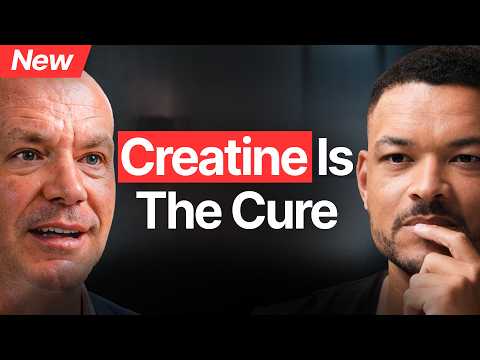
In a discussion with host Steven Bartlett on The Diary of a CEO, investor and author Mohnish Pabrai (discussing his book The Dhandho Investor) explains the concept of dhandho—a Gujarati term often translated loosely as business, which he describes as an approach focused on minimizing downside risk while keeping upside potential intact, pointing to figures such as Richard Branson, Bill Gates, and Sam Walton as examples of building major fortunes without taking reckless downside bets.
Illustrating how low-cost, disciplined operations can scale over time, Pabrai recounts the story of Patels who came to Uganda over a century ago, were expelled in the 1970s when Idi Amin nationalized assets, and resettled in places like the United States, the United Kingdom, and Canada—where many entered small motels, kept overhead and staffing lean through family labor and simple living, undercut local competitors while maintaining occupancy, and reinvested cash flow into additional properties until Patel ownership accounted for a large share of U.S. motels. He emphasizes that the vast majority of new businesses are not venture-backed tech startups, and highlights spotting "offering gaps"—illustrated by a barber testing demand part-time in a growing intermediate town between two established towns at a convenience price before expanding, or Howard Schultz bringing Italian cafe culture to the United States with Starbucks.
Moats, Lock-In, and Longevity
Discussing how businesses defend themselves over time, Pabrai introduces the concept of an economic moat—a durable advantage that makes it harder for rivals to take customers away—such as habitual loyalty with a trusted local barber, or membership/lock-in models such as Costco and Amazon Prime (noting a dinner conversation with Bill Gates regarding how memberships shape repeat customer behavior). Turning to Apple and Disney, Pabrai observes that companies shaped heavily by a single visionary leader—such as Steve Jobs or Walt Disney—can face strategic and product/form-factor questions over time as leadership changes or technology evolves, while noting that even well-run companies eventually face finite lifespans unless built on durable principles and continuous adaptation.
Citing IKEA as an example of long-term thinking, Pabrai highlights two core practices: funding expansion from retained earnings and cash rather than taking on heavy debt (since leverage is a major driver of business failure), and introducing some new innovation or improvement in each new store rather than standing still—an idea Bartlett connects to running measurable experiments in his own work.
Punch-Card Investing, Index Returns, and Runway
Addressing how to invest wisely, Pabrai points to Warren Buffett's "punch card" idea—imagining a lifetime limit of around 20 investment decisions so each choice is made carefully—and notes that a small fraction of listed stocks account for the vast majority of market returns, making broad index investing practical for many investors rather than trying to pick individual winners. Rather than naming specific stocks, he advises focusing on savings rate, runway, and steady compounding through broad index exposure while giving skills and opportunities time to develop.
Full Transcript
00:00You've been referred to as the the Dando
00:01Investor and uh I've I've got a book
00:05here which you wrote called the Dando
00:08Investor. What what what does this word
00:12Dando mean and why do they call you the
00:13Dando investor?
00:15>> Dando is actually a word from Gujarat
00:18which is on the on the western coast of
00:21India where Gandhi came from. They are
00:23extremely astute business people and
00:26dando if you translate it directly in
00:29Gujarati
00:31it means business but it doesn't really
00:34mean business what it means is it's a
00:36way of doing business
00:39where the downside is non-existent
00:44we already discussed how Mr. Branson
00:49is a dando investor. He had no downside.
00:54Uh Mr. Gates was a dando investor. He
00:56had no downside. Mr. Walton is a dando
00:59investor. They had no downside. So all
01:01of these people embarked on businesses,
01:04built huge fortunes
01:06without taking risk. And so the dando
01:10investor was written from the
01:11perspective of how can we minimize risk
01:17while keeping the returns intact.
01:19>> You use this example of the Patels.
01:21>> Mhm.
01:22>> What is what is that story?
01:24>> The Patels uh went to Uganda
01:29more than 100 years ago. Maybe close to
01:32130 years ago.
01:33>> It was a family.
01:34>> It's a ethnic group in India. And so
01:38this ethnic group came to Uganda to
01:40build the railroad
01:42and
01:44but they are very savvy business people
01:47and
01:49over the course of the last 100 odd
01:52years uh when they were in Uganda
01:55through their dando methods of doing
01:57business they became very successful
02:00entrepreneurs
02:01and they controlled large parts of the
02:04Ugandan economy and Idi came to power in
02:09Uganda in the 1970s
02:11and he said Africa is for Africans. So
02:15what he did is he threw all the Patels
02:18out and he nationalized all their
02:20assets.
02:22So now the Patels
02:25were stateless.
02:27The US took them in, the UK took them
02:30in, Canada took some of them in. And
02:33when they landed in the US, they
02:35basically really didn't have any skills
02:38that would allow them to get good jobs,
02:40white collar jobs in the US. And
02:45what a few of them started to do was
02:48they realized
02:50that if they bought a motel,
02:53a small 10 or 20 room motel,
02:57uh the family could live in one or two
02:59of the rooms and they could use the
03:02money they got out and get a bank loan
03:06and run the motel. Now motel are very
03:09labor inensive businesses. So what they
03:11did is when a patel took over a motel,
03:14they fired all the staff
03:16>> and the family took over all the jobs,
03:19you know, the cleaning and front desk
03:21and everything else, right? And the
03:24Patels are vegetarians and they are very
03:28they live a very simple life. So when a
03:32Patel took over a motel in an area, what
03:35they were able to do is they were able
03:37to undercut the prices of all the other
03:40motel in the area because they have no
03:42labor. They have no payroll. They have
03:45no workers comp, none of those things.
03:47And so they were if everyone else is
03:49charging $25 a night, they're charging,
03:51you know, 19 a night. So the occupancy
03:54was higher than everyone else. And they
03:57saved their money. And then what they
03:59would do is buy the next motel, send the
04:02nephew to run it, and then buy the next
04:05motel. And this started happening in the
04:08early '7s. And when you fast forward to
04:10today,
04:1280% of all the motel in the US are in
04:17the Patel ownership.
04:1980%. So the Patels make up.1%
04:27[snorts] of the US population.
04:30Indians make up about little over 1%
04:33maybe 1.2 1.3%.
04:36Just onetenth of that is the Patels. And
04:38this.1% population
04:41is controlling 80% of the motels in the
04:45country. And um
04:49it's because of the Dando way.
04:52>> So if I want to steal from the Dando
04:54way, you told me it's good to be a
04:55copier. Um what are the principles of
04:58the Dando way that I need to be thinking
04:59about? Cuz you I think there was was
05:02there nine? Yeah, there was nine
05:04principles in total in the book.
05:06>> Well, the most important one is heads I
05:09win, tails I don't lose much.
05:14Everything we discuss today, Stephen, is
05:17heads I win, tails I don't lose much.
05:20When I started my business,
05:22when Bill Gates started, when Sam Walton
05:25started, when Richard Branson started,
05:28that was the formula.
05:31If they won, they would win big. And if
05:34they lost, they'd lose nothing. So
05:37everything has to be in business
05:40about risk reduction. Everything has to
05:43be about free lunches. We love free
05:45lunches. Okay. So, we always have to
05:48think about how do we get this done
05:52without capital, without risk. Free
05:55lunches.
05:56>> Do you think there's an opportunity for
05:57people because everybody's at the moment
05:58thinking about AI and technology and
06:01these like really advanced um new
06:03innovations as an opportunity? But does
06:06that create an opportunity in the boring
06:09in the motel in the laundry? Matt.
06:13>> Yeah. So you know the reality is so
06:16entrepreneurship is not studied much in
06:19business schools because there's nobody
06:21going to give you consulting project for
06:23studying entrepreneurs.
06:25If we really study startups in the US or
06:29actually anywhere in the world, 99.99%
06:34of startups are non venturebacked.
06:37>> What what does that mean?
06:38>> What I what I mean by that is those are
06:41your laundromat, your Chinese
06:43restaurant,
06:44your you know eBay seller, whatever,
06:48Amazon seller so on, right? The small
06:51businesses.
06:52None of those companies were formed
06:55because of venture capital. So the media
06:58focuses on all the venture capitalled
07:02businesses. And so people think that oh
07:04if I have to do a startup I got to do
07:06something in technology. Well that's
07:09like onetenth of 1% or less. You can
07:12ignore it. You don't need to really
07:14worry about it.
07:15uh the important thing is to be an
07:19observer
07:21and to look at uh what what uh my dad
07:25would call offering gaps. So let me
07:28explain an offering gap, right? So let's
07:31say there's a town we let's call it town
07:35A. Town A. There's a barber shop in town
07:39A. Okay? And the barbers,
07:42one of many barbers doing well, etc.
07:45There's another town about 30 mi away,
07:47town B, which also has barbers. They're
07:50also doing fine.
07:52There's a new township coming up in the
07:54middle of these two towns called Town C.
07:58Town C doesn't have much of a
08:00population, but it's growing fast.
08:03So, the barber in town A goes to see
08:06what the all the hoopla or town C is all
08:08about. So he makes a takes a trip there,
08:11sees that there's some increase in
08:13population. People are moving in and he
08:15notices there's no barber shops. Why
08:18would there be any barber shops? Because
08:20it's brand new, right? So he's thinking,
08:23how do I do this without taking risk?
08:26And what he does is he rents a subleas
08:30leases a small storefront,
08:33buys some used barber equipment,
08:36and then decides that one day a week
08:39he's going to go into that town and cut
08:41hair every Wednesday and puts up a note
08:44board saying I'm available Wednesdays.
08:47And what happens is people start coming
08:51in.
08:53They come in because they have no
08:55choice. if you don't go to this barber,
08:57you got to spend half an hour driving to
08:58one of the other two towns. Now, he
09:01normally charges 30 bucks for a haircut.
09:04But here, he doesn't need to charge 30
09:07because there's an opportunity cost of
09:09the time you're saving. So, he can
09:11charge 45.
09:13So, he's charging 45 over here. And then
09:16when he's in his own town, he's charging
09:1830. Now, what he what he notices is
09:20Wednesdays are filled up. So, he says
09:22Tuesday and Wednesday. Okay? And
09:26gradually what ends up happening is that
09:28that business
09:30is full-time
09:32and he's making 45 bucks an hour per
09:34haircut.
09:35>> Mhm. [clears throat]
09:36>> But the nature of capitalism is more
09:39barbers are going to show up. So the
09:43second barber comes in, the third barber
09:45comes in, eventually the haircut there
09:47is going to be 30 bucks. It's going to
09:49neutralize. But in the meanwhile, he's
09:52doubled his business.
09:53>> Mhm.
09:53>> Right.
09:55What risk did he take? So going into
09:59town C was addressing an opportunity
10:02gap. When Howard Schultz started
10:06Starbucks,
10:08he saw an offering gap. He thought that
10:11what Italians love about cafes
10:15might be what Americans love too.
10:18Didn't exist, right? And he went and did
10:22it. you know that barber that moves into
10:24town C first and they're really having a
10:26great time because there's no
10:27competition. One of your points when
10:29you're talking about the Dando method is
10:31this idea of creating a durable moat.
10:33It's point four of the nine.
10:35>> So, so sometimes what happens is that
10:39you start a business every business
10:41starts off without a moat.
10:44>> What is a moat?
10:47>> We have a castle.
10:50a knight in charge of the castle to keep
10:54the invaders away. And one of the ways
10:56to keep the invaders away is you put a
10:58motor water around the castle. So when
11:02you put a motor water around the castle,
11:04it makes it harder for anyone to take
11:06the castle. [clears throat]
11:07>> And a business with a moat around it is
11:10a business that competitors
11:13will have a difficult time take business
11:15away from. So what can happen with our
11:18barber in town C? Humans are creatures
11:21of habits. We don't like to change our
11:24barber every month. We like the same
11:26barber. So if he's competent and good,
11:30what's going to end up happening is that
11:32his client base will stay with him. What
11:35about loyalty points? I was just struck
11:37the other day when I was shopping in LA
11:38at which is a supermarket here in LA and
11:41I someone had recommended to me on the
11:43plane which actually goes to your point
11:44about actually give a great product
11:46because an airline hostess on my flight
11:48over here went oh you're um you're on
11:50keto diet you need to go check out air1
11:52I got to so that's the recommendation
11:54>> 10x more powerful than any ad or
11:56anything else they could drive
11:57>> and I went there yeah
11:58>> when I landed cuz I needed a supermarket
12:00and didn't know the place but then
12:01interestingly when I was at the checkout
12:02yesterday after my second visit the lady
12:05at the checkout goes Hey, are you are
12:06you an Air1 member? And I was like, Air1
12:08member? And she goes, it does cost. She
12:10went She was honest. She went, "It costs
12:12money." Yeah,
12:12>> but here's what you get. She goes, "On
12:14this order today, you would have got 10%
12:16off this entire order." It's expensive
12:18one. And she goes, "And we give you a
12:19drink every month." She listed all the
12:21things off.
12:22>> I signed up and bought the membership to
12:23one. I tell you now,
12:25>> I'm not going anywhere else.
12:28>> I DON'T KNOW WHAT IT IS, but now that
12:30I'm a member and I have the app, I'm not
12:31going anywhere else. Well, that's now
12:34that's the hack that Amazon did, right?
12:36With Prime and um two or three years
12:42ago, I was uh I was seated at dinner
12:44next to Bill Gates. You know, my middle
12:46name is Forest Gump. These things happen
12:49once in a while. And Bill is Bill is
12:52describing to me how the business model
12:56of Costco and the business model of
12:58Amazon is illegal. Okay. So I said, "Why
13:02is it illegal?" He said, "When you when
13:05you put a membership fee,
13:08what what you're doing to the consumer
13:10is you're locking them in."
13:12>> Mhm.
13:12>> Which means the consumer is no longer
13:15going after the lowest price because
13:18there's a distortion in their behavior.
13:20>> Yeah.
13:21>> Okay. So now the FTC doesn't believe
13:24it's illegal, but Bill Gates does. And I
13:27was just thinking, well, that's because
13:28you're competitive with Amazon,
13:30>> you know.
13:31>> Yeah. [laughter] Yeah.
13:32>> That prime thing with Amazon is super
13:34smart.
13:34>> Yeah. And and that was taken from
13:36Costco.
13:37>> Oh, okay. I didn't know that.
13:38>> But basically, yeah, the lock in lockin
13:41is very powerful.
13:43>> One company I wanted to talk to you
13:44about was Apple because Apple I find is
13:47a really interesting company. You talked
13:49about being a copycat, kind of arriving
13:52later to the party with new things.
13:54They've kind of been a story of both
13:56sides of the equation. They've been
13:57innovative, it seems, especially under
13:59Steve Jobs. And more recently,
14:01>> I mean, they were like copying other
14:03people, but now I'm not even sure what
14:05they are.
14:05>> Well, so Apple is a very unusual company
14:08in that everything emanated from one
14:12guy.
14:13>> Okay. [clears throat]
14:14And that one guy has been gone for a
14:16long time. And if you look at Apple,
14:20basically nothing new has come out since
14:23he left.
14:25We don't have a Steve Jobs at Apple. We
14:29and and the same thing happened at
14:31Disney. You know, they had to buy Pixar
14:34because there was no Disney anymore. Mr.
14:36Disney was gone. And so Apple actually I
14:42I find
14:44somewhat risky
14:46>> as an investment.
14:47>> Yes. Because if the form factor So
14:51currently humans walk around with a
14:53brick in their pockets or in their hands
14:57at some point that form factor is going
14:59to change. It may be integrated into
15:01something we wear or some other more
15:04ergonomic situation.
15:08that may or may not be Apple and in fact
15:11more likely not to be Apple. It's
15:14probably some guy in a garage somewhere.
15:16And so if they are smart enough to find
15:19the guy in the garage early enough and
15:21buy them, they're okay and bring them in
15:24as an extreme jobs that's okay. But even
15:28there, the odds are low.
15:30>> What does this say to you about
15:31founders?
15:34the specialness of founders. Are they a
15:36unique animal or can you swap them out
15:39and still be tremendously successful?
15:42>> Well, I would I would say that
15:46there's
15:47there are a lot of elements of luck. So,
15:50first of all, founders are all great at
15:53what I call offering gaps, right? They
15:55find something that the world doesn't
15:56have, that needs, etc., and they go
15:58after it.
16:00Sometimes what happens with the offering
16:02apps is a moat gets built right someone
16:06starts Visa it becomes a moti company or
16:08American Express and so on and it
16:11perseveres and scales
16:13>> like Apple with their ecosystem their
16:15closed ecosystem
16:16>> but
16:18100% of businesses
16:22eventually will go to zero
16:24and so it very well could be that a
16:28business could last for 50, 100, 200
16:31years, 150 years
16:33uh could last well past the founders's
16:35lifetime.
16:37Those are businesses which were built
16:39with a lot of principles and a lot of
16:41core great core values. You know the
16:43founder of IKEA,
16:46every decision he took was with a 500y
16:49year view.
16:51How many businesses think with a 500year
16:53view?
16:55and
16:57IKEA, you know, I was I was uh studying
16:59IKEA. Some very remarkable things about
17:01it. First of all, he never ever took
17:04debt. Every single store they built,
17:08they built out of retained earnings and
17:10cash. He never took debt. And I've
17:12studied business failure quite a bit.
17:14The single biggest reason why businesses
17:16fail is leverage. They owe people money
17:20and they can't pay it back and that
17:22they're gone. So IKEA has never taken
17:26debt. If you never take debt as a
17:29retailer, you're going to grow slower,
17:30right? You got to keep uh kind of
17:33bringing in the cash, but it's a very
17:36solid foundation
17:38because
17:40it's it's on a rock solid balance sheet.
17:44>> Mhm.
17:44>> And and [clears throat] such. And um his
17:48second principle was
17:50no two IKEA stores can be the same. So
17:54what he said is that whenever we opening
17:56a new IKEA store, there has to be some
18:00innovation
18:02that is going into that store that does
18:05not exist in our previous stores because
18:08he says that if I don't keep innovating,
18:13I'm done. And so if we don't notice it
18:16because we think all the IKEA are the
18:17same, but actually if you study them and
18:20look at when they were when they were
18:22built, etc., you start seeing these
18:25these incremental changes that they're
18:27making.
18:28>> That's a really interesting idea that I
18:29could implement into everything that I
18:31do, which is just making sure that every
18:32podcast I do,
18:34>> there's one new experiment or innovation
18:36or every piece of work you do, whatever
18:38team you're in, is just to run out one
18:40experiment in every Absolutely. But you
18:42have to make it measurable, right? or
18:43else it's not a
18:44>> experiment. So um you also talk about
18:47making fewer big infrequent bets.
18:50>> Who who's that relevant for and in what
18:52context?
18:53>> So one of the things that Warren Buffett
18:56says he says that you get a punch card
19:00which you can punch 20 times in your
19:02lifetime and each time you buy a stock
19:05it's one punch that's gone. So what what
19:08Warren is saying is
19:11if there was a rule which said that you
19:14cannot buy more than 20 stocks in your
19:16whole life,
19:18what would happen is you would be very
19:21thoughtful
19:22about what you bought. Okay? And chances
19:26are those decision might be good
19:27decisions because uh you only have 19
19:31left and then you only have 18 left etc.
19:34So
19:38in in venture investing,
19:41a very small sliver of companies that
19:43venture capitalists invests in do well,
19:47right? There's a high high burnout rate.
19:51And if we look at the stock market,
19:544% of listed companies
19:58generate 90% of the return.
20:01So most companies that we may think
20:05about investing in are likely not to do
20:08well
20:09>> for us. It's a 96% odds
20:13that that's why the index is so
20:15important is when you buy the index
20:19you bought that 4%.
20:22And if you go pick stocks
20:25you have one in 25 chance of getting it
20:28one of those 4% there. You said earlier
20:31the punch card analogy of 20 things in
20:33the punch card. You got to pick 20 in
20:34your life. If you only had three or
20:36three to five things that you you would
20:38bet or back now, which I think is
20:40actually kind of what you do, what would
20:42those things be?
20:44>> Well, I mean, uh, so I'm trying to
20:48resist going to specific names.
20:51>> Yeah.
20:52>> Because I think that would hurt people
20:54more than help people.
20:55>> Okay, that's fair. What I would prefer
20:58that people do is focus on the other two
21:01variables, which is the amount you're
21:04saving and the length of the runway and
21:07focus on the index.
21:09So I I I think that it's it's kind of
21:12like saying I want to be a great AI
21:15developer because it's the way it be
21:18will to be a great AI developer is going
21:21to take time. If you love the D CEO
21:23brand and you watch this channel, please
21:24do me a huge favor. Become part of the
21:2715% of the viewers on this channel that
21:30have hit the subscribe button. It helps
21:31us tremendously and the bigger the
21:33channel gets, the bigger the guests.
Description
Value investor Mohnish Pabrai reveals the simple strategy he learned from Warren Buffett for building wealth while minimizing risk. He explains the Dhandho approach to investing, a philosophy built around finding opportunities where the downside is limited, and the upside is large.
Mohnish also breaks down the principles behind durable businesses, why boring industries often outperform exciting ones, and how small advantages compound over time when you protect yourself from loss first.
Discover:
• The Dhandho principle of heads I win, tails I don’t lose much
• Why copying proven ideas beats trying to be original
• How ordinary families built massive wealth through simple businesses
• Why avoiding debt is the most important rule in investing
• How to spot low-risk opportunities most people ignore
• Why boring businesses often produce the best returns
• The mindset shift that protects wealth over decades