The Diary Of A CEO
AI Summary
Honeypot Operations, Espionage, and the Nvidia / Jensen Huang Claims
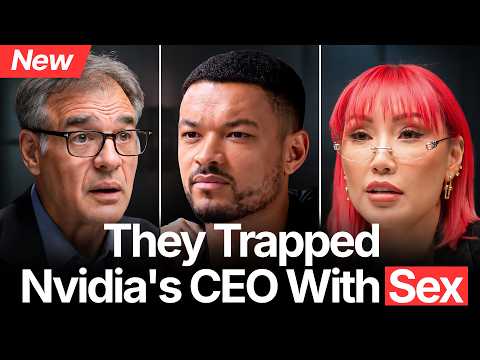
Former CIA officer John and former Russian/Soviet operative Aliyah speak with host Steven Bartlett on The Diary of a CEO about intelligence tradecraft, honeypot/honey-trap operations, psychological manipulation, and media reports surrounding Nvidia CEO Jensen Huang and Alice Huang (Alice Wong). Opening with claims and media coverage around an alleged affair/honeypot involving Jensen Huang and Alice Wong—reportedly tied to a company called Mega Speed International (purportedly linked to Singapore and Malaysia), a reported $5 billion order for advanced chips, a reported CIA/intelligence memo in early 2026, and subsequent travel/appearances involving President Donald Trump, Marco Rubio, and Chinese leader Xi Jinping—John and Bartlett examine both the business and national-security dimensions of such scenarios, including potential chip/technology risks, "pillow talk" around sensitive policy or defense discussions, and personal/governance vulnerabilities such as lack of a prenuptial agreement or board/regulatory scrutiny.
John explains that while he believes the CIA generally avoids or has long moved away from honey-trap recruitment for building durable relationships, other intelligence services—including Russia, China, and others—use honey traps or honey pots as a form of leverage or access, and notes that 10,000 to 15,000 foreign intelligence officers are estimated by the FBI to operate in Washington. Both John and Aliyah also discuss how reports around Alice Wong, Mega Speed International (described as having minimal actual footprint/staffing relative to huge chip orders), and her husband Kangwei (a finance/private-equity figure connected to Hexi Investment Management who reportedly knew Huang earlier and introduced them, alongside scrutiny/sanctions mentioned in reports) raise questions about how long-term influence or business setups can be orchestrated.
Tradecraft, Social Engineering, and Conditioning Techniques
Aliyah recounts growing up in the USSR/Kazakhstan/Tatarstan background and living in Moscow with a strict, patriotic father who worked in security/law enforcement and pushed her toward state service around age 18 rather than her initial interest in fashion/design. Selected into a specialized program drawing on KGB/psychological tradecraft—where recruits were chosen for specific profiles and trained in psychology, physical conditioning, and covert influence for low pay driven by ideology and duty rather than glamour—she describes how covert influence operations unfold in stages:
-
Pre-Approach Research & Social Engineering: Gathering intelligence on a target's background, habits, vulnerabilities, and social circle, and staging subtle cues or environments ("planting seeds") so the target feels drawn in rather than approached cold.
-
Rapport & "Love Bombing": Building instant familiarity—such as speaking a shared language or referencing cultural/religious touchpoints or achievements—offering targeted praise, and asking for small favors so the target invests time or energy and feels valued.
-
Information Control, Emotional Dependency & Isolation: Mapping the target's inner circle, creating a sense of unique connection or understanding ("emotional dependency"), and subtly distancing the target from friends, family, or advisors who might raise doubts.
-
Gaslighting & Anchoring: Planting doubt or reframing reality so a target questions their own judgment ("gaslighting"), alongside conditioning/anchoring techniques—such as pairing a visual image, scent/perfume, keyword/phrase, and physiological arousal/orgasm—to condition emotional/arousal associations or self-regulate nerves before high-stakes encounters.
Aliyah also notes signs people can watch for in everyday manipulation or pickup tactics—such as rapid or unnatural mirroring of posture, gestures, or speech, overly fast "soulmate" or shared-story claims, and subtle emotional shifts—while explaining that she now shares these insights publicly in part for her own safety and to help people recognize manipulation defensively.
Cover Identities, Morality, and High-Stakes Operations
Discussing deep cover and espionage tradecraft, John explains the CIA's NOC (Non-Official Cover) concept—where officers operate under a non-diplomatic cover role (such as a curator, photographer, or business cover, sometimes backed by front businesses or phone lines) over many years rather than rotating through an embassy every few years—and contrasts long-horizon operations with intelligence bureaucracies where career incentives and promotion timelines shape how cases are run. Both guests also discuss sleeper agents (citing examples such as Jack Barski and routine surveillance awareness) and the reality of living under false identities or constant vigilance.
Turning to morality, empathy, and personal toll, Aliyah and John discuss how operatives can compartmentalize or detach emotionally during missions—with Aliyah describing a high-stakes case involving a criminal/drug figure named Vladimir and a corrupt commander who betrayed her cover to set up a power play, leading to a brutal abduction/beating, a tense confrontation where she had to talk her way out of being killed, Vladimir's later murder by associates, and lingering guilt and dark periods—while asserting that she still feels protective toward children and opposes injustice and abuse, and dreams of one day running an orphanage/school free from online manipulation. Asked directly whether they have ever killed anyone, John recounts a Cold War/intelligence episode involving Colin Powell and an Iraqi intelligence target/strike where a janitor died—noting his superior told him Powell/the strike ordered it rather than John personally—while Aliyah says she did not directly pull a trigger or administer poison herself, though intelligence she provided was part of operations that resulted in targets being terminated.
Closing the conversation—with John referencing his books (including Honey Trap) and Aliyah pointing to her book on spotting manipulation and reclaiming agency—both emphasize seeing past surface narratives and building awareness of how influence and power operate in everyday life.
Full Transcript
00:00and they ran what's called a honeypot
00:01operation against the CEO of Nvidia.
00:05>> We actually have a honeypot here. And
00:07you were a sex spy basically.
00:09>> Basically, yes. If I would compare my
00:11life to James Bond movie, I would be the
00:13one who would seduce James Bond.
00:15>> And from your experience as a spy
00:17yourself, a CIA agent. What's a honeypot
00:19operation?
00:19>> Is a beautiful woman willing to sleep
00:22with an important and well-connected man
00:24in exchange for something. How much of
00:26this espionage stuff is happening every
00:28single day all over the world? The FBI
00:30estimates that there are between 10 and
00:3215,000 foreign intelligence officers in
00:35Washington. And there are a lot of
00:36moving parts. For example, you're a
00:38museum curator from 9 to 5 and then
00:40after 5, you're a CIA officer. So, no
00:43one would suspect that you're an
00:44intelligence officer. Right now, there
00:46are several different risks with Jensen
00:48and so far nobody's really talking about
00:50that.
00:50>> Okay, I'm going to have to ask you, what
00:51were these unusual techniques they
00:53started to teach you? So 70 80% were all
00:56about human psychologist. How to control
00:58men's brain using intimacy. You need to
01:01gather information about your target.
01:03For example, what do you do? Where do
01:05you go? With whom do you speak? Then you
01:07go into love bombing, which are
01:09compliments. But if you really want to
01:12seduce your target, [music] you need to
01:13program your brain to like this person.
01:16>> So you had a photo of him in front of
01:18your bed. You'd masturbate to that
01:19photo.
01:20>> Yes. Because the strongest emotion
01:21[music]
01:22is an orgasm for a human being. We will
01:24talk about it later.
01:25>> I have some questions to ask. Did you
01:26ever catch feelings with one of your
01:28targets? And also, have you ever killed
01:30anybody?
01:33>> Uh,
01:35>> before this episode starts, I have a
01:36small favor to ask you. 2 months ago,
01:3861% of the people that watch this
01:39channel weren't subscribed. We're now
01:41down to 58%. My goal is 50%. So, if
01:44you've ever liked any of the videos
01:45we've made on this channel, if you like
01:46this channel, can you do me a small
01:48quick favor and hit the subscribe
01:49button? It helps this channel more than
01:51you know. And the bigger the channel
01:52gets, the more we can invest in the
01:53guests and the production. Thank you and
01:55enjoy this episode.
01:57[music]
02:00John Jensen Huang, who runs arguably one
02:03of the most consequential important
02:05companies in history and also one of the
02:07most valuable companies in history, has
02:10just admitted to having an affair with a
02:13Chinese spy.
02:16Walk me through from your experience as
02:18a spy yourself, a CIA agent, exactly
02:22what happened. You're right, Stephen,
02:24when you say this is one of the most
02:27impactful and consequential companies in
02:30history. It's a multi- trillion dollar
02:33cuttingedge tech company, Nvidia.
02:37And the Chinese from the very beginning
02:40of this AI revolution have sought the
02:44fastest, best, most advanced chips to
02:47power their own AI.
02:49uh we have not been willing to sell them
02:52or to allow Nvidia to sell them the most
02:55advanced chips. So they set out to get
02:58them in another way and they ran what's
03:00called a honeypot operation against
03:02Jensen Wong, the CEO of Nvidia.
03:05>> A honeypot operation.
03:07>> A honeypot operation.
03:09>> What's a honeypot operation?
03:10>> It is a beautiful woman willing to sleep
03:13with an important and well-connected man
03:16in exchange for something. Now, he
03:20apparently and likely didn't even know
03:23that there was a quid proquo here, but
03:26she ended up successfully getting Nvidia
03:30to sell $5 billion worth of advanced
03:33chips.
03:35He got US government approval for the
03:38transaction.
03:40and the company that she represented,
03:42Megape, and I I can't wait to talk to
03:45you about Megape. Supposedly a Singapore
03:48based tech company that turns out to
03:51have nothing more than a storefront in
03:53Malaysia and two employees in Singapore,
03:57neither of which is an engineer. So,
04:00it's clearly a front company. She bought
04:02$5 billion worth of chips and had those
04:06chips sent to China. So, I have a a
04:08timeline just behind you there of the
04:10order of events. Could you walk me
04:12through what happened?
04:14>> This was a classic intelligence
04:17operation. Not too many moving parts,
04:21not too sophisticated, relatively easy
04:24to implement. In 2023, Alice Wong, who
04:28claimed to have been an anchorwoman for
04:31first Hunan TV, Hunan TV is a
04:34privatelyowned TV network in China, then
04:37claimed to have transferred to be an
04:39anchorwoman at CCTV, which is the
04:41Chinese state broadcaster.
04:44And neither one of the those positions
04:46uh were real. Hunan TV issued a
04:49statement saying, "We never heard of
04:50this woman. She she was never an anchor
04:53woman here." And there is literally not
04:56one second of video from CCTV of her
05:00anchoring anything. So she claimed to be
05:03a journalist and an anchorwoman. She's
05:05very attractive as you can see. And then
05:07she went from media to this company
05:10called Mega Speed International. It
05:13purports to be based in Singapore. In
05:15fact, it has a small office with two
05:19people in it, according to the New York
05:21Times, which sent investigators there.
05:24Neither one of these people uh was an
05:27engineer, and neither one of them could
05:29even explain what it was that Megape
05:32does as a company. Uh it turns out to
05:35have an office in Malaysia
05:38that was utterly empty. There were no
05:41employees there. Yet it somehow had $5
05:44billion
05:46to buy Nvidia chips. So 2023 she becomes
05:50managing director at Mega Speed, which
05:52again doesn't really exist.
05:55>> How does someone go from being a TV
05:57anchor to being the CEO of a company
05:59that has the funds to buy $5 billion of
06:02chips?
06:03>> That's bad trade craft. The Chinese cut
06:06corners there when you are either under
06:10deep cover as a business person or you
06:13know the manager of a mutual fund or a
06:16wildlife photographer whatever your deep
06:18cover job is it has to be what's called
06:21backs stopped right so if you introduce
06:24yourself and say hi um I'm the CEO of
06:28Megaspe you give me your card okay
06:31there's got to be a place called Megaspe
06:34there's got to be a website I can go to.
06:36There has to be an office I can go to.
06:38You have to have, you know, an annual
06:40report and a board of directors and
06:42something that if I begin investigating
06:44and I look into the background of it,
06:46there's going to be something there for
06:48me to see. And there was nothing for
06:50anybody to see with this mega speed. But
06:53the Chinese just figured, well, one of
06:56two things. Either nobody's going to
06:58check or by the time somebody does check
07:01they will have gotten what it was that
07:03they were seeking which in this case
07:04apparently was the chips.
07:07And when do you think she was recruited
07:09by China? Was it
07:12do you think early in her childhood? Is
07:13it typically when they get into a
07:15position of prominence?
07:17>> No. My my guess is she's probably doing
07:20been doing this for 10 years or so. She
07:23had to have gone through extensive
07:24training. For example, um this isn't
07:27something you just throw a person into
07:29and say, "Have sex with this guy and
07:32let's hope for the best." Th this is
07:34complicated. There are a lot of moving
07:36parts. And so my guess is that she was
07:39she's been around for a while and she's
07:41been well trained.
07:43>> And then somehow Nvidia accept an order
07:46off this company Mega Speed for $5
07:48billion worth of chips. and they don't
07:49do their due diligence to figure out if
07:51it's a real company.
07:52>> How crazy is that? But I suspect that
07:56they didn't do the due diligence because
08:00the orders were coming from Jensen Wong.
08:03If Jensen Wong says, "Go ahead and do
08:06this. I got the Americans to agree to
08:08it." And apparently they did. There
08:10wouldn't be any due diligence. There
08:12wouldn't need to be any due diligence
08:14because the CEO is ordering it.
08:16>> Okay. And then in June 2024,
08:18>> yeah, they're photographed together for
08:20the first time. One of the things that
08:23that both CNN and the New York Times are
08:26reporting is that they were inseparable.
08:29Mind you, he's been married for 41
08:31years. And he's being seen in public
08:33with this woman. Look how closely
08:35they're sitting. And the reporting also
08:38indicates that she could just pick up
08:40the phone, call him, and he would
08:42immediately show up. That's not a normal
08:45relationship between business partners
08:47or between the managing director of one
08:50company and the CEO of one of the
08:52world's foremost tech companies. And
08:56here they are again in May 2025
09:00photographed together in Taiwan. If I
09:03were Mrs. Jensen Jong, I'd be asking
09:05questions at this point. This is this is
09:08a pretty public affair.
09:11They didn't appear to be making much of
09:13an attempt to hide it. And then, as you
09:16see in October 25, they're investigated.
09:19They're being investigated
09:22for doing exactly what she set out to
09:24do, which is to acquire the $5 billion
09:28worth of chips. Where was the Treasury
09:30Department? Where was the Commerce
09:32Department? Where was the CIA or the
09:35Office of Foreign Assets Control?
09:38Everybody just seemed to throw up their
09:39hands and say, "Well, if Jensen Wong
09:42wants it, then Jensen Wong should have
09:45it." And then apparently at the White
09:47House, you know, the president struck up
09:49a friendship with Jensen. Her name is
09:52Alice Wong, but there's no relation. Um,
09:55the president struck up this friendship
09:57with Jensen. And we know just over the
10:00last couple of days, he's called Jensen
10:02to see how he's doing, make sure
10:05everything's okay,
10:06>> and to ask him if he knew that she was a
10:08spy.
10:09>> Yeah. And he said he had no idea. He
10:11probably didn't have any idea. But I
10:14said on my own podcast the other day,
10:16Steven, you know, you're in your 60s.
10:20She looks like she's in her 30s.
10:23Every other woman sees you as
10:26maybe a creepy old man. Maybe you're
10:29putting on a few pounds. Your hair is
10:31turning gray or it's falling out. But
10:34then this beautiful woman smiles at you
10:38and everything change. It changes. You
10:41just light up. You're a young kid again.
10:43Oh, she wants $5 billion in chips. No
10:46problem. She loves me. You know, and you
10:49don't think straight. You're thinking
10:51with the wrong head is what it comes
10:52down to. That's really what it is. And
10:55he's not the first guy that's guilty of
10:58falling into this trap. That's for sure.
11:00>> And then in April 2026, it's believed
11:04that Trump was made aware.
11:06>> Right. So, the CIA apparently wrote a
11:08memo in in March of 2026. That memo was
11:14delivered to the president in early
11:15April of 2026 saying, "Hey, we think
11:18that Jensen Hong might be compromised by
11:20a Chinese intelligence officer."
11:22>> How might they know that?
11:24>> Well, don't forget that the CIA has
11:27infiltrated the Chinese Ministry of
11:28State Security, the Chinese Intelligence
11:30Service. This is the thing about being
11:33being [snorts] a penetration of a
11:34foreign intelligence service. The risk
11:36is incredible because
11:40you convince yourself that you're so
11:43deep, your cover is so deep
11:47that there is nobody else around you
11:49that's actually working for the other
11:50side.
11:52And this is how the last two
11:55uh American major American traders were
11:59finally caught. Aldrich Ames and Robert
12:01Hansen. you know, they were both working
12:04for the Soviets and then the Russians
12:06after the Soviet Union fell,
12:09ignoring the fact that we had other
12:11people that had penetrated the the
12:14Soviet KGB that were reporting back to
12:16us saying, "You've got a mole. There's a
12:19problem."
12:21Well, the same thing is happening here.
12:23Somebody reached out to the CIA and
12:25said, "There's a problem in tech and it
12:28involves Jensen Hong."
12:30>> And how might they know that? Because so
12:32the US have spies on the inside in China
12:35and so there's somebody else on the
12:36other side. I assumed that it might be
12:38they've tapped technology. They can see
12:40she's making phone calls to back to
12:42China. Sure. I think there was a report
12:44or sort of an assertion that she was
12:47delivering information about Jensen back
12:50to in a video back to China.
12:51>> She had to have been sending information
12:54back.
12:55>> How do they do that? Is it phone calls?
12:56Is it WhatsApp? It should never be a
12:58phone call or WhatsApp or Signal or any
13:01of that. There are back doors into
13:02everything. It should have been some
13:05proprietary
13:07Chinese commo gear that the MSS built
13:10just for her or just for that operation.
13:14>> And it's alleged that in April 2026,
13:17Donald Trump becomes aware that Jensen
13:19is compromised by by the spy. But months
13:22later in November this year,
13:24>> yeah,
13:24>> he sat next to him at the White House.
13:29>> This is crazy to me. So, here we are in
13:32April. Marco Rubio, who's not just
13:35Secretary of State, he's also the
13:36National Security Adviser, which has
13:39primacy over the CIA or over the the
13:41entire intelligence community really. He
13:44tells the president,
13:47"Jensen Wong appears to be involved in a
13:49honeypot operation,
13:52and the president doesn't seem to care."
13:55When the president went to China, Marco
13:58Rubio apparently blocked Jensen from
14:01traveling to China with the president.
14:03When the president landed to refuel Air
14:06Force One in Anchorage, Alaska, he
14:08called Jensen and said, "On second
14:10thought, why don't you fly to Alaska,
14:12meet with me here, get on Air Force One
14:15with me, we'll fly to China together."
14:16And that's what happened. And not only
14:18did the president and Jensen Wong go to
14:21China together from Anchorage,
14:24Trump insisted to the Chinese that
14:26Jensen sit at the same table with him,
14:29with the president and with Chinese
14:32Premier Xihinping. The the Chinese had
14:35to have been laughing at us during this
14:38this dinner.
14:41Yeah. and then he gets caught.
14:44>> What is the risk of this? Is it a risk
14:48at all? Is it just occasionally had an
14:50affair?
14:51>> Is there real risks here?
14:52>> Yeah, there are several different risks.
14:54First of all, the obvious one is the
14:55business risk. The Chinese, of course,
14:58are probably the best in the world at
15:00reverse engineering these highly
15:02technical gizmos, right? They they only
15:05really needed one chip so that they
15:07could reverse engineer it. But even more
15:10than that, Steven,
15:12what about the pillow talk that was
15:15involved between these two?
15:18Let's say they're laying there in bed.
15:20They're not talking about chips.
15:23She might say, "How was your
15:25conversation with President Trump? What
15:28did he have to say? Anything going on?
15:30Anything new? Oh, how exciting. Oh,
15:33you're so important, Jensen. You get to
15:35talk to the president of the United
15:36States anytime you want." Did he say
15:38anything? What's he say about the
15:40Chinese? What's he say about trade?
15:42What's he say about CIA or DoD? What
15:46kind of chips are they using? What kind
15:48of chips is DARPA developing? What does
15:51NSA have to say about all this?
15:54That's the real danger. And so far,
15:56nobody's really talking about that.
15:58>> What made Jensen vulnerable to an
16:00approach like this?
16:01>> Is it ego? Is it
16:02>> Oh, sure.
16:03>> isolation. What is it?
16:04>> It's ego. It's age.
16:08I I'm a lot older than you are. I'm 62.
16:10But at least I have half a brain. So I
16:12know that if a 25year-old or 30-year-old
16:14woman smiles at me, I just kind of nod
16:17politely and move on. Right. Apparently,
16:20he was lonely enough. And again, this is
16:22a guy married for 41 years. He's
16:25probably a little bored. You know,
16:27things are blah at home. He's powerful.
16:31He's rich. He can pick up the phone and
16:33call a dozen different world leaders if
16:35he wants to. And then the one part of
16:38his life that's missing, a beautiful
16:40young woman, makes eye contact and
16:44everything changes.
16:46>> Speaking of honeypotss, we have a
16:49honeypot here who used to be a Russian
16:52undercover spy. Welcome, Aaliyah.
16:55>> Pleasure to meet you.
16:59>> Thank you.
17:00>> Nice to meet you. Pleasure. Pleasure to
17:02meet you. Do you want to come take a
17:03seat around here? Thank you.
17:06>> Aliyah, I have to introduce you so the
17:09audience know who you are and you know
17:11your experience on this story. So give
17:13me the relevant introduction. I was a
17:17woman who doesn't exist in the paper,
17:21who had different name, different
17:23appearance, different look, but somehow
17:27surviving through all these challenges
17:29and different dangerous missions. I'm
17:31right now sitting here and I'm very
17:33honored to be in front of you because
17:35that girl who was born in Soviet Union,
17:39the gray small city, uh without any
17:44belief in life and future, without any
17:47hope, without the right to speak and
17:49even dream in this communism
17:53now being here and actually sharing my
17:56story, it's a big privilege for me. So,
17:58I'm very honored to be here. So there's
18:01this term honeypot. Is that an offensive
18:04term?
18:05>> Not really. Not really. Honey pot sex
18:07espionage and honey trap is the same.
18:10>> So you were a sex spy basically.
18:13>> Basically. Yes.
18:14>> Okay. And how does that happen? What age
18:17do you get in and you did this for
18:18Russia?
18:19>> I Yeah, I did. I was born in USSR but
18:22then I'm coming from Kazakhstan
18:24Tatarstanian family but we ended up
18:26living in Moscow. my father that I was a
18:29highranking officer and when I turned 18
18:33years old he literally brought me to my
18:35first department which was criminal
18:36investigation fighting human and drug
18:38trafficking and I had already enrolled
18:41my papers into university to become a
18:43designer. I really loved fashion and I
18:46wanted to you know work there and then
18:48my dad say listen I've invested so much
18:51time to train you to become an operative
18:54an agent so you have no other way
18:58because this is the pride of our country
19:00of our family my grandfather was
19:03fighting during second war he's a
19:06national hero I mean it's it's a big
19:08pride of course for my family but I was
19:11so obliged so I couldn't say no to my
19:14dad especially he's coming from Muslim
19:17background I actually did baptist
19:20stilada so I actually then took um
19:24Orthodox religion in Greece when I lived
19:26there so living in that strict
19:29background with my father who was you
19:31know this man believing in his
19:34patriotism so he brought me to my first
19:37department at 18 years old everybody who
19:39would enter the department they had to
19:41go to study in the Hi,
19:43>> can I just ask what did you think you
19:45were going to become when you were 18?
19:47When you arrived at that academy, did
19:48you think you were going to become
19:50someone in the military, a spy, or a
19:52honeypot? Was it clear?
19:53>> No, absolutely not. I actually didn't.
19:56So that time at 18, I was virgin. I
19:59didn't have any boyfriend. I never
20:01kissed a boy. So I didn't know anything
20:03about communication, especially with
20:05men. My father taught me only like
20:08psychology and uh physical training and
20:10gun shooting. So when I came to my you
20:15know first lesson and I didn't have any
20:18idea so we supposed to become operatives
20:21meaning that
20:22>> I mean we supposed to be in the field
20:24like field agents and sometimes we would
20:27be in the department like working on the
20:29papers on our papers and so on but that
20:32time I didn't know anything about honey
20:33trap in fact in Russia they would never
20:36call it honey trap they would say you
20:39are chosen for this program which is
20:43secret uh based on classified techniques
20:47uh developed by KGB officers and
20:50psychologists. You're not allowed to
20:52share these knowledges with your family
20:55members obviously your colleagues,
20:58friends or anyone. And it was about 350
21:03students who just came on the first like
21:06year. And um I remember the first day
21:08when we were like lining up like you
21:10know having a briefing our principal of
21:13this school he actually handpicked a few
21:16male and female agents including me. So
21:20altogether we were like five girls.
21:22Everybody has to be a certain height not
21:24too tall not too short. So ideally 56
21:29and they should be before like 26 years
21:32old. So it's also like one of the
21:34important parameters. So all the girls
21:36who were there, they were like young and
21:38pretty but all different. So they were
21:41like one blonde, blue eyes, you know,
21:43like a proper Russian appearance.
21:45Another one was like with ginger hair. I
21:48had a nickname. They gave me a nickname
21:50exotic. So I had this, you know, Asian
21:53background. Another girl was like with
21:56the long black hair. So everybody were
21:58different and it was for the purpose in
22:01order to be able to install them in
22:03different operations and missions
22:05because everybody were working in
22:06different departments and um I didn't
22:09know anything about the honeypot, the
22:11honey drop. In fact, like I understood
22:13it much later only when we studied like
22:17some unusual
22:20subjects and lessons and techniques
22:23which um I actually never found after in
22:28any books or internet or
22:31>> what were these unusual techniques they
22:32started to teach you
22:34>> like for example okay like 70 80% were
22:37all about human psychology especially
22:39men psychology and the rest were all
22:42about how to control man's brain using
22:46intimacy.
22:47>> Okay. We have some blocks, don't we?
22:49Somewhere.
22:50>> Yes. Uh it's basically how you establish
22:52relationship with your target. And you
22:55need in the beginning to um
22:58gather information about your target. Of
23:00course, then you go into love bombing,
23:04which are as you know, compliments.
23:07>> Could you love bomb
23:10John please? Of course. That's way
23:12refreshing, right? [laughter]
23:14>> Okay, John, prepare yourself. This is
23:17honey. This is not real. Okay.
23:19[laughter]
23:20>> Oh, it's funny. I I love that.
23:22>> See, but I would say, "Oh, come on. I'm
23:24old enough to be your father.
23:27>> Target doesn't have any age."
23:29>> See,
23:30>> so I would go, "John,
23:34I'm so impressed of what you're doing. I
23:36read so much about you and I watched
23:38every single your interview and I
23:41subscribed to your YouTube channel.
23:42[laughter]
23:43>> This is what you said. She said this
23:44when she walked in.
23:46>> I said something in like in Greek like
23:48nice to meet you because I gathered my
23:51information on you and I
23:53>> understood that you know Greek because
23:55you were raised
23:56>> in Greek families. So and you're also
23:58Orthodox. That's why I said I'm also I
24:00took an Orthodox religion. So I that
24:02time I built a bridge,
24:05>> a report like a likeness. So your brain
24:08>> starts to think like oh she has like
24:11similar things like me. So
24:13>> 5 seconds into it and we have a
24:14connection.
24:15>> Mhm.
24:16>> I would start from complimenting but not
24:19like oh my god I love your suits. I love
24:21your hairstyle. I would go into
24:23complimenting John's achievements and
24:27work because for a man I mean if you're
24:31talking about wise intelligent men
24:35mature men in this case for example or
24:37with Jensen as well it's all about
24:39achievements it's all about work because
24:41it's so hard and we all know how hard it
24:43is to actually get to that position to
24:46be brave enough to go against government
24:50CIA
24:51>> and even knowing that you would go to
24:54jail but still stand for what you
24:56believe and this is impressive and in
24:59this case it's very authentic right
25:02because I genuinely believe in what I'm
25:04saying
25:05>> it's not like I'm making it up
25:08>> you feel that I really admire you for
25:10this for speaking out and uh you know be
25:13brave so it's all mostly about like
25:16complimenting but mostly achievement and
25:19work career I would say
25:21This is super interesting because this
25:23all seems to also apply to business, you
25:25know, doing deals in business and sales
25:27and persuasion and hiring people and all
25:28those things. So, there's a lot of
25:29adjacencies here. So, what you step one
25:32is actually you've done your research on
25:34him.
25:34>> Absolutely.
25:34>> You walked in and you spoke to him in
25:36Greek. You sit down, you give him all
25:38these compliments.
25:39>> Mhm.
25:40>> How long does that love bombing process
25:41last?
25:42>> Depends from the situation, of course,
25:45but uh you shouldn't also give too much
25:47love bombing, but love bombing also can
25:49last for longer. for example, if
25:51establish connection and I would be
25:53like, John, [gasps]
25:55you know, really I would really
25:57appreciate if you can give me this
25:58favor. I'm working on this book right
26:01now and it's a scripted book and I'm
26:04thinking about one mission happened in
26:06Greece and I did one mission like
26:09fighting one criminal gang who was
26:12kidnapping girls from Ukraine and Poland
26:15and I really want your perspective on
26:16that. Can you I please send it to you so
26:18you can have a look please
26:20>> right
26:21>> so but in fact you know
26:24>> and that's harmless
26:25>> that doesn't cause any red flag
26:28>> why did you do that
26:29>> because when we ask someone for a small
26:31favor the brain instantly feels like if
26:35I do something for this person and
26:37invest my time invest my energy and
26:40efforts I already like this person
26:42because I do something for this person.
26:44So now John is more likely to do what?
26:47>> Well, help me with some little favors.
26:50>> Okay.
26:50>> Or like be my mentor for example, right?
26:53Because obviously John is more
26:55experienced, knowledgeable than me and I
27:00appreciate that and I admit that.
27:03>> And because you've asked him for help,
27:04you've also made him feel valuable.
27:06>> Absolutely.
27:07[clears throat]
27:07>> Okay.
27:08>> Yeah. So this is also part of love
27:11bombing attention. when I establish eye
27:14contact.
27:15>> Mhm.
27:16>> When I find mutual interests, for
27:19example, as I said, like maybe we like
27:22to do something similar like sport
27:25activities,
27:26you do public speeches, you're going
27:2970th November to somewhere
27:3217th November.
27:33>> So I was like, oh, if I would be in
27:34Washington, I would come for example,
27:36you know. So, you studied this
27:38information, you gathered this
27:39information, you analyze it, and then
27:40you say like
27:41>> is sweating. [laughter]
27:42>> I know, right? She's she's on to me
27:45already.
27:45>> When I heard that you would be at the
27:48studio, I got so excited, honestly,
27:50because it's incredible. And of course,
27:53I I knew about your work and everything
27:56much earlier.
27:57>> Thank you.
27:58>> So, yeah. Are you still is this an act
28:00or is this I'm not sure [laughter] what
28:02>> the thing is
28:04I feel like and people ask me that um
28:07question I feel like it's already
28:09established or like implemented into my
28:12DNA. So I feel like this is more
28:14>> my nature. This is the way I am. This is
28:18the way I live. And it actually gives me
28:21a lot of benefits in communications in
28:24businesses any type of relationship. So
28:27everybody would say, "Oh my god, you are
28:29so nice and kind and you remember
28:32everything about us." Like so when you
28:34remember little details like I mentioned
28:36about your event and you were inviting
28:38people, when you remember these little
28:40details, people really appreciate that.
28:41>> Mhm. So there's no difference now
28:43between what you were trained to do for
28:45the honeypot reasons and actually who
28:47you are now because they were both
28:49beneficial when dealing with humans.
28:50Well, I would say honey poet gave me a
28:52lot of interesting great knowledges and
28:55that's why I share these knowledges with
28:58the world because apparently I when I
29:01understood that this information doesn't
29:03exist anywhere I felt like you know it
29:06did help me to survive to go through
29:09>> dangerous missions and actually kept me
29:11alive and I felt like women especially
29:15women living in this patriarchal world
29:18sorry no offense but still like it's
29:21really hard for women to live in this
29:23world because it's still there is no
29:24equality. Still women have to go through
29:27like many difficulties and careers and
29:30like less uh salary payment. I'm sorry
29:33to speak about it but like it is what it
29:34is. So for a woman to work in man's
29:38world when they're like 90% of men and
29:41that's what happened with me, right? So
29:43it's quite hard and if you know how to
29:46use these techniques in a nice way so
29:48you don't become the victim and I was
29:51the victim. I was abused. I was raped by
29:54my commanders. I went through
29:56[sighs and gasps]
29:56you know many things where I had to
29:58sacrifice my body and I went through
30:01suicidal thoughts and some you know I I
30:04was trying to take my life and I was
30:07working with therapist after. So I
30:09understand how hard it is for a woman if
30:12she's by herself especially raised in
30:14that particular countries like you know
30:17third countries let's say
30:19>> so I feel like when I share these
30:21techniques and I actually teach women I
30:23empower them and that's what makes me
30:25happy actually.
30:29>> So when you were in training
30:31>> they taught you to love bomb.
30:32>> Yes.
30:32>> Was there anything else that they taught
30:34you?
30:34>> Oh yes absolutely. So after love bombing
30:36when I establish this um likeability and
30:39breach of sort of like trust but not
30:41trust enough. So I give a lot of
30:43attention right after that we go into
30:47information control and basically
30:48information control would be um where I
30:52start to analyze the inner circle of
30:55John.
30:56>> Uh what do you do? Where do you go with
30:58with whom do you speak? what are your
31:00interests and involving myself into your
31:04parts of your life like for example
31:06going to the same events
31:08>> just like this.
31:09>> Yeah. Yeah. I would say like when they
31:12met uh at the conference in Taiwan but
31:14before
31:15>> they actually met in California it was a
31:18media uh conference and they met
31:21>> in Yes. I think it was like 20 before
31:24this and then they went to Taiwan to
31:27another conference and then we have like
31:29already relationship going on
31:32>> with that. My question is in espionage
31:35is it like I don't know China they train
31:37up a thousand people and they try and
31:40get all thousand into an interesting
31:42role in and around the Jensen and they
31:44hope that one of them gets there. Is
31:46that like and how long does it sometimes
31:48take? Do you know what I'm saying?
31:49>> In the west the answer would be no. just
31:52because you don't have the the manpower,
31:54the wherewithal to do something like
31:56that. Now, the Chinese are are
31:57different. The Chinese have become far
31:59far more sophisticated just in the last
32:0220 or 30 years. Uh the Chinese
32:04intelligence service, when I joined the
32:06CIA, the Chinese intelligence service
32:08was almost solely focused on technology,
32:12but their English language capabilities
32:14were so poor that they really weren't
32:17much of a threat to us. They were a
32:20threat in that they could target and
32:23they did target Chinese Americans,
32:26but their English was generally so bad
32:28that it was no big deal. We were far
32:30more worried about the Russians, the
32:32Cubans, the North Koreans, countries
32:35like that. May I ask you a question?
32:37>> Absolutely.
32:38>> I assume that if you're in a position
32:41like this, you have to be a natural
32:43extrovert. Is that true?
32:46>> To be honest, I don't think that I'm
32:48extrovert. And I haven't been because
32:49I've been very shy um a very unconfident
32:53girl
32:53>> really.
32:54>> Yeah. Like living in the spheres all the
32:56time. So and even now
32:58>> I would do my things like public
33:01speaking events and red carpets and all
33:04that. But I would need to go home, close
33:06my room and be by myself for at least a
33:08few days just to recover and recharge.
33:10>> Really?
33:10>> Yeah. So even without speaking on the
33:12phone. So I don't think I think this is
33:14skills and I think everybody can learn
33:16and craft these skills. I also wanted to
33:19ask you John if if I may say but do and
33:21also this is the the the question to
33:23your question. Do you think that in
33:25China because the
33:27labor is so cheap that's why it's so
33:30easy to teach this future agents and
33:34send them to any countries and just uh
33:37try and whoever will win whoever will
33:40get that guy you know. Okay, good luck.
33:43So, well done. But these 999 women
33:46didn't succeed. So, it's okay. At least
33:49somebody did it.
33:50>> Yeah, I do. In answer to your question,
33:52Stephen, I in the West, no. In China,
33:55sure. Yeah, I could see that.
33:57>> Because in Russia, it's like this. Like
33:58my salary was I mean, if it would
34:00translate to this money, it was like
34:02$100 for working 6 days a week.
34:07Sometimes like even like 12 hours.
34:09>> $100 a what?
34:11>> A month. You got paid $100 a month.
34:12>> A month. Yes. So when they say like,
34:15"Oh, you did like honey trap and you had
34:17all this luxury glomeorous life." I
34:20mean, it's not the movie of James Bond,
34:22right? So people don't understand. I'm
34:24like, "You actually don't get paid." And
34:26like, you know, prostitutes, they get
34:28paid much more rather than, [laughter]
34:30you know, these agents.
34:31>> I was friendly with a with a u an SVR
34:35officer,
34:36>> the successor of the KGB. friendly with
34:39a with a KGB officer when I was in the
34:42Middle East. Friendly like I'd say
34:43hello, you know, Ivonne, even say hello,
34:46[clears throat] John, at the cocktail
34:47parties. And then I happened to read an
34:49article, this is right after the Soviet
34:50Union fell apart. I read an article in
34:52Time magazine saying that the average
34:55Russian diplomat made about $100 a
34:58month. And I saw him at a cocktail party
35:01and I said I said, "Man, $100 a month?"
35:06thinking, well, I wasn't a case officer
35:08at the time. I was an analyst, but
35:10thinking I'll I'll refer him to a
35:12colleague of mine. And he said, "Why do
35:15you think my wife teaches ice skating?
35:19You know, it's the only way we can put
35:21food on the table." Next thing I knew,
35:23he resigned and took a job with a bank,
35:25so he made a little bit more. But, but
35:27you raised an important point here.
35:30You're not doing this for the money.
35:31>> It's the national prize.
35:32>> Absolutely not. So, my father was like
35:35that. So he had like this salary and I
35:38remember that there were time where like
35:41literally when I was going to the school
35:43I could drink like this glass of water,
35:46no food, no breakfast and I would go to
35:48the school for 6 hours because we simply
35:51didn't have food.
35:52>> Mhm. So it really is the the patriotism
35:54that they saw you
35:55>> only a patriotism only ideology that you
35:59do something for your family, for the
36:01country, for innocent people. And that's
36:03why I actually was
36:06programmed also there. So I believe that
36:09if I sacrifice my body alive and there
36:13is like a thing that you know if you die
36:15on the mission you're the hero. I don't
36:17know if you heard about that. So it's a
36:19privilege to die on the mission because
36:22then
36:23>> you sacrifice yourself for a big mission
36:26and you just didn't waste your time
36:28living as a parasite. In your
36:31experience, when you were given a
36:32target, were multiple women given the
36:35same target and was it who can get in,
36:37who can pass the job interview, who can
36:39do the business deal or was it you were
36:41given one target and it was only you
36:43that was assigned that target.
36:44>> Well, in my case u particularly it was
36:47only me because in this case it would be
36:48very difficult to you know establish the
36:51right connection. But we would perform
36:53social engineering before gathering
36:56information and before love bombing and
36:58then the rest of the levels we will talk
37:00about it later.
37:01>> What is social engineering?
37:03>> Social engineering it's basically when
37:05you when the team or like whoever like
37:08you know you together with someone
37:10because it's very hard to do it by
37:11yourself. You create that virtual
37:14reality where your target doesn't
37:17understand but uh by the peripheral
37:21vision would spot some signals and
37:24signs.
37:25>> Give me a real example. Okay.
37:27>> Where you social engineered something.
37:28>> I wasn't doing this by myself. I was
37:30always a bait in operations. I was the
37:33you know this kind of tool in the whole
37:37mission. If you would compare my life to
37:39James Bond movie,
37:42I would be the one who would seduce
37:43James Bond and you would be the one who
37:45would be an M.
37:47>> M is the the head of the British
37:49intelligence.
37:50>> The brain behind the whole operation.
37:53>> Okay.
37:53>> So, one of my targets was um a criminal
37:57lord. Let's say like Pablo Escobar. He
38:02built a huge army of followers because
38:06um that time after Soviet Union you know
38:09crush dissolved in 1991 there was so
38:12many homeless young people. So he would
38:15take all these young people boys and
38:18give them the roof the food and teach
38:21them martial arts and boxing. So they
38:23became after the street fighters
38:26basically criminals like you know the
38:28small criminals. So they were followers
38:29of him and the commander would develop
38:32the whole strategy give it to us to the
38:35team we are field agents and we find out
38:38that apparently this criminal lord he
38:41had this love to this girl who looked
38:44Asian because she was frombakistan and
38:47she had particular hairstyle like you
38:50know long braided hair and all this she
38:52was wearing particular like uh dress and
38:55like fashion style and all this. So we
38:57kind of like developed my persona around
39:00that girl. So what happened when
39:03Vladimir and it's compulsory in Russia
39:05when this criminal lord his name is
39:07Vladimir was he went to the army for two
39:10years she didn't wait for him so she got
39:12married and when he came back she
39:14actually met him being pregnant so he
39:16was really heartbroken so after that he
39:18went to become a criminal and he
39:21actually never remarried I mean he never
39:24married he never been in relationship
39:26for a long time he just used girls like
39:28kind of like for one night And
39:31so what we understood this is his kind
39:34of weakness and the social engineering
39:37what we did. So around him in different
39:40situations in different environments for
39:42example in the boxing um gym uh ba which
39:46is stoner on the street or wherever when
39:48he was walking from the car everywhere
39:50he would see some couples there always
39:52would be a guy wearing military clothes
39:55looking similar like blonde blue eyes
39:57tall and there would be an Asian-l
39:59looking girl so they were basically
40:02actors we were hiring them and they
40:04would perform this laugh around him so
40:07in In the first scene they were like
40:09kissing each other and like holding
40:11hands you know like this sweetheart
40:13couple on another day in another like
40:16you know time in another scene there
40:17would be she would be pregnant and um
40:21you know they were again like kissing
40:22each other holding hands but it should
40:25happen like not at the same time. So you
40:28give your target time to see to
40:30remember. So you basically plant the
40:32seeds. So maybe that could be me. Maybe
40:35I can have this
40:38happiness and like mutual love
40:40eventually. And then in the end there
40:42was a couple similar looking uh with a
40:45little baby. And when the time I mean it
40:49was the right time and my team already
40:51was undercover. He was um pretending he
40:54was um a drug dealer like small hand
40:57drug dealer. He introduced me to my
41:00target. So you never approach your
41:04target first. you always make a desire.
41:08So the moment I came to the club where I
41:10supposed to meet him, I already knew
41:13what does he like uh what kind of drinks
41:16does he drink, what kind of jokes he
41:18likes, what kind of women he takes, what
41:20what is his behavior, everything. So
41:23when I walked in, I basically became
41:26that perfect woman for him. So I
41:29performed that whole act for him and he
41:35was interested in me. So we kind of like
41:37created desire in his head that he
41:40definitely needs me. He definitely needs
41:42to meet me and start relationship with
41:44me because I became that perfect uh
41:47woman who would laugh at all his jobs
41:49and continue saying what he's saying. I
41:52would know all his uh schedule and I
41:54would be like oh I can help you with
41:55this and that. Well, I know you I know
41:57your for example weaknesses but I
42:00wouldn't say like that. So I would
42:02become like this. I would adapt myself
42:04to him. So this is the social
42:06engineering.
42:07>> How long did that last and then what
42:08happened?
42:09>> So the whole uh mission uh on you know
42:14gathering information and installing
42:15social engineering was about 2 months.
42:18Uh our relationship went for 8 months
42:22where I became his girlfriend and I did
42:26collect all the information because I
42:28was with him 24/7. I listened to all his
42:31telephone calls. I installed bugs in his
42:33house. I knew everybody who is doing
42:37what who is like there. And when I was
42:40you know passing this information to my
42:42commander to M uh they would do the
42:46whole arrest of the gang in the
42:48different places where
42:50>> wow
42:50>> they would do like the drug uh
42:54supplying.
42:54>> So a couple of questions. How did you
42:56pass the information back? Was it We
42:57were talking about this a second ago.
42:59Was it
42:59>> Yes. So, we had like a special um police
43:03uh you know like secret agents they have
43:05like a hidden spots where they actually
43:07leave some sort of uh notes like Yeah.
43:12Oh, yes. Exactly that. [clears throat]
43:13So, either it was like that
43:15>> you were just basically leaving physical
43:17paper in a certain place
43:18>> with uh dates with upcoming missions
43:22with dates with places. Yes. Um, also I
43:26did pretend that I was a student, but I
43:28wasn't obviously. So I would say to my
43:31target, oh, I'm going to my college
43:34>> and I would go to the college, but I
43:36would walk from my back door and I would
43:38meet my team member and would tell him
43:40everything and update him everything.
43:42>> So you were in a sexual relationship
43:44with this person for 8 months?
43:45>> Yes.
43:47>> I have some questions to ask.
43:49>> Yes, of course.
43:50um having a sexual relationship with
43:53someone that you are presumably not
43:55interested in
43:56>> Mhm.
43:57>> conflicting, difficult, uncomfortable.
44:01>> There are few techniques you have be had
44:04to learn in the special program which
44:08now we call honey trap. It's basically
44:11when you uh dissociate your body from
44:14your emotions. So if you would ask me go
44:17and sleep with this guy I mean I
44:18wouldn't do it now but that time it
44:21doesn't matter how does he look how old
44:24is he you don't see it like that and
44:27there's certain techniques which I think
44:28like I shouldn't mention here because
44:30it's too sexual but there are certain
44:32techniques which you can uh you can
44:34basically do it and program your brain
44:36how to have aros arousal with this man
44:41>> okay I'm going to have to ask you
44:42>> I know right I'm dying over here
44:44>> it up and I can't share it here.
44:47>> If you really want to seduce your
44:49target, place the picture of your target
44:52in front of you. Let's say fridge, I
44:54mean in front of the bed where you can
44:57see this face all the time. So, you need
44:58to program your brain to like this
45:02person before you actually move into
45:06intimacy. to do that and there's like I
45:10don't know if you heard about it or not
45:12female agents um and any actually women
45:15can do it if they want they should um I
45:18mean okay so I had to perform
45:21masturbation with execution
45:25anchoring myself on special words and um
45:30also on special smells so we've been
45:33given a special perfumes there
45:37Perfume is an anchor. The word is an
45:40anchor. For example, if you want to
45:43become more sexy and confident, you have
45:46to choose a word. For example, for me it
45:48was I'm the best, I'm the queen.
45:49Depends. So once I look at this picture
45:52like Vladimir, let's say picture who was
45:54my target. I look at him and when I
45:56execute my performance, I would anchor
46:01myself on this word and also on the
46:03smell. So what happened when I was going
46:06to see him? I did masturbate before.
46:10Sorry to say these words, but I mean it
46:12is what it is. But you know like
46:15sometimes like for men they say oh if
46:16you're going for a date you should like
46:19>> no
46:19>> executed so you don't like kind of like
46:22get aroused very quick with her.
46:23>> Okay. Yeah.
46:24>> It's opposite for women. When women get
46:28themselves to this arousal, but then
46:30they don't finish,
46:32they have this sense of um you know
46:36sexuality.
46:38They um have this arousal and you know
46:41the cheeks are blushing, the eyes has
46:43different blink. Uh they move
46:46differently and here you go. I see this
46:49image this this face which are very well
46:52known to my brain because I already
46:54trained my brain that this is and you do
46:56it every day. So and my brain instantly
46:59creates pherommones creates this you
47:02know um desire and men they feel it they
47:06sense it.
47:07>> So I want to play this back to you to
47:09check if it's if I've got this
47:10correctly.
47:11>> You had a photo of him in front of your
47:13bed. You'd masturbate to that photo
47:14while smelling something and saying a
47:17key word,
47:18>> like anchor word. Yes.
47:20>> An anchor word. Yes. And then you
47:21wouldn't come.
47:23>> No, I would.
47:24>> You would
47:25>> with myself. I would because the
47:26strongest
47:28>> emotion is an orgasm for a human being.
47:31>> Okay. So after you've orgasmed, you then
47:32go and see him. After I establish the
47:35the anchors in my brain, then I would go
47:39and see him and tell myself the anchor
47:42word, the keyword and ideally also spray
47:46this perfume on myself so I could feel
47:49that scent because it also was an anchor
47:51for me.
47:52>> And you're trying to associate those
47:53feelings of pleasure and arousal to this
47:55person using perfume and a keyword as
47:58the as the cues.
47:59>> Yeah, you can also use this anchoring
48:01techniques for anything, right? You can
48:04use it for confidence for example or
48:06like for before like public speech and
48:08you're like kind of like nervous. I have
48:10my anchor here. So before coming here I
48:12was like a little bit nervous because
48:13like I'm in such a I'm happy to be here
48:17[laughter]
48:18but I was so nervous to be honest. So I
48:21have the anchor over here which means
48:22that okay everything is good. I'm
48:24confident you know and I kind of like
48:27breathe in breathe out breathing work.
48:29So, I calm myself down, but I was very
48:32nervous.
48:33>> Did you ever catch feelings with one of
48:36your targets?
48:37>> You know what impressed? They love
48:39saying that, "Oh, she fell in love." But
48:41I never actually said that. I actually
48:44would love to experience love to be
48:46honest, but I don't think I ever did
48:49>> still to this date.
48:51>> Yes, unfortunately. And to be honest, I
48:54can't. And that's why I keep myself
48:55single because I don't want to hurt any
48:58man because they obviously every man I
49:01am with they become obsessed but for me
49:04it's not love it's honey drop it's
49:05obsession.
49:06>> You did you ever catch any sort of
49:07feelings?
49:08>> I never missed anyone. I never had
49:10emotional attachment. I never if you
49:13would ask me what you prioritize the
49:15love or career or work I would always
49:17say work.
49:18>> Mhm.
49:19>> You have the same thing. Sure. So um
49:21>> because you've got this thing that's
49:23bigger than you.
49:24>> Yeah.
49:24>> You know it's for the country.
49:26>> Yes. Yes. Exactly that. So you feel like
49:28even now I'm not there of course anymore
49:31and that's why I'm you know public. But
49:33there are certain reason why I went
49:35public also for my protection and I feel
49:38like now what I'm doing it's exactly
49:40basically the same. I transformed that
49:41mission to what I'm doing now because
49:44now I want to teach people to protect
49:47themselves from manipulators,
49:48narcissists, toxic people, abusers,
49:51predators. So for me it's exactly the
49:53same thing but which I was doing before
49:56using my skills in my body. Now I do
50:00>> defensive now instead of offensive.
50:03>> Absolutely. because I think that um I'm
50:08very experienced in manipulation because
50:10I studied that I was trained in that and
50:12I feel that
50:14if I would open eyes to people and they
50:18can see through all the setups and
50:20manipulation and social engineering not
50:22in dating romantic but business family
50:25relationship but also in news and all
50:28this
50:30you know for me it's all kind of like a
50:32very confusing situation. For me it's
50:34like a setup to me.
50:36>> A setup
50:37>> for me it is a setup. It it's my my
50:39personal opinion.
50:40>> So you you're empathetic towards Jensen.
50:45>> Another thing and you would support me.
50:47We don't have like as agents former
50:49agents we don't have this um sympathies
50:52to anyone. You kind of like we always
50:57the nature of the of the job
50:58>> the profession. We always like look at
51:00people in terms of um you know it's like
51:02a tool and that's what they are and this
51:05is the facts and let's just operate on
51:06facts and let's just analyze that.
51:10>> One of the difficult things in life. One
51:12of the things we tend to avoid is our
51:13own health. I kind of avoid health
51:15checks or at least historically I have
51:17because it's like signing up for
51:19potential bad news. Prevention really is
51:21as most of my guests have said way more
51:24important than cure. And so what I said
51:26to myself is that every year I will take
51:28a bunch of health checks. And I had one
51:29of the founders of Function Health on
51:31this podcast and they are now a sponsor
51:32of this podcast. They've developed a way
51:34of giving you a more comprehensive view
51:36of what's going on inside your body. You
51:38do this one blood draw and it gives you
51:40access to over 160 lab results which it
51:43then turns into a set of personalized
51:45actionable insights. So downstairs by my
51:47desk right now, I have a couple of fiber
51:49supplements that I'm taking because I
51:51got my Function health results back and
51:53it suggested that I I introduce a few
51:55new things into my routine. Function
51:57gives you access to 160 lab tests for
51:59$365
52:01a year, about a dollar a day. You can
52:03join at functionhealth.com/doac
52:06and use code DOAC25
52:09and you'll get $25 off as a credit. Make
52:12knowing your health part of your plans.
52:15You'd think the former president of
52:16Nespresso would be a pretty hard person
52:18to convert to a new coffee company. But
52:21just one sip of Cometier coffee made him
52:25invest.
52:29But let me tell you the reason why I
52:30became an investor. So I had a big box
52:32of this arrive on my desk in the London
52:34office. And then I'd say within about an
52:37hour and a half, the Slack channel that
52:38we have starts blowing up with people
52:40asking, "What the hell is that thing
52:42that's been left in the kitchen?" It is
52:45unbelievable. So instead of trying to
52:46make it yourself at home and balance the
52:48flavors, they flash freeze it at the
52:51perfect moment. So all you have to do is
52:52pop it out of here into a cup, pour hot
52:54water on it, and it tastes like nothing
52:56you've tasted before. You can also make
52:58delicious iced coffee drinks as well.
53:00Just pour it in.
53:02No machine, no brewing with plastic and
53:05all that nasty stuff. And you can get
53:07$30 off your first order at
53:09cometier.com/stephven.
53:12That's comedy.com/steeden.
53:16>> Is that something that you were both
53:18born with or is that both nature and
53:20nurture?
53:21>> Oh, I think that you're born with the
53:22seeds of it and they cultivate that.
53:25When I was leaving one of the countries
53:27that I was assigned to, I was doing
53:29what's called a warm turnover where my
53:32successor it comes with me to the
53:34meeting and I tell the uh the the asset,
53:37the source, listen, I'm leaving. you've
53:41been great. This is the guy that you're
53:43going to be working with now. And this
53:46happened to me twice where the the
53:48agent, the asset, the recruited asset
53:51started crying because we were best
53:54friends, right, in his mind.
53:58And he's hugging me and he's crying. I
54:00love you. You're like a brother to me.
54:03And I remember saying, in another life,
54:06you and I would be brothers. And I'm
54:09thinking,
54:10>> yeah,
54:10>> I don't even remember their names,
54:12>> but it gives hope.
54:13>> It gives hope. You're right. And and the
54:16reason, I mean, sure, they're doing it
54:18for money or they're doing it for
54:19excitement or for ideology or whatever,
54:21but really the basis of it is they're
54:24doing it because they love you.
54:26>> That's why they're doing it.
54:27>> And you can make them to love you.
54:29>> And you can make them love you.
54:30>> Do you think does this fit the bill of a
54:33spy and maybe yourselves? Lack of
54:35empathy.
54:36>> Mhm.
54:36>> Manipulation.
54:37>> Mhm. deceitfulness, impulsivity,
54:40reckless disregard for safety.
54:42>> Okay, really?
54:43>> No, it's a it's a book written by a
54:45professor at the University of uh New
54:47Mexico to the best of my recollection.
54:50>> You agree with all of those things? Yes.
54:51>> Can you relate?
54:52>> Oh, yeah.
54:53>> I just Googled what are the core traits
54:55of a sociopath.
54:56>> Oh, thanks. [laughter]
54:58>> I just
54:58>> That's what it is. I've said many, many
55:00times the CIA actively seeks to hire
55:02people with sociopathic tendencies.
55:05>> They don't want sociopaths because
55:06you're going to lie to them. and you're
55:08going to do it with a straight face and
55:09pass the polygraph and they don't want
55:11that. Sometimes they do. Exactly.
55:14>> Can you relate to that?
55:15>> Absolutely. 100%.
55:16>> Do you think you're a sociopath?
55:17Whatever that means.
55:18>> Yes.
55:19>> No. I I really believe that I am. I'm,
55:22you know, and I say to
55:25people when they fall in love or like
55:27they become obsessed, I literally say
55:29like I am not for you and I try to
55:31protect you because I am, you know, I'm
55:35just not there. Have you I'm just
55:37different.
55:37>> Have you always been like that or is
55:39that something that was trained?
55:41>> I think my father gave me this
55:42knowledges when I was little girl
55:45because he's the same way and he always
55:47say like always of similar.
55:49>> Okay. So you think you were there was
55:50innate you were born with it and then it
55:52was trained and cultivated and given
55:54some tools.
55:55>> Yes.
55:55>> Okay. Are you lonely?
55:58>> I get used to it. I like being lonely.
56:01Do you have the same?
56:02>> There's a difference between being alone
56:04and being lonely. One of them is more of
56:06a felt
56:06>> lonely. When you're like alone in the
56:10evening and you have this sadness and
56:13you feel like, "Oh, it would be great to
56:14just watch a movie with someone and
56:16discuss this movie." No, I don't have
56:19that. I'd rather work. I'd rather read
56:22books, learn maybe I don't know, maybe
56:25later. But for now, like I'm very
56:27focused on my work.
56:28>> Are you lonely?
56:30>> Uh, I have been. I'm seeing somebody
56:32now, but yeah. Yeah, sure. I'm lonely. I
56:35like being around people. I like people.
56:37I I gained strength by being around
56:40people. Even awful people. I'm sure you
56:43can relate.
56:45I could go out with a bonafide terrorist
56:48and have an awesome time.
56:50>> Yeah. And analyze them. It's
56:52interesting.
56:52>> Yeah. It's fun.
56:54>> You establish a connection.
56:55>> Yeah.
56:56>> You start telling stories back and forth
56:58and then you you go home and you say,
57:00"Wow, that is a that psychopath."
57:02>> Yeah. Yeah, but I had a good time.
57:04>> Exactly. But it's so good to collect
57:06these memories. That's what I like to
57:08do.
57:08>> What is your goal though? Because I a
57:09lot of people if I said, you know,
57:11they're working hard, they're putting in
57:12effort, they're going to the gym, it's
57:14all essentially because they want to be
57:16loved and accepted and have a family and
57:18whatever it might be for them.
57:19>> When when I think about the effort
57:21you're putting into the world.
57:22>> Yeah.
57:23>> You even the when John was talking about
57:24meeting a terrorist, you're like, "Yes,
57:25and we can analyze them and collect
57:27information."
57:28>> What is the goal for you with all all of
57:30these things that you're doing? your
57:31Instagram, you have a million followers.
57:32What is the what is the end goal
57:34>> for me? Like there are few goals. Um
57:37number one, and it came actually from my
57:40followers, you know, I when I started to
57:42share my story, there were so many girls
57:44uh texting me and saying like, "Oh,
57:46you're my role model. You're so strong
57:50and I want to be like you."
57:52>> But if you're saying you don't have
57:54empathy, I'm I'm assuming you don't
57:56really care about them. I look at humans
57:58as a mother and they're all 3 years old.
58:02>> It sounds like empathy
58:03>> for me maybe. Yes. And I've seen a lot,
58:08you know, like this horror. So my end
58:12goal in this life to buy an island and
58:14adopt as many orphan kids I can ideally
58:18thousands build orphanage
58:21and actually educate them and teach them
58:25without internet tik tok without all
58:28this manipulative tools which every
58:30government has.
58:31>> So do you feel empathy for the children?
58:34I feel empathy for emotional empathy for
58:37humans because I want them genuinely to
58:40become stronger and independent from any
58:43manipulation they see and they surround.
58:46>> When was the last time you cried?
58:50>> Okay, good question. I don't remember.
58:53Um,
58:55definitely a few years I didn't cry. I
58:58don't know.
59:00I don't I don't remember.
59:02Sometimes I do, but not for for a few
59:06years for sure.
59:07>> This issue of empathy reminds me very
59:10much of a of a critical scene in The
59:12Sopranos in the final season of The
59:14Sopranos. Yes. Where they're talking
59:16about sociopaths. Dr. Melie the
59:19psychiatrist is talking about sociopaths
59:21and other other psychiatrists in her
59:25circle are chiding her because every
59:29every psychiatrist knows that sociopaths
59:33do feel empathy for children and are
59:37kind to animals.
59:39>> Oh yes, I have dog and cat.
59:41>> See, but they'll just as soon, you know,
59:43blow your brains out if you're not a
59:45child. people like pedophiles. I mean
59:49>> sure
59:49>> if you would show me like pedophile
59:51right now if you ask me like what will I
59:54do I would probably do the same what I
59:55was doing like 20 years ago like I I I
59:59cannot stand unjustice and unfair and
01:00:02crime I just cannot stand it because I
01:00:04feel that
01:00:06if I have this knowledges and I feel
01:00:08that I am maybe a little bit more
01:00:10advanced than civilians I don't know how
01:00:13to call these people so I feel
01:00:15responsible
01:00:16>> so you do have a moral ethical
01:00:19motivation.
01:00:21>> I think that's what my father put in me
01:00:23when he raised me. Yeah.
01:00:25>> Were you close to your mother?
01:00:27>> I am close to my mom, but I would never
01:00:30want to be like her
01:00:32because she still lives in the victim
01:00:34mentality and I went
01:00:37much like further.
01:00:38>> You know, there's a lot of people out
01:00:39there that feel powerless for lots of
01:00:41reasons. Um, one of them is that they
01:00:44use the word victim mentality there,
01:00:46that they sometimes feel like the world
01:00:47just happens to them. One of the things
01:00:49I find remarkable about spies is you're
01:00:50almost trained to take control of
01:00:52situations in really interesting ways.
01:00:54So, I really want to get your
01:00:56perspective on that. We were going
01:00:57through some of these blocks. I don't
01:00:58know if what else other experiences or
01:01:00training you had, John, that would help
01:01:02an audience who are trying to sort of
01:01:03take control of their lives, whether
01:01:05it's other people or whatever it might
01:01:07be, um, that we could offer to the
01:01:09audience. So, you're talking about love
01:01:10bombing. Okay, we're not recommending
01:01:12this, but I'm just curious about the
01:01:13psychology behind it. Information
01:01:15control, there's a few more blocks
01:01:16there.
01:01:16>> Then we go to emotional dependency.
01:01:19>> John, when you were working in the CIA,
01:01:22were you also finding targets,
01:01:25manipulating them, getting information,
01:01:27or getting them to do things?
01:01:28>> Oh, yeah. And and it's a it's a an
01:01:31in-depth conversation that you're having
01:01:32with headquarters. How do I manipulate
01:01:35this person? What do you suggest? Can
01:01:37you give me some ideas? And I'll tell
01:01:39you something else, too. When I was in
01:01:41training, in between classes, in between
01:01:44sessions, the old men who were training
01:01:47us would tell war stories. When I was in
01:01:52Moscow in 1968,
01:01:55I did this operation. Or when I was in
01:01:58Mexico City in 74, this is what I did.
01:02:02And the lead instructor would always
01:02:04say, "Hey, old man, stop telling these
01:02:07stories. let's focus on the training.
01:02:10And I went up to the chief instructor
01:02:12and I said, I'm getting a lot out of
01:02:14these stories. I think maybe you should
01:02:16have a class that's just old men telling
01:02:20these stories. Call it non-traditional
01:02:23operations or something. And they
01:02:24actually did that. So, when I finally
01:02:27went overseas after having taken that
01:02:29class,
01:02:32I was able to send classified emails to
01:02:35some of these old-timers and say, "Hey,
01:02:38I need to approach so and so. I'm not
01:02:40going to run into this lunatic at a
01:02:42diplomatic cocktail party. Do you have
01:02:44any ideas?" And then they would hit me
01:02:46with ideas. Try this, try that, try the
01:02:48other thing. And it really worked. You
01:02:53can come up with some really great
01:02:54ideas. What is the essence of what
01:02:56motivates people? You were talking about
01:02:58some of the things there with men in
01:02:59particular. And then you also in your
01:03:02own story reflected that ideology was
01:03:04the thing that got you to get to accept
01:03:06$100 a month over everything else. Like
01:03:10and I often get quite fascinated by this
01:03:11because we tend to think that money is
01:03:12the great motivator.
01:03:14>> Usually not always.
01:03:16>> Not always. Not for everyone.
01:03:18>> What is it in your in your experience?
01:03:20>> About 90% of the time in my experience
01:03:22it was money. Otherwise, it was
01:03:25ideology. It was a desire for
01:03:27excitement. Everybody loves a James Bond
01:03:29movie or a Jason Bourne movie. Or it
01:03:34could be revenge. You've been passed
01:03:36over for promotion and maybe more than
01:03:38once and you want to get revenge against
01:03:40your boss for not appreciating your
01:03:43abilities.
01:03:44You know, we can exploit that.
01:03:46>> Also, desire for a legacy.
01:03:50>> Yeah, that's an important one. And
01:03:51that's what I would say the example the
01:03:53perfect example for me is Steve Jobs and
01:03:55Elon Musk.
01:03:56>> Yeah, I agree with that.
01:03:58>> Mhm. And on this emotional dependency
01:04:01brick, you meet the target, you love
01:04:02bomb them, you information control. What
01:04:04is emotional dependency?
01:04:07>> You establish this dependency where your
01:04:10target feels like you're so connected
01:04:13that you're sort of like soulmates that
01:04:17she or he understands me so well. He
01:04:20knows me so well. He gives me so much
01:04:22attention, love, energy. And only with
01:04:26him or her, I can be the best version of
01:04:30myself. So seduction, the art of
01:04:32seduction, it's not about loving
01:04:34someone. It's about what do we
01:04:36experience? What kind of state do we
01:04:38have with this person? So if you create
01:04:40that sort of bubble where your target
01:04:43feels the best version of himself, he
01:04:45will love this state. Is espionage
01:04:48trying to copy what happens naturally
01:04:51when humans fall in love here? Because a
01:04:54lot of what you're describing sounds
01:04:55like some like great relationship,
01:04:56>> but to control it and guide it and
01:04:59influence decisions. Yes.
01:05:01>> Because a lot of this stuff is actually
01:05:02what happens when two people that fall
01:05:04in love meet.
01:05:04>> Yeah. But like it's not love, right? I
01:05:07mean,
01:05:07>> I mean, this isn't love. This is
01:05:08something else. And there's so many, you
01:05:11know, situations with gold diggers, for
01:05:13example, and men unfortunately don't see
01:05:15it or they just don't want to see it
01:05:17because it's all transactional and they
01:05:19accept it.
01:05:20>> But we do understand this is not love.
01:05:23This is more like obsession. And then
01:05:26the next break
01:05:26>> and the next break we go to isolation
01:05:29where you try to isolate your target
01:05:32from inner circle family members friends
01:05:36especially whoever has the opinion on
01:05:39your relationships because
01:05:41>> that they'll listen to
01:05:42>> that they listen to. Yes.
01:05:43>> What do you mean by that?
01:05:44>> Well, if your sister you're close to
01:05:46your sister, let's say,
01:05:48>> and she says, "I don't like this woman.
01:05:50I don't like her at all. Something's up
01:05:52here. I don't trust her."
01:05:53>> Mhm. and you say, "I'm not going to pay
01:05:55any attention to my sister anymore."
01:05:57Because the person I think is my
01:05:59girlfriend is going to say, "You know
01:06:00what? Your sister's no good."
01:06:01>> Oh. So, you try and get the people out
01:06:03that are
01:06:04>> Yes. from that like inner circle.
01:06:06>> Don't call your sister every day. She's
01:06:08no good. She doesn't
01:06:09>> she doesn't want us to succeed. or like
01:06:11even not directly indirectly it would be
01:06:13oh I heard your sister lost uh money by
01:06:17you know or like she said something bad
01:06:20about your business or like of what
01:06:22you're doing or like she publicly said
01:06:25bad things about your image or something
01:06:26like this. So it's not direct really
01:06:28like oh I don't like your sister because
01:06:29she's mean to me but
01:06:31>> it's more subtle than that which is more
01:06:33effective
01:06:34>> of course
01:06:34>> because you make him think it's his idea
01:06:36>> of course
01:06:37>> to push his sister away.
01:06:39>> Yes. And like you never create like a
01:06:41direct enemies. So you kind of like
01:06:43plant the seeds around him.
01:06:45>> Yeah. And what type of people do these
01:06:48intelligence agencies go for? Do they go
01:06:50for podcasters [laughter] or is it do
01:06:53they go for the average people that are
01:06:55taxi drivers?
01:06:56>> They would go
01:06:58>> if they can be recruiters.
01:07:00>> They would go for anybody that they
01:07:02think can provide them actionable
01:07:04information.
01:07:06I worked with a guy, a DIA agent,
01:07:10>> a defense intelligence agency. So, it's
01:07:12the intelligence agency of the Pentagon.
01:07:15They're kind of the poor stepchild to
01:07:18the CIA. And um this guy, we were in
01:07:21training together. He kept talking about
01:07:23my guy, my guy, my guy. This is the guy
01:07:26he recruited. This guy is so great. This
01:07:28guy, who is this guy? Finally, I said,
01:07:30who is this guy? You talk about him all
01:07:32day, every day. He was a cab driver in
01:07:34San Francisco
01:07:36>> and he had cousins in Afghanistan.
01:07:40It's like that's what you're basing your
01:07:42career on, a cab driver in San
01:07:44Francisco. So in that case, sure, the
01:07:48guy's going to say, "Oh, in Jalalabad
01:07:50something happened." Okay, fine. That's
01:07:52great. But you want somebody with more
01:07:54direct access to real intelligence. You
01:07:57want, for example, the valet in the
01:08:01White House, the guy that lays out the
01:08:03president's suits every day. He doesn't
01:08:05speak to the president. The president
01:08:06doesn't necessarily speak to him, but he
01:08:08listens to everything that's happening
01:08:10in that room. That's the guy you want.
01:08:14>> I agree. Yeah. They're the best
01:08:16informers.
01:08:17>> Mhm.
01:08:18>> And they feel unappreciated.
01:08:20>> Yeah.
01:08:20>> And they're cheap.
01:08:22>> It's a cheap labor. And the last brick
01:08:24is the
01:08:24>> last one is gaslighting. Of course,
01:08:27>> the most damaging of them all.
01:08:29>> Gaslighting. What do you mean by
01:08:30gaslighting?
01:08:31>> Well, it's basically when you
01:08:34make your target stop believing himself
01:08:38and when um everything wherever your
01:08:40target says, you kind of like refer it
01:08:43and um you plant the seeds that Yeah,
01:08:46thank you. I was I put it quite nicely
01:08:49but just in case you basically make your
01:08:51target uh doesn't believe himself
01:08:54anymore because you constantly
01:08:57put a lot of doubts in his head and like
01:09:01a lot of this conflicts
01:09:04how you [clears throat] would gaslight
01:09:04someone. Gaslight me.
01:09:07>> Um on you on John.
01:09:09>> Okay. Do John.
01:09:11Okay. John's easier to gaslight.
01:09:15>> Okay.
01:09:17John, in one interview which I watched,
01:09:19you said that
01:09:22honey trap are actually prostitutes and
01:09:25I just said that honey traps they don't
01:09:28get paid like honey trap agents they
01:09:30don't get paid. Um
01:09:34and now I would bring more facts and
01:09:35evidences why it is not like why your
01:09:39statement is not correct which for
01:09:41example I would say number one
01:09:45honey trap agents they do the good for
01:09:48the government for the state for the um
01:09:51homeland for the family for the biggest
01:09:54mission in their life a prostitute just
01:09:56sleeps with someone for just cash so
01:09:58it's much different like you know
01:10:00mission honey trap occasions. They are
01:10:02very smart. They're very intelligent.
01:10:05They are very committed to the job. And
01:10:08um hence they simply cannot be
01:10:11prostitutes because prostitutes they
01:10:14just
01:10:16give away their bodies for some cash.
01:10:19So do you feel like I have changed your
01:10:22perspective on
01:10:24>> Wait, in my in my defense
01:10:29>> the example that I was using was from
01:10:31when the CIA
01:10:32>> I know but I did speak on [laughter]
01:10:33purpose.
01:10:33>> No, you're right that she is gaslighting
01:10:35me cuz that's not really what I
01:10:37>> exactly because of course yes you refer
01:10:40to different things. You [laughter]
01:10:41actually said that CIA doesn't have
01:10:43honey trap program anymore after 1970
01:10:47because it's not like according to human
01:10:50rights and I do agree because like if
01:10:52you come to the college like you said
01:10:53and and you say like to a young female,
01:10:56hey,
01:10:57>> do you want to work in CA and travel the
01:10:59world and become a prostitute?
01:11:00>> Exactly.
01:11:01>> You know, and I do agree with that. Yes.
01:11:03>> And you would gaslight people too.
01:11:05>> Oh, sure. All the time. What is the
01:11:07power of gaslighting?
01:11:10It's to it's to dull their sense of
01:11:13self,
01:11:14>> make them question themselves.
01:11:15>> Yes. So that so that they're more easily
01:11:18manipulated by very subtly repeating
01:11:22something that may or may not be true or
01:11:25may only be partially true to make them
01:11:28doubt themselves, to doubt their
01:11:29abilities, to doubt whether they're even
01:11:32right about something that they here for
01:11:36believed strongly in. And once they
01:11:37start questioning themselves, you can
01:11:39>> you can manipulate them.
01:11:41>> Manipulate them.
01:11:41>> Mhm.
01:11:42>> Aliyah, you look quite different. How
01:11:44how did you change have to change your
01:11:46appearance and and what was the thinking
01:11:47there?
01:11:48>> Um I actually well of course you use
01:11:50disguise a lot. Depends from the
01:11:52mission, right? Depends from your target
01:11:54what your target does prefer, what kind
01:11:56of look. So um I would wear different
01:12:00wigs. I would have like different
01:12:02makeups, different style, fashion style.
01:12:06uh even different body language. Um and
01:12:10of course everybody knows about
01:12:11techniques like mirroring where you
01:12:13adapt yourself even adapt your voice
01:12:16words your target user use exactly the
01:12:19same words even adapt your breathing to
01:12:21your target's breathing in order to have
01:12:24this connection. So the
01:12:28>> I don't know about any of this stuff I
01:12:30don't even know about that. That's
01:12:32fascinating. No, I didn't know that.
01:12:34Okay,
01:12:34>> that's a real connection.
01:12:36>> It is. It is. And that's what actually
01:12:39pickup artists also use. And that's what
01:12:41I share to my women in my club. I said
01:12:44to them, you have to see these red flags
01:12:46and be aware.
01:12:48>> What are the red flags? So list them for
01:12:49me. So you said body language is the
01:12:50first one.
01:12:51>> Okay. So body langu language on the
01:12:53first meeting, the first date for
01:12:55example. If you see that you instantly
01:12:59the body language of this person becomes
01:13:02exactly like yours and you can check it.
01:13:04So for example, if you notice I'm
01:13:06sitting exactly like John [laughter] all
01:13:08the time.
01:13:08>> I did that.
01:13:09>> I'm joking. I'm joking. Of course not.
01:13:11No, it's just like very convenient. Or
01:13:13like Steven did like this and I also did
01:13:15that at some point.
01:13:16>> And did you do that intentionally?
01:13:18>> No, that's the whole thing. I don't do
01:13:20it intentionally because it's just
01:13:21installed in my brain.
01:13:22>> It's part of the training.
01:13:23>> It's part of me. They they so make it a
01:13:26part of your everyday life that you do
01:13:27it without even thinking about. It's
01:13:29like surveillance detection.
01:13:31>> I've been out of the CIA since 2004 and
01:13:34I'm still constantly scanning my side
01:13:37view and rearview mirror.
01:13:37>> Me too. But this is a good skill just
01:13:39for yourself. And I think for everyone,
01:13:41you always need to scan the room just in
01:13:44case. And then so the first sign of this
01:13:48manipulation [sighs] or like when
01:13:50somebody tries to pick you up or use you
01:13:54in the
01:13:56uh whatever purpose is first of all when
01:13:58somebody tries to establish this body
01:14:00language like mirroring
01:14:02>> but can they also be doing it because
01:14:03they are actually interested in you is
01:14:05it like a a natural human response to
01:14:07being interested in someone that you
01:14:08start mirroring them
01:14:10>> can be and cannot because there's
01:14:12different levels. So the level number
01:14:14one can be but if you want to genuinely
01:14:18understand you test and the test is
01:14:20simple if like for example I'm mirroring
01:14:23John right all this time and then if I
01:14:26would test the connection I would do a
01:14:29different gesture and if John would do
01:14:31exactly the same it means that we
01:14:32already connected
01:14:34>> and you can do exactly the same test to
01:14:36this person and see if he will do the
01:14:39same or not and then you understand if
01:14:42it's like uh manipulation or not. Then
01:14:44another thing when on the first date on
01:14:47the first meeting this person
01:14:50like knows everything about you asks you
01:14:52a lot of questions and it feels like you
01:14:54say like oh I studied in this college oh
01:14:56me too or like I love this uh sport team
01:15:00I don't know baseball team whatever and
01:15:02like oh me too or I have like two
01:15:05cousins
01:15:06u and there's so many similarities and
01:15:08it feels like oh we know each other for
01:15:09so long or like it's my soulmate or like
01:15:11we know each other for like from another
01:15:13lifetime or whatever you say. And
01:15:15sometimes they say it. I always say to
01:15:17my I used to say to my targets, but I
01:15:18still do.
01:15:20>> I think we're soulmates.
01:15:22[gasps]
01:15:23>> You still you still say this to people?
01:15:24>> I still do it. I don't want to do it,
01:15:25but I still do it. I don't know who you
01:15:27say it to who
01:15:28>> to to men.
01:15:29>> Do you fancy these men? Are you
01:15:31attracted to them?
01:15:33>> I would say I do it just for out of
01:15:37borderhood. like I'm just bored
01:15:39>> and I just do it because I sometimes
01:15:42want to flirt and just do it just for
01:15:44fun and that's it and then I leave.
01:15:46>> Has there ever been a man since the your
01:15:48your time as a honey trap honey pot that
01:15:52you have been attracted to?
01:15:53>> The whole thing. No,
01:15:54>> there's not been one you've been
01:15:55attracted to.
01:15:56>> No, there's not.
01:15:57>> I I work with therapists for the last 15
01:16:00years in order to fix this problem and
01:16:03it's not still, you know, fixed. I know
01:16:06too much about man's brain. So for me,
01:16:09it's very hard to relax and probably
01:16:12trust or like somebody who probably
01:16:15would understand my brain. Maybe it's a
01:16:17former agent or somebody in the
01:16:20military.
01:16:20>> That sounds like PTSD to me. I have a I
01:16:23have a friend who is exactly the same
01:16:26way. She's had three long-term
01:16:28relationships. It's been with three
01:16:30intelligence officers. And uh I I
01:16:32wouldn't recommend it because you're
01:16:35always trying to run operations against
01:16:36each other.
01:16:37>> But it's interesting.
01:16:39>> It is interesting. You have a lot to
01:16:41talk about.
01:16:42>> Yes. Exactly.
01:16:42>> But then when things don't work, I'll
01:16:44tell I'll I'll quote the judge in my own
01:16:46divorce case. She's like, I'm never
01:16:48taking one of these cases again. You are
01:16:50constantly running operations against
01:16:52each other. I can't do this anymore.
01:16:53>> And your ex-wife was a agent as well?
01:16:56>> Yes.
01:16:57>> But now you're married?
01:16:58>> No.
01:16:59>> Oh, wow. I didn't know that. Ooh, that's
01:17:01interesting. [laughter]
01:17:03>> All right. Sorry.
01:17:05>> I just heard a whisper. I'm the queen
01:17:06under her breath. [laughter]
01:17:09>> It used to be that working for yourself
01:17:11was a massive, massive risk. But that
01:17:13world has completely changed. If you've
01:17:15got a business idea that you can't stop
01:17:17thinking about, I think you owe it to
01:17:19yourself to at least try and make it
01:17:21happen. And that is where our show
01:17:23sponsor Shopify comes in. Their smart
01:17:26platform includes everything you need to
01:17:28start selling and get that idea off the
01:17:29ground. They have this drag and drop
01:17:31editor. They have this AI sidekick and
01:17:33helps you. They have analytics and you
01:17:35don't need to be an expert to get going.
01:17:37Shopify's best-in-class checkout makes
01:17:39sure that you're getting paid from day
01:17:41one. It helps more of your customers
01:17:43finish their purchase because their
01:17:44checkout is so efficient and it saves
01:17:46their info for next time. Personalized
01:17:48checkouts like that equal more
01:17:50conversion, equal a faster growing
01:17:52business. Nothing kills that early
01:17:54enthusiasm you have for a new idea than
01:17:57that first initial step to get going
01:17:59being difficult, complicated, or
01:18:01expensive. And you need to save as much
01:18:03time and money so that you can focus all
01:18:05of it on growing your actual business.
01:18:07And that's what Shopify gives you. Head
01:18:09over to shopify.com/bartlet
01:18:13and you can start your free trial right
01:18:15now. As a founder building a business
01:18:17when I was in my early 20s, I think I
01:18:19always had a deep sense of imposter
01:18:20syndrome because there was something
01:18:21that I wasn't good at and that thing was
01:18:24finances. Finance and understanding your
01:18:26financial position as a small business
01:18:28is the great enabler of all of your
01:18:31dreams. I was running from it until I
01:18:34discovered a platform called Zero. Zero
01:18:36is an accounting and financial
01:18:37management platform specifically for
01:18:39small businesses. And it brings
01:18:41accounting, payments, payroll, and
01:18:42analytics all into one place. Even for
01:18:45people that don't love doing finances,
01:18:47Zero wants to do the financial work for
01:18:49you. But its core ambition is to go
01:18:51beyond keeping the financial record
01:18:52because Zero wants to help you
01:18:54understand what's happening in your
01:18:55business and increasingly and this is
01:18:57maybe the most important thing is help
01:19:00you make decisions. Finally, we have a
01:19:03partner who can enable us in a simple
01:19:05way for those people that are both
01:19:06leftrain or rightrain and enable our
01:19:09dreams. You can learn more about Zero by
01:19:11going to zero.com. Thank you to Zero.
01:19:14Thank you for sponsoring this podcast,
01:19:15but also thank you for helping me to
01:19:16scale my business as somebody that quite
01:19:18frankly has never loved finances that
01:19:20much.
01:19:22So, body language, do you did you think
01:19:24much about body language in your career?
01:19:26>> We actually went through training
01:19:27classes on body language.
01:19:29>> Yeah. And what to do, how to mirror, um
01:19:34what to look for in others body
01:19:36language, are they leaning toward you,
01:19:38away from you, looking you right in the
01:19:40eye, all different kinds of things. Does
01:19:42eye contact matter?
01:19:44>> Yes. In what regard?
01:19:45>> One of the most important I mean depends
01:19:47if if I may. For example, for honey
01:19:50trap,
01:19:50>> you should you should do the first kind
01:19:53of like sign, right? You you kind of
01:19:55like offering him to approach you, but
01:19:58at the same time, you cannot be too
01:20:00pushy. So you can look at your target
01:20:02eyes.
01:20:03>> How far away?
01:20:04>> Uh doesn't really matter. I mean like uh
01:20:06you know in a distance that he could see
01:20:09me
01:20:09>> 2 m less. And um also my body position I
01:20:12have to be open to him. So ideally a lot
01:20:16of women when they come to bars and I
01:20:18always tell them I teach them don't put
01:20:20your bags on your um lap because in this
01:20:23case you kind of like put a sort of um
01:20:26protection. Yeah. A barrier. So your
01:20:29shoulders looking to my target in this
01:20:33case who is John. [laughter]
01:20:35Um relax shoulders as well. Um
01:20:40I mean you you can kind of like play
01:20:42with your hair and that's what we see
01:20:44like u there in this video. I just
01:20:46cannot forget it because like Alice was
01:20:47constantly grooming herself and like you
01:20:50know so this is a very uh important tool
01:20:52for any woman when she uh touches her
01:20:55hair. Why? Because even in geisha school
01:20:58which is like you know the most ancient
01:21:00one when you show to men uh this parts
01:21:05because this this is the most vulnerable
01:21:07parts and your neck the most vulnerable
01:21:09in the body.
01:21:10>> So your wrists your neck
01:21:11>> your wrist and the neck. So when women
01:21:13would groom their hair and men would
01:21:16feel and see this vulnerability right so
01:21:19it's kind of like I'm
01:21:23I'm open for a contact. So this is one
01:21:26of the you know trick let's say and the
01:21:30eye contact of course. So yeah,
01:21:32mirroring. So I would sit maybe in the
01:21:35same position and ideally also not to
01:21:38cross your uh legs because if you cross
01:21:41and you sit um towards let's say the the
01:21:46the board here, right? So I'm kind of
01:21:48like closing also myself like this is
01:21:50the closing position position. So it's
01:21:51better to just like be in relaxed
01:21:53position and with the open, you know,
01:21:55posture and the eyes contact, right? So
01:21:59it's a few seconds then down like you
01:22:02kind of like think you're a little bit
01:22:05shy and then you like wonder and then
01:22:07you like remember something. You touch
01:22:09your lips you feel like oh this man
01:22:13reminds me about James Bond.
01:22:16[laughter] Then you look somewhere and
01:22:18you touch again maybe your cheeks, your
01:22:21face. It's always good because like
01:22:23again wrist, you show your wrist and
01:22:26then you kind of like got into this
01:22:28blushing uh mood that you're excited but
01:22:33you're shy and you're still like you
01:22:35know vulnerable and indecisive and then
01:22:37you look back for a few seconds and then
01:22:39again down and then you know again. So
01:22:42it's like a triangle basically and then
01:22:44you look at the lips and smile because I
01:22:49reflect your facial expressions. So you
01:22:52smile to me, I smile you back and then
01:22:54again down and like
01:22:56>> very pouty.
01:22:58>> Yeah. Like girly.
01:22:59>> Vulnerable. Yes. Playful.
01:23:02>> Uhhuh. So we've got the body language,
01:23:04we've got the eye contact. Is there
01:23:07anything else that's important?
01:23:08>> I don't know if you heard about milk
01:23:10technique.
01:23:10>> Milk.
01:23:11>> Milk? No, I don't know that
01:23:12>> the way it works is for example what
01:23:16association this word brings to you like
01:23:19milk
01:23:20>> childhood.
01:23:22>> Good.
01:23:22>> Yeah. What else?
01:23:23>> Uh mother.
01:23:24>> Yes.
01:23:26What else?
01:23:27>> What else? Babes. Yeah.
01:23:29>> See, so I learned so much during just
01:23:32like after like one question in like one
01:23:35minute even less. With you I could say
01:23:38that you were connected to your mother.
01:23:41You are nostalgic about your childhood.
01:23:43Hence, you had a really nice childhood.
01:23:45You miss it. You want to
01:23:48>> I still have my teddy bear.
01:23:49>> Yes. So, if I will be nurturing, if I
01:23:52would be that woman who like come and be
01:23:55in the archetype of mother and say,
01:23:57"John, darling, you're so tired. Come
01:23:59here. Let me hug you. Let me carry you.
01:24:02Like, let let me just like come here.
01:24:04Let me massage your back. Let me scratch
01:24:06your back." That's what mommies do, you
01:24:08know? Like, just come here. So this is
01:24:10nurturing a mother um archetype position
01:24:15where you said boobs am I cor right yes
01:24:19okay so
01:24:21>> what does it mean so it's definitely I
01:24:24should not I shouldn't come from the
01:24:26position archetype being mother here I
01:24:29probably would come as archetype of
01:24:31lover seducer
01:24:33>> what if I said cow
01:24:35>> it's a good question
01:24:36>> it's the second one okay cow How again
01:24:40means what? Um
01:24:43stability,
01:24:45food,
01:24:46um ground, grounded, you're grounded,
01:24:50support. That what cow means you see
01:24:53what I'm saying? So milk technique
01:24:55really works like that. But um what does
01:24:58it do? So I would create conversations
01:25:02and find all these
01:25:05important things for you in your past uh
01:25:09or in your life where I can install
01:25:12myself and become this perfect person
01:25:16and give you what you're lacking.
01:25:19>> How much of this stuff goes on, John?
01:25:21Like how much of this espionage stuff is
01:25:23happening and where is it happening and
01:25:25which countries are the biggest
01:25:26>> every day. every single day all over the
01:25:29world. You know, I I've said many times
01:25:32the CIA
01:25:34generally doesn't use this anymore and
01:25:37hasn't for a long time just because if
01:25:39if you're building a long-term
01:25:41relationship,
01:25:43it has to be built um on at least
01:25:47honesty and directness between the the
01:25:50agent and the officer. Uh I if you're
01:25:53trying to get chips sold, okay, sure. Um
01:25:57but the the Russians do it, the um the
01:26:00French do it, the Israelis do it, a
01:26:03handful of other countries, the Chinese
01:26:05do it. Um
01:26:08so in that respect, it happens all the
01:26:11time. It's happening right now as we're
01:26:13speaking. It's probably happening right
01:26:14here in Washington. There are more spies
01:26:17in Washington than there are anywhere
01:26:18else on the planet. The FBI estimates
01:26:21that there are between 10 and 15,000
01:26:24foreign intelligence officers in
01:26:26Washington. So, it's happening right
01:26:28now.
01:26:30>> Makes you feel paranoid.
01:26:31>> Yeah, it does. It does. Well, I'll tell
01:26:34you another thing that makes you feel
01:26:35paranoid. You mentioned earlier in our
01:26:37conversation, dead drops. Well, there
01:26:40are thousands of potential dead drops
01:26:43right here in the neighborhood that we
01:26:44happen to be sitting in. You know,
01:26:46there's a little foot bridge underneath
01:26:48the bridge, behind the uh the bush, in
01:26:51front of the local library,
01:26:55unlimited number of places.
01:26:58>> So fascinating. So what what would what
01:27:00would be going on in Jensen's world
01:27:03right now, do you think? What do you
01:27:04think's happening?
01:27:05>> Total damage control. And he has two
01:27:07different problems, maybe three
01:27:09different problems. First of all, he's
01:27:10being investigated by the Nvidia board,
01:27:12right? They brought in outside
01:27:13investigators to look to see what
01:27:15exactly is happening here. Second, he
01:27:19has to worry about what the FBI is
01:27:21investigating because the FBI is also
01:27:23talking to the CIA and NSA and the
01:27:26Pentagon and that could be potentially,
01:27:28you know, criminal. And third, as you
01:27:31said, he's got no prenup.
01:27:34>> This is going to cost him half a
01:27:36trillion dollars.
01:27:38Well, what was he thinking?
01:27:41So he's I I wouldn't want to be Jensen
01:27:44Wong today.
01:27:45>> I saw some reports. I think I think it
01:27:46might be about 100 billion.
01:27:48>> That that's it.
01:27:49>> I think he owns 3% of Nvidia. So
01:27:51>> okay,
01:27:51>> it's it would be the biggest the biggest
01:27:53prenup payment in history. But you know
01:27:55Yeah. at the
01:27:56>> well what if they will negotiate
01:27:58>> maybe
01:27:59>> if
01:27:59>> but then like you know what
01:28:02it's a little bit confusing based on
01:28:04like all this information when I said in
01:28:06beginning but also
01:28:0917th November right Nvidia they'll have
01:28:12um
01:28:14meeting yes where they have to disclose
01:28:16how much money they make
01:28:19>> that's right
01:28:19>> right and this whole situation about
01:28:22this affair with alleged Chinese spy I
01:28:26uh went out publicly 3 weeks ago which
01:28:30made the shares drop down.
01:28:32>> Yeah. By like 20%.
01:28:34>> Yeah. So if I would have a lot of money,
01:28:37wouldn't I go and buy this shares?
01:28:41>> I would
01:28:42>> because this is the only one company who
01:28:44has this cheaps GPU.
01:28:47>> Buy low, sell high, and it's low right
01:28:49now.
01:28:50>> Exactly. So why wouldn't I buy it right
01:28:52now? And I don't care if he if she is a
01:28:55spy, if he has all these problems or
01:28:58whatever happened with his prenup and
01:29:00like divorce. I don't care.
01:29:01>> You're totally right.
01:29:02>> Yeah. But that's
01:29:03>> Nvidia is going to survive this.
01:29:05>> Absolutely. Because this is the only one
01:29:06company who has that power in the world.
01:29:09That's right.
01:29:09>> And it's now it's all about AI.
01:29:11>> Mhm.
01:29:11>> It's all about AI.
01:29:12>> So you're saying buy
01:29:13>> buy Nvidia?
01:29:15>> I agree. I I would you know if I have
01:29:17like if I would have extra cash I would
01:29:19go and buy this stock right now as much
01:29:22as I could. So what if it could be
01:29:24someone's setup
01:29:27to
01:29:28>> create that and eventually to buy the
01:29:30shares and become rich because with
01:29:34Jensen or without Jensen the Nvidia will
01:29:37become even more powerful and stronger
01:29:40and profitable. Mhm. And nobody's
01:29:42talking about the board asking him to
01:29:45resign.
01:29:45>> Exactly.
01:29:46>> Right.
01:29:47>> Even
01:29:47>> there's no successor though, is there?
01:29:49>> No, not really.
01:29:50>> Really interesting company where he has
01:29:5260 direct reports,
01:29:53>> right? Which is crazy.
01:29:54>> 60 people reporting directly to him. He
01:29:56has this weird flat structure. And also
01:29:58when he's been asked previously, is
01:30:00there a successor? He says, nope.
01:30:02>> No.
01:30:02>> I hope there's one internally, but nope.
01:30:04>> So I think the board's you know, they're
01:30:06in a position I should say. And also you
01:30:08mentioned um when I listened like behind
01:30:11uh the studio so you mentioned very
01:30:13important thing actually it also gave me
01:30:15this question
01:30:16Nvidia spent and I read that spent about
01:30:19$10 million annually on Jensen's
01:30:22security.
01:30:23>> So how come they didn't check Alice
01:30:25Huang who is for all this time kissing
01:30:29him publicly
01:30:31>> like they go together at the same car
01:30:34somewhere. So it's obviously not
01:30:36business relationship. So what? They
01:30:38didn't tell him that. Hello, we did the
01:30:40background check and she's apparently a
01:30:42spy.
01:30:43>> Where will she be now? Is she back in
01:30:46China hiding out? Is she being
01:30:48>> I would be.
01:30:50>> Yeah, I would be.
01:30:52>> No one's really answered this question,
01:30:53which is, you know, presumably at some
01:30:55point she figured out that she'd been
01:30:57>> Well, and and there's a there's a
01:30:58correlary
01:31:00question there, too. She's married and
01:31:03her husband is this billionaire uh
01:31:07venture capitalist.
01:31:08>> Oh my god. Right.
01:31:09>> But is that fake?
01:31:11>> Is it fake? Is he a cuck? I mean, he may
01:31:15be uh is he humiliated now?
01:31:19>> What's his role in all this? Is he a
01:31:22Chinese intelligence officer?
01:31:23>> How does it work when you're a spy? Do
01:31:25that does the US or Russia in your case.
01:31:27Do they build you a fake life
01:31:30>> if you're especially if you're under
01:31:32deep cover? Yes. Your entire life is
01:31:34fake.
01:31:35>> So, how how long do you live a fake
01:31:36life?
01:31:37>> Well, I worked with some guys that did
01:31:38it for 30 years.
01:31:40>> Explain. Give me some specifics here.
01:31:42So, they'll they'll ship you off to
01:31:44another country. Like, walk me through
01:31:46the process.
01:31:46>> Okay. There's a program at the CIA
01:31:48called the Knock program. Nonofficial
01:31:50cover. Meaning you don't go overseas as
01:31:55you know a state department officer,
01:31:57defense department officer, commerce
01:31:58department officer. You go overseas as
01:32:02you know
01:32:04a wildlife photographer.
01:32:05>> Mhm.
01:32:06>> Or a museum curator. I'm making these
01:32:10up. You can be anything. And you do that
01:32:13job. You're a wildlife photographer or
01:32:16you're a museum curator from 9 to5. And
01:32:18then after five, you're a CIA officer
01:32:20and you're going to cocktail parties
01:32:22trying to spot interesting people with
01:32:24access to important information.
01:32:26Where an official cover person is going
01:32:30to work from an American embassy and
01:32:32transfer out after 2 years or 3 years or
01:32:35maybe four years, you're going to be in
01:32:37that position for 20 years or 30 years.
01:32:41And so no one would would suspect that
01:32:44you're an intelligence officer. Then in
01:32:46the meantime
01:32:48either you are working for a legitimate
01:32:50company and listen
01:32:52CEOs of you know American companies or
01:32:55heads of security of American companies
01:32:57are patriots too. And so if the CIA goes
01:33:00to Apple or Microsoft or whatever and
01:33:03says hey listen the country needs you.
01:33:06We need for you to provide a cover job
01:33:08for one of our deep cover officers. They
01:33:10always say absolutely yes absolutely
01:33:13we'll do it. So then you've got that
01:33:14kind of cover
01:33:16or
01:33:18you don't go with one of these companies
01:33:20and you know you're a wildlife
01:33:21photographer. So you just do that
01:33:24forever. But there's backstopping
01:33:26normally, not like this crazy situation
01:33:29where there are two people in a
01:33:31storefront, neither one of which is an
01:33:33engineer, and they don't even know what
01:33:35the company does, you know? Oh, I work
01:33:38for Mega Speed. Oh, what's Mega Speed
01:33:40do? You know, I'm not really sure.
01:33:42>> Gaming company.
01:33:42>> Gaming. Yeah, it's a gaming company.
01:33:46So, there's backstopping. So, if
01:33:47somebody Googles whatever your company
01:33:51is and a number comes up and they call
01:33:53the number, not realizing, of course,
01:33:55that the phone rings inside CIA
01:33:57headquarters. They say, you know, Art
01:34:00Vanderlay import export company and they
01:34:03can answer questions,
01:34:05you know, or they've set up an office in
01:34:09wherever, resting, Virginia, Tyson
01:34:11Corner, Virginia, Singapore, London,
01:34:14whatever, and it's an actual office with
01:34:16people working there.
01:34:18>> I read that in Singapore this mega
01:34:21speed, they have like enormous amount of
01:34:23these chips. They it didn't even unpack
01:34:25it. Oh my god.
01:34:27>> So this is another evidence.
01:34:29>> Oh my.
01:34:30>> Just reading about some of the reports.
01:34:31Alice who slept with um Jensen and who's
01:34:34had this affair.
01:34:35>> She is married to Kangwi,
01:34:38>> right?
01:34:38>> And he's a Chinese investment and fund
01:34:40executive who previously headed up a
01:34:43fund and founded the Shanghai based
01:34:45private equity firm Hexi Investment
01:34:47Management. Reports indicate that
01:34:48Kangwi, who is this lady's this
01:34:51honeypot's husband, had known Jensen
01:34:54since 2010. And he is reportedly the one
01:34:58who originally introduced Alice.
01:34:59>> Oh man.
01:35:01>> Oh boy. I would drive over to the to the
01:35:03Nvidia offices and I'd kill him myself
01:35:05if I were the husband.
01:35:07>> Perfect social engineering.
01:35:09>> Wait. So, so the husband, this guy
01:35:11called Kangwi, by the way, Kangwi was
01:35:13also faced a lot of scrutiny from
01:35:14Chinese authorities, including fines and
01:35:16securities reg um sort of criminal um
01:35:19sanctions against him and actions
01:35:20against him for things like stock,
01:35:22alleged stock manipulation,
01:35:24>> Kangwi marries a woman called Alice.
01:35:27>> Kangwi introduces Alice to Jensen.
01:35:30>> Yes.
01:35:31>> Alice steals secrets and sleeps with
01:35:33Jensen and reports it back to China. So
01:35:36the question is what did Kangwi know
01:35:38exactly?
01:35:39>> What do you think? What do you think?
01:35:41>> Maybe Keni is the one who will buy all
01:35:43the shares right now for like a
01:35:45>> You know what? That's a good point. I
01:35:47hadn't thought of that.
01:35:48>> Why not?
01:35:49>> Who knows?
01:35:50>> Totally do that. If like he's a very
01:35:53rich man. Looks like he wants to have a
01:35:56power. Why not?
01:35:57>> And her sister is involved in this too.
01:35:59I don't remember the sister's name. It's
01:36:01it's Wong something.
01:36:05Um Uh, do you think that Alice married
01:36:08Kangwi potentially
01:36:10>> as a fast to get to Jensen Jensen?
01:36:12>> If if if Kangwi has known Jensen since
01:36:142010,
01:36:16>> Mhm.
01:36:16>> it is conceivable that she engineered
01:36:18her way into a relationship.
01:36:19>> See, that would be a much longer term
01:36:21much more sophisticated operation.
01:36:24>> 16 years.
01:36:24>> And then besides, what if can she
01:36:27wherever his name is really loves his
01:36:30wife, right? Why would he? or if this is
01:36:32a business transaction.
01:36:36>> H, it's so crazy.
01:36:39>> Isn't it awful and cynical?
01:36:41>> I think it would be good plot for the
01:36:43movie.
01:36:43>> I think you're right. You think it's
01:36:45going to be a movie?
01:36:46>> Well, eventually yes. I mean, look at
01:36:48this. It's uh it's in the history
01:36:51really. We have such a amazing crazy
01:36:56dangerous case. It's like national
01:36:57security
01:36:59>> where everybody
01:36:59>> I'm perplexed though as to
01:37:02the nature of the president's response.
01:37:05>> Yeah, I have the same question.
01:37:06>> Like I can't believe he responded in the
01:37:08way that he did. Who cares?
01:37:10>> Welcome him onto the plane.
01:37:12>> Why do you think he might have responded
01:37:13like that?
01:37:13>> I think he genuinely doesn't care.
01:37:16>> Or maybe he knew about that.
01:37:19>> Maybe from before April of 2026.
01:37:22>> Maybe he's like also a part of this
01:37:24whole operation. So Alice joined Kangwi,
01:37:28so her husband's firm as a senior
01:37:30executive shareholder around 2015.
01:37:34So one would you know there's
01:37:36>> where did that money come from?
01:37:38>> I don't don't know. Maybe I don't know.
01:37:40It's all very strange. Very strange. I I
01:37:42I get quite fascinated by the length of
01:37:45time these operations can persist for to
01:37:47get to get to this point where she sat
01:37:49next to
01:37:50>> one of the most powerful men on planet
01:37:51Earth. See, and this is where the CIA is
01:37:53not good. The CIA doesn't generally
01:37:56doesn't do operations that take that
01:38:00long.
01:38:00>> Why not?
01:38:01>> Because you can't get promoted that way.
01:38:04>> I don't mean to sound cynical, but if
01:38:07I'm in a job for 2 years or 3 years, I
01:38:10need to make recruitments. That's the
01:38:11only way I get ahead in life. I can't
01:38:14plot out an operation that's going to
01:38:16take 10, 15 years to finally come to
01:38:18fruition.
01:38:19>> Okay.
01:38:19>> I'm not going to get promoted.
01:38:22How do you see the world differently
01:38:23from the average person? Leah,
01:38:26>> great question.
01:38:28I think I um that's what they say.
01:38:31People who know me well. I think I am
01:38:34very
01:38:36careful. I'm very analytical
01:38:40and um I see a lot of things happening
01:38:44and I see through but this is what I
01:38:45think like they train us to do to see
01:38:47through all this. For me, all public
01:38:51news, it's always like this uh meat in
01:38:55front of the dog. So, all the crowd and
01:38:58public would be like, "Yes, she's a spy,
01:39:02he's like unfaithful husband." And like
01:39:05there's so many mems in social media
01:39:07right now going on. It's hilarious.
01:39:10>> And then people do not see the most
01:39:12important thing which is behind all
01:39:14that.
01:39:15>> And that's what we just discussed. There
01:39:18must be somebody who organized and
01:39:20orchestrated everything for his own
01:39:22benefit. Who is this person? That's
01:39:24right.
01:39:24>> Who will make the profit out of all this
01:39:27situation?
01:39:27>> Is it not just China get information and
01:39:29they get chips?
01:39:30>> But but the Chinese intelligence service
01:39:33is a bureaucracy just like every other
01:39:35intelligence service. People are
01:39:36constantly coming and going, moving in
01:39:38and out, promoting, retiring, all that
01:39:41stuff.
01:39:42Somebody has had to keep this operation
01:39:45going for the last 15 or 16 years.
01:39:48>> I agree.
01:39:50I agree 100%.
01:39:51>> Very impressive.
01:39:52>> Who Who would that person be?
01:39:55>> No idea. Whoever it is, we should try
01:39:57to, you know, recruit him.
01:40:00>> Well, I don't think so. Whoever it is,
01:40:03he definitely is a psychopath.
01:40:06>> Yes.
01:40:07You know, there's so many conspiracy
01:40:09theories about the way that the world is
01:40:11run. And you know, before I became a
01:40:12podcaster, I just thought people were
01:40:14just like whack jobs for believing this
01:40:15stuff. If you told me that there was
01:40:17these like honeypotss and spies and all
01:40:19of this stuff, I would have thought,
01:40:20"Oh, nonsense." That's part of the
01:40:21reason I asked this question about like
01:40:23what is it you now know about how the
01:40:24world actually operates, the media,
01:40:27people in power, the Illuminati, all of
01:40:29these things um that the average person
01:40:32doesn't know.
01:40:33>> Mhm.
01:40:34>> Like as we go through our lives kind of
01:40:35just thinking things are as we see them.
01:40:36>> Yeah.
01:40:37>> And then when I have these kind of
01:40:38conversations, it's like a paradigm
01:40:39breaker for me.
01:40:40your podcast.
01:40:41>> Well, listen, as a podcaster, I started
01:40:43this on my this was the replica of my
01:40:45kitchen table 6 years ago when I first
01:40:47came to YouTube. And obviously podcast
01:40:50does well and then people start thinking
01:40:51you're a spy, right?
01:40:53>> Or they think you're like a or whatever.
01:40:54>> Literally every day I get that.
01:40:56>> Well, I understand why you might get it.
01:40:57>> Sure, [laughter] but you shouldn't have
01:40:59to deal with that.
01:40:59>> No, but it's fine. All podcasters, we
01:41:01all get it eventually. But I understand
01:41:04now why people are like conspiratorial.
01:41:08I understand it. I didn't used to
01:41:10understand it when I was just a kid in
01:41:11the comment section.
01:41:13>> Now I understand it. The world isn't as
01:41:15we as we see it. You've talked about how
01:41:17you think like there's a really a deep
01:41:18state that run
01:41:19>> Oh, I do.
01:41:20>> The world or America or what?
01:41:21>> No. America at least.
01:41:23>> And I I say all the time, you don't have
01:41:25to call it the deep state. You can just
01:41:26call it the federal bureaucracy. But
01:41:28presidents come and go every four years,
01:41:30every 8 years. and at the CIA, at NSA,
01:41:33at FBI, DoD, these intelligence
01:41:36contractors, people are there for 25,
01:41:3830, 35 years. And you know, if they
01:41:42don't want to do something that a
01:41:43president is ordering them to do, they
01:41:45just say, "Yes, sir. I'll get right on
01:41:46that." And then they just wait until
01:41:48he's not president anymore.
01:41:51>> Not like in Russia systems. [laughter]
01:41:56>> Oh, yeah. In Russia, it's definitely
01:41:58>> what can you do? It's like or in China
01:42:00or like any other like you know North
01:42:01Korea what can you do to execute
01:42:06>> this task?
01:42:07>> Did you ever meet Vladimir Putin?
01:42:11[sighs and gasps]
01:42:12>> Why'd you laugh?
01:42:13>> Because I don't know if I can if it's
01:42:16safe to say yes or should I just you
01:42:20know let's be honest your podcast is
01:42:23very popular. [laughter]
01:42:26[gasps]
01:42:28You just had Zelinski [laughter]
01:42:31>> just like you know just before that. So
01:42:34I don't know how to answer this
01:42:35question.
01:42:36>> So you have met him.
01:42:38>> Can we move to another question?
01:42:40>> Of course we can. Of course we can. I'm
01:42:41I'm I'm curious as to why that question
01:42:44is is
01:42:46>> triggering
01:42:48>> because I still have fears.
01:42:49>> Okay. Fine. And uh my family still live
01:42:52in Russia like my parents
01:42:54>> and I still have um
01:42:57people watching me.
01:43:00>> And um
01:43:01>> you have people watching you?
01:43:02>> Yes.
01:43:02>> How do you know?
01:43:04>> Well, we know.
01:43:06>> You're well trained.
01:43:07>> We know.
01:43:08>> Yeah. Well trained to spot it.
01:43:10>> Okay.
01:43:10>> I don't anymore. I haven't seen them in
01:43:13years.
01:43:14When I got out of prison, the FBI was on
01:43:17me regularly, routinely. Then they
01:43:19backed off and I'd see them every once
01:43:21in a while
01:43:23>> in your rearview mirrors and stuff.
01:43:24>> Yeah. I went to a I I had an invitation
01:43:26from a by from a former colleague uh to
01:43:29meet for lunch. So to get to the
01:43:32highway, I cut through like this through
01:43:33my neighborhood and they're on me. Well,
01:43:36nobody's going to be driving like this,
01:43:38you know, behind me through my
01:43:39neighborhood. So that was kind of easy.
01:43:41I dragged this surveillance all the way
01:43:43to the lunch place. I said to the guy,
01:43:44"Were you followed here?" He said, "No."
01:43:46"Were you?" And I said, "Yeah." And I
01:43:48bought them a pizza and I sent it out to
01:43:49the cars.
01:43:50>> Nice.
01:43:51>> And I was like, "What are you guys? You
01:43:52going to follow me all day? Watch me
01:43:53have lunch and then what? Watch me have
01:43:55dinner? Come on. What do you think I'm
01:43:57doing all day long?" And then after a
01:43:59while they just stopped.
01:44:00>> It would be pretty You'd be pretty
01:44:02effective if you were still a spy.
01:44:03>> I think so.
01:44:05>> I thoroughly enjoyed it.
01:44:06>> But even I'm saying, look, even in the
01:44:07persona that you have now, in the public
01:44:09profile you have now, what an
01:44:11unbelievable way to
01:44:12>> it would be good cover.
01:44:13>> It would be great cover.
01:44:16You know, like I go on podcasts all the
01:44:18time and I give the CIA the middle
01:44:19finger. Like what better cover than
01:44:21that?
01:44:21>> Yeah.
01:44:21>> Which is why I'm accused all the time as
01:44:24recently as this morning of being, you
01:44:27know, a CIA plant, which never made
01:44:30sense to me because you would think I
01:44:33would they would want me to say pro-CIA
01:44:36things. I say exclusively anti-CIA
01:44:39things,
01:44:39>> which builds trust and makes it more
01:44:40believable.
01:44:41>> There it is. I can't win. So usually I
01:44:43say like when people say once CIA always
01:44:48CIA and I I say you came up with that
01:44:51all by yourself, Professor Einstein,
01:44:54>> did you ride the short bus to come over
01:44:56here?
01:44:58>> Not to not to jump back to the the
01:45:00question, but um why would answering the
01:45:02question if you've met Vladimir Putin
01:45:04get you in trouble?
01:45:06>> No, but I'm super curious about it.
01:45:09But is it because even saying if you've
01:45:11met someone would is a violation of some
01:45:12sort of like privacy?
01:45:14>> Yes.
01:45:14>> Okay.
01:45:15>> And then again people also still call me
01:45:20a spy
01:45:21>> of course
01:45:22>> because they say the same. Oh she's
01:45:25public but and all the story but you
01:45:27know it's a perfect cover
01:45:29>> and now she's on Washington. Plus, if
01:45:32you're if you're still a spy,
01:45:35>> the fact that you're high-profile takes
01:45:38takes public interest and the public
01:45:40view off the other spies.
01:45:42>> Exactly. So, that's what I'm saying.
01:45:44When all this going on and your social
01:45:45media,
01:45:46>> right,
01:45:47>> and you're like public everywhere behind
01:45:49this, there's something going on which
01:45:51nobody sees.
01:45:52>> When did you leave? Um, when did you end
01:45:55your career as a honeypot?
01:45:57>> Officially. Yeah. when I left Russia but
01:45:59then I lived in London, Greece,
01:46:03Switzerland, Italy, France and then five
01:46:06years ago I moved to United States.
01:46:08>> So when you were in Europe you were
01:46:09still doing it.
01:46:10>> I wasn't officially working as and you
01:46:12were referring to sleeping agents.
01:46:14>> You were a sleeper agent.
01:46:16>> So you Russians are very very good at
01:46:18that.
01:46:19>> What? So you leave Russia,
01:46:21you officially say I'm done.
01:46:24>> Officially on documents on papers done.
01:46:26But you weren't done.
01:46:29>> But
01:46:29>> if they need you, you a sleeper agent is
01:46:32>> if they don't give you any options
01:46:34>> or if they don't, which which is exactly
01:46:36how they operate. That's a good point.
01:46:39I'll give you an example. In my
01:46:41neighborhood in Arlington, Virginia, the
01:46:44FBI swooped in a year and a half ago and
01:46:46arrested a sleeper agent. This was a
01:46:48woman who was an elementary school
01:46:51teacher in Arlington, Virginia. She was
01:46:55placed in this position and they said
01:46:56just live your life, do your thing. If
01:46:59we need you, we'll activate you. You
01:47:02could go a year, 10 years, 30 years. Um,
01:47:06I interviewed a sleeper agent for my
01:47:08podcast a year, year and a half ago, and
01:47:13he was living in Brooklyn,
01:47:15just sleeping,
01:47:18and fell in love with a woman, got
01:47:20married, and they had a daughter. and he
01:47:22said, "As soon as I saw that baby's
01:47:24beautiful little face,
01:47:26>> he knew he could never go back." And
01:47:28sure enough, they activated him. And he
01:47:32ignored the activation. And he said he
01:47:34was on the subway one day. He's holding
01:47:36the strap. A man walked up to him and
01:47:38whispered to him, "You know that you
01:47:41have to respond. And if you don't, you
01:47:44know I have to kill you."
01:47:46>> Which country was that?
01:47:48>> This was Brooklyn, New York.
01:47:49>> Which country was it that was actually
01:47:50>> Russia? Was he am I? Can I ask Jack
01:47:53Barski?
01:47:54>> Yeah, it was Jack Barski. So, and he's
01:47:57public about this. I'm not outing Jack,
01:47:59but he wrote a book about this. He said
01:48:01that instead of going to wherever his it
01:48:04is he was going that day,
01:48:06>> he instead got off of the subway at the
01:48:10FBI New York field office, walked right
01:48:12in and said, "I'm a Russian sleeper."
01:48:15>> So, you were a Russian sleeper in Europe
01:48:16for several years. Well, I wouldn't say
01:48:19particular like this ter just in case
01:48:23just in case because we all you know
01:48:25it's a video and you know just just in
01:48:28case but I would say this I um
01:48:32unofficially I was requested by my
01:48:36commander that time [sighs and gasps]
01:48:38and only because
01:48:41he gave me that freedom to leave the
01:48:43country otherwise you know what people
01:48:45say and like it's true You know once you
01:48:48are an asset you really cannot leave the
01:48:52agency. So you have to find any way if
01:48:54you really want to leave you have to
01:48:56find any way to officially
01:49:00resign and like start a new life. So
01:49:03that's what I decided to do for myself
01:49:05simply because by the time my main
01:49:08target Vladimir um was killed and before
01:49:13his death
01:49:15>> all the criminal world knew about me as
01:49:17a mole and targeted me and trying tried
01:49:21to kill me.
01:49:22>> They tried to kill you.
01:49:24>> They tried to kill me. Yes.
01:49:24>> What was the closest you came to sort of
01:49:26a life and death situation? I mean I
01:49:28shared it publicly in the podcast to die
01:49:31for with Neil Strauss and iheart and um
01:49:36we came to the point where another my my
01:49:40commander of another department he was
01:49:42corrupted
01:49:44>> and he did the whole setup that's what
01:49:46I'm referring to all the setups so he
01:49:48did the setup where he
01:49:51>> put me as a bait to become the lover of
01:49:54this criminal lord where He and it
01:49:58didn't really matter if Vladimir would
01:50:00fall in love or we would have any
01:50:02relationship. It didn't really matter
01:50:04because as long as the leader of this
01:50:07group and we can really refer this to
01:50:09Jensen because it's such a good
01:50:11similarity of the stories. This Vladimir
01:50:14let's say was so powerful as Jensen. He
01:50:16had like huge criminal gang with a lot
01:50:20of power and money and putting there and
01:50:25compromising him and provoking him and
01:50:27seducing him by like you know me or
01:50:29anyone else really. It's it was just me
01:50:32that time. It meant anyway the bad
01:50:37ending for Vladimir because sleeping
01:50:40with a mole and according to criminal
01:50:43world you have to be killed
01:50:46executed. There is no like oh you will
01:50:48go to jail or you will like criminal
01:50:50world they live in different according
01:50:53to different
01:50:53>> they're asking what exactly did he tell
01:50:56you exactly
01:50:57>> that you then passed back to the
01:50:58government everybody's at risk
01:51:00>> and by the time you know 8 months have
01:51:02passed they lost the criminal gang lost
01:51:05so much money so much heroine and they
01:51:08were all questioning and then that
01:51:10commander comes and gives my name and
01:51:13this is the mall this is the agent who
01:51:14is honey dropped your criminal leader
01:51:17whom you trust and you worship him as a
01:51:20god.
01:51:21So my commander, why did he do it? Why
01:51:25did he give up my name?
01:51:26>> Okay,
01:51:27>> I find out out about it later. So he did
01:51:30it in order to remove Vladimir somehow.
01:51:33He wanted to
01:51:36install there his own protetéé instead
01:51:38of Vladimir but because Vladimir didn't
01:51:40want to continue doing drug supplies and
01:51:44trafficking from Afghanistan because
01:51:46like you know he actually wanted to
01:51:49become more like he wanted to legalize
01:51:51himself and wanted to become somebody
01:51:53like Abramovich.
01:51:54>> It's it's LA Confidential is what she's
01:51:57describing.
01:51:58the the the film LA Confidential where I
01:52:01actually haven't seen it
01:52:02>> where the LA Police Department in the 19
01:52:04whatever it is 40s is going after
01:52:07organized crime. Well, the whole reason
01:52:08they're going after organized crime is
01:52:10because the chief of police wants to
01:52:11take over organized crime.
01:52:13>> Ah, so your commander didn't like
01:52:15Vladimir who was the leader of the the
01:52:17drug gang because maybe he can control
01:52:18him and Vladimir wanted to go straight
01:52:20and sort of become law abiding.
01:52:22>> Yes.
01:52:23>> And so he wanted to take him out
01:52:25>> to install his protege.
01:52:27>> Okay. Fine. who was responsible for
01:52:29bringing heroine from Afghanistan to
01:52:33Russia and um eventually criminals
01:52:38didn't well they didn't tell me
01:52:39obviously I didn't know so they um it
01:52:42was usual evening so I would go
01:52:45downstairs from my apartment uh dress up
01:52:48for meetings to see like you know for a
01:52:51dinner Vladimir as always and um I come
01:52:54downstairs it's always like the same car
01:52:57the same driver criminal.
01:53:00>> So the moment I you know I sit in the
01:53:03car I see other guys and I understand
01:53:06that oh
01:53:08>> something is wrong something is up.
01:53:10>> So they take my back they put the potato
01:53:14back on my hat so I cannot see anything.
01:53:18>> Um I started to think like okay so what
01:53:20do they know what's happening? because
01:53:22that time I didn't know that my
01:53:23commander betrayed me and give back my
01:53:25name and I hear that um you know my
01:53:28telephone that time I had mole you know
01:53:31it was like back the day so I I I
01:53:33remember
01:53:36listening so many like missed calls so
01:53:38Vladimir probably was calling me to find
01:53:40out what's happening why I'm not there
01:53:41with him and they brought me to the
01:53:44forest actually the forest where I used
01:53:46to spy with my team looking like these
01:53:49criminal guys would kill someone and
01:53:52bury in that soil. So they brought me
01:53:55exactly to the same place. So I
01:53:57understood that okay this is my
01:53:59>> I'm going to kill you and bury you.
01:54:01>> Exactly. That's what they like that's
01:54:02what they are were trying to do. But
01:54:05then Vladimir
01:54:07called eventually to the main guy you
01:54:11know this driver dash criminal and told
01:54:14him he gave him an order to bring me to
01:54:17him and they said like let us finish her
01:54:19here because you know we already here at
01:54:22the spot so why would you waste your
01:54:24[sighs and gasps]
01:54:25you know time and like don't cover your
01:54:27hands with blood she's a mole let's just
01:54:30finish her hair um
01:54:33they beat me up pretty bad because I
01:54:35then I had to do restructure of my
01:54:37bones. I have like uh scarves over the
01:54:39over here. So, it was pretty bad.
01:54:44And eventually they brought me to
01:54:46Vladimir. They agreed because they
01:54:47couldn't say no.
01:54:50And when I came to Vladimir, I was
01:54:51already bleeding
01:54:53and um
01:54:56he understood the whole thing. And the
01:54:58only one question he asked me is was
01:55:03any suggestions?
01:55:05>> Yeah. Did you love me?
01:55:07>> Bravo.
01:55:09John, you're the best. [laughter]
01:55:11Yeah. He literally asked me like, "Was
01:55:14it really love? Do you really love me?
01:55:15Or was it all game for you?"
01:55:18So, of course, I had to My instinct of
01:55:23survival like, you know, kicked in. So,
01:55:25I
01:55:26>> Your instinct of survival? Yes, I mean
01:55:28[laughter]
01:55:29I used all my seduction, all my
01:55:33psychological techniques of persuasion
01:55:36and influence in order to explain the
01:55:39story from my perspective.
01:55:41>> And what was that story from your
01:55:42perspective?
01:55:42>> That um I'm the victim. I didn't know. I
01:55:47um that was my order which was truth. uh
01:55:51I was sent to seduce him in order to
01:55:53stop drug trafficking coming like you
01:55:55know from like Afghanistan and I was
01:55:57simply doing my job that's it but then
01:56:01alongside of course because you're so
01:56:03amazing and you're so handsome and
01:56:05you're so clever and you're so nice and
01:56:07you're so noble and you were so kind to
01:56:08me I fell in love
01:56:11>> and he believed you
01:56:11>> that's the right answer
01:56:14>> and he believed you
01:56:15>> he did well I'm sitting here right
01:56:17[laughter]
01:56:17>> then so he lets you go he he
01:56:19>> no he did So basically we spoke till
01:56:22like late late like early morning. It
01:56:25was already like 4:00 a.m. So he called
01:56:28so he set all these guys to leave the
01:56:30house. So we were like in private and I
01:56:32was telling him all these things and
01:56:33then actually I find out and we kind of
01:56:35like put all the puzzles together and we
01:56:37understood that my commander just wanted
01:56:40to
01:56:42somehow get rid of the Vladimir and
01:56:45bring his own protege to continue with
01:56:48this you know drug trafficking
01:56:50operations. It's all about money in the
01:56:53end of the day. So when we understood
01:56:55that, Vladimir called his friend which
01:56:57was not criminal and he literally came
01:57:00and picked me up and drove me away to
01:57:02the safe house and Vladimir was the one
01:57:05who actually gave me uh some contacts to
01:57:09reach if something
01:57:11cash
01:57:13and they brought me to a secure place
01:57:15and then after some time after actually
01:57:182 months and from the newspapers I find
01:57:21out that Vladimir was killed. It's
01:57:23actually online in the news and
01:57:25>> who was he killed by
01:57:26>> by his own criminals. But again in the
01:57:28end of the day it doesn't matter by whom
01:57:31because eventually my commander former
01:57:34commander installed his protetéé and
01:57:36they were continuing doing the same.
01:57:39[sighs]
01:57:39>> And how did you feel when you heard that
01:57:40Vladimir had been killed?
01:57:43>> Guilt.
01:57:44>> Guilt. So you did feel guilt. That's
01:57:46that's a form of empathy.
01:57:46>> I still feel guilt. Yeah. I I I
01:57:53it's a lot of pain. I don't know if you
01:57:56ever experience that. Um
01:57:59I I cannot call it loneliness, but it's
01:58:02like pain when
01:58:04you just carry it inside of you and like
01:58:06nothing really makes you super happy or
01:58:09like you never feel in peace.
01:58:11>> And it's a curse because I constantly
01:58:14feel that I am obliged to do something
01:58:18good. Then maybe that's what I want to
01:58:19do with the orphanage and like give
01:58:21myself and help people and all that.
01:58:22Maybe because of the guilt. Maybe
01:58:24because I I feel that because of me
01:58:27there's so many people died that I'm not
01:58:30really allowed to leave because I tried
01:58:32to suicide and it was a really dark time
01:58:34in my life. I cannot um you know it was
01:58:40really hard and
01:58:41>> because of you so many people died
01:58:44>> and of this guilt and pain.
01:58:46>> Who are those people?
01:58:49First of all, two members of my team
01:58:51during this operations were killed by
01:58:53criminals. Then Vladimir
01:58:57then there were other missions where not
01:59:00me personally but the cleaning team
01:59:04>> they so I was the one who would seduce
01:59:07open the door bring the team in and then
01:59:10then they would clean
01:59:12>> clean
01:59:13>> clean like terminating
01:59:14>> killing
01:59:15>> terminating the target. Yes.
01:59:17>> Oh, the the killing team.
01:59:18>> Yeah. Clean. Well, you're cleaning up
01:59:20the situation. Oh, cleaning.
01:59:22>> Mhm.
01:59:22>> So, and again, I was the one
01:59:26>> opened the door and actually brought
01:59:29this guy to that place. I mean, of
01:59:30course, they were bad guys and that's
01:59:32what the only excuse I give myself.
01:59:35>> They were all like criminals,
01:59:36pedophiles, you know. Wouldn't I do the
01:59:38same to Epstein,
01:59:39>> right? Have you ever killed anybody?
01:59:43Stephen, why do you ask such a difficult
01:59:45question?
01:59:46>> Difficult? I'm within my right to ask.
01:59:48You're within your right not to answer.
01:59:50That's the way.
01:59:50>> You asked me that question the last time
01:59:52we talked.
01:59:52>> What did you answer?
01:59:53>> I said no. Never. Well,
01:59:56>> what
01:59:58[laughter] in this case? Like I don't
02:00:00want to lie.
02:00:00>> Aliyah, have you ever killed anybody?
02:00:03>> Um, intentionally
02:00:06or like accidentally? Sometimes it
02:00:08happens too, you know.
02:00:10>> Accidentally kill someone.
02:00:11>> That's right. How did you how can you
02:00:12accidentally give me a different kind of
02:00:14like crime?
02:00:14>> Remember you asked me if I had ever
02:00:16killed anybody and I said no. And then I
02:00:17said well there was this one time where
02:00:19Colin Pal asked me a question. Colin Pal
02:00:23had called me one morning and asked me
02:00:26who would be in charge of an operation
02:00:29to kill former President George HW Bush.
02:00:32I said that would be to make a long
02:00:35story short Saber Abdulaziz Adori the
02:00:37head of the Iraqi intelligence service.
02:00:39Where does he physically sit? I said,
02:00:41"In Iraqi intelligence service
02:00:43headquarters in Baghdad and we fired 47
02:00:46cruise missiles into the building, but
02:00:48it was in the middle of the night and we
02:00:50killed the janitor." And I went to work
02:00:52the next day and I said to my boss, "I
02:00:54killed that janitor last night." And he
02:00:57said, "I knew you were going to say
02:00:58that. You didn't kill the janitor.
02:00:59Powell killed the janitor."
02:01:02>> But do you feel guilt?
02:01:03>> I do feel guilt.
02:01:04>> So you accidentally killed somebody.
02:01:07Well, I I would say like very similar
02:01:09situations like Joker.
02:01:11>> There there are the wheels are moving
02:01:12and you you can't stop them. Sometimes
02:01:15>> you gave the wrong information and that
02:01:17resulted in the death.
02:01:18>> I would say like I would give the right
02:01:20information and then the result was the
02:01:23termination of the target. But because
02:01:26like
02:01:26>> so you have so that's when when I say
02:01:28have you killed someone that's the what
02:01:29you're describing is you gave
02:01:30information that person was taken out.
02:01:32>> Okay.
02:01:33>> Well, it is part of the operation.
02:01:37Or do you want like me to answer like oh
02:01:40did you like take the gun or poison?
02:01:42>> I don't know. Did you [laughter] I don't
02:01:43know. I don't want I just want the
02:01:44truth.
02:01:45>> You know the thing is there's so many
02:01:47questions about that and the James won't
02:01:48like answer would be well if I will tell
02:01:51you the truth then I have to kill you.
02:01:52>> Yeah.
02:01:52>> Yeah.
02:01:54>> Um in reality um I would say
02:01:59directly no but similar stories. Yes.
02:02:04Absolutely. That was part of my job.
02:02:07>> What a crazy world we live in. [sighs]
02:02:09Crazy world. Um, you both have the most
02:02:12fantastic
02:02:14books, John. You've got quite a lot of
02:02:15them.
02:02:16>> I've written a bunch. Yeah, [laughter]
02:02:18written a bunch. The one on top just
02:02:20came out yesterday.
02:02:22>> Congratulations.
02:02:22>> Thank you very much.
02:02:23>> Um, Honey Trap.
02:02:25>> Honey Trap. How never be trapped again.
02:02:27It's all about techniques how to spot
02:02:29manipulation.
02:02:30>> Spot manipulators, predators, and
02:02:32reclaim your power. And you have a big
02:02:34following on the internet where you
02:02:35teach women and people generally how to
02:02:37navigate in this world
02:02:39>> how to also stay feminine as well and
02:02:41how to be confident and how to like you
02:02:43know bring this femininity back but not
02:02:46as um
02:02:48>> you know for someone's or like for some
02:02:50benefits not using it against men but
02:02:53for you to feel confident to feel good.
02:02:56>> Well isn't that isn't that an important
02:02:58point that these skills are actually all
02:03:01transferable. Mhm.
02:03:02>> Absolutely.
02:03:03>> They really are.
02:03:04>> Honey trap is not just like bad
02:03:06manipulation. Honey trap can be actually
02:03:08used for good. The way you we just
02:03:09discussed like with these techniques,
02:03:11you know, you can make someone to feel
02:03:12much better. You can motivate and that's
02:03:14what I teach my right,
02:03:16>> you know, like you can anchor your
02:03:17husband where he will become more
02:03:19successful because you constantly
02:03:21motivate him and you like guide him and
02:03:23you like support him. This is like ideal
02:03:26woman and that's the partner we always
02:03:28want. Somebody there who is always for
02:03:30you, who always supports you. And John,
02:03:32you have many a book. I'm going to link
02:03:33them all.
02:03:34>> I have no life is the problem.
02:03:36>> You're a remarkable storyteller both and
02:03:38and in written form. So, I highly
02:03:40recommend people go get these books.
02:03:41Fascinating, fascinating journey,
02:03:43fascinating lives.
02:03:44>> The first one
02:03:47came out yesterday.
02:03:48>> Please take it.
02:03:49>> Thank you.
02:03:50>> Thank you.
02:03:50>> We're done.
02:03:51>> Thank you so much.
02:03:53>> Thank you. YouTube have this new crazy
02:03:55algorithm where they know exactly what
02:03:57video you would like to watch next based
02:03:59on AI and all of your viewing behavior.
02:04:01And the algorithm says that this video
02:04:04is the perfect video for you. It's
02:04:06different for everybody looking right
02:04:07now. Check this video out and I bet you
02:04:09you might love it.
Description
How did Jensen Huang CEO of Nvidia the world's most critical AI company fall victim to a multi billion dollar intelligence trap? Former CIA officer John Kiriakou and former Russian operative Aliia Roza expose the dark reality of spies, honeypot operations and espionage; revealing the exact psychological tradecraft used to compromise powerful targets.
John Kiriakou is a former CIA officer who managed global intelligence operations, and Aliia Roza is a former Russian spy subjected to intensive military training in human psychology and seduction. Today, Kiriakou is a published author and Roza leverages her large social media platform to teach civilians how to spot covert manipulation and reclaim their power from predators.
*Correction:* Jensen Huang has admitted to having several affairs, but he has not acknowledged that any of them were members of Chinese intelligence or Chinese spies, although that has been widely reported.
_This episode was recorded on November 11, 2026._
*In this episode, they explain:*
■ *The $5 Billion Trap:* How Chinese intelligence successfully used a fabricated tech company and a honeypot operative to extract restricted AI chips from Nvidia's CEO.
■ *The Perfume Anchor:* How operatives neurologically link their target's arousal to a specific scent and keyword to trigger deep physical obsession on command.
■ *The Milk Technique:* A rapid word-association test used by spies to instantly profile your background and identify exactly which psychological archetype will manipulate you best.
■ *Strategic Isolation:* The subtle gaslighting method agents use to slowly sever a target's relationships with trusted family members and advisers.
■ *Deep Cover Tradecraft:* Why foreign agents spend decades living fabricated lives and building false identities just to secure a single piece of actionable intelligence.