How the James Webb Space Telescope Is Changing What We Know About the Universe
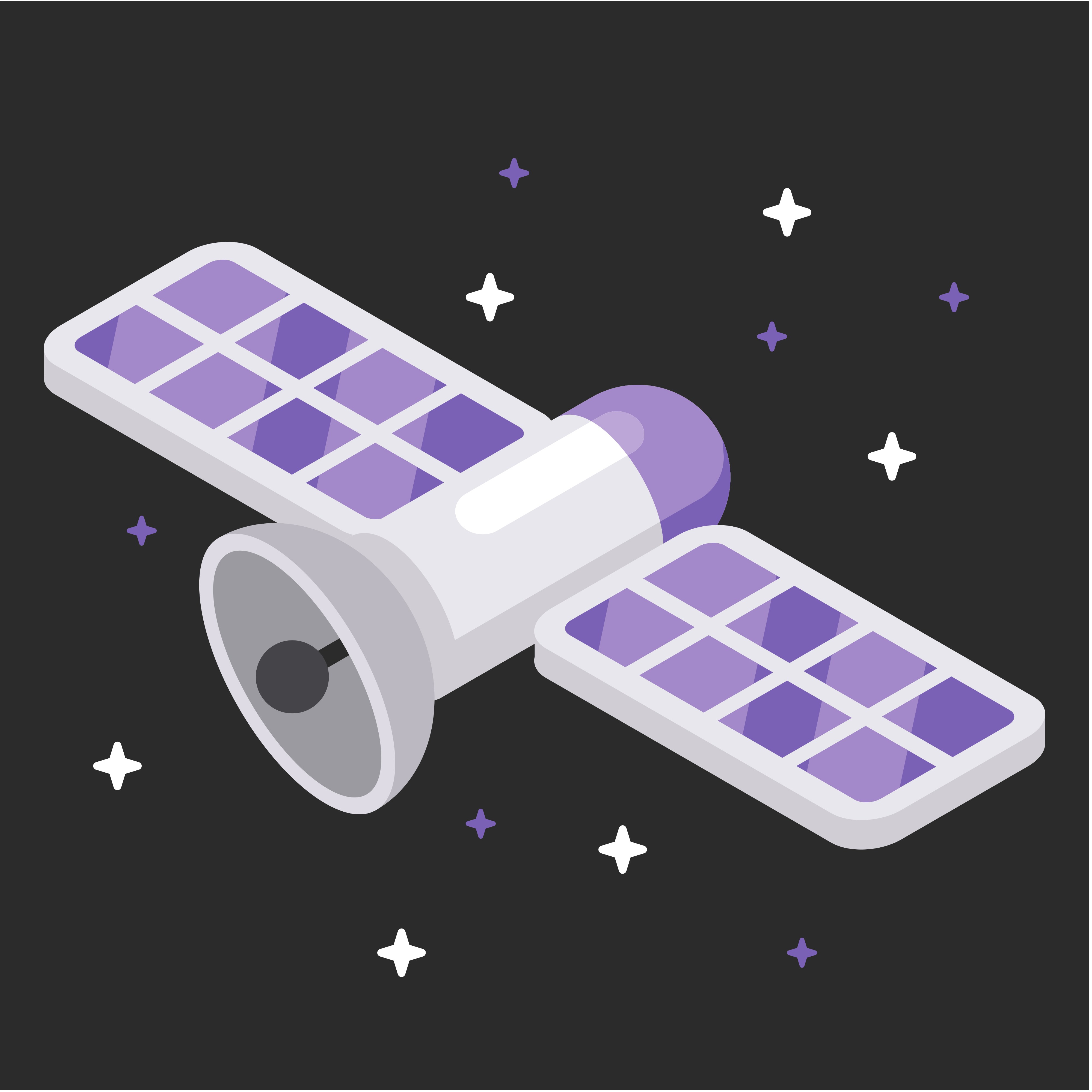
The universe looks very different through the eyes of the James Webb Space Telescope (JWST). Since beginning scientific operations in 2022, Webb has allowed astronomers to see extremely distant galaxies, investigate the birth of stars, analyze exoplanet atmospheres, and examine cosmic structures hidden behind thick clouds of dust.
Its discoveries are not simply producing spectacular space images. They are helping scientists test—and sometimes rethink—ideas about how galaxies, stars, planets, and black holes formed and evolved.
How Does the James Webb Space Telescope Work?
JWST is designed primarily for infrared astronomy. Its 6.5-meter primary mirror is made from 18 hexagonal segments and collects extremely faint light from distant objects. Webb's instruments can observe wavelengths from about 0.6 to 28.8 micrometers, covering near-infrared and mid-infrared light.
Infrared observations are especially useful because distant galaxies have their light stretched to longer wavelengths as the universe expands. This process, called cosmological redshift, moves ancient visible and ultraviolet light into the infrared range that Webb can detect.
Infrared light can also pass through much of the dust that blocks visible light. This allows Webb to investigate stellar nurseries and other regions that can be difficult to observe with optical telescopes.
Webb operates around the Sun-Earth L2 point, approximately 1.5 million kilometers from Earth. Its enormous five-layer sunshield protects the telescope from heat and light from the Sun, Earth, and Moon, helping keep its instruments extremely cold.
Webb Is Looking Back Toward the Beginning of the Universe
One of JWST's most important scientific goals is understanding the early universe.
Because light takes time to travel, looking at extremely distant galaxies means looking into the past. Webb has discovered galaxies that existed only a few hundred million years after the Big Bang.
In 2026, NASA reported confirmation of a bright galaxy that existed approximately 280 million years after the Big Bang. This observation gives astronomers a remarkably early view of galaxy formation.
Webb has also been studying mysterious objects known as little red dots. These objects appear in large numbers during the early universe and may represent a previously poorly understood stage involving rapidly growing supermassive black holes. Scientists are still investigating exactly what these objects are.
These observations are important because they provide new evidence about how quickly the first galaxies and black holes could form.
Discovering How Stars Are Born
JWST is also transforming our understanding of star formation.
Stars are born inside enormous clouds of gas and dust. Visible light can struggle to penetrate these clouds, while infrared observations can reveal young stars hidden inside them.
In July 2026, Webb observed the FS Tau star-forming region and revealed numerous protostars only about 1–3 million years old. The observations also showed outflows of material from a young protostar, providing clues about how growing stars interact with their surrounding gas and dust.
Webb's mid-infrared observations can also study the dust itself, helping researchers understand the environments in which stars and planetary systems develop.
Exploring Nebulae in New Detail
Webb is changing our view of nearby nebulae as well as distant galaxies.
In August 2026, NASA released new Webb observations of NGC 2392, commonly called the Lion Nebula. Webb's infrared instruments revealed detailed structures within the nebula, including different types of dust surrounding its dying central star. Some dust is being destroyed by radiation, while other structures survive.
These observations help scientists understand what happens when stars approach the final stages of their lives and return material to space.
Webb Is Studying Planets Beyond Our Solar System
Another major research area is exoplanet science.
JWST can use spectroscopy to analyze light associated with an exoplanet's atmosphere. Different molecules absorb specific wavelengths of light, leaving chemical fingerprints that can reveal atmospheric composition.
In July 2026, astronomers using Webb identified Beta Pictoris d, a giant exoplanet in the nearby Beta Pictoris system. Instead of being discovered simply as a bright point of light, the planet was identified through the distinctive chemical fingerprint of its atmosphere.
This approach could become increasingly important as astronomers study the atmospheres of different types of planets and investigate how planetary systems form and evolve.
Why JWST Is Changing Astronomy
The biggest impact of Webb is the combination of high sensitivity, infrared vision, spectroscopy, and high-resolution imaging.
Astronomers can now study objects at different stages of cosmic history—from young galaxies in the early universe to newborn stars and planets much closer to home.
Webb is also helping answer questions that were previously difficult to investigate, including how the first galaxies formed, what powered cosmic reionization, how stars assemble from gas and dust, and how planetary atmospheres evolve. NASA reports that Webb observations have provided evidence that stars in early galaxies contributed enough ultraviolet radiation to ionize surrounding hydrogen during the era of reionization.
What Are Webb's Limitations?
JWST is extraordinarily powerful, but it cannot observe everything.
Because it must remain extremely cold, its design is optimized for infrared observations and requires careful control of heat from the Sun, Earth, and Moon. Its location near L2 also means that, unlike Hubble, it cannot be routinely serviced by astronauts.
Webb also complements rather than simply replaces other observatories. Different telescopes observe different wavelengths and therefore reveal different physical properties of astronomical objects.
What Will Webb Study Next?
JWST is expected to remain an important observatory for research into early galaxies, black holes, star formation, exoplanets, planetary systems, nebulae, and the evolution of galaxies.
As astronomers collect larger samples of distant galaxies and more detailed observations of individual objects, they can compare Webb's findings with theoretical models and observations from other telescopes.
The result is a more complete picture of how the universe changes over billions of years.
Conclusion
The James Webb Space Telescope is changing astronomy because it allows scientists to observe the universe in ways that were previously impossible or extremely difficult.
Its infrared vision has revealed ancient galaxies, newborn stars hidden inside dusty clouds, detailed nebula structures, and the chemical signatures of distant planets. Just as importantly, Webb is generating new questions about how quickly galaxies and black holes formed and how planetary systems evolved.
The universe is not simply becoming clearer through JWST. Our understanding of the universe is becoming more detailed—and, in some cases, more surprising.
Frequently Asked Questions
1. What is the James Webb Space Telescope used for?
JWST is used to study the early universe, galaxies, stars, nebulae, exoplanets, planetary systems, and other astronomical objects, primarily through infrared observations.
2. Why does JWST use infrared light?
Infrared light can travel through dusty regions more effectively than visible light and can reveal highly redshifted light from extremely distant galaxies.
3. What is one of Webb's most important discoveries?
Webb has made many important discoveries rather than one single defining discovery. Its observations of galaxies existing only a few hundred million years after the Big Bang are particularly important for studying early galaxy formation.
4. Can JWST find life on other planets?
Webb can study the atmospheres of some exoplanets and search for chemical signatures. However, detecting a potentially interesting molecule is not automatically evidence of life. Scientists need multiple lines of evidence and careful interpretation.
5. Is JWST better than Hubble?
They are designed for different strengths. Webb specializes in near- and mid-infrared observations, while Hubble has strong capabilities at ultraviolet, visible, and some infrared wavelengths. Together, they provide complementary views of the universe.