10 Books That Can Completely Change the Way You Think
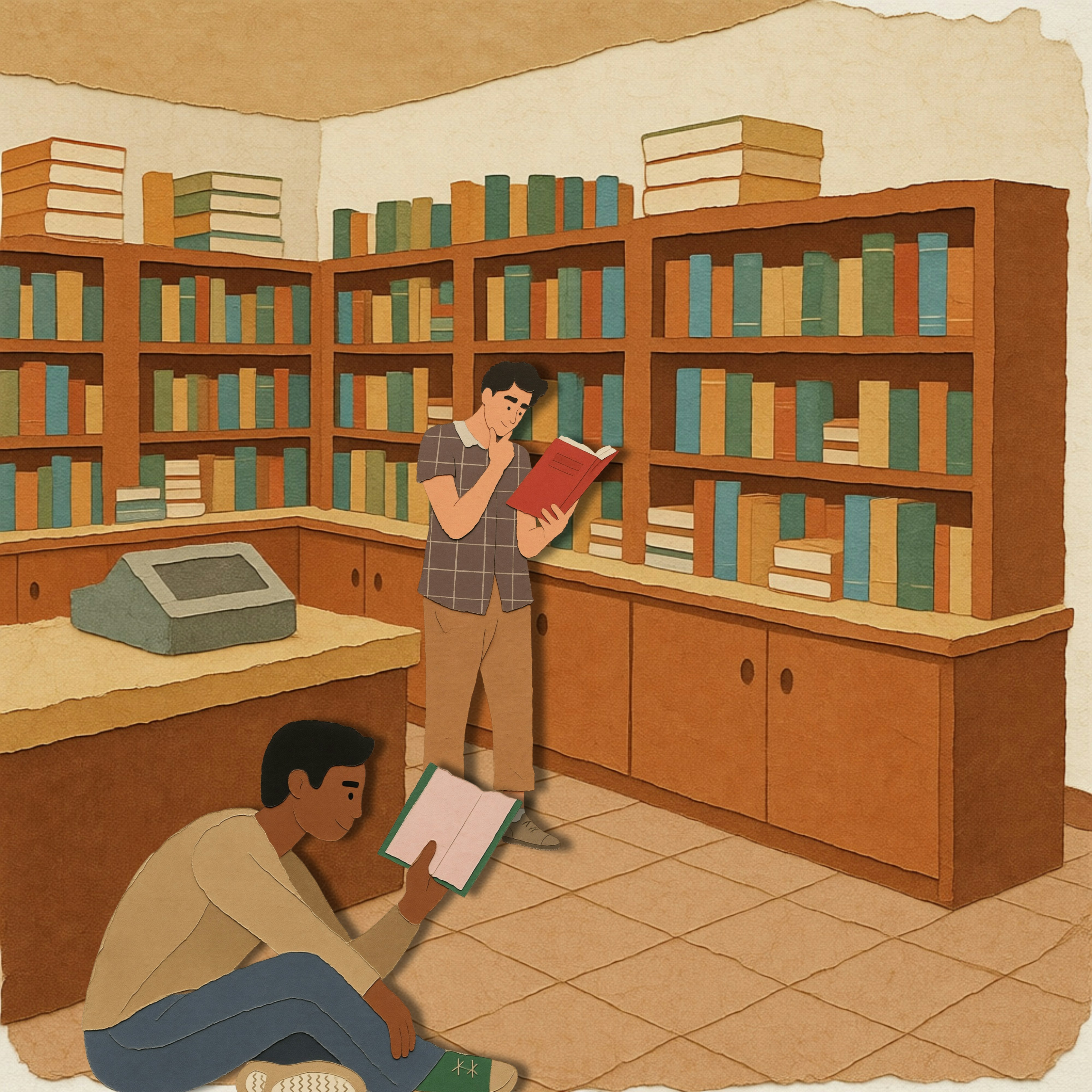
Every now and then, you read a book that does more than give you information. It makes you pause, question something you have always believed, and look at an ordinary part of life from a completely different angle.
That is the real magic of great books.
The right book can change the way you think about success, money, habits, relationships, failure, happiness, or even your own identity. You may finish the final page and realize that a belief you had accepted for years was never as solid as you thought.
So, instead of another list filled with the same predictable recommendations, here are 10 books that can completely change the way you think. Each one challenges a different part of your thinking and gives you something worth reflecting on.
1. Thinking, Fast and Slow — Daniel Kahneman
What if your brain is making decisions before you even realize it?
In Thinking, Fast and Slow, Daniel Kahneman explains two broad ways our minds operate. One is quick, intuitive, and automatic. The other is slower, more deliberate, and analytical.
The book explores cognitive biases, judgment, confidence, and the mental shortcuts people use every day.
What makes it so interesting is that it turns the spotlight back on the reader. You may start noticing how often your own decisions are influenced by assumptions and mental shortcuts.
Big lesson: A confident decision is not necessarily a well-reasoned decision.
2. Atomic Habits — James Clear
Many people believe success comes from making one huge change. Atomic Habits offers a much more practical way to look at progress.
James Clear explains how tiny behaviors, repeated consistently, can produce significant results over time. Instead of relying entirely on motivation, he focuses on systems, environment, identity, and making better habits easier to repeat.
The book can change the way you look at everything from exercise and studying to work and personal goals.
Big lesson: Your daily systems often matter more than your biggest ambitions.
3. The Psychology of Money — Morgan Housel
We like to think that money decisions are rational. In reality, they are often deeply personal.
The Psychology of Money explores how emotions, family background, experiences, fear, greed, luck, and expectations shape financial behavior.
One person can see money as security while another sees it as freedom. Someone else may see it as status. Those different beliefs can lead to completely different decisions, even when people earn similar amounts.
The book is less about complex financial formulas and more about understanding the human side of money.
Big lesson: Becoming better with money starts with understanding your own behavior.
4. The Scout Mindset — Julia Galef
What if the goal of thinking was not to prove that you are right, but to discover what is actually true?
That is the central idea behind The Scout Mindset. Julia Galef contrasts two approaches to thinking: one that tries to defend existing beliefs and another that remains curious and willing to update them.
This is especially useful in a world where people often surround themselves with information that confirms what they already believe.
The book encourages intellectual flexibility without asking you to abandon your values.
Big lesson: Changing your mind when the evidence changes is a strength, not a failure.
5. Man's Search for Meaning — Viktor E. Frankl
Some books teach you how to become more productive. Others make you question what productivity is even for.
Man's Search for Meaning is a deeply personal reflection on suffering, purpose, resilience, and the human search for meaning. Frankl draws on his experiences and psychological perspective to explore how people respond to extremely difficult circumstances.
It is not an easy book, but it can dramatically change your perspective on everyday frustrations and priorities.
Big lesson: Having a meaningful reason to keep going can shape how you respond to difficult circumstances.
6. The Almanack of Naval Ravikant — Eric Jorgenson
Success is often presented as a simple equation: work harder, earn more, and keep climbing.
The Almanack of Naval Ravikant offers a broader view. It explores wealth, judgment, learning, leverage, decision-making, and happiness.
One of its most interesting themes is the idea that building valuable skills and making better decisions can compound over time. It also encourages readers to think about freedom rather than simply chasing a bigger paycheck.
Big lesson: Long-term thinking, useful skills, and good judgment can be more valuable than simply working harder.
7. Four Thousand Weeks — Oliver Burkeman
This book challenges one of the biggest assumptions behind modern productivity: that you can somehow fit everything into your life if you just become organized enough.
Oliver Burkeman points out that human time is limited. Instead of trying to control every minute, he encourages readers to accept limitations and make conscious choices about what deserves their attention.
It is a refreshing alternative to endless productivity advice.
Big lesson: You cannot do everything, so choosing what not to do is part of living well.
8. The Courage to Be Disliked — Ichiro Kishimi and Fumitake Koga
How much of your life is shaped by your desire for approval?
Written as a dialogue between a young man and a philosopher, The Courage to Be Disliked explores individuality, responsibility, relationships, freedom, and the pressure to please others.
Its ideas can be uncomfortable because they challenge the habit of blaming circumstances or other people for how we feel and live.
You do not have to agree with every argument to find the book thought-provoking.
Big lesson: A meaningful life may require letting go of the need for constant approval.
9. Factfulness — Hans Rosling, Ola Rosling, and Anna Rosling Rönnlund
Do you have an accurate picture of the world?
Factfulness explores the gap between how people often imagine the world and what available data actually shows. The authors explain several common ways humans can misunderstand global trends and situations.
The book encourages readers to slow down, check assumptions, and look at evidence before jumping to conclusions.
It can change the way you consume news and interpret statistics.
Big lesson: Your first impression of the world is not always the most accurate one.
10. The Creative Act — Rick Rubin
Creativity is often treated as something mysterious that only artists possess. The Creative Act takes a much broader view.
Rick Rubin explores attention, curiosity, experimentation, creative confidence, and the process of making meaningful work.
Its ideas can apply to much more than music or art. Entrepreneurs, writers, developers, designers, marketers, and anyone trying to build something original can find useful ideas here.
Big lesson: Creativity grows when you become more curious, more observant, and more willing to experiment.
What Makes These Books So Powerful?
These books do not all agree with one another, and that is exactly what makes the list interesting.
Atomic Habits changes how you think about behavior. The Psychology of Money changes how you think about wealth. Thinking, Fast and Slow makes you question your own judgment. The Scout Mindset challenges you to become more comfortable being wrong.
Others go even deeper.
Man's Search for Meaning asks what makes life meaningful. Four Thousand Weeks forces you to confront the limits of time. The Courage to Be Disliked questions how much your life is shaped by other people's expectations.
Together, they encourage a more flexible way of thinking.
How to Get the Most From These Books
Do not read these books simply to finish them.
Read slowly enough to notice ideas that challenge you. Highlight passages that make you stop. Write down questions. Most importantly, connect the ideas to your own experiences.
After each book, ask yourself:
What belief did this book challenge?
What idea do I want to test in my own life?
What will I do differently because I read it?
That turns reading from entertainment into actual personal growth.
Final Thoughts
The best books do not necessarily give you all the answers. Sometimes their greatest value is that they give you better questions.
These 10 books that can completely change the way you think cover habits, money, decision-making, purpose, productivity, relationships, creativity, and the way you see the world.
You may disagree with some of the authors. You may even reject some of their ideas. That is fine.
A great book does not need to convince you of everything. Sometimes it only needs to make you think a little harder than you did yesterday.
Pick one that catches your attention, open the first page, and see what happens when someone else's ideas challenge the way you see your own life.