How the Human Brain Works: The Biggest Mysteries Scientists Are Studying
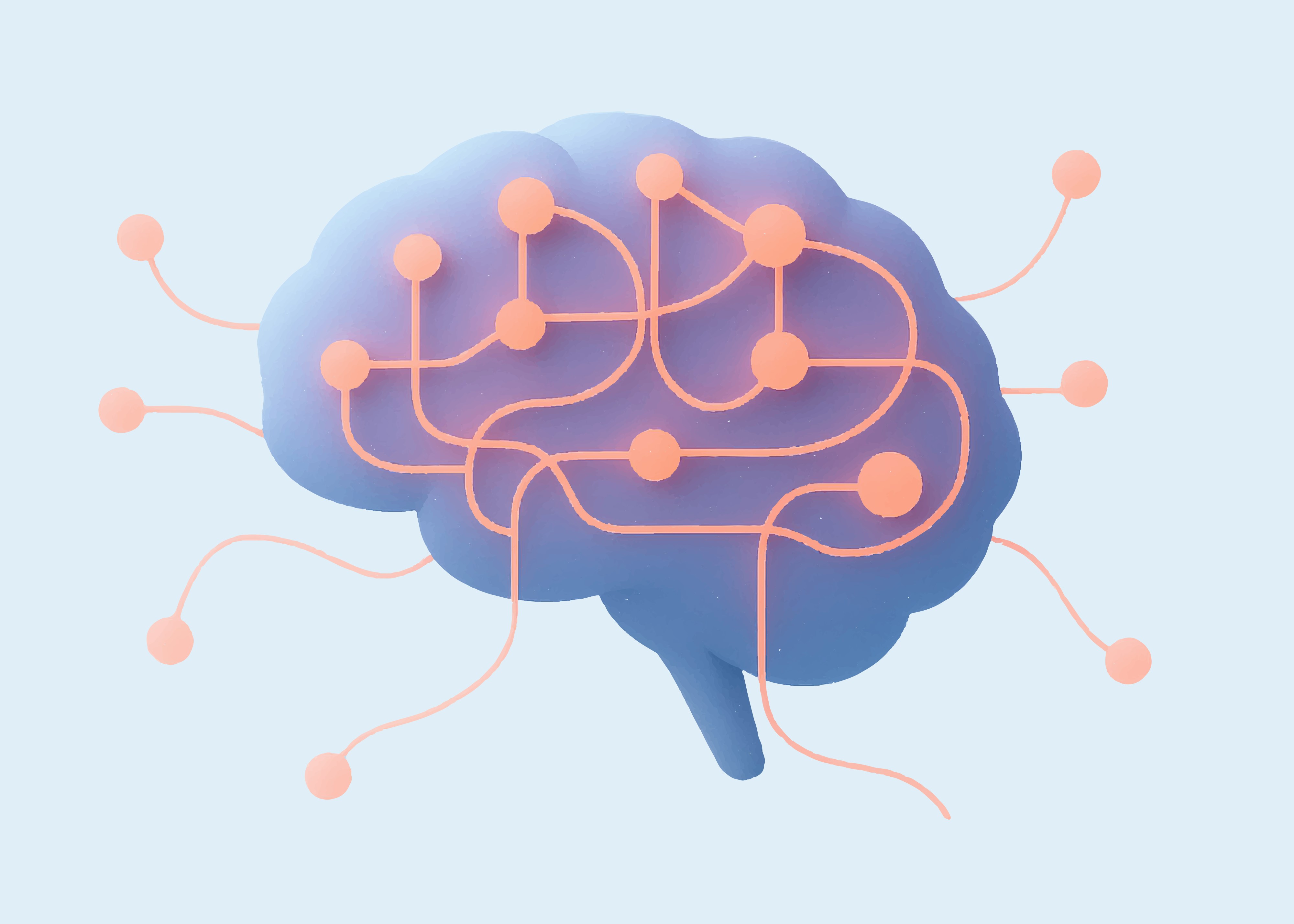
The human brain contains roughly 86 billion neurons, connected through an enormous network of synapses. These cells communicate through electrical and chemical signals that allow us to see, hear, remember, learn, move, make decisions, and experience the world.
Scientists understand many individual parts of this system, but one enormous mystery remains: how does activity across billions of cells produce the complex experience of being human?
Modern neuroscience is attacking this question from many directions, using brain imaging, electrophysiology, artificial intelligence, genetics, and increasingly detailed maps of neural circuits.
How Do Neurons Communicate?
Neurons are specialized cells that transmit information throughout the nervous system.
When a neuron receives enough input, it can produce an electrical signal called an action potential. This signal travels along the neuron and can cause the release of chemical messengers called neurotransmitters at a synapse.
The next neuron detects these chemical signals and may become more or less likely to fire.
This simple process becomes enormously complicated when billions of neurons are connected into constantly changing networks.
Scientists are therefore studying not just individual neurons, but how groups of neurons work together.
The Brain Works as a Network
Different brain regions often specialize in particular functions, but the brain does not operate as a collection of isolated modules.
Large-scale brain networks allow different regions to communicate and coordinate their activity.
Functional MRI, for example, can identify patterns of correlated activity between brain regions. Researchers use these patterns to study networks involved in attention, memory, movement, decision-making, and other functions.
Importantly, functional connectivity does not necessarily prove that one brain region directly causes activity in another. It describes patterns of coordinated activity, and scientists need additional methods to determine mechanisms.
How Does the Brain Turn Sensations Into Perception?
Your eyes detect light. Your ears detect sound waves. Your skin detects pressure and temperature.
But the brain does not simply receive these signals like a camera or microphone.
It processes sensory information through multiple stages and combines it with previous information, context, attention, and expectations.
Research is revealing increasingly detailed circuits involved in sensory processing. In 2025, scientists mapped hundreds of thousands of neurons in a small region of a mouse brain and examined how their activity responded to visual information, providing new insights into how neural circuits transform sensory signals.
But an important question remains:
How does electrical activity become the experience of seeing a face, hearing music, or feeling pain?
Scientists can measure neural activity associated with perception, but the complete mechanism is still unknown.
How Does Memory Work?
Memory is not stored in one simple location inside the brain.
Different forms of memory involve different neural systems, including networks involving the hippocampus and cerebral cortex.
Scientists have found that patterns of neural activity can change when memories are formed, stored, and retrieved.
Recent research is particularly interested in brief high-frequency neural events called ripples. Studies using intracranial recordings are investigating how these events contribute to human memory formation and retrieval.
Yet scientists still do not completely understand how a specific experience becomes a stable memory—or why some memories remain for decades while others disappear quickly.
How Does the Brain Learn?
Learning changes the nervous system.
One major mechanism involves changes in the strength of synapses, known as synaptic plasticity.
When neural circuits are repeatedly activated in particular patterns, connections between neurons can become stronger or weaker.
But learning is not simply about making individual synapses stronger.
Researchers are studying how changes across entire neural networks, brain regions, and patterns of activity allow the brain to adapt to new information.
This leads to a deeper question: How does the brain convert experience into lasting changes in behavior and knowledge?
The Mystery of Consciousness
Perhaps the biggest question in neuroscience is consciousness.
We know that conscious experience depends on the functioning brain. Changes in brain activity during sleep, anesthesia, brain injury, and neurological disorders can alter conscious awareness.
Scientists can also identify neural activity associated with different conscious states.
But identifying correlations is not the same as explaining the experience itself.
Why does certain brain activity feel like something?
Why do we have a first-person experience of color, sound, pain, or thought?
Researchers are testing several competing theories of consciousness, but no single theory has yet provided a complete explanation.
How Do Scientists See the Living Brain?
Modern neuroscience has several powerful tools.
MRI and fMRI
Structural MRI can reveal detailed information about brain anatomy.
Functional MRI (fMRI) measures changes in blood oxygenation associated with neural activity and allows researchers to study brain function while people perform tasks or rest.
EEG and MEG
EEG measures electrical activity from the scalp, while MEG measures magnetic fields generated by neural activity.
These techniques can capture changes on very fast timescales, although their ability to precisely identify activity deep inside the brain is more limited than some other methods.
PET and Other Techniques
PET can provide information about metabolism and molecular processes using specialized radioactive tracers.
Scientists also use implanted electrodes in certain clinical settings, allowing unusually detailed recordings from individual neurons or small populations of neurons.
No single technique can currently measure everything happening in the human brain at once.
The Biggest Limitation: Scale
One of neuroscience's greatest challenges is scale.
A single neuron is microscopic, but the brain contains billions of them and trillions of connections.
Scientists want to understand how molecular events inside a neuron eventually produce activity across circuits and large-scale networks.
Current human brain imaging methods cannot yet provide a complete, cellular-resolution picture of the entire living human brain. NIH researchers describe improving spatial and temporal resolution, connectivity mapping, and large-scale neural recording as major priorities.
This gap between individual cells and whole-brain behavior is one of the central challenges of modern neuroscience.
Why Understanding the Brain Matters
Better understanding of brain circuits could have major real-world consequences.
Neuroscience research is already contributing to improved understanding and treatment of conditions such as epilepsy, Parkinson's disease, stroke, and other neurological disorders.
Researchers are also developing technologies for recording and modulating brain activity that could eventually lead to new treatments and assistive technologies. The NIH BRAIN Initiative specifically supports research connecting brain activity with behavior and developing technologies for neurological disorders.
However, translating discoveries from laboratory experiments into reliable human treatments can take many years.
What Scientists Still Don't Know
Some of the biggest unanswered questions include:
-
How does consciousness emerge from neural activity?
-
How does the brain store complex memories?
-
How does the brain combine information from different senses?
-
How does the brain make decisions?
-
How does the brain predict and adapt to the future?
-
Why do individual brains differ so much?
-
How do billions of neurons coordinate activity without a central controller?
These are not simply questions about finding another brain region. They require understanding dynamic interactions across multiple levels of the nervous system.
The Future of Brain Research
The next generation of neuroscience is likely to combine large-scale brain maps with high-resolution recordings, advanced imaging, artificial intelligence, computational models, and increasingly precise experimental tools.
The NIH BRAIN Initiative is supporting projects that map neural connections across scales, characterize different brain cell types, and develop technologies for monitoring neural activity.
Artificial intelligence may also help researchers analyze enormous datasets that would be impossible to interpret manually.
The long-term goal is to connect neurons → circuits → networks → behavior → subjective experience.
That is an enormous scientific challenge, but new technologies are steadily closing parts of the gap.
Conclusion
The human brain is one of the most complex systems scientists have ever attempted to understand.
We know that neurons communicate through electrical and chemical signals, that synapses change with learning, that brain networks coordinate behavior, and that different neural systems contribute to perception, memory, emotion, and decision-making.
But knowing what different brain regions and neurons do is not the same as understanding how the entire system produces thought and consciousness.
Modern neuroscience is therefore moving toward a more complete picture—one that connects individual cells with circuits, networks, behavior, and experience.
The biggest mystery may not be where a particular mental function happens, but how billions of interacting cells work together to create the mind.
Frequently Asked Questions
1. How many neurons are in the human brain?
The human brain contains approximately 86 billion neurons, although the exact number varies between individuals. These neurons communicate through enormous numbers of synaptic connections.
2. How do neurons communicate?
Neurons communicate using electrical signals within cells and chemical or electrical signaling between cells. At many synapses, an electrical signal triggers the release of neurotransmitters that influence another neuron.
3. Can scientists see thoughts using brain scans?
Brain imaging can reveal patterns of brain activity associated with particular tasks, perceptions, or mental states. However, brain scans do not provide a complete, direct readout of a person's thoughts. Current imaging technologies also have important spatial and temporal limitations.
4. What is the biggest mystery in neuroscience?
Consciousness remains one of the deepest unanswered questions. Scientists can study neural activity associated with conscious states, but they do not yet have a complete explanation for how physical brain activity produces subjective experience.
5. Will scientists eventually understand the entire human brain?
Researchers are making rapid progress in mapping brain cells, connections, activity, and networks. However, a complete understanding of how these levels interact—and how they produce complex human thought and consciousness—remains an open scientific challenge.















